Revelation chapter 6 KJV records the Lamb opening the first six seals of the scroll. The visions reveal conquest, war, famine, death, the suffering of martyrs, and cosmic disturbances before the great day of divine wrath.
The chapter begins when the Lamb opens one of the seals and one of the four living creatures calls forth the first horseman. It then moves through six successive scenes, ending with the terrified question, “For the great day of his wrath is come; and who shall be able to stand?”
Revelation 6 KJV: The Complete Chapter
The First Seal: The White Horse
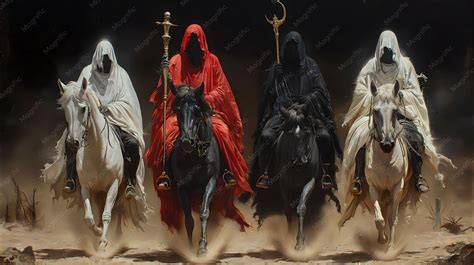
And I saw when the Lamb opened one of the seals, and I heard, as it were the noise of thunder, one of the four beasts saying, Come and see. And I saw, and behold a white horse: and he that sat on him had a bow; and a crown was given unto him: and he went forth conquering, and to conquer.
The Second Seal: War
And when he had opened the second seal, I heard the second beast say, Come and see. And there went out another horse that was red: and power was given to him that sat thereon to take peace from the earth, and that they should kill one another: and there was given unto him a great sword.
The Third Seal: Famine
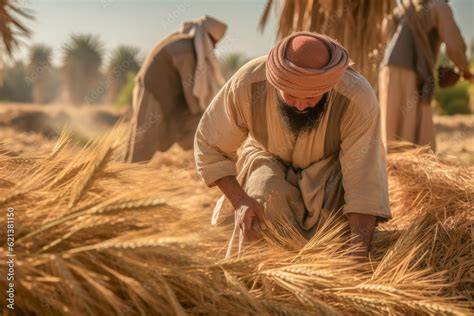
And when he had opened the third seal, I heard the third beast say, Come and see. And I beheld, and lo a black horse; and he that sat on him had a pair of balances in his hand. And I heard a voice in the midst of the four beasts say, A measure of wheat for a penny, and three measures of barley for a penny; and see thou hurt not the oil and the wine.
The Fourth Seal: Death
And when he had opened the fourth seal, I heard the voice of the fourth beast say, Come and see. And I looked, and behold a pale horse: and his name that sat on him was Death, and Hell followed with him. And power was given unto them over the fourth part of the earth, to kill with sword, and with hunger, and with death, and with the beasts of the earth.
The Fifth Seal: The Martyrs
And when he had opened the fifth seal, I saw under the altar the souls of them that were slain for the word of God, and for the testimony which they held: And they cried with a loud voice, saying, How long, O Lord, holy and true, dost thou not judge and avenge our blood on them that dwell on the earth?
And white robes were given unto every one of them; and it was said unto them, that they should rest yet for a little season, until their fellowservants also and their brethren, that should be killed as they were, should be fulfilled.
The Sixth Seal: Cosmic Terror
And I beheld when he had opened the sixth seal, and, lo, there was a great earthquake; and the sun became black as sackcloth of hair, and the moon became as blood; And the stars of heaven fell unto the earth, even as a fig tree casteth her untimely figs, when she is shaken of a mighty wind.
And the heaven departed as a scroll when it is rolled together; and every mountain and island were moved out of their places. And the kings of the earth, and the great men, and the rich men, and the chief captains, and the mighty men, and every bondman, and every free man, hid themselves in the dens and in the rocks of the mountains.
And said to the mountains and rocks, Fall on us, and hide us from the face of him that sitteth on the throne, and from the wrath of the Lamb: For the great day of his wrath is come; and who shall be able to stand?
The Structure of Revelation Chapter 6
Revelation chapter 6 follows the vision of the heavenly throne and the sealed scroll in the preceding chapter. Only the Lamb has the right to open the seals on the scroll. Each opening discloses a new judgment or scene, and the first four seals are introduced by one of the four living creatures.
| Seal | Vision | Main theme |
|---|---|---|
| First | White horse and crowned rider | Conquest |
| Second | Red horse and great sword | War and loss of peace |
| Third | Black horse and balances | Scarcity, famine, and unequal provision |
| Fourth | Pale horse, Death, and Hell | Mass death |
| Fifth | Souls beneath the altar | Martyrdom and the cry for judgment |
| Sixth | Earthquake and heavenly signs | Cosmic terror and divine wrath |
The Lamb Opens the Seals
The chapter repeatedly emphasizes that the Lamb opens the seals. The judgments do not occur outside the authority of God. The Lamb who was worthy to take the scroll is also the one who reveals what follows as the seals are removed.
If the scroll details the culmination of history, then the things associated with the removal of the seals must happen before the scroll is opened. This is not the fulfillment of history itself, but the preparation for it. The actual culmination will be detailed in Revelation 19.
It is worthy of remark that the opening of the seals is not merely a declaration of what God will do, but is the exhibition of a purpose then accomplished; for whenever the seal is opened, the sentence appears to be executed.
Each seal is associated with a living creature, one of the cherubim of Ezekiel 1 and Ezekiel 10, who called out “come,” or it could be translated “go forth,” to each horseman.
The First Seal: The Rider on the White Horse
When the Lamb opens the first seal, John hears a sound like thunder and one of the four beasts says, “Come and see.” John then sees a white horse. Its rider has a bow, receives a crown, and goes forth conquering and to conquer.
The white horse and the rider’s conquering activity have led to different interpretations. Jesus does return on a white horse in Revelation 19:11-16; but this is a satanic dictator who imitates Jesus.
He rules, a crown was given; he rules with a bow, not a sword; and he exercises dominion over the earth, went out conquering and to conquer. But the results of his rule, as described in the following verses, show clearly that this is not the reign of Jesus.
The whole context and character of these seals absolutely forbid our thinking of this rider being the Lord Jesus, as so many affirm. His reign shall not bring war, famine, and strife in its train.
Those who think Revelation is mostly a book of history believe that this rider is Jesus, the apostles, or the Roman emperors. Those who believe that this is a prophetic passage, yet to be fulfilled, often account this rider to be the antichrist.
Taking this to be the final satanic dictator over men, we see that he will be more terrible than all previous dictators were. He will rule over men as a false messiah, and lead man in organized rebellion against God, in the pattern of Nimrod, his first predecessor. He is the one often called the antichrist.
The idea of a satanic dictator over men goes back all the way to Nimrod, the ruler over Babel in Genesis 10:8-14, where it says he was a mighty hunter before the LORD. This has the sense that he was a mighty hunter of men, and that this was offensive to the face of God.
The modern political and social scene is certainly set for the emergence of such a political leader. All that waits is for the Lord to allow it in His timing after He takes His church from this earth.
And now you know what is restraining, that he may be revealed in his own time. For the mystery of lawlessness is already at work; only He who now restrains will do so until He is taken out of the way. (2 Thessalonians 2:6-7)
Significantly, the first seal opened brings this dictator to prominence. We understand that the seventieth week of Daniel 9 begins when this dictator will confirm a covenant with the many, referring to the Jewish people.
Many wonder if these four horsemen of Revelation 6 are connected with the seventieth week of Daniel and the great tribulation itself, or with the course of history up until that time. This initial emergence of the antichrist, connected with what we know about this leader from Daniel 9 shows that these four horsemen are connected with Daniel’s seventieth week and the great tribulation.
The Second Seal: The Red Horse and War
When the second seal is opened, the second living creature calls out. Another horse, fiery red, goes forth, and its rider is given power to take peace from the earth so that people should kill one another. A great sword is given to him.
The red horse represents war and conflict. The rider does not necessarily need to create war directly; he removes peace, and human violence follows.
Peace between men and among nations is a gift from God. It is not the natural state of relations between men.
This authority was granted to the horseman. This is, directly or indirectly, the judgment of God.
Our modern age is marked by war and conflict. Since World War II, there have been more than 150 wars of some kind in the world, and at any given time there may be some three dozen armed conflicts taking thousands of lives yearly. The nations of the world often spend more than $1 trillion on military expenditures a year.
The second seal therefore follows the first in a progression of disorder: conquest is followed by the removal of peace, and the removal of peace produces killing and widespread conflict.
The Third Seal: The Black Horse and Famine
The third living creature calls out when the third seal is opened. John sees a black horse, and its rider holds a pair of balances in his hand.
The balances symbolize the need to carefully measure and ration food. This speaks of a time of scarcity.
A measure of wheat for a penny, and three measures of barley for a penny describes extremely costly food. A measure, or choenix, signifies a measure containing one wine quart, and the denarius was a day’s wage for a laborer.
| Food | Amount | Cost |
|---|---|---|
| Wheat | A measure | A penny |
| Barley | Three measures | A penny |
These prices are about twelve times higher than normal. It means that it would cost a day’s wage to buy the ingredients for a loaf of bread. This describes a time of famine when life will be reduced to the barest necessities.
We often see great famine in the world today, yet fewer people suffer from hunger today than 100 years ago. However, understanding the world’s precarious ecological balance, it would not take much to plunge many into the kind of scarcity and inequity mentioned here.
The command, “see thou hurt not the oil and the wine,” indicates that the crisis does not affect every form of provision equally. The basic foods are measured and costly, while oil and wine remain available.
Yet, the nicer things will be available for those who can afford them. There will still be the oil and the wine that should not be harmed.
The third seal therefore presents not only famine, but also scarcity and inequity: essential food becomes inaccessible to many, while less essential goods remain available to those with sufficient means.
The Fourth Seal: The Pale Horse, Death, and Hell
When the fourth seal is opened, the fourth living creature says, “Come and see.” John looks and sees a pale horse. The name of its rider is Death, and Hell follows with him.
Power is given to them over the fourth part of the earth, to kill with sword, and with hunger, and with death, and with the beasts of the earth.
The pale horse represents the accumulated result of the preceding judgments. Conquest, war, famine, and other calamities lead to a tremendous death toll.
This last rider shows that there will be a tremendous death toll from the dictatorship, war, famine and other calamities described by the previous three horsemen.
Our modern age has seen hundreds of millions killed by dictators, war, and famine. Yet all that will pale in comparison to the death toll coming in the wake of this ultimate dictator. No wonder Jesus said of this time For then there will be great tribulation, such as has not been since the beginning of the world until this time, no, nor ever shall be. (Matthew 24:21)
Power was given to the horseman, and given by God. Though all hell breaks loose on the earth, God is very much in control. He still holds the scroll and opens the seals.
The Fifth Seal: The Souls of the Martyrs
The fifth seal changes the scene from the horsemen and earthly calamities to the souls of those who have been slain for the word of God and for the testimony which they held. John sees them under the altar.
That these souls were under the altar emphasizes that their life blood was poured out as an offering to God. The idea is drawn from Leviticus 4:7: And he shall pour the remaining blood at the base of the altar of the burnt offering.
It is probably best to see this as the cry of all martyrs for God’s truth, not merely believers persecuted by the coming world leader, the first horseman of Revelation 6:1-2.
The martyrs cry with a loud voice, “How long, O Lord, holy and true, dost thou not judge and avenge our blood on them that dwell on the earth?” Their appeal is directed to the Lord, who is holy and true.
These souls in heaven cried out for vengeance. We usually don’t think of God’s people crying out for vengeance, but here they made their cry to God, and leave the matter with Him.
When God’s people are persecuted, He will set it right. It isn’t wrong for God’s people to ask Him to do what He promised to do. In this way the blood of Abel cried out from the ground for vengeance, as did the blood of unavenged murders in the land of Israel.
White Robes and a Little Season
White robes are given to every one of the martyrs. The robes signify their honored and purified standing before God while they await the completion of the divine purpose.
These saints are instructed to wait. How long must they wait? Until both the number of their fellow servants and their brethren, who would be killed as they were, was completed.
This may mean that they should wait until all God’s appointed martyrs are killed. Or, because the words the number of are supplied by the translators, not the text, it may mean that they wait until the character of the remaining martyrs on earth is perfected and complete. It is character - the way that one lives - that makes a martyr, not the way that one dies.
The fifth seal shows that persecution and martyrdom are not forgotten. The martyrs’ question is heard, their robes are given, and their waiting has a defined place within God’s purpose.
The Sixth Seal: Earthquake and Cosmic Disruption
When the sixth seal is opened, John sees a great earthquake. The sun becomes black as sackcloth of hair, and the moon becomes as blood. The stars of heaven fall unto the earth as a fig tree casts its unripe figs when shaken by a mighty wind.
The heaven departs as a scroll when it is rolled together, and every mountain and island is moved out of its place.
In the Bible, celestial disturbances are often connected with the coming of the Messiah. Isaiah, Jeremiah, Ezekiel, Joel, Zephaniah and Jesus Himself all described such things.
The great day of the LORD is near; it is near and hastens quickly. The noise of the day of the LORD is bitter; there the mighty men shall cry out. That day is a day of wrath, a day of trouble and distress, a day of devastation and desolation, a day of darkness and gloominess, a day of clouds and thick darkness, a day of trumpet and alarm against the fortified cities and against the high towers. (Zephaniah 1:14-16)
Or, as in Joel 2:10-11: The sun and moon grow dark, and stars diminish their brightness… for the day of the LORD is great and terrible; who can endure it?
It is best to regard these pictures as real, but poetic. John did not use technically precise scientific language, but he simply described what he saw.
Those who regard these events as history have to greatly spiritualize them. One example is Adam Clarke, who said this great earthquake was “A most stupendous change in the civil and religious constitution of the world. If it refer to Constantine the Great, the change that was made by his conversion to Christianity might be very properly represented under the emblem of an earthquake.”
What are the seven seals of Revelation? | GotQuestions.org
The Terror of the Earth’s Rulers and People
The kings of the earth, the great men, the rich men, the chief captains, the mighty men, every bondman, and every free man hide themselves in caves and in the rocks of the mountains.
All people are equally brought low by God’s wrath. The judgment is all the more profound because it is the wrath of the Lamb.
It is the wrath of love, the wrath of sacrificial love which, having done the absolute utmost for us and our salvation, tells us as nothing else could the certainty with which evil awaits its doom at the hand of God.
The people hide not only from the terror of the judgments, but from the face of Him who sits on the throne.
What sinners dread most is not death, but the revealed presence of God.
They call to the mountains and rocks, “Fall on us, and hide us from the face of him that sitteth on the throne, and from the wrath of the Lamb.” Their words recognize that the great day of wrath has come, and they ask, “who shall be able to stand?”
How the Six Seals Fit the Prophetic Plan
There are many different opinions, but it seems best to say that the seals, trumpets, and bowls that will be described later are not strictly sequential events. It could be said that chronologically, the trumpets do not follow the seals and the bowls do not follow the trumpets in a strict order.
The first six seals are a summary of the judgments distributed over the whole book; a brief summary of what will occur in “the day of the Lord,” up to the time of His actual Apocalypse or Unveiling in Revelation 19.
That span begins with the revelation of the Antichrist, the first seal, and it concludes with the revealing of the face of Him who sits on the throne, the seventh seal.
The seals can be understood in relation both to conditions immediately before the end and to conditions prevailing over a more extended period up until the return of Jesus.
There is a sense in which we can say that they represent both - dictators, war, famine, death and persecution have been familiar throughout all history, but not to the magnitude and the severity with which they will be present in the Great Tribulation.
tags: #revelation #chapter #6 #kjv