Saint John the Baptist was the prophet who prepared the way for Jesus Christ, called people to repentance, baptized Jesus in the Jordan River, and directed his followers toward the Messiah. In the Catholic tradition, he is honored especially on June 24, the Nativity of Saint John the Baptist, while the anniversary of his death is commemorated on August 29.
Jesus called John the greatest of all those who had preceded him: “I tell you, among those born of women, no one is greater than John….” But John would have agreed completely with what Jesus added: “[Y]et the least in the kingdom of God is greater than he” (Luke 7:28). John’s life is remembered as a model of humility, courage, repentance, purity, and total dependence on God.
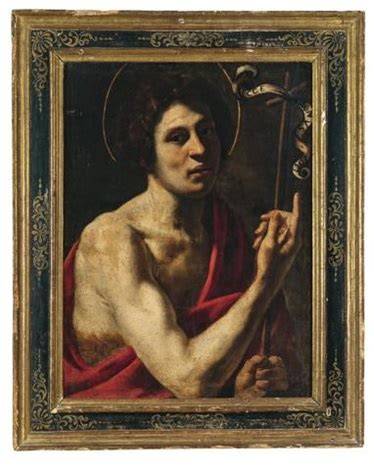
Who Was Saint John the Baptist?
John the Baptist was a contemporary of Christ who was known for evangelization and his baptizing of Jesus Christ. John the Baptist was born through the intercession of God to Zachariah and Elizabeth, who was otherwise too old to bear children. According to scriptures, the Angel Gabriel visited Elizabeth and Zachariah to tell them they would have a son and that they should name him John.
Zachariah was skeptical and for this he was rendered mute until the time his son was born and named John, in fulfillment of God's will. When Elizabeth was pregnant with John, she was visited by Mary, and John leapt in her womb. This revealed to Elizabeth that the child Mary carried was to be the Son of God.
The greatness of John, his pivotal place in the history of salvation, is seen in the great emphasis Luke gives to the announcement of his birth and the event itself-both made prominently parallel to the same occurrences in the life of Jesus.
The Nativity of Saint John the Baptist
The Nativity of Saint John the Baptist is celebrated on June 24. The feast commemorates the birth of the prophet who was chosen to prepare the way for Christ. The story of his birth emphasizes God’s power to answer prayer and bring life where human expectations had reached their limits.
John’s birth was announced by the Angel Gabriel to Zachariah and Elizabeth. His name was given according to God’s will, and the events surrounding his birth showed that he had a special role in salvation history. The Nativity of Saint John the Baptist shows us the way to purity and grace.
John’s Mission to Prepare the Way for Jesus
John spent his time in the desert, an ascetic. He began to announce the coming of the Kingdom, and to call everyone to a fundamental reformation of life. His purpose was to prepare the way for Jesus.
His baptism, he said, was for repentance. But one would come who would baptize with the Holy Spirit and fire. John was not worthy even to untie his sandals. His attitude toward Jesus was: “He must increase; I must decrease” (John 3:30).
John began public ministry around 30 AD, and was known for attracting large crowds across the province of Judaea and around the Jordan River. John attracted countless people to the banks of the Jordan, and it occurred to some people that he might be the Messiah.
But he constantly deferred to Jesus, even to sending away some of his followers to become the first disciples of Jesus. John instructed his followers to turn to Christ, calling Him the "Lamb of God" and these people were among the first Christians.
John Baptizes Jesus
John was humbled to find among the crowd of sinners who came to be baptized the one whom he already knew to be the Messiah. “I need to be baptized by you” (Matthew 3:14b). But Jesus insisted, “Allow it now, for thus it is fitting for us to fulfill all righteousness” (Matthew 3:15b).
When Jesus came to him to be baptized, John recognized him and said, "It is I who need baptism from you." Jesus told John to baptize Him anyway, which he did, whereupon the heavens opened, and the Spirit of God was seen like a dove. The voice of God spoke, saying, "This is my beloved Son, in whom I am well pleased."
Jesus, a true and humble human as well as eternal God, was eager to do what was required of any good Jew. Jesus thus publicly entered the community of those awaiting the Messiah. But making himself part of that community, he made it truly messianic.
John the Baptist meets Jesus Clip from Jesus of Nazareth 1977
John’s Humility Before Christ
John’s entire mission was directed toward Christ rather than toward himself. He announced the coming of the Kingdom, invited people to repentance, and then pointed beyond his own ministry to the One who would baptize with the Holy Spirit and fire.
John was not worthy even to untie his sandals. His attitude toward Jesus was: “He must increase; I must decrease” (John 3:30). This statement expresses the central spiritual meaning of John’s life: his greatness consisted not in seeking personal honor, but in preparing people to recognize Jesus.
Except for the Mother of God, no one had a higher function in the unfolding of salvation. Yet the least in the kingdom, Jesus said, is greater than he, for the pure gift that the Father gives.
John’s Question About the Messiah
Perhaps John’s idea of the coming of the Kingdom of God was not being perfectly fulfilled in the public ministry of Jesus. For whatever reason, when he was in prison he sent his disciples to ask Jesus if he was the Messiah.
Jesus’ answer showed that the Messiah was to be a figure like that of the Suffering Servant in Isaiah. John himself would share in the pattern of messianic suffering, losing his life to the revenge of Herodias.
John’s Imprisonment and Martyrdom
Following his baptism of Christ, John's popularity grew so much that he alarmed King Herod. Herod ordered him arrested and imprisoned. John spoke with Herod on several occasions and condemned his marriage to his half-brother's wife.
This condemnation would be his downfall as King Herod promised to grant a wish to his daughter. In revenge for John the Baptist's condemnation of her mother's scandalous marriage to Herod, she asked for John's head. King Herod reluctantly obliged.
John the Baptist died sometime between 33 and 36 AD. The anniversary of his death is August 29 and is sometimes celebrated with a second feast.
Spiritual Meaning of Saint John the Baptist
John challenges us Christians to the fundamental attitude of Christianity-total dependence on the Father, in Christ. The attractiveness as well as the austerity of John, his fierce courage in denouncing evil-all stem from his fundamental and total placing of his life within the will of God.
John’s ascetic life in the desert, his call to repentance, his courage in confronting evil, and his willingness to surrender attention to Jesus all point to the same spiritual purpose. His life demonstrates that authentic Christian leadership directs people toward Christ and remains grounded in obedience to God.
The Nativity of Saint John the Baptist shows us the way to purity and grace. His example invites Christians to examine their lives, turn away from sin, practice humility, and allow Christ to become greater in their thoughts, decisions, and actions.
Feast Days of Saint John the Baptist
| Celebration | Date | Meaning |
|---|---|---|
| Nativity of Saint John the Baptist | June 24 | Commemoration of John’s birth and his role in salvation history |
| Anniversary of the death of Saint John the Baptist | August 29 | Commemoration of John’s martyrdom |
John the Baptist's feast day is June 24, and the anniversary of his death is August 29 and is sometimes celebrated with a second feast.
Patronage of Saint John the Baptist
Saint John the Baptist is the Patron Saint of: Baptism.
John the Baptist is the patron saint of Jordan, Puerto Rico, French Canada and many other places.
He is also named as patron of Jordan, Puerto Rico, Knights Hospitaller of Jerusalem, French Canada, Newfoundland, Cesena, Florence, Genoa, Monza, Perth (Scotland), Porto, San Juan, Turin, Xewkija, and many other places.
Key Facts About Saint John the Baptist
- Feast day: June 24.
- Death: approximately 33-36 AD.
- Ministry: evangelization, preaching repentance, and baptizing in the Jordan River.
- Role: preparing the way for Jesus Christ.
- Message: “He must increase; I must decrease” (John 3:30).
- Patronage: Baptism and many places, including Jordan, Puerto Rico, French Canada, and others.