William Wines Phelps (February 17, 1792-March 7, 1872) was an early leader of The Church of Jesus Christ of Latter-day Saints, a printer, newspaper editor, publisher, writer, teacher, lawyer, and prolific hymn writer. He helped establish the Church in Missouri, edited its first newspaper, contributed to the publication of the Book of Commandments and the Doctrine and Covenants, prepared an early Latter-day Saint hymnal, served as a close associate and political clerk of Joseph Smith, and later became a senior statesman in Utah.
Phelps is especially remembered for his hymns, including “The Spirit of God” and “Praise to the Man,” and for the remarkable reconciliation that followed his falling-out with Joseph Smith. After Phelps repented and sought forgiveness, Joseph Smith warmly welcomed him back, expressing the principle that “friends at first, are friends again at last.”
Basic facts about William W. Phelps
| Fact | Information |
|---|---|
| Full name | William Wines Phelps |
| Born | 17 February 1792 |
| Birthplace | Hanover Township, Morris County, New Jersey |
| Parents | Enon Phelps and Mehitabel Goldsmith |
| Spouse | Sally Waterman, married in 1815 |
| Baptized | 16 June 1831, at Kirtland |
| Ordained an elder | June 1831, by Joseph Smith |
| Church printer | Appointed 20 July 1831 |
| Ordained a high priest | 1 October 1831 |
| Died | 7 March 1872 |
| Place of death | Salt Lake City, Utah Territory |
Early life and education
William Wines Phelps was born 17 February 1792 in Dover, Hanover Township, Morris County, New Jersey, as the first child of Enon Phelps and Mehitable Goldsmith. His first name and curious middle name came from a close friend of his parents, William Winds (earlier Wines), a famous general in the Revolution.
Phelps spent the first eight years of his life in rural northern New Jersey and the rest of his youth in rural Cortland County in central New York. He moved to Homer, Cortland County, New York, in 1800.
As an adult, Phelps displayed a vast array of knowledge of printing, surveying, languages, history, geography, topography, meteorology, climatology, rhetoric, and theology. He taught himself mostly through his many books, but he also was mentored by learned individuals and completed a printing office apprenticeship.
Next to Sidney Rigdon, Phelps was one of the most prominent educated men to join the early Church while it was still in its infancy. According to Bruce A. Van Orden, “No one was better educated and more articulate than he in the early days of the Church.”
Phelps knew Greek, Latin, and Hebrew and the classics. He also demonstrated considerable knowledge world history and geography and had a working knowledge of the law. Phelps always referred to himself as W. W. Phelps, although Joseph Smith often called him William.
Marriage and early printing career
At the end of the War of 1812, in which he participated, William married Sally Waterman, who also hailed from central New York. In 1815, Phelps started his printing and newspaper career in his native Cortland County.
He edited the Western Courier from Homer, New York, in the early 1820s. He moved to Wooster, Wayne County, Ohio, by 3 July 1819, returned to Homer by November 1821, and moved to Trumansburg, Tompkins County, New York, in 1823.
In 1820 he became an editor of a politically partisan newspaper in the city of Cortland. He verbally attacked his foes and they him. His publishing activities established him as a leading voice in upstate New York’s political and journalism circles.
Phelps and the Anti-Masonic movement
In 1827, Phelps helped found a religious, social, and political movement called Anti-Masonry, a populist movement that accused Freemasons of secretly dominating elected and appointed political offices and of ruthlessly using elitism and favoritism.
Anti-Masonry was determined to oust these members of Freemasonry from local and national political offices. Phelps became an Anti-Masonic editor of two newspapers in New York State, where Anti-Masonry was strongest: the Lake Light in Trumansburg and later the Ontario Phoenix in Canandaigua.
In September or October of 1827, he began editing an anti-Masonic newspaper called Lake Light in Trumansburgh, New York. A few months later in January 1828, he relocated to Canandaigua, where he launched the Ontario Pheonix, a paper he edited until his departure for Kirtland in 1831.
Phelps took some credit for electing many Anti-Masons to the New York legislature in 1828 and 1830. His name was held for good or ill in New York political and journalism circles. Phelps kept close tabs on what other upstate newspapers were printing, and this brought him immediate notice of the publication of the Book of Mormon.
Conversion to the Book of Mormon
By his own account, Phelps was a deeply religious person who studied the Bible devotedly, but who did not join any particular denomination. Before he had heard of the Book of Mormon, he had heard something of “a sacred record, or, as I had it, another bible, written or engraved upon thin gold leaves, containing more plainness than the [Bible] we had, [while still] agreeing with it.”
He could not recall exactly how he had heard about such a thing and supposed it was through a dream or an angel that he had learned of “such strange tidings.” After being ridiculed for asking others if they had heard about this sacred record, Phelps decided to keep it private for several years.
His curiosity led him to purchase several copies of the Book of Mormon on 9 April 1830, some of them to sell in his own printing office. He and Sally read the book from start to finish within a few days and became converted to its truth.
Phelps kept close tabs on what other upstate newspapers were printing, and so he took immediate notice of the Book of Mormon’s publication in late March 1830. He purchased copies about two weeks after the book became available.
Phelps “sat up that first night comparing it with the Bible. Soon he had read the entire volume and was convinced that it contained the word of God.” Concerned about how his anti-Masonic friends and supporters would react to him openly associating with the Latter-day Saints, however, he did not join the Church at that time.
He did offer the Book of Mormon for sale in his print shop and had occasion to meet Joseph Smith and Sidney Rigdon in December 1830. Phelps also became acquainted personally with several key figures in the birth of the Latter-day Saint faith: Joseph Smith Jr., Joseph Smith Sr., Samuel H. Smith, Sidney Rigdon, and Thomas B. Marsh.
His defense of the Book of Mormon
E. D. Howe, an early critic of the Church, was also editor of another anti-Mason newspaper in Ohio. As the Saints began to gather in Kirtland, Howe wrote to Phelps, a trusted ally in anti-Mason sentiments, for more information on the origins of the Book of Mormon.
This gave Phelps an opportunity to defend the Book of Mormon from misinformation as an outsider. He responded with a factual but neutral tone:
To be sure, I am acquainted with a number of the persons concerned in the publication, called the “Book of Mormon.”-Joseph Smith is a person of very limited abilities in common learning-but his knowledge of divine things, since the appearance of his book, has astonished many. Mr. Harris, whose name is in the book, is a wealthy farmer, but of small literary acquirements; he is honest, and sincerely declares upon his soul's salvation that the book is true, and was interpreted by Joseph Smith, through a pair of silver spectacles, found with the plates. The places where they dug for the plates, in Manchester, are to be seen. When the plates were said to have been found, a copy of one or two lines of the characters, were taken by Mr. Harris to Utica, Albany and New York; at New York, they were shown to Dr. Mitchell, and he referred to professor Anthon who translated and declared them to be the ancient shorthand Egyptian. So much is true. The family of Smiths is poor, and generally ignorant in common learning.
Phelps then noted, “I have read the book, and many others have, but we have nothing by which we can positively detect it as an imposition, nor have we any thing more than what I have stated and the book itself, to show its genuineness. We doubt-supposing, if it is false, it will fall, and if of God, God will sustain it.”
Throughout his lengthy publishing career, Phelps repeatedly emphasized how important the Book of Mormon is to the Restoration. He taught the Saints that the fullness of the gospel was contained therein.
Writing to Oliver Cowdery, Phelps left his testimony of the book: “Whenever I have meditated upon the book of Mormon, and looked ahead at the glory which will be brought to pass by that, and the servants of God, I have been filled with hope; filled with light; filled with joy, and filled with satisfaction.”
He continued: “What a wonderful volume! what a glorious treasure! By that book I learned the right way to God; by that book I received the fulness of the everlasting gospel; by that book I found the new covenant; by that book I learned when the Lord would gather scattered Israel; by that book I saw that the Lord had set his hand the second time to gather his people, and place them in their own land; by that book I learned that the poor Indians of America were some of the remnants of Israel; by that book I learned that the new Jerusalem, even Zion was to be built up on this continent; by that book I found a key to the holy prophets; and by that book began to unfold the mysteries of God, and I was made glad.”
Arrival in Kirtland and Doctrine and Covenants 55
Because of his increasing interest in the Latter-day Saints, Phelps was mocked by other newspaper editors and was jailed for about ten days in Lyons, New York, on charges of not paying his debts to Anti-Masonic businessmen who underwrote the Phoenix.
Using the pretense of unpaid debts, some of the anti-Masons had Phelps thrown in jail with the intent of preventing him from joining with the Latter-day Saints. This “taught him where his true friends would be found-among the Mormons.”
When he was finally released in June 1831, Phelps resigned his editorship and took his family to join with the Mormons in Kirtland, Ohio. Upon release from jail, Phelps resigned as editor of the Phoenix, testifying of the work the Lord was about to do in his farewell editorial.
“We live in an eventful time. According to the Psalmist, truth springs out of the earth, and righteousness looks down from heaven, and as twin-angels they will sweep through the world like a mighty torrent, till mankind, untrammelled by secret bondage, sing as the sons of glory, ‘we are one-peace on earth-virtue endures forever.’”
The Church history record lists Phelps as having migrated to Kirtland, Geauga County, Ohio, in 1831. He joined the fledgling Church on June 14, 1831, was baptized on 16 June 1831 at Kirtland, and was ordained an elder by Joseph Smith in June 1831.
Phelps went to the doorstep of Joseph Smith and requested that the Prophet seek a revelation as to God’s will for Phelps. The result was Doctrine and Covenants 55, which charged Phelps to be baptized and ordained an elder, to “preach repentance and remission of sins,” to go with Joseph to locate the land of Zion in the west, to eventually plant his family in that land, to print Church literature, and to take a lead in educating children in the Church.
Doctrine and Covenants 55:1 was received in Kirtland, Ohio, on June 14, 1831, when Phelps was 39 years old. He was called and chosen and, upon being baptized, was to be made an elder in the Church and “ordained to assist my servant Oliver Cowdery to do the work of printing, and of selecting and writing books.”
That same revelation instructed Phelps to join the leading brethren on a trip to Missouri, “that you may be planted in the land of your inheritance to do this work.”
Mission to Missouri
William W. Phelps was called in Doctrine and Covenants section 55 on a special mission to Missouri, with Joseph and others to that State, and there took an active part in founding the colony of Saints in Jackson County. He departed from home June 19, 1831.
At the time of his call, Phelps was married, lived in Kirtland Township, Geauga County, Ohio, and held the priesthood office of elder. His mission qualifier was proselytizing.
He aided Joseph Smith, Sidney Rigdon, Edward Partridge, and several other elders to identify the Land of Zion in Jackson County, Missouri, and the temple lot in Independence, and to dedicate these sites to the Lord.
He was called to be “printer unto the Church.” In this capacity he directed the Church-owned “W. W. Phelps & Co.” printing establishment in Independence.
Church printer in Independence
Phelps edited Mormonism’s first periodical, The Evening and the Morning Star, from June 1832 to July 1833, at which time the printing press was destroyed by an anti-Mormon mob.
He became editor of The Evening and the Morning Star and Upper Missouri Advertiser, published from 1832 to 1833 at Independence, Jackson County, Missouri.
Along with Oliver Cowdery and John Whitmer, Phelps prepared the type and printed off numerous sheets for the Book of Commandments, a compilation of sixty-five of the early revelations to the Prophet Joseph Smith.
Phelps, Cowdery, and Whitmer were in the process of preparing thirteen additional revelations for inclusion in the Book of Commandments when the press was destroyed. The Book of Commandments was published in 1833, but most copies were destroyed by a mob when the printing office was razed on 20 July 1833.
Doctrine and Covenants 57:11 is associated with Jackson County, Missouri, and identifies Phelps with the work of printing for the Church. Other revelations associated with his early service include Doctrine and Covenants 58:40 in Jackson County, Doctrine and Covenants 61:7-10 in Missouri, Doctrine and Covenants 67 in Hiram, Ohio, Doctrine and Covenants 70:1 in Hiram, Ohio, Doctrine and Covenants 82:11-12 in Independence, Missouri, and Doctrine and Covenants 85 in Kirtland, Ohio.
Leadership in Jackson and Clay Counties
Along with six other high priests, Phelps presided over the Saints in Jackson County, and when they were forced out, in Clay County. He was expelled from Jackson County to Clay County, Missouri, in November 1833.
When Zion’s Camp under Joseph Smith arrived in Missouri in 1834, Phelps was called as an “assistant president” in a new Missouri Church presidency. David Whitmer was the president and John Whitmer an additional “assistant president.”
Phelps was called with fifteen other Missouri elders to go to Kirtland, where the “House of the Lord,” or temple, was being constructed, to receive his endowment of “power from on high.”
As a member of the Missouri presidency, and because the president, David Whitmer, was absent most of the time, Phelps assumed the leading role of directing ecclesiastically the Church in Clay County from 1834 to 1836 and then in Caldwell County in 1837.
He was appointed counselor and assistant president to David Whitmer, president of the Church in Missouri, on 3 July 1834. Back in Missouri, Phelps, along with John Whitmer, Edward Partridge, and John Corrill, identified a new and isolated location for an all-Mormon community: Far West, Caldwell County.
He and these other leaders directed the gathering of the Saints to this new portion of Zion and guided Far West to become a thriving city. There Phelps identified a spot for a new “House of the Lord.”
Phelps was appointed postmaster on 27 May 1837 at Far West, Caldwell County, Missouri.
Work in Kirtland
Phelps spent eleven months in Kirtland, from May 1835 to April 1836. He returned to Kirtland and served as Joseph Smith’s scribe.
His assignments were multiple and important: assist in the initial publication of the Doctrine and Covenants, coedit the Latter Day Saints’ Messenger and Advocate, sit in on many leadership council meetings with the other Church presidents from both Ohio and Missouri, and prepare the Church’s first hymnbook.
He helped compile the Doctrine and Covenants and the first Latter-day Saint hymnal in 1835 at Kirtland. He was appointed to draft rules and regulations for the Kirtland Temple on 13 January 1836.
Phelps prepared the Church’s first hymnbook, A Collection of Sacred Hymns, for publication in 1836, although it bears the date 1835. He wrote at least thirty-five of the ninety hymns.
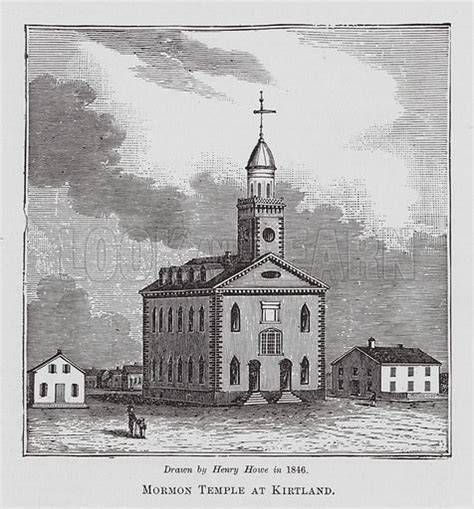
He also served on the Kirtland Temple dedication committee and participated in all the Kirtland endowment ceremonies that included solemn assemblies, sacred washings and anointings, and a mighty outpouring of God’s Holy Spirit as on the Day of Pentecost at the dedication services.
Conflict, excommunication, and reconciliation
The life story of William W. Phelps is one of faith, despair, forgiveness, and love. In Missouri, Brother Phelps experienced some of his greatest challenges.
Unfortunately, Phelps and most of the other original Missouri Church leaders left the Church in 1838 over disagreements over how to deal with complex leadership issues and jealousies.
However, land speculation and pride entered his heart. By March 10th, 1838, W. W. Phelps was stripped of his call to the presidency of the Church in Missouri and excommunicated.
He was excommunicated on 10 March 1838. He was reconciled with the Church before March 1839, excommunicated again in March 1839, and later moved to Dayton, Montgomery County, Ohio, before March 1840.
After the excommunication, Phelps and John Whitmer fought against the Saints, stirring up opposition, urging lawsuits, spreading rumors, publishing slanderous reports, and generally fueling the anger of the mobs.
At one stressful point in 1839, Phelps had a falling out with Joseph Smith and was excommunicated. Yet Phelps maintained his testimony of the Book of Mormon and his faith in the Restoration of the gospel of Jesus Christ.
William moved his family to Dayton, Ohio, in early 1840 when he met Elders Orson Hyde and John Page, who were passing through Dayton on their mission to Palestine. They encouraged him to write to Joseph, asking him to forgive him.
William gathered his courage and wrote Joseph: “I know my situation, you know it, and God knows it, and I want to be saved if my friends will help me. I have done wrong and I am sorry. I ask forgiveness in the name of Jesus Christ of all the Saints, for I will do right, God helping me.”
Joseph Smith answered him: “Dear Brother Phelps: I must say that it is with no ordinary feelings I endeavor to write a few lines to you in answer to yours . truly our hearts were melted into tenderness and compassion when we ascertained your resolves, etc.”
Joseph continued: “I can assure you I feel a disposition to act on your case in a manner that will meet the approbation of Jehovah, (whose servant I am), and agreeable to the principles of truth and righteousness which have been revealed.”
He added: “Inasmuch as long-suffering, patience, and mercy have ever characterized the dealing of our Heavenly Father towards the humble and penitent, I feel disposed to copy the example, cherish the same principles, and by so doing be a savior of my fellow men.”
Joseph acknowledged the pain caused by Phelps’s behavior: “It is true, that we have suffered much in consequence of your behavior . when you turned against us.” He nevertheless concluded: “Believing your confession to be real, and your repentance genuine, I shall be happy once again to give you the right hand of fellowship, and rejoice over the returning prodigal. For friends at first, are friends again at last.”
Phelps was rebaptized in late June 1840. He worked to gather enough funds to journey to Nauvoo, Illinois. Finally, he was able to do so and, in great poverty, began his journey home.
“One evening, as we plodded along the road that led into Nauvoo, Joseph spied me at a distance. He left his dinner and ran to greet me. We fell on each other’s necks and embraced and wept.”
Return to Church service
When he returned to the Church in Nauvoo in late 1841, Phelps became an indefatigable aide to Joseph Smith. He resumed his writing for Joseph and the Church.
He returned to Kirtland by May 1841. On 23 May 1841 he was appointed to serve a mission to the eastern United States, and on 2 October 1841 in Kirtland he was appointed recorder of Church licenses.
Phelps preached as he traveled from Missouri to Ohio. He left his family in Clay County, Missouri, arrived in the field on May 16, 1835, and helped with the Doctrine and Covenants in Kirtland, Ohio.
He was appointed at a conference held in Kirtland, Ohio, on May 23, 1841, to labor in Ohio and other states. He moved to Nauvoo by November 1841.
With Willard Richards, Phelps helped compile the official History of the Church. He served on the city council and as clerk of the mayor’s court.
Phelps became Joseph Smith’s chief political clerk and, as such, was the ghostwriter for Joseph’s principal political documents, including the platform for his presidential campaign.
Most significantly, even though he was not the nominal editor, Phelps was the chief day-to-day administrator of the Nauvoo printing office in writing editorials, presidential campaign pieces, and many doctrinal articles in the name of Joseph Smith.
He acted as clerk to Joseph Smith and assisted John Taylor in editing Times and Seasons and Nauvoo Neighbor. He assisted Willard Richards in writing Joseph Smith’s history by January 1843.
He was elected fire warden and mayor’s clerk on 11 February 1843 and served as a member pro tem of the Nauvoo City Council. He was admitted to the Council of Fifty on 11 March 1844.
Church administration in Nauvoo
Phelps was also among the Church leaders involved with the Prophet in receiving and administrating the endowment of the holy priesthood prior to completing the temple. He also was selected as a key member of the Council of Fifty.
Phelps was intimately involved with the Nauvoo Expositor affair, the destruction of a press that published an issue critical of Mormon leaders. This destruction spiraled downward to the Prophet’s jailing and assassination in Carthage.
With Willard Richards, Phelps helped hold the Nauvoo Saints together in peace following the martyrdom until all the Apostles could return from their mission in the East.
Phelps also gave Joseph Smith’s eulogy. He visited Joseph Smith in Carthage Jail early in the morning on the day the Prophet and Hyrum were murdered. Two days later, it was William W. Phelps who delivered the funeral sermon to over ten thousand grieving souls.
In the aftermath of the martyrdom, he used his considerable influence in August and September 1844 to sustain the Twelve Apostles as leaders during the succession crisis.
He assisted the Twelve in directing Nauvoo when enemies sought to drive the Saints out of Illinois; specifically, he helped Brigham Young and the Twelve conduct over five thousand Saints through their endowment ceremonies in the temple.
Phelps also stayed behind in Nauvoo to perform necessary business after the main body of the Saints began their trek to the West.
Hymns and religious writing
Throughout his life, Phelps wrote many hymns for the Latter-day Saints, many of which are still sung today. His magnificent hymns of the Restoration are among the primary reasons members of the Church have long held a fascination for him.
He wrote several hymns, including “The Spirit of God.” He also later wrote the hymn “Praise to the Man,” expressing his testimony of Joseph as a prophet of God.
Phelps wrote a song chosen by Emma Smith and published in the first hymnbook that Latter-day Saints continue to sing: “O God, the Eternal Father.”
Its opening verse reads: “O God, th”Eternal Father, Who dwells amid the sky, In Jesus’ name we ask thee To bless and sanctify, If we are pure before thee, This bread and cup of wine, That we may all remember That offering divine.”
The second verse reads: “That sacred, holy off”ring, By man least understood, To have our sins remitted And take his flesh and blood, That we may ever witness The suff”ring of thy Son, And always have his Spirit To make our hearts as one.”
The third verse reads: “When Jesus, the Anointed, Descended from above And gave himself a ransom To win our souls with love-With no apparent beauty, That man should him desire-He was the promised Savior, To purify with fire.”
The final verse reads: “How infinite that wisdom, The plan of holiness, That made salvation perfect And veiled the Lord in flesh, To walk upon his footstool And be like man, almost, In his exalted station, And die, or all was lost.”
A few weeks after Joseph Smith’s death, Phelps authored these words: “Praise to the man who communed with Jehovah! Jesus anointed that Prophet and Seer. Blessed to open the last dispensation, Kings shall extol him, and nations revere.”
Publishing the doctrines of the Restoration
W. W. Phelps promulgated all of the basic doctrines of the early Restoration through his printing and publishing work with The Evening and the Morning Star, the Latter Day Saints’ Messenger and Advocate, the Times and Seasons, the Wasp, the Nauvoo Neighbor, and the Deseret News.
He also contributed significantly to the publishing of God’s holy word: printing numerous chapters from the Book of Mormon and of Joseph Smith’s revelations in The Evening and the Morning Star, at a time when copies of the Book of Mormon were scarce and there were not yet any printed copies of the latter-day revelations.
His publishing work also included the Book of Commandments, two editions of the Doctrine and Covenants, the “Prophecy of Enoch,” Moses 5-7 in the Pearl of Great Price, the first hymnal Sacred Hymns, and the Book of Abraham.
In all of his writings, he worked hard to put forward the doctrines of the Restoration. He became one of the early Church’s hymn writers, and he wrote extensive essays.
His essays span across a myriad of gospel topics: the importance of the Book of Mormon and all forms of scripture, the significance of revelations to Joseph Smith, the gathering of Israel, the building up of Zion, the signs of the times, preparing for Christ’s Second Coming, living the gospel in purity, the importance of eternal marriage, the plan of salvation, the priesthood, the government of God, and all the gospel ordinances, including the ordinances in the “House of the Lord.”
Phelps’s teachings about the Book of Mormon
Phelps became one of the staunchest advocates of the Book of Mormon and all other revelations subsequently given through the Prophet Joseph Smith. His early role as an expert printer of Church materials ensured that he played no small role in promulgating the teachings of the Book of Mormon and the latter-day revelations to both the Saints and the world.
Reflecting later on the impact the Book of Mormon had on his life, Phelps wrote: “Whenever I have meditated upon the book of Mormon, and looked ahead at the glory which will be brought to pass by that, and the servants of God, I have been filled with hope; filled with light; filled with joy, and filled with satisfaction.”
He continued: “What a wonderful volume! what a glorious treasure! By that book I learned the right way to God; by that book I received the fulness of the everlasting gospel; by that book I found the new covenant; by that book I saw that the Lord had set his hand the second time to gather his people, and place them in their own land; and by that book [I] began to unfold the mysteries of God and I was made glad.”
He asked, “Who can tell his goodness or estimate the worth of such a book?” and declared, “I think the saints-all honest men, who read the book of Mormon for the truth’s sake, will agree with me in saying, that it is one of the best books in the world.”
Phelps would go on to declare, “The book of Mormon, is just what it was when it first came forth-a revelation from the Lord. The knowledge it contains is desirable; the doctrine it teaches is from the blessed Savior; its precepts are good; its principles righteous; its judgments just.”
Later service in the western Church
Phelps migrated to the Salt Lake Valley in 1848. In Deseret, he continued his influence in the Church, but primarily as a senior statesman.
He was called to fill a special mission to the different branches of the Church. At the time of this assignment, he was married, lived in Winter Quarters, Nebraska Territory, and held the priesthood office of high priest.
His special mission was described as a proselytizing assignment to different branches of the Church. The assignment began when the organization was formed and ended between 20 and 24 September 1848.
Phelps went to Boston to obtain a newfangled press, which the Deseret News ended up using for over forty years. He was a founding member of the board of trustees for the University of Deseret.
He served as Speaker of the House in the Utah Territorial legislature, helped develop the Deseret Alphabet, served as Utah’s chief weatherman, published the Church’s official almanac, and wrote many articles and poems for the Deseret News.
He served as counselor to Parley P. Pratt on an exploration mission to southern Utah Territory in November 1849. He was admitted to the Utah territorial bar in 1851 and was a member of the Utah territorial Legislative Assembly from 1851 to 1857.
Death and legacy
William W. Phelps died in Salt Lake City, Salt Lake, Utah Territory, on 7 March 1872, at the age of 80.
His legacy includes his work as editor of the Church’s first newspaper, his contributions to the Book of Commandments and the Doctrine and Covenants, his leadership in Missouri, his service in Kirtland and Nauvoo, his political and historical writing, and his large body of hymns.
The life story of William W. Phelps is one of faith, despair, forgiveness, and love. His history combines intellectual preparation, religious conviction, serious conflict, repentance, reconciliation, and sustained service to the Restoration.
After wading through much tribulation, repenting nigh unto death, Phelps wrote: “The Lord in mercy hath seen fit to snatch me out of an everlasting burning, and I am born of God.”