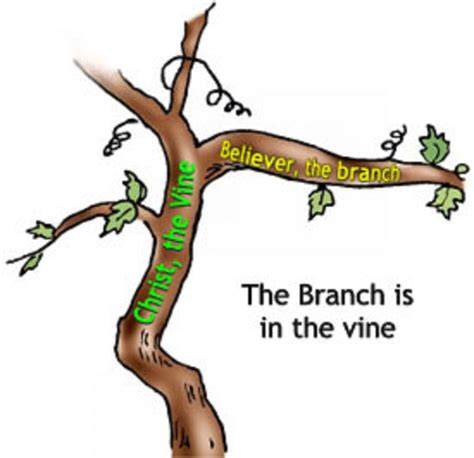
Abiding in Christ means remaining permanently connected to Jesus in a trusting, intimate relationship, receiving and trusting all that God is for us in Christ. Jesus is the vine, believers are the branches, and the power to bear fruit flows from Jesus when we stay vitally connected to Him.
Jesus said, “Remain in me, as I also remain in you. No branch can bear fruit by itself; it must remain in the vine. Neither can you bear fruit unless you remain in me.” Abiding in Christ is therefore essential to salvation and a growing walk with God, because “apart from me you can do nothing.”
John 15 and the Call to Abide
“Remain in me, as I also remain in you. No branch can bear fruit by itself; it must remain in the vine. Neither can you bear fruit unless you remain in me. I am the vine; you are the branches. If you remain in me and I in you, you will bear much fruit; apart from me you can do nothing. If you do not remain in me, you are like a branch that is thrown away and withers; such branches are picked up, thrown into the fire and burned. If you remain in me and my words remain in you, ask whatever you wish, and it will be done for you. This is to my Father’s glory, that you bear much fruit, showing yourselves to be my disciples. As the Father has loved me, so have I loved you; now remain in my love. If you keep my commands, you will remain in my love, just as I have kept my Father’s commands and remain in his love.” John 15:4-10 NIV
Some versions use “abide” instead of “remain.” “Abide in Me, and I in you. As the branch cannot bear fruit of itself, unless it abides in the vine, neither can you, unless you abide in Me. I am the vine, you are the branches. He who abides in Me, and I in him, bears much fruit; for without Me you can do nothing.”
The Scripture emphasizes the word “remain.” Abiding in Christ is key to bearing fruit. Unless we do so, we will bear no fruit, and we put ourselves at risk for destruction.
What Does Abiding in Christ Mean?
In the language of the New Testament, abide is the ordinary word for “stay” or “continue” or sometimes “dwell.” Jesus meant: “Stay in me. Continue in me. Keep me for your dwelling.” It is the lifelong extension of encountering Jesus.
Abiding in Christ means making Him the object of your faith. True faith accepts, receives, and rests upon Christ alone for justification, sanctification, and eternal life. We abide in Christ by exercising faith in Him, and nothing else-not family connections, moral strivings, or religious experiences.
Abiding means that we dwell in Christ. We do not visit Him intermittently. Instead, we sit permanently and learn from Him as we consistently partake of His love, joy, peace, and other gifts.
Abiding in Jesus means staying vitally connected to the life-giving, power-giving, fruit-producing branch, namely, Jesus. It means receiving and trusting all that God is for us in Christ. Believing is a receiving of Christ into the soul, welcoming Him, trusting Him, drinking and eating and savoring Him.
Abiding in Christ is the essence of the promise of the New Covenant-the God who commands us from the outside in the Old Covenant now comes to live within us in the New. Christianity is not a self-help religion, but a relationship with God through Jesus Christ that brings new life by the Spirit.
Union with Christ and Communion with Christ
No more profound and theologically rich description of what it means to be a Christian can be found than this: by faith we have been united with Jesus Christ. This spiritual union is the means by which space and time are transcended and we share in all the benefits of Jesus’ work on our behalf.
Through our union with Christ, what is true of Him becomes true of us. By the work of the Spirit, Christ lives in us and we in Him, and we partake of all His riches. A Christian is “a new creature in Christ,” yet for most believers this new status too often remains an unclaimed treasure.
Our union with Christ must be experienced-we must abide in Christ. The fact of our union with Him is clear: “I am the vine, you are the branches.” But this union requires a continuing action: “Abide in me as I abide in you.” Our objective state calls for a subjective experience.
We are united to Christ by faith through the gracious work of God’s Spirit. Now we must seek to live out that union in a relationship of communion with God. Our union precedes our communion and provides the sure and certain basis for it, grounded entirely in the saving work of God.
Our experience of communion can fluctuate with the inconsistencies of our efforts to engage in those activities which foster that relationship. But God’s love cannot fluctuate, for we have a union with Christ that nothing can separate.
Abiding as a Shared Life
Central to this biblical presentation of our union with Christ is the notion of a shared life: “Just as the living Father sent me and I live because of the Father, so the one who feeds on me will live because of me.” Paul puts it even more forcefully: “I have been crucified with Christ and I no longer live, but Christ lives in me.”
Paul is not declaring the loss of his own personal identity. Though he says “I no longer live,” that statement is immediately qualified in the following sentence which affirms “the life I live in the body.” Christ does not live instead of Paul, but Christ lives in and through him.
This union with Christ must not be confused with ideas of the Hellenistic mystery cults, some of which taught a loss of individuality or a pantheistic absorption of the believer into the being of the divine. The teaching of the New Testament maintains throughout a moral dimension that assumes individual responsibility.
It is a relationship that always begins with the divine initiative, but which calls for a human response: “Abide in me…abide in my word…abide in my love.” In Philippians 2:12 Paul clearly calls us to act: “Work out your salvation with fear and trembling,” but he immediately recognizes the mysterious divine activity which must be presupposed: “for it is God who works in you to will and to act according to his good purpose.”
The Father and the Son as the Divine Model
John’s Gospel uses the phrase “to abide in” with a personal object to express the relationship of Jesus to the Father and of both to believers. The clear priority, however, must be given to Jesus’ mutual indwelling with the Father: “Don’t you believe that I am in the Father and the Father is in me? The words that I speak to you are not from myself, but the Father who abides in me does his work.”
This is a dynamic relationship which energizes the ministry of Jesus and is inexplicable without it. Out of this personal union come His words and His works, which manifest the character of God.
The Son obeys the Father and imitates the Father, but the Father imparts His life to the Son: “I live because of the Father.” Together they share this common life and are united in love.
This relationship between the Father and the Son becomes the model and source of the relationship between Jesus and His disciples. Just as the Father has loved Jesus, so Jesus has loved His disciples, and they are to abide in His love.
Just as Jesus has remained in His Father’s love by obeying His commands, so the disciples are to abide in Jesus’ love by obeying His commands. And as they abide in Him, Jesus will convey His life to them, even as a vine gives life to its branches.
The one who loves Jesus will be loved by the Father, and together the Father and the Son will make their abode with him. “I have given them the glory that you gave me, that they may be one as we are one: I in them and you in me.” This is the perfect unity that results from the mutual indwelling of the Father, the Son, and Christian believers.
The Fruit of the Spirit
“But the fruit of the Spirit is love, joy, peace, forbearance, kindness, goodness, faithfulness, gentleness and self-control. Against such things there is no law. Those who belong to Christ Jesus have crucified the flesh with its passions and desires. Since we live by the Spirit, let us keep in step with the Spirit.” Galatians 5:22-25
The fruit of the Spirit is not behavior modification. Nor is it an attempt at becoming a better version of yourself. Godly fruit does not originate from our minds and does not hinge on our will-power or tenacity.
The fruit of the Spirit comes from God, through Christ, by the Holy Spirit. Therefore, you can try but will fail, at morphing yourself into the perfect picture of love, joy, peace, and other spiritual qualities.
Irrespective of your sincerity, you cannot motivate yourself to successfully walk in love. It is only possible through the indwelling power of the Holy Spirit consistently prompting, leading, and guiding you. Relying on yourself is a recipe for frustration and failure.
The Holy Spirit, also called the Spirit of Christ, establishes His dwelling place in our spirits at the point of salvation. We are then made new creatures and receive eternal life, which is the rich, abundant divine nature of God: the fullness of His love, joy, power, and ability.
Therefore, the fruit of the Spirit is the result of the union between the Spirit of God and the spirit of man. “But whoever is united with the Lord is one with him in spirit.” The fruit of the Spirit is Christ in us, expressed through us, to the world around us.
To put it another way, the fruit of the Spirit is the outward expression of God’s nature within. It is the way of life for those who are led by the Spirit of God. They are signs of growth and maturity in a Christian and the product of a Spirit-controlled life.
Abiding and Bearing Fruit
The main point of the analogy of the vine and branches is that power to bear fruit-that is, power to live a fruitful life of Christ-like love-flows from Jesus if we stay vitally connected to Him.
Then we are like a branch connected to the vine so that all the life-sustaining, fruit-producing sap can flow into it. Jesus is explicit in claiming to be the power that we need to live fruitful lives. He says, “Apart from me you can do nothing.”
If we are not united to the vine so that Christ’s life is flowing into us, then His words, His love, and His joy will be utterly and totally barren. Nothing of any lasting value will come from us.
Abiding and fruit-bearing confirm us. Fruitfully abiding with life, love, and joy coursing into us through the connection between us and the vine proves we are disciples.
Fruit-bearing and commandment-keeping are the result of abiding. If we abide, we bear fruit. Fruit is the result of our being connected to the vine. They are not the same thing.
So the answer to the question, “How do we abide in Jesus?” is not “by bearing fruit” or “by keeping the commandments.” That misses the whole point. The point is to discover how to bear fruit. The answer is, by abiding in Jesus.
Abiding in Christ by the Holy Spirit
The fruit of the Spirit comes from God, through Christ, by the Holy Spirit. The Holy Spirit is the sap that runs through the vine and gives life to us, the branches.
The branches cannot survive without consistent nourishment from the life of the vine. Therefore, when we abide in Christ and remain plugged-in to the life-sustaining power of the Holy Spirit, we bear fruit as a result of our unbroken communion with Christ.
As we abide in Christ, the Holy Spirit ignites our spirits and gives us the power to obey God. As I abide in Christ and dwell in His presence, I get to know Him more intimately. When He speaks, I can discern His voice.
As I abide, I am led by the Holy Spirit and empowered by the Word to say “no” to my flesh and “yes” to God. I exchange my anxiety for His peace, my fears for His power, and the works of my flesh for the fruit of His Spirit.
Our union with Christ is indeed “a profound mystery.” By the work of the Spirit we are united with our Savior, and it is equally by the work of the Spirit that we experience communion with Him: “We know that we abide in him and he in us, because he has given us of his Spirit.”
Like a sailor raising his sails, we must do all we can to catch the wind, but it is the wind that moves the ship. So in our efforts to abide in Christ, it is always God’s Spirit who must blow as a gentle breeze, enabling us to experience the divine life that is ours in Christ.
Abiding in Christ Through Faith
The essential meaning of our active abiding is the act of receiving and trusting all that God is for us in Christ. Believing is an attachment to Jesus, a coming to Jesus, and a receiving from Jesus.
It is trusting in Jesus, remaining in fellowship with Jesus, connecting to Jesus so that all that God is for us in Him is flowing like a life-giving sap into our lives.
Abiding is believing, trusting, savoring, resting, receiving, and cherishing Christ. Believing in Jesus as our living water means drinking the water-savoring it and being satisfied with it.
This daily ever-renewed satisfaction in Jesus is the key to bearing fruit. We receive His life, drink it, savor it, and satisfy our souls with it.
Abiding in Jesus’ Love
Jesus said, “As the Father has loved me, so have I loved you; now remain in my love.” Abiding in His love means continuing to believe, moment by moment, that we are loved.
Not to abide in Jesus’ love would mean that we stop believing that we are loved by Jesus. We look at our circumstances-perhaps persecution or disease or abandonment-and we conclude that we are not loved by Jesus anymore.
Everything that comes into our lives under Jesus’ sovereign authority is part of His love for us. If it is pleasant, He says, “That’s how my Father cares for the birds of the air and the lilies of the field; how much more you!”
And if it is painful, He says, “Fear not, the worst that can happen is death, and I have overcome death. I will be with you to the end. And you will be repaid at the resurrection of the just.”
Abiding in Jesus means trusting that this is true-and true for you. It means living on this truth moment by moment.
Abiding in the Word
“If you abide in Me, and My words abide in you, you will ask what you desire, and it shall be done for you. By this My Father is glorified, that you bear much fruit; so you will be My disciples.” John 15:7-8 NKJV
Jesus and the Word are the same; therefore, to abide in Christ is to abide in His Word. A person who abides is consistently being fed and nourished by the Word and is constantly pursuing obedience to God’s Word.
As I remain in Christ and stay connected to Him through diligently studying and meditating on the Word, He teaches me to renew my mind and change the way I think.
I have found that when I disconnect from Christ, my thoughts wander. But as I remain in Him, He teaches me to deliberately think of His Word instead of the random thoughts that come into my mind.
As we remain in Christ, His Word gives us life. A believer who does not meditate on His Word will not bear fruit. In Psalm 1:2-3, the person who consistently meditates on the Word is likened to “a tree planted by streams of water, which yields its fruit in season and whose leaf does not wither.”
Similarly, “Abide in my word” cannot mean merely “Keep my commandments.” Rather it means, “Keep on trusting my word. Keep on trusting what I have revealed to you about myself and my Father and my work.”
The result of abiding in Jesus’ word is being set free. Freedom from sin is the fruit of abiding in the word. Not sinning is the fruit, not the definition, of abiding in the word.
We are not idle in the battle to abide in Jesus. Abiding in Jesus-in His love and in His word-is trusting that He really is loving us at every moment and that everything He has revealed about Himself and His work for us and our future with Him is true.
How to Have a Healthy Bible Study
One crucial aspect of abiding is having a healthy Bible study. The overall purpose of studying the Bible is to get to know the author more intimately. In that intimacy, we will be more tuned into the voice of the Good Shepherd, Jesus.
Therefore, we will hear more clearly where He wants us to grow and go as He does His pruning to make us more fruitful in our lives and the world around us.
If you want to grow strong and healthy spiritually, you must study your Bible. The key to a healthy Bible study is to eat your PEAS.
P - Prep and Prayer
The first step is to prep for success. Start by choosing a consistent time and place. Morning is the suggested time because your mind is fresh and alert.
You also must give yourself a reasonable amount of time; the more, the better, but a Bible study must be at least 30 minutes to an hour. Note that devotion and study times are not the same thing. I encourage consistent Bible study and devotions as often as you can.
Choose a place you can return to each day that is comfortable and free from distraction. Once you have your time and place, begin with prayer.
Pray Jeremiah 33:3 over your time; that God will show you great and mighty things. Pray 1 Corinthians 2:10 over your time, that the Holy Spirit will search out and reveal the depths of God to you.
Beginning with prayer sets your heart and mind in the right space to receive what God has to say to you through His Word.
E - Engage the Bible
A healthy Bible study must be an engagement and not simply a reading. You want your heart and mind renewed through your encounter with the Word.
Engage the text by approaching it with curiosity and questions. I recommend journaling during your reading. Begin this phase with your Bible; support it with access to different translations, but have a primary Bible you use.
Study through the Bible systematically, verse by verse, or chapter by chapter, as this will help you study and recall scriptural truths and allow the entire narrative of the Bible to be understood.
Ask these questions as you read: When was this written? Who was it written to? What does it say to them? Does scripture talk about this anywhere else? What does it say about God?
Have study resources accessible, like a lexicon, concordance, Bible dictionary, and original language resources. Fortunately, these are all readily available online so you can have those at your fingertips with one device.
A - Apply It to Yourself
Make your time a heart journey versus a head journey by asking, “What does this say about me or to me?” Make it personal because God wrote it to be personal.
As a disciple of Jesus, the Bible should not remain merely information. The Word calls for a response that reaches the heart, shapes the mind, and directs the life.
S - Set a Plan
How often do we hear God speak to us directly from the Word, through a sermon or reading the Bible, and we do nothing with what He has said?
In Luke 11:28 and Psalm 128:1-2, God tells us that blessing comes from obedience. We cannot expect the blessings of God’s promises if we don’t obey God’s Word.
Set a specific action plan for the truth God has revealed to you. Commit to growing spiritually stronger and healthier by eating your PEAS daily.
Abiding Through Obedience
“If you keep My commandments, you will abide in My love, just as I have kept My Father’s commandments and abide in His love.” John 15:10 NKJV
Abiding in Christ goes hand in hand with obeying His commands; the two are inseparable. “If we love him, we will keep his commandments.”
As we abide in Christ by feeding daily on the Word and pursuing obedience to all His commands, the Holy Spirit empowers us to put flesh away like a filthy garment and clothe ourselves with the new life we have in Christ.
Because our union with Christ means a shared life with One who is holy, the experience of that life is incompatible with sin. Therefore, we cannot expect to grow in Christ apart from obedience to His commands.
Obedience, in fact, becomes the key to love. “As the Father has loved me,” Jesus said, “so have I loved you. Now remain in my love. If you obey my commands, you will remain in my love, just as I have obeyed my Father’s commands and remain in his love.”
To share in the life of God is to share in His love, for “God is love. Whoever abides in love abides in God, and God abides in him.”
Putting on the New Life in Christ
“Rather, clothe yourselves with the Lord Jesus Christ, and do not think about how to gratify the desires of the flesh.” Romans 13:14
“You were taught, with regard to your former way of life, to put off your old self, which is being corrupted by its deceitful desires to be made new in the attitude of your minds and to put on the new self, created to be like God in true righteousness and holiness.” Ephesians 4:22-24
“Do not lie to each other, since you have taken off your old self with its practices and have put on the new self, which is being renewed in knowledge in the image of its Creator.” Colossians 3:9-10
As we abide in Christ, the Holy Spirit empowers us to put away the works of the flesh and live from the new identity we have received in Christ.
Abiding Through Prayer
In response to the Word we must also go to God in prayer. Wasn’t this the constant practice of Jesus Himself? He recognized His own dependence on the Father, and His life of prayer was a visible expression of that dependence.
Finally, we abide in Christ when we pray. In prayer, we humbly throw ourselves into the arms of our beloved Savior.
First, by receiving our salvation. Then, by yielding daily to God’s Word, meditating on the Word, spending time in prayer, praise, worship, practicing His presence, and obeying His commands.
As I abide in Christ and dwell in His presence, I get to know Him more intimately. When He speaks, I can discern His voice. We talk and commune.
Abiding Through the Means of Grace
To help us, God has given us various “means of grace,” which are simply disciplines that help us to live in this truth.
Nothing can replace the regular reading of God’s Word. We express our dependence on Christ’s power by going to His Word-by reading it, studying it, meditating on it, memorizing it-drawing upon its comfort, its truth, and its guidance.
Through that Word our minds are transformed and renewed. If Christ is to dwell in us, so must His Word.
Also given to us to help us abide in Christ are the sacraments or ordinances. Here the truth of our union with Christ becomes visible and tangible in our going down and rising in the water by which we are “baptized into Christ” and in our eating of the bread and the drinking of the cup in the communion meal by which we feed on Christ in our hearts by faith.
These physical acts reinforce the spiritual reality of our union with Christ and through them our faith is confirmed and nourished.
These sacramental practices point us to the importance of our fellowship with other believers as a means by which we experience our union with Christ.
Inasmuch as the church is the body of Christ, indwelt by His Spirit, our interaction with one another becomes a means of engaging with Christ Himself. Through the ministry of others in the body, I receive Christ’s instruction, His encouragement, His rebuke, and His comfort.
Abiding in Fellowship with Other Believers
Genuine Christians abide in Christ. They cling tightly to their crucified, risen, and ascended Savior. It’s what believers do. Why? Because apart from Jesus Christ, we can do nothing.
Indeed, apart from union and communion with Christ-by grace alone through faith alone-we are all spiritually powerless. On our own, we are dead in our sin and unable to produce spiritual fruit.
The early church believed this, which is why they were steadfastly “devoted to the apostles’ teaching, the fellowship, the breaking of bread, and the prayers.”
When Christians sit attentively under the faithful reading and preaching of the Scriptures, they abide in Christ. We meet Christ in the Word. Indeed, in His Word, Jesus lays hold of us and we lay hold of Him.
Abiding Through Pruning, Suffering, and Affliction
We need encouragement and comfort, for our gracious God sometimes uses more severe means of grace in our lives: “every branch that does bear fruit he prunes so that it will be even more fruitful.”
Suffering can be a fruitful experience, as we allow our lives to be shaped by it, and as we share in the suffering of Christ Himself.
The branches are being cared for both internally by the life of Christ flowing into us and externally by the vinedresser who prunes us.
Pruning means cut. The branches are being cared for to make them maximally fruitful both by internal life flowing to us from the vine and by a vinedresser, who with His very painful scissors or saw cuts us and hurts us.
By these painful providences in life we experience the fullest possible impact of the inner life of Christ. We are being cared for both internally by Christ’s life coursing into us by the Spirit and externally by the providences of a loving Father who knows how to discipline His children to make them very, very holy.
Abiding Is a Lifelong Continuation
Jesus’ commands are for a lifetime. He does not command a once-for-all decision to repent or come or believe or love or listen. Rather He commands that we go on repenting, coming, believing, loving, and listening.
The transformation of repentance continues. Coming to Jesus again and again continues. Believing in Him hour by hour continues. Listening to His word as the daily source of spiritual life continues.
Jesus commands the engagement of our minds and hearts every day of our lives. A transaction with Jesus in the past that has no ongoing expression in our lives was a false transaction.
When Jesus said, “If you abide in my word, you are truly my disciples,” He meant that if we don’t abide, we are not truly His disciples. The opposite of true disciples is false disciples.
One way that Jesus taught the necessity of an ongoing devotion was to command, “Abide in me.” It is the lifelong extension of encountering Jesus.
Jesus Keeps His People Abiding
As easy as it seems to abide, to stay implanted, to drink, to rest in Jesus, the truth is that we are often tempted to find our life-giving sap from another plant.
Besides our own sinful tendencies, the devil himself wants to snatch us out of the vine, and we must pray daily, Jesus said, that God would “deliver us from evil.”
Therefore, we need to remind ourselves that Jesus does not leave us to ourselves. Even though He commands us to abide in Him-and we are responsible to abide there, and guilty if we don’t abide-nevertheless He Himself keeps us there.
We would not abide there without His crucial keeping. Jesus said that no one can snatch His own sheep out of His hand.
“My sheep hear my voice, and I know them, and they follow me. I give them eternal life, and they will never perish, and no one will snatch them out of my hand. My Father, who has given them to me, is greater than all, and no one is able to snatch them out of the Father’s hand.”
Jesus prayed to His Father that God would cause us to keep on abiding in His name. So it is God who does the decisive work in keeping us in the vine.
Jesus Himself illustrated how He prays for His own disciples and preserves them from falling away. He predicted Simon Peter’s three denials on the night before His death, but then He said, “I have prayed for you that your faith may not fail. And when you have turned again, strengthen your brothers.”
Jesus prayed for Simon’s keeping and knew it would happen. He said, “When you have turned,” not “If you turn.” Simon’s faith faltered, and he sinned by denying Jesus, but his faith did not fail utterly. He was not cut off from the vine.
We are not idle in the battle to abide in Jesus. But in the end the battle is assured because it does not depend finally on us. Jesus wins. No one can snatch us out of His hand. He and His Father are greater than all.
Abiding and Perseverance
Some branches appear to be truly in the vine but are not. They have a kind of attachment, but it is not real and life-giving. Judas is the clearest example in Jesus’ ministry.
He was “attached” to Jesus for three years: there was a kind of influence flowing into him, and he received many blessings from Jesus. But he was not truly attached in a life-giving way.
So eventually he was “taken away”-not away from true life, but away from the artificial attachment that looked real for a season but was not.
John provides the category for understanding a kind of superficial, external attachment to Jesus that is not a saving attachment. This can result in a fruitless, empty life where there’s no sap coursing, and they are broken off-that is, fall away from the church-but they never were of us.
When God chooses someone and they hear His voice and He takes them to be His children, that never changes. “I give them eternal life, and they will never perish, and no one will snatch them out of my hand.”
A Practical Pattern for Daily Abiding
To abide in Christ is to recognize the gospel truth of who we are in Him as reality and to live in the light of it. We must constantly call to mind the truth of who we are in Christ-that we are chosen in Him, holy and dearly loved children of God.
“See that what you have heard from the beginning remains in you. If it does, you also will remain in the Son and in the Father.”
As we abide in Christ and dwell in His presence, we get to know Him more intimately. We hear His voice more clearly, exchange anxiety for peace, and learn to recognize who we are in Him.
When pressure squeezes us, His fruit spills out. As we remain in Him, His Word teaches us to deliberately think of His truth instead of the random thoughts that come into our minds.
As we abide in Christ, the Holy Spirit empowers us to put flesh away like a filthy garment and clothe ourselves with the new life we have in Christ.
- Receive salvation through faith in Christ.
- Remain in Jesus’ love by trusting His promises.
- Read, study, meditate on, and memorize God’s Word.
- Pray, praise, worship, and practice God’s presence.
- Obey Christ’s commands as an expression of love.
- Participate in fellowship with other believers.
- Receive encouragement, instruction, rebuke, and comfort through the body of Christ.
- Submit to the Father’s pruning and allow suffering to shape your life.
- Rely on the Holy Spirit rather than self-effort.
- Set a specific action plan for the truth God has revealed through His Word.
Questions for Personal Bible Study
- What does Jesus’ image of the vine and branches reveal about dependence on Him?
- What is the difference between being united to Christ and experiencing communion with Christ?
- Where are you tempted to rely on yourself instead of receiving life from Jesus?
- Which aspect of the fruit of the Spirit most needs to grow in your life?
- How does abiding in Christ differ from behavior modification?
- What does it mean in your circumstances to abide in Jesus’ love?
- What words of Jesus do you need to continue trusting today?
- How does regular Bible study renew your mind?
- What specific command of Christ is the Holy Spirit leading you to obey?
- What practical action will you take in response to what God has shown you?
- How might God be using pruning, suffering, or difficulty to make you more fruitful?
- How can fellowship with other believers help you remain in Christ?
An Eight-Session Study in John 14-17
Jesus’ words, “Abide in me and I in you,” found in John 15 in the parable of the vine and branches, are some of the most intimate words of comfort in the Bible, offering assurance of unity with Christ, abundant joy, and blessings to Christians throughout the centuries.
| Session | Theme | Scripture |
|---|---|---|
| Session One | A Life of Love | John 13:31-14:4 |
| Session Two | Which Way to God? | John 14:5-14 |
| Session Three | Looking Within | John 14:15-31 |
| Session Four | Being Connected | John 15:1-17 |
| Session Five | Overcoming Rejection | John 15:18-16:16 |
| Session Six | Anticipating the Future | John 16:16-33 |
| Session Seven | Defining Purpose | John 17:1-19 |
| Session Eight | Leaving a Legacy | John 17:20-26 |
Of all the final commands Jesus might have left with His followers, He said, “Love one another.” Jesus also said, “Do not let your hearts be troubled,” and He gave His disciples the blessing of peace.
In John 15, Jesus uses the word remain as He speaks of life on the vine. To remain in love is to continue receiving and trusting the love of Christ.
In John 17, Jesus prayed for His disciples and for those who would believe through their message: “May they also be in us so that the world may believe.”
The goal of abiding is the glory of God. “By this my Father is glorified, that you bear much fruit and so prove to be my disciples.” The whole design of our not being the vine, but being utterly dependent branches grafted into the vine, is to give glory to God.
What Does It Mean to Abide in Christ? (John 15 Explained Simply)
The whole design of depending on a vinedresser to manage the outward shape of our vine structure and our branch structure is so that God gets the glory for bringing it all about.
The bottom line is, hour by hour, let us receive and rest in and trust and savor and enjoy Christ’s word and love and joy while we submit externally to the merciful providences of God.