The Cathedral of the Immaculate Conception in Albany, New York, is the Bishop’s church in the Catholic Diocese of Albany and the Mother Church of the Roman Catholic Diocese of Albany. Built in 1852, it is recognized as the oldest neo-Gothic cathedral structure in the country and remains a parish community serving as the spiritual home to people from within and outside its inner-city setting.
The cathedral stands at 125 Eagle Street, Albany, NY 12202. It is a historic religious landmark, a working Catholic church, and an important part of Albany’s architectural and cultural heritage. The building is wheelchair accessible, and free parking is available courtesy of the Office of General Services of the State of New York in the parking garage located on the opposite corner of Madison.
Origins and founding of the cathedral
The Cathedral of the Immaculate Conception was established during a period when Albany’s Catholic community was growing rapidly. John McCloskey, the first Bishop of Albany, envisioned a Cathedral that would be prominent in the city and serve as a center for his flock. One way for this to be done was by building a great cathedral of which all could be proud.
The majority of Bishop McCloskey’s immigrant Irish flock came to America from Ireland during the harrowing Potato Famine. Being poor and uneducated, they became the object of much ridicule and scorn from the Yankee establishment. The “Know Nothing Movement” at the time was strong in its attacks on immigrants, especially Catholics. Bishop McCloskey realized that his first task was to help Catholics take their rightful place in their new country.
Bishop McCloskey commissioned a young Irish architect, Patrick Charles Keely, (1816-1896) of Brooklyn, New York, to design and build Albany’s Cathedral. Keely emigrated to New York in 1842 at age 26. He was commissioned to design a building that would express the importance of the Catholic community and provide a prominent spiritual center for the Diocese of Albany.
Cornerstone, construction, and dedication
Bishop McCloskey of Albany and Bishop John Hughes of New York laid the cornerstone of the Cathedral on July 2, 1848 with over ten thousand people watching in the rain. The cornerstone was laid in the presence of 10,000 people.
Bishop McCloskey campaigned throughout the United States and the world for funds to build this cathedral. The Cathedral was built for $250,000 ($6.5 million in today’s dollars). In just five years the nave and towers of the Cathedral were built by an immigrant work force, which included many volunteers.
Four years later, on November 21, 1852, people from all over Albany, from laborer to merchant king, gathered for the Cathedral’s dedication. The Cathedral was dedicated by Bishop McCloskey, Archbishop John Hughes of New York, and other major church leaders, on November 21, 1852.
When the Cathedral doors opened to the public in 1852, the structure was somewhat different than it looks today. The Cathedral’s trademark spires had not yet risen above the north and south towers. The Cathedral’s western wall stood where the choir stalls now stand and the Lady Window was set over the altar.
Neo-Gothic design and European inspiration
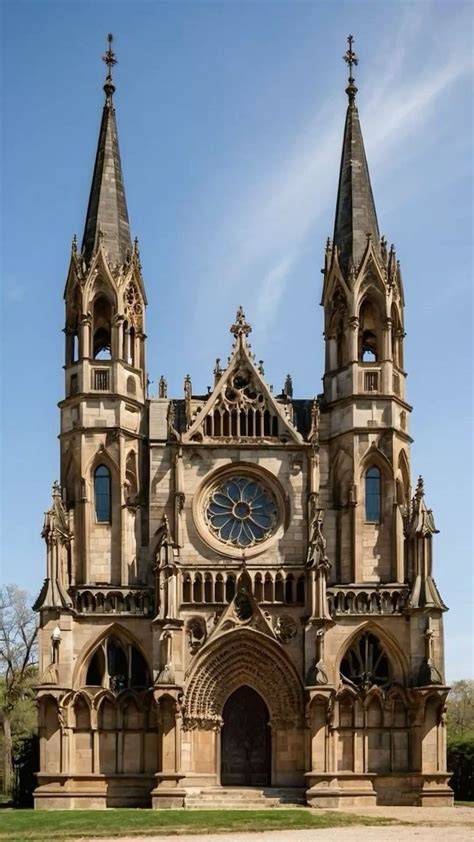
Patrick Charles Keely designed the cathedral in the neo-Gothic style. The Cathedral is modeled after the Cathedral of Cologne, Germany. Its design reflects the vertical emphasis, pointed forms, elaborate ornament, and dramatic interior height associated with Gothic architecture.
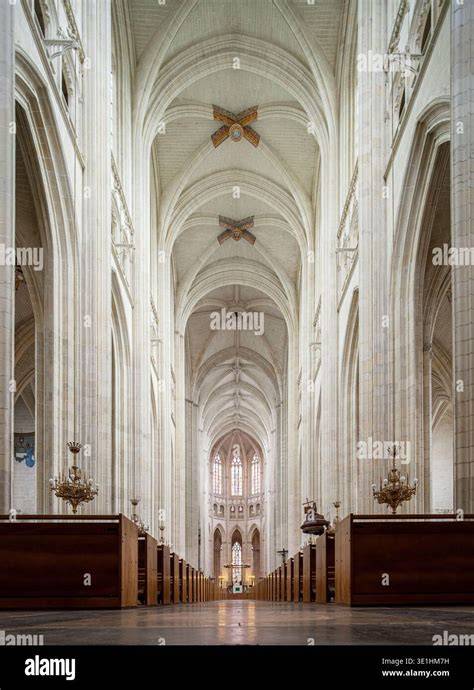
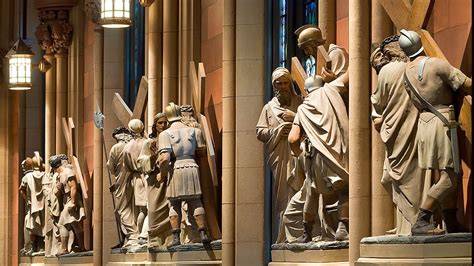
The magnificent ornate plasterwork, faux stone walls, carved ribs, ceiling bosses, vaulting and statuary all date from the original construction. These features form the principal architectural character of the interior and preserve the artistic intentions of the original design.
The cathedral’s composition includes a soaring nave, prominent towers, transepts, aisles, an apse, sacristies, carved portals, and extensive decorative work. The combination of stone construction, vertical towers, detailed interior surfaces, and large windows gives the building its distinctive neo-Gothic appearance.
Construction of the spires and installation of the bells
The Cathedral’s graceful north and south spires were built approximately twenty-five years apart. The north tower spire was completed in 1862. The Cathedral’s south tower spire was constructed in 1888.
The Cathedral’s bells were blessed by Bishop McCloskey on November 16, 1862. They were placed in the north tower and rang for the first time on the eve of the Feast of the Immaculate Conception, December 8, 1862.
The bells were cast in West Troy (Watervliet), New York, in the legendary Meneely Bell Foundry. Their installation added a distinctive public and liturgical presence to the cathedral, while the completed spires gave the building the recognizable skyline profile it has retained.
Later additions and consecration
Between 1891 and 1892, during the reign of Bishop Francis McNierney, the apse and adjoining sacristies were added, completing the Cathedral structure. These additions finished the building’s principal architectural composition and expanded the spaces associated with worship and liturgical preparation.
On November 16, 1902, marking the fiftieth anniversary of its dedication, the Cathedral was consecrated by Bishop Thomas M. A. Burke. The consecration formally marked the cathedral’s place as a major center of Catholic worship in Albany.
The cathedral through the twentieth century
Throughout the twentieth century until the mid 1960s, the Cathedral served as a parish church to some 3,000 households. In addition to its diocesan role, it functioned as a parish church for a large local congregation.
The Cathedral served as the parish church to Governor Alfred E. Smith. His daughter Catherine was married here in 1928. The Cathedral has witnessed many historic events: the consecration of bishops, the ordination of priests and deacons, the visits of Cardinals, the visit of the Archbishop of Canterbury the Right Reverend Michael Ramsey.
In the mid 1960s the construction of the Empire State Plaza reduced the parish congregation to about three hundred households, threatening the very existence of the Cathedral itself. Due to the vision and foresight of Albany’s seventh bishop, The Most Reverend William A. Scully, and Governor Nelson A. Rockefeller, the Cathedral was not razed.
The Most Reverend Edwin B. Broderick, the eighth Bishop of Albany, was the first to propose a major restoration of the Cathedral. In 1977 the Rev. Howard J. Hubbard became the ninth Bishop of Albany. Bishop Hubbard was the first native of the Albany Diocese to become Bishop of Albany.
Portal and the history of interfaith reconciliation
In 1986 the Cathedral became the site of the first ever service of forgiveness between Christians and Jews on Palm Sunday. This event is commemorated by the sculpture “Portal”, which is located outside the Cathedral just west of the sanctuary.
The sculpture provides a physical reminder of the cathedral’s role in a significant interfaith event. Its position outside the cathedral, just west of the sanctuary, connects the building’s architectural setting with its wider historical and community significance.
Restoration and renewal
Begun in 2000 under the leadership of Bishop Emeritus Howard J. Hubbard, the Cathedral has been undergoing a major process of restoration and renewal. The restoration addressed both the exterior condition of the historic structure and the artistic integrity of its interior.
From 2000 - 2004, the restoration of the Cathedral first addressed the critical sections of the Cathedral’s brownstone surfaces and to provide for the waterproof integrity of the entire structure. Deteriorated stone on the north tower and clerestories has been replaced by new sandstone imported from England.
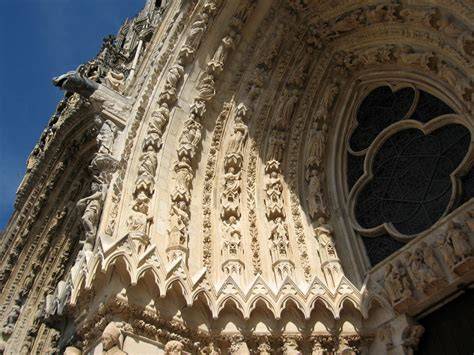
A rolled lead roof, the only one of its kind at present in America, was installed. You might say the roof is the modern version of what was used in medieval times. The east façade, or main entrance to the cathedral, has received new granite steps in addition to richly carved sandstone portals adorning the doorways.
More stone restoration is planned for the east façade, south tower, transepts and aisles. Current restoration efforts are focused on the sacristies.
Interior restoration completed in 2010
From 2008 - 2010, the spacious and soaring interior of the Cathedral was repaired and renewed to its original artistic beauty, to bring a fresh vitality to the Cathedral’s role as the center of Diocese liturgy and community celebration.
The spacious and soaring interior of the Cathedral has been repaired and renewed to its original artistic beauty. The main interior enhancements completed in 2010 feature improved seating, lighting, and plaster repair.
The crowning achievement of the interior restoration is a magnificent paint scheme, evoking the original design of Patrick Charles Keely. The restored worship space brings a fresh vitality to the Cathedral’s role as the center of Diocesan liturgy and community celebration.
Historical exhibitions and interpretation
The Albany Heritage Area Visitors Center is proud to host a new exhibit that chronicles the history of one of Albany’s most beautiful buildings, the Cathedral of the Immaculate Conception. The Cathedral of the Immaculate Conception: A Legacy of Faith, A Vision of the Future tells the story of this magnificent 165-year old Albany landmark and institution through artifacts and images from the Cathedral’s historical collection-some dating back to the Cathedral’s founding in 1848 and being publically shown for the first time.
The exhibit focuses on the building and restoration of the Cathedral, the community it serves, as well as the lives of two of Albany’s Bishops-the first Bishop, John McCloskey, and Thomas Burke, whose tenure covered a period of incredible growth in the late 19th-early 20th centuries.
Viewers will learn about the role and impact of the Cathedral on local, state and national history. This traveling exhibit was designed and curated by volunteers from the Cathedral’s History & Heritage Program and is based on the full exhibit, which ran at the Cathedral this past November and was viewed by over 2,000 people.
Visiting the Cathedral of the Immaculate Conception
The cathedral is located at 125 Eagle St Albany, NY 12202. Its central location in Albany makes it part of the city’s historic and cultural landscape, while its continuing religious function means that visitors enter an active place of worship.
This 1852 cathedral is the Bishop's church in the Catholic Diocese of Albany; the oldest neo-Gothic cathedral structure in the country. Visitors can explore the building’s exterior architecture, interior decorative program, towers, historic additions, restoration work, and connection to the history of Albany’s Catholic community.
General wheelchair accessibility is listed among the cathedral’s amenities. Free Parking is available courtesy of the Office of General Services of the State of New York in the parking garage located on the opposite corner of Madison.
Worship and visitor experience
The Cathedral of the Immaculate Conception is the Mother Church of the Roman Catholic Diocese of Albany, and a parish community serving as the spiritual home to people from within and outside its inner city setting. The restored worship space remains the center of Diocesan liturgy and community celebration.
Beginning Monday, 8 January 2024, daily Eucharist will be celebrated Monday thru Friday at Historic St. Mary’s Church, 10 Lodge Street at 12:05pm. There will.
Explore the Cathedral in a whole new way with the 3D virtual tour. Click here to take the.
Architectural features to look for
- The neo-Gothic design commissioned by Bishop John McCloskey and created by Patrick Charles Keely.
- The cathedral’s relationship to the Cathedral of Cologne, Germany, which served as its model.
- The north tower spire, completed in 1862.
- The south tower spire, constructed in 1888.
- The historic bells cast in West Troy (Watervliet), New York, by the Meneely Bell Foundry.
- The apse and adjoining sacristies added between 1891 and 1892.
- The ornate plasterwork, faux stone walls, carved ribs, ceiling bosses, vaulting, and statuary from the original construction.
- The restored paint scheme evoking Patrick Charles Keely’s original design.
- The carved sandstone portals and granite steps at the east façade, or main entrance.
- The rolled lead roof installed during the restoration and described as the only one of its kind at present in America.
- The “Portal” sculpture outside the Cathedral just west of the sanctuary.
Key dates in the cathedral’s history
| Date | Event |
|---|---|
| July 2, 1848 | Bishop McCloskey of Albany and Bishop John Hughes of New York laid the cornerstone of the Cathedral. |
| November 21, 1852 | The Cathedral was dedicated by Bishop McCloskey, Archbishop John Hughes of New York, and other major church leaders. |
| November 16, 1862 | The Cathedral’s bells were blessed by Bishop McCloskey. |
| December 8, 1862 | The bells rang for the first time on the eve of the Feast of the Immaculate Conception. |
| 1888 | The Cathedral’s south tower spire was constructed. |
| 1891-1892 | The apse and adjoining sacristies were added. |
| November 16, 1902 | The Cathedral was consecrated by Bishop Thomas M. A. Burke on the fiftieth anniversary of its dedication. |
| 1928 | Catherine, daughter of Governor Alfred E. Smith, was married at the Cathedral. |
| 1986 | The Cathedral became the site of the first ever service of forgiveness between Christians and Jews on Palm Sunday. |
| 2000-2004 | The restoration addressed critical sections of the brownstone surfaces and the waterproof integrity of the entire structure. |
| 2008-2010 | The interior was repaired and renewed to its original artistic beauty. |
| 2010 | The main interior enhancements included improved seating, lighting, and plaster repair. |
tags: #albany #cathedral #of #the #immaculate #conception