American gospel songs combine Christian faith, African American musical traditions, spirituals, hymns, country, blues, jazz, soul, and popular music. Their central themes are faith, hope, salvation, struggle, comfort, praise, and trust in God.
American gospel music has a rich history that spans several decades, and its impact on music is immeasurable. Over the years, there have been numerous gospel songs that have touched the hearts and souls of people all over the world.
What American gospel music expresses
Gospel music has been an essential part of African American culture since the 17th century. The genre has evolved over the years, but the core message has remained the same: to spread the good news of Jesus Christ through music. Old school gospel songs are a testament to the power of this genre and how it has touched the lives of people across generations.
You don’t have to be religious to be affected by the power of the best gospel music. After all, gospel music influenced soul and R&B music - along with rock’n’roll legends such as Elvis Presley and The Rolling Stones. Even Bob Dylan tried his hand at writing bona fide gospel songs.
Old school gospel songs have stood the test of time because they speak to the soul. They are a reminder of the power of faith and the hope that comes with it. These songs have touched the lives of people across generations, and their message still resonates today.
The lyrics of these songs are simple yet profound. They speak to the human condition and the struggles that we all face in life. They remind us that we are not alone and that there is a higher power that we can turn to for comfort and guidance.
The music of old school gospel songs is also timeless. The melodies are simple yet powerful, and they have a way of sticking in your head long after the song has ended. The instrumentation is usually minimal, but it is always effective in conveying the emotion of the song.
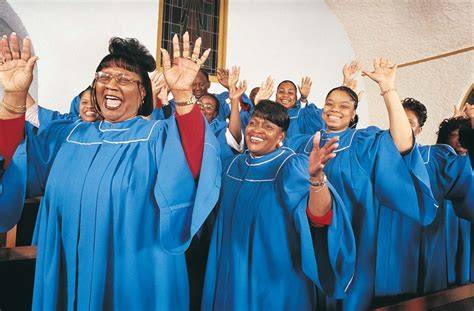
Prayer, praise, and biblical foundations
Let all Things Praise the Lord Praise the Lord! Praise God in His sanctuary; Praise Him in His mighty firmament! Praise Him for His mighty acts; Praise Him according to His excellent greatness! Praise Him with the sound of the trumpet; Praise Him with the lute and harp! Praise Him with the timbrel and dance; Praise Him with stringed instruments and flutes! Praise Him with loud cymbals; Praise Him with clashing cymbals! Let everything that has breath praise the Lord. Psalm 150:1-6
For God so loved the world that he gave his one and only Son, that whoever believes in him shall not perish but have eternal life. Jonh 3:16
God is a safe place to hide, ready to help when we need him. We stand fearless at the cliff-edge of doom, courageous in seastorm and earthquake Before the rush and roar of oceans, the tremors that shift mountains. Jacob-wrestling God fights for us, God-of-Angel-Armies protects us.
River fountains splash joy, cooling God’s city, this sacred haunt of the Most High. God lives here, the streets are safe, God at your service from crack of dawn. Godless nations rant and rave, kings and kingdoms threaten, but Earth does anything he says.
Jacob-wrestling God fights for us, God-of-Angel-Armies protects us. Attention, all! See the marvels of God! He plants flowers and trees all over the earth, Bans war from pole to pole, breaks all the weapons across his knee.
“Step out of the traffic! Take a long, loving look at me, your High God, above politics, above everything.” Jacob-wrestling God fights for us, God-of-Angel-Armies protects us. Psalm 46: 1-11
Essential American gospel songs
The following songs show the breadth of American gospel music, from traditional spirituals and church hymns to country gospel, modern gospel, jazz interpretations, and crossover recordings.
“Amazing Grace”
“Amazing Grace” by Mahalia Jackson
“His Eye Is On The Sparrow”
“His Eye Is On The Sparrow” by Sister Rosetta Tharpe
“Take My Hand, Precious Lord”
“Take My Hand, Precious Lord” by Thomas A. Dorsey
“How Great Thou Art”
“How Great Thou Art” by Elvis Presley
“The Old Rugged Cross”
“The Old Rugged Cross” by George Bennard
“I’ll Fly Away”
Written by noted gospel songwriter Albert E Brumley, “I’ll Fly Away” was recorded by close-harmony specialists and identical twins The Kossoy Sisters in 1956. A sublime version by Gillian Welch and Alison Krauss was later used by the Coen Brothers in O Brother, Where Art Thou?. Kanye West has even recorded a version.
“Oh Happy Day”
“Oh Happy Day” by Edwin Hawkins Singers
“Oh Happy Day” is a 1967 gospel arrangement of an 18th-century hymn, and it was another song to reach the mainstream charts. The version by Edwin Hawkins Singers reached No.4 on the US singles charts, No.2 in Britain and Ireland, and was No.1 in France and Germany. The band won a Grammy for best soul gospel performance in 1970.
“Nobody Knows the Trouble I’ve Seen”
Louis Armstrong brought emotion and depth to this powerful spiritual song, written during the period of slavery and published in 1867. The song has been popular with other jazz musicians, and among noted cover versions are those by Harry James and, more recently, Dr. John, in his tribute album to Satchmo.
“Blessed Assurance”
“Blessed Assurance” by Fanny Crosby
“Swing Low, Sweet Chariot”
A favorite of vocal groups since The Fisk Jubilee Singers’ version in 1909, “Swing Low, Sweet Chariot” is sung regularly in churches and has also become a favorite at sporting venues around the globe. There is a remarkably affecting version by blues legend Big Bill Broonzy on his Last Sessions album, recorded in 1961, shortly before his death.
“Go Tell It on the Mountain”
“Go Tell It on the Mountain” by Mahalia Jackson
“Precious Lord, Take My Hand”
“Precious Lord, Take My Hand” by Mahalia Jackson
“We Shall Overcome”
“We Shall Overcome” by Mahalia Jackson
“Leaning on the Everlasting Arms”
“Leaning on the Everlasting Arms” by Anthony J. Showalter
“Just a Closer Walk With Thee”
Van Morrison, who wrote his own gospel song called “(Lord) If I Ever Needed Someone” in 1967, included two gospel hymns on his 1991 album Hymns to the Silence. As well as “Be Thou My Vision,” the Belfast-born musician recorded a powerful version of “Just a Closer Walk with Thee,” the title and lyrics of which come from passages in the Bible.
Morrison, who also references Louis Armstrong and Sidney Bechet in the additional words, is backed by the excellent singers Carol Kenyon and Katie Kissoon.
“His Banner Over Me Is Love”
“His Banner Over Me Is Love” by Esther Mui
“Pass Me Not, O Gentle Savior”
Fanny Crosby, who was known as the Queen Of Gospel Song Writers, wrote this song in 1868. More than a century later, it was recorded by Nobel Prize winner Bob Dylan, who is thought to have learned his version from The Stanley Brothers.
“What A Friend We Have in Jesus”
Jazz legend Ella Fitzgerald recorded a version of “What a Friend We Have in Jesus” - for her 1967 Capitol Records album Brighten the Corner - more than a century after the hymn was written by preacher Joseph M. Scriven as a poem to comfort his mother, who was still living in Ireland after he had emigrated to Canada. Fitzgerald’s haunting version features backing from the Ralph Carmichael Choir.
“Peace in the Valley”
Sam Cooke grew up listening to “Peace in the Valley,” a song written in 1937 for Mahalia Jackson by Thomas A. Dorsey, and which was later recorded by hundreds of musicians, including Presley and Little Richard.
In 1950, it was one of the first songs recorded by 19-year-old Cooke, during his time as lead singer of gospel group the Soul Stirrers. Cooke, who went on to be one of the best soul singers in popular music, showed he was also a natural interpreter of gospel in this period of his career.
“The Love of God”
“The Love of God” by George Beverly Shea
“I Saw the Light”
Hank Williams’s “I Saw the Light” is one of the finest examples of country gospel. He reportedly penned the song on the journey home from a dance in Fort Deposit, Alabama, when his mother Lilly saw a beacon light near Dannelly Field Airport and roused her son with the words, ”Hank, wake up, we’re nearly home. I just saw the light.”
Although the song initially had little commercial success, it subsequently becomes one of his best-known songs. To wit, the 2015 Williams biopic, starring Tom Hiddleston, was called I Saw the Light.
“Swing Down Chariot”
“Swing Down Chariot” by The Golden Gate Quartet
“Soon and Very Soon”
“Soon and Very Soon” by Andrae Crouch
“In the Garden”
“In the Garden” by Elvis Presley
“Steal Away”
“Steal Away” by Fisk Jubilee Singers
“He’s Got the Whole World in His Hands”
Mahalia Jackson, a singer with one of the finest voices in this history of gospel music, did full justice to this joyous spiritual from 1927. Her moving version even reached the 1958 Billboard charts, a strong showing for a gospel single at the time when Elvis Presley, Chuck Berry, and Jerry Lee Lewis were dominating the rankings.
You could fill a whole list of the best gospel songs just with Mahalia Jackson’s music, so a special mention also goes for her 1958 version of “Joshua Fit The Battle of Jericho,” sung with such feeling and gusto.
“I Shall Not Be Moved”
“I Shall Not Be Moved” by Mississippi John Hurt
“Rock My Soul”
“Rock My Soul” by The Fairfield Four
“I Want To Be Ready”
“I Want To Be Ready” by Rev. James Cleveland
“Oh How I Love Jesus”
“Oh How I Love Jesus” by Hiram Blanchard
“I Can’t Even Walk (Without You Holding My Hand)”
“I Can’t Even Walk (Without You Holding My Hand)” by Jessy Dixon
“Great Is Thy Faithfulness”
“Great Is Thy Faithfulness” by Thomas Chisholm
“Jesus Is My Help”
“Jesus Is My Help” by Hezekiah Walker
“The Blood Will Never Lose Its Power”
“The Blood Will Never Lose Its Power” by Andrae Crouch
“Wade in the Water”
“Wade in the Water” by The Staple Singers
“Down By The Riverside”
Many of the best gospel songs lent themselves to jazz interpretations. This famous spiritual - also known as “Ain’t Gonna Study War No More” and “Gonna Lay Down My Burden” - has its origins in the American Civil War (1861-65), though it was not actually published until 1918, when it appeared in Plantation Melodies: A Collection of Modern, Popular And Old-Time Negro-Songs Of The Southland, Chicago.
The song, which is full of searing Biblical imagery, has been recorded by hundreds of leading musicians, including Bing Crosby, Johnny Cash, and Van Morrison. Nat King Cole sang it regularly at concerts.
“I Believe I’ll Run On”
“I Believe I’ll Run On” by Buddy Greene
“Take Me to the Water”
“Take Me to the Water” by Nina Simone
“Joyful, Joyful, We Adore Thee”
“Joyful, Joyful, We Adore Thee” by Beethoven
“Higher Ground”
“Higher Ground” by The Blind Boys of Alabama
“When the Saints Go Marching In”
This celebrated feel-good song, with lyrics that take much of their inspiration from the Book Of Revelations, became something of a jazz-gospel standard after Louis Armstrong’s impressive 1938 version. However, “When The Saints Go Marching In” also features in a brilliant instrumental version by the New Orleans legend Sidney Bechet.
“Do Lord Remember Me”
“Do Lord Remember Me” by The Pilgrim Travelers
“Oh Mary Don’t You Weep”
“Oh Mary Don’t You Weep” by The Swan Silvertones
“Nobody’s Fault But Mine”
“Nobody’s Fault But Mine” by Blind Willie Johnson
“Run On for a Long Time”
“Run On for a Long Time” by Bill Landford & The Landfordaires
“Lord, I Want To Be A Christian”
“Lord, I Want To Be A Christian” by Paul Robeson
“This Little Light of Mine”
“This Little Light of Mine” by The Golden Gate Quartet
“Jesus On The Mainline”
Robert Plant and Randy Travis have both sung versions of this traditional spiritual, but the finest version is the tour-de-force live one by Ry Cooder And The Chicken Skin Band. A haunting example of roots music gospel.
“Sinner Man”
Some of what we think of as the best gospel songs actually began life outside of the church. “Sinnerman” was based on a traditional African-American spiritual, which started life as a Scottish folk song.
It was a tune Nina Simone would have heard at her local church, where she was the pianist from an early age. She would sometimes perform live versions of the song that lasted nearly 15 minutes.
Artists who shaped American gospel
Sister Rosetta Tharpe
Elvis Presley, himself a fine gospel performer, named Sister Rosetta Tharpe as one of his favorite singers and guitar players. Tharpe, who was born in Arkansas in 1915, was singing gospel tunes from the 1930s and recording regularly for Decca Records. She was a true inspiration.
All you need to hear is the guitar introduction to her 1947 hit “The Lord Followed Me” to recognize Chuck Berry’s musical debt to her. In 1948, Tharp released a 78rpm record for Decca of Lee Roy Abernathy’s song “Everybody’s Gonna Have a Wonderful Time Up There,” which was described as “a gospel boogie.”
Mahalia Jackson
Mahalia Jackson, a singer with one of the finest voices in this history of gospel music, did full justice to this joyous spiritual from 1927.
“Move On Up A Little Higher” was another seminal hit for Mahalia Jackson. However, there is a striking version of the song, written by the Baptist minister William Herbert Brewster in the 1940s, which was recorded by the great Philadelphia contralto Marion Williams, who influenced Aretha Franklin and also won the MacArthur Genius Award.
Sam Cooke and the Soul Stirrers
This 1956 modern gospel gem easily makes this list of Best Gospel Songs Of All Time, and was penned speedily while soul singer Sam Cooke was on his way to a recording session with his group The Soul Stirrers. Their majestic harmonizing on “Touch The Hem Of His Garment” is a lovely example of male quartet singing from that period in American music when vocal groups were so popular.
Aretha Franklin
Aretha Franklin was only 14 when she recorded the 1956 album Songs Of Faith, later reissued in 1983 as Aretha Gospel, at the New Bethel Baptist Church, where her father was the reverend. Among the remarkable performances is her version of this hymn by the English 18th-century hymn writer and poet William Cowper.
Dinah Washington
Dinah Washington, one of the most popular singers of the 1950s, grew up singing church music. She sang lead with the first female gospel singers formed by Sallie Martin, who was co-founder of the Gospel Singers Convention.
In 1952, Washington recorded a singing version of “The Lord’s Prayer” - the prayer that Jesus taught his disciples, when they asked him how they should pray - for Mercury Records, the label for which she recorded so many jazz classics. Washington’s voice soars and swells on these momentous words.
Marion Williams
“Move On Up A Little Higher” was another seminal hit for Mahalia Jackson. However, there is a striking version of the song, written by the Baptist minister William Herbert Brewster in the 1940s, which was recorded by the great Philadelphia contralto Marion Williams, who influenced Aretha Franklin and also won the MacArthur Genius Award.
Johnny Cash
This gospel classic is from Johnny Cash’s 1962 album Hymns From The Heart. Arkansas-born Cash said that when he was 16, he came in from working in the fields where he used to sing gospel songs he had heard on the radio.
He recalled: “I sang those old gospel songs for my mother, and she said, ‘Is that you?’ And I said, ‘Yes, ma’am.’ And she came over and put her arms around me and said, ‘God’s got his hands on you.’”
Shirley Caesar
Shirley Caesar, who was born in 1938, has established a deserved reputation as one of the most important gospel singers of modern times. Caesar, who began recording at the age of 12, preaches at the Mount Calvary Word of Faith Church in her hometown of Durham, North Carolina.
“I am called to be a preacher-evangelist first, and a singer second,” she said. Her version of her own composition “Jesus, I Love Calling Your Name” shows off her rich, soulful voice.
Yolanda Adams
Yolanda Adams, who was born in Houston, Texas, in 1961, is one of the most influential gospel singers around - partly down to the 10 million record sales she has racked up around the world, but also because she hosts a nationally syndicated television show.
In 1983, for the album Save the World, she delivered a rousing version of “The Battle is the Lord’s.” A later live version of the track, from the album Yolanda… Live In Washington, was named Song of the Year at the 1994 Stellar Awards. “The Battle is the Lord’s” was composed by the talented gospel songwriter V. Michael McKay.
Alison Krauss and The Cox Family
Proving that the best gospel songs truly span genres, in 1994, country singer Alison Krauss teamed up with The Cox Family, who later appeared in the Coen Brothers’ film O Brother, Where Art Thou?, to record the album I Know Who Holds Tomorrow.
Among the range of fine songs on the album is the gorgeous “I’d Rather Have Jesus,” written by the gospel star George Beverly Shea. Shea appeared live in front of hundreds of millions of people in his career as a singer with preacher Billy Graham. Krauss and The Cox Family won a Grammy for Best Southern, Country Or Bluegrass Gospel Album.
Fred Hammond
Fred Hammond has carved out a reputation as the king of the urban gospel groove. The Detroit-born singer, who is also a talented bass player, recorded a version of “We’re Blessed” for his album The Inner Court.
The song, co-written with regular collaborator Tommie Walker, has a pulsating funky melody and features his musical backing group Radical For Christ.
Gospel across country, blues, jazz, and popular music
Hank Williams’s “I Saw the Light” is one of the finest examples of country gospel. Elvis Presley, himself a fine gospel performer, named Sister Rosetta Tharpe as one of his favorite singers and guitar players.
Many of the best gospel songs lent themselves to jazz interpretations. This famous spiritual - also known as “Ain’t Gonna Study War No More” and “Gonna Lay Down My Burden” - has its origins in the American Civil War (1861-65), though it was not actually published until 1918.
Thelonious Monk recorded a very striking interpretation of the gospel classic “Abide With Me.” His jazz instrumental take, for his 1957 album Monk’s Music, features jazz giants John Coltrane, Coleman Hawkins, and drummer Art Blakey.
Some gospel songs are so well known for their melody as well as their words that they are covered purely as instrumental tunes. In 1963, for the iconic Blue Note label, guitar great Grant Green recorded a version of “Joshua Fit De Battle of Jericho” - about the battle in which Joshua led the Israelites against Canaan - for his album Feelin’ the Spirit. The pianist was Herbie Hancock.
“Bridge Over Troubled Water” was written by Simon and recorded in 1970 by the acclaimed duo. A year later, Aretha Franklin noted its potential to stand alongside some of the best gospel songs, and released a more overtly gospel version.
“Morning Has Broken” is a hymn written by the English children’s author Eleanor Farjeon in 1931. Cat Stevens’ almost reverential arrangement of the song - featuring the expressive piano playing of Yes keyboardist Rick Wakeman - was recorded in 1971 for his album Teaser and the Firecat. The single reached No.6 in the charts.
Stevens later admitted: “I accidentally fell upon the song when I was going through a slightly dry period. I came across this hymnbook, found this one song, and thought, ‘This is good.’ I put the chords to it and then it started becoming associated with me.”
Van Morrison, who wrote his own gospel song called “(Lord) If I Ever Needed Someone” in 1967, included two gospel hymns on his 1991 album Hymns to the Silence.
“Sinnerman” was based on a traditional African-American spiritual, which started life as a Scottish folk song. It was a tune Nina Simone would have heard at her local church, where she was the pianist from an early age.
Selected gospel recordings and musical details
| Song or release | Artist or group | Notable detail |
|---|---|---|
| “Everybody’s Gonna Have a Wonderful Time Up There” | Sister Rosetta Tharpe | Described as “a gospel boogie.” |
| “I Saw the Light” | Hank Williams | One of the finest examples of country gospel. |
| “When The Saints Go Marching In” | Louis Armstrong; Sidney Bechet | Became something of a jazz-gospel standard. |
| “Peace in the Valley” | Sam Cooke; Mahalia Jackson | Written in 1937 by Thomas A. Dorsey. |
| “Move On Up A Little Higher” | Mahalia Jackson; Marion Williams | Written by William Herbert Brewster in the 1940s. |
| “The Lord’s Prayer” | Dinah Washington | Recorded in 1952. |
| “There Is A Fountain Filled With Blood” | Aretha Franklin | Recorded for Songs Of Faith in 1956. |
| “I’ll Fly Away” | The Kossoy Sisters | Recorded in 1956. |
| “Abide With Me” | Thelonious Monk | Featured on Monk’s Music. |
| “He’s Got The Whole World In His Hands” | Mahalia Jackson | Reached the 1958 Billboard charts. |
| “Joshua Fit De Battle of Jericho” | Grant Green | Recorded in 1963 with Herbie Hancock. |
| “Oh, Happy Day” | Edwin Hawkins Singers | Reached No.4 on the US singles charts. |
| “What a Friend We Have in Jesus” | Ella Fitzgerald | Recorded for Brighten the Corner. |
| “Bridge Over Troubled Water” | Simon & Garfunkel; Aretha Franklin | Aretha Franklin released a more overtly gospel version. |
| “Morning Has Broken” | Cat Stevens | The single reached No.6 in the charts. |
New American Gospel
Explore the magic of New American Gospel! This dynamic album/movie features a captivating collection of 14 song meticulously created to complement the cinematic atmosphere.
With melodies ranging from ballads to uplifting symphonies, each song is a masterpiece in its own right. The talented artists, including Lamb of God have poured their souls into crafting standout tracks like New American Gospel songs.
New American Gospel isn't just an album/movie - it's a transformative journey through a realm of musical wonder and emotion. Released on: Mar 25, 2014 Tracks: 14 Language: English
| Detail | Information |
|---|---|
| Release date | Mar 25, 2014 |
| Tracks | 14 |
| Language | English |
| Total playtime | 55 min 23 sec |
| Artist mentioned | Lamb of God |
Frequently mentioned songs and performers
- “The Lord’s Prayer” by Dinah Washington
- “There Is A Fountain Filled With Blood” by Aretha Franklin
- “Touch The Hem Of His Garment” by Sam Cooke
- “Abide With Me” by Thelonious Monk
- “What A Friend We Have in Jesus” by Ella Fitzgerald
- “Jesus On The Mainline” by Ry Cooder And The Chicken Skin Band
- “Jesus, I Love Calling Your Name” by Shirley Caesar
- “The Battle Is The Lord’s” by Yolanda Adams
- “I’d Rather Have Jesus” by Alison Krauss And The Cox Family
- “We’re Blessed” by Fred Hammond
- “Pass Me Not O Gentle Saviour” by Bob Dylan
- “Alabaster Box” by CeCe Winans
In the late 70s and early 80s, Dylan also released a so-called “Christian Trilogy” of albums, including Saved, which features his own songs, such as “Precious Angel.”