The Anglican Church of Southern Africa is part of the worldwide Anglican Communion, a religious body of 42 national, independent, and autonomous churches throughout the world that adheres to the teachings of Anglicanism and evolved from the Church of England. It is united by a common loyalty to the archbishop of Canterbury in England as its senior bishop and titular leader and by a general agreement with the doctrines and practices defined since the 16th century in The Book of Common Prayer.
In southern Africa, Anglicanism developed first among English settlers and military and civilian chaplains, but it gradually became an organized provincial church with dioceses, parishes, bishops, clergy, and lay governing structures. Its history includes an early moderate Calvinistic character, the decisive episcopate of Bishop Robert Gray after 1848, the growth of Anglo-Catholic and ritualist practices, and continuing engagement with social, ecumenical, and public questions.
The Anglican Communion and the place of Southern African Anglicanism
The roots of the Anglican Communion can be traced to the Reformation in the 16th century, when King Henry VIII rejected the authority of the Roman Catholic pope in Rome and established an independent church in England. The essential teachings of the church were first set down in The Book of Common Prayer, compiled by Thomas Cranmer, and the organization of the Church of England was worked out during the 16th and 17th centuries.
From the time of the Reformation, the Church of England followed explorers, traders, colonists, and missionaries into all parts of the world. The colonial churches generally exercised administrative autonomy within the historical and creedal context of the mother church. It was probably not until the first meeting of the Lambeth Conference in 1867 that there emerged among the various churches and councils a mutual consciousness of an Anglican Communion.
Since its inception the Lambeth Conference, which meets every 10 years, has constituted the principal cohesive factor in Anglicanism, even though its decisions are not binding and must be approved by the individual churches. The Communion is therefore not a centralized church governed by a single worldwide authority, but a fellowship of autonomous churches connected by history, doctrine, worship, episcopal ministry, and relationships among their leaders.
There are also five additional churches that are considered extra-provincial to the Archbishop of Canterbury. They are the Church of Ceylon, Bermuda, the Lusitanian Church, the Falkland Islands, and the Reformed Episcopal Church of Spain.
Origins of Anglicanism in southern Africa
The early years of Anglican ministry in South Africa were primarily among English settlers. Their worship patterns, for the most part, reflected the general trends of English Anglicanism at the time, which itself was influenced theologically and materially by a moderate form of Calvinism.
There is general agreement among historians that Anglicanism in South Africa has a strong Anglo-Catholic ethos. It is not only historians who agree on this interpretation. By the end of the nineteenth century, the Anglo-Catholic leanings of Anglicanism in the Cape and Natal colonies had aroused the suspicions of the Imperial Protestant Federation.
However, Anglicanism in the southern African colonies did not always embody this ethos. The “English Church,” as it was known in the Cape and Natal Colonies in the early nineteenth century, appears, for the most part, to have been a reflection of the dominant churchmanship in Britain during the late eighteenth and early nineteenth centuries; namely middle-of-the-road Calvinism.
It seems that Anglican settlers coming to South Africa carried the broadly Calvinistic sense of worship and worship-space with them. Consider the earliest church buildings of South Africa, of which St John’s in Bathurst, built in 1829, is a typical example: simple rectangular white-washed interior, with clear-glass windows and little in the way of furnishings besides a pulpit, reading desk and communion table.
Pew rents determined congregational seating patterns along class lines. Vestments tended to be simple: clergy wore a surplice for most of the service, but changed into a Genevan-style gown for preaching. Consider also the descriptions of spirited metrical psalmody in Cape Town Anglican congregations from the late 1820s, indicative of Reformed practice, rather than the hymnody which was characteristic of Methodist and congregational worship of the time.
Even in matters such as Christian conduct and spirituality, a strongly Reformed character was discernable. Such congregations also shared a desire to remain independent, content to function along congregational lines rather than under centralised Diocesan authority.
Settlers, chaplains, and lay participation
Additionally, the clergy coming to South Africa to minister as colonial chaplains appear to have been mostly evangelical in character, particularly those sponsored by the Colonial Church Society. For such clergy and laity, theological and ceremonial developments which signified a move away from Calvinist teaching on the unmediated relationship between an individual believer and Christ, would have been offensive at best.
For them, defending the church from a perceived Catholic advance may have been paramount to defending the true Christian faith. Yet, despite this independence and the Calvinistic influences on churchmanship, there were requests for a local bishop through the SPG to the government in Britain.
Equally important, though, was that the colonial Anglican Church in South Africa at the time was dominated by lay involvement and a strong sense of the democratic rights of its church members. Because of the Cape Colony’s history as a military garrison, the ministrations of Anglicanism began through military chaplains, but were extended to civilian chaplains once non-military settlers began arriving.
It was the burgeoning lay settler groups in Cape Town, Grahamstown and Port Elizabeth which supported and galvanised the church. Thus, the laity in South Africa helped transform a military chaplaincy into a civilian church.
The colonial Church grew because it was supported by a diverse lay community that was highly mobile and highly proficient in raising money and building networks of recruitment. The colonial Anglican laity was, however, a shifting, heterodox population who could voluntarily join the Church and voluntarily leave it.
Anglicanism, respectability, and denominational fluidity
Also important is the nature of respectability which was linked with Anglican worship in South Africa during the early days of the colony under British rule. It seems that numerous Dutch colonists, who were actually members of the “established” Dutch Reformed Church, attended Anglican services to increase their standing and respectability.
Some even claimed that the Dutch enjoyed Anglican liturgy. Indeed, the Book of Common Prayer 1662, which inherited much from its 1549, 1552 and 1559 progenitors, contained a great deal of Reformed doctrine.
In a few cases, such strategic allegiance converted into actual adoption of Anglicanism, as in Graaff-Reinet where 15 Dutch settlers were among the signatories of a petition for an Anglican clergyman. Indeed, the man who came in response to this plea was a staunch evangelical whose preaching style suited the theological stance of both the small British settler population and the large Dutch population.
In other circumstances, attendance did not necessarily convert to acceptance of Anglican rituals and membership. It is possible that the strong Calvinistic influence of the Dutch attendees in Anglican churches resulted in a stronger sense of Reformed doctrine and practice.
Additionally, there appears to have been significant fluidity between Christian denominations in the colony, such that rules of membership were fairly flexible. Historians have found it tricky to gauge the accuracy and reliability of attendance records for Anglican churches.
Before the first bishop
There was no Anglican bishop in South Africa before the arrival of Robert Gray in 1848. While newly consecrated bishops en route to their dioceses in India and Australia had performed episcopal duties, the secular role of bishop was designated to the governor.
Thus, there was no specific system of parishes, nor for that matter, clerical formation and support. Significantly, there was no specific authority figure to promote particular doctrines or to regulate worship before his arrival.
This absence of centralized episcopal authority allowed congregations and lay committees considerable independence. It also meant that the development of a unified diocesan system, consistent clerical standards, and common patterns of worship remained incomplete.
Bishop Robert Gray and the formation of the Anglican Church
It was into this context that Robert Gray, the newly appointed metropolitan Bishop of Cape Town, arrived in the Cape Colony on 20 February 1848 to take up residence in his diocese.
Historians agree that Gray should be remembered for two contributions: for his untiring energy, visiting vast swathes of his diocese and establishing numerous churches on the way; and for his ambition to secure independence for the Anglican Church in South Africa.
Gray told a colleague that his aim in his new diocese was to “engraft a new system-a new phase of religion-upon a previously existing one.” From the context detailed above, this entailed imposing an episcopal and hierarchical model, influenced by Tractarian theologies of episcopacy espoused by the CBF, upon a strongly democratised and Calvinistically influenced laity.
If funding is anything to go by, the financing of the new Cape Town Diocese, which was initially administered by the CBF, showed just how nominal the interest in a local bishop was. Indeed, of the £17 700 required to establish the diocese, local fundraising had accumulated a mere £193.
When the Diocese was eventually created and Gray consecrated, he was warmly welcomed by a good many of the clergy and congregations in the Cape Colony, but not everybody was quite as happy; after all, clerical and lay independence was being severely curtailed by episcopal authority, even if that authority was essentially “conciliatory.”
High churchmanship, Tractarianism, and ritualism
The status quo was challenged by the arrival of Bishop Robert Gray in 1848. Among the most important reasons for the opposition against Gray were his Tractarian sympathies.
Most historians agree that Gray was a Tractarian sympathiser. Some historians go so far as to suggest that he was “profoundly” influenced by Tractarianism. Gray often consulted Samuel Wilberforce, then Bishop of Oxford, who was the unofficial leader in high church circles.
It seems that Gray considered Wilberforce a mentor or, at the very least, a confidant. It is likely, then, that he too considered himself a moderate high churchman. Indeed, it seems that he considered himself as a moderate churchman.
High churchmen were characterised as valuing the following: the apostolic succession expressed through the traditional three-fold ordained ministry; the inherited Anglican liturgy and sacraments of the church; the supremacy of the Bible and accepted creeds; the importance of the Early Church and its witness; sacramental grace and its outworking in good works; and a belief in the divine right of a royal line of rulers, exemplified in a strong bond between church and state.
While many historians have agreed that Gray was a high church cleric, most stop short of labelling him a Tractarian. This article critically examines Gray’s sympathies and posits that while he started out firmly within the high church party of Anglicanism, he slowly moved closer and closer to Tractarianism.
Finally, aspects of Gray’s leadership encouraged a gradual move from moderate Calvinism towards a more definite Tractarian and ritualist stance as the nineteenth century drew to a close.
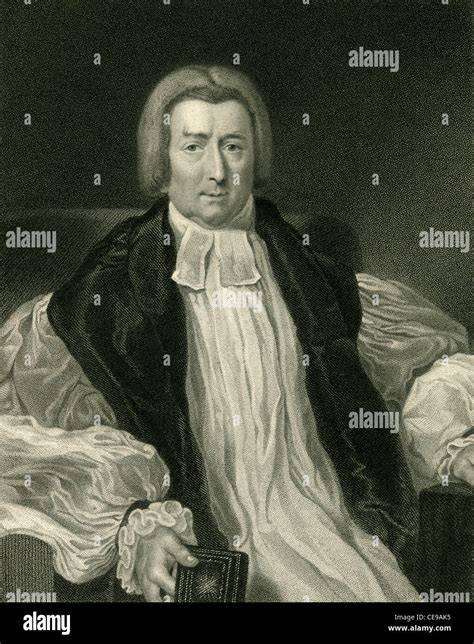
Conflict over episcopal authority
Interestingly, historical accounts seem to dwell equally on the clerical and lay opposition to episcopal oversight. Indeed, all the South African bishops of the 1850s were at some point or another challenged for their so-called tyrannical leadership and ritualist tendencies; Gray was not the only target.
The point is that independence was not only a lay phenomenon. If the popularity of the idea of a bishop is laid aside, to what extent did Gray conform to the authoritarian model, which seems to have been so feared by democratically-minded settlers?
The answer lies in the type of historical source you consult. “Supporters spoke in praise of his principled determination and single-mindedness, opponents of an authoritarian rigidity and inflexibility.”
Perhaps what was missing from Gray’s approach was a concerted effort to adjust to local sensibilities, mainly working class, before making major liturgical and structural changes reflecting upper class sensibilities.
On the other hand, a form of diocesan government may never have evolved if Gray had not been strongly resolute in his approach to impose structure.
Whatever antagonistic clergy and laity thought of Gray’s leadership style, he did seem to value the voice of the laity, even if guardedly. After all, he was willing to go against his mentors in England, and some clergy in South Africa, and give the laity a voting voice within local Provincial and Diocesan governing systems.
His reason was that in a voluntary church system, the bulk of the funds would come from the laity. Thus they were entitled to a say in its governance.
Main beliefs of the Anglican Communion
The beliefs and practices of the Anglican Communion are often said to be the middle ground between those of the Roman Catholic and those of the Protestant churches. The Communion teaches a Trinitarian understanding of God and believes in Jesus as the coequal and coeternal Son of God who came for the salvation of humankind.
The holy book of the Communion is the Bible, which is made up of the Old Testament, or Hebrew Bible, and the New Testament. Anglicans also accept the Nicene Creed and the Apostles’ Creed as essential statements of their beliefs.
There are only two sacraments, baptism and the Eucharist, but the Communion honors confirmation, ordination, marriage, reconciliation of the penitent, and unction of the sick as important religious rites.
Easter and Christmas are two of the most important holy days in the Communion, and members of the church typically attend weekly services.
Anglican worship and liturgy
The Communion’s worship service varies but often includes the eucharistic rites, prayer, the singing of Psalms and hymns, readings from the Gospels and the Hebrew Bible, and a sermon by the presiding minister.
The history of southern African Anglican worship shows how these general Anglican forms were interpreted differently in different periods. Early congregations used simple interiors, limited furnishings, plain vestments, preaching, and metrical psalmody.
Over time, the influence of high churchmanship, Tractarianism, and ritualism encouraged a more sacramental and ceremonial understanding of Anglican worship in parts of the region. This gradual change did not simply replace one uniform system with another; it developed through disagreements involving bishops, clergy, congregations, and lay members.
Ministry and ordained orders
The Anglican Communion accepts a threefold order of ministry, including bishops, priests or presbyters, and deacons. The bishop is the chief administrative official of the church, and the highest figure of this rank is the archbishop of Canterbury.
Priests, who may be men or women depending on the member church, are responsible for overseeing the local church, proclaiming the Gospel, blessing and pardoning in God’s name, and administering the sacraments.
The function of the deacon is to assist the priest; deacons help to administer the sacraments and are also called upon to help spread the Gospel.
The threefold ministry was also central to the high church and Tractarian vision associated with Gray. High churchmen valued apostolic succession expressed through the traditional three-fold ordained ministry, together with inherited Anglican liturgy and the sacraments of the church.
How the Anglican Communion is organized
While population differences and other factors account for some variation in basic structure between the churches, several elements predominate. The diocese, under the authority of a bishop, is the basic administrative unit throughout the Communion.
The diocese is made up of parishes, or local church communities, each under the care of a pastor. In many of the national churches, dioceses are grouped into provinces. In some, parishes may be grouped also below the diocesan level into rural deaneries and archdeaconries.
| Administrative level | Main responsibility or function |
|---|---|
| Province or national church | Groups dioceses within an autonomous Anglican church |
| Diocese | Basic administrative unit under the authority of a bishop |
| Parish | Local church community under the care of a pastor |
| Rural deanery or archdeaconry | Intermediate grouping used in some churches below the diocesan level |
The Anglican Communion is united by a common loyalty to the archbishop of Canterbury in England as its senior bishop and titular leader, but the Lambeth Conference’s decisions are not binding and must be approved by the individual churches.
The structure of the Anglican Church in southern Africa
The development of diocesan government in South Africa was closely connected with the arrival of Bishop Gray. Before his arrival, there was no specific system of parishes, clerical formation, and clerical support, and no specific authority figure to promote particular doctrines or regulate worship.
Gray’s episcopate helped establish a more defined diocesan and provincial framework. It also created a continuing tension between episcopal authority and the democratic traditions of the earlier colonial congregations.
The laity nevertheless retained an important role. Gray gave the laity a voting voice within local Provincial and Diocesan governing systems because, in a voluntary church system, the bulk of the funds would come from the laity and they were therefore entitled to a say in its governance.
This combination of bishops, clergy, dioceses, parishes, and lay participation became a characteristic feature of Anglican organization in southern Africa. It reflected both the worldwide Anglican pattern and the region’s particular history of voluntary congregations and settler-led church development.
The Anglican Church of Southern Africa and the wider Communion
The Anglican Church of Southern Africa belongs to the family of Anglican churches that developed from the Church of England while exercising administrative autonomy. The colonial churches generally exercised administrative autonomy within the historical and creedal context of the mother church.
The Anglican Communion includes national and regional churches across Africa, Asia, the Americas, Europe, and the Pacific. Among the churches listed in the Communion are the Anglican Church of Burundi, the Church of the Province of Central Africa, the Anglican Church of Kenya, the Church of the Province of Southern Africa, the Anglican Church of Tanzania, and the Church of the Province of Uganda.
Other member churches include the Episcopal Church in Jerusalem and the Middle East, the Anglican Church of Japan, the Anglican Church of Korea, the Anglican Church of Melanesia, the Anglican Church of Mexico, the Anglican Church of South America, the Province of the Episcopal Church of South Sudan, and the Church in the Province of the West Indies.
Some churches are united churches, formed by the merger of Anglican and non-Anglican churches, and remain in full communion with the Anglican Communion.
Differences from Roman Catholic and Protestant churches
Anglican beliefs and practices are often described as a middle ground between those of the Roman Catholic and Protestant churches. This description refers to the combination of elements associated with both traditions rather than to a complete uniformity among Anglican churches.
Anglicanism shares with Roman Catholic Christianity a structured episcopal ministry, sacramental worship, an emphasis on the historic church, and the importance of bishops, priests, and deacons. It differs from Roman Catholicism through its historical rejection of the authority of the Roman Catholic pope in Rome and through the autonomy of its national and regional churches.
Anglicanism shares with Protestant traditions a central reliance on the Bible, the importance of preaching, the use of vernacular liturgy, and the historical influence of Reformed theology. The Book of Common Prayer 1662 contained a great deal of Reformed doctrine, and early South African congregations reflected a moderate Calvinistic character.
Anglicanism also differs internally from one province or church to another. Worship may range from relatively simple and Protestant forms to highly ceremonial Anglo-Catholic forms, while questions concerning clergy, marriage, sexuality, and church governance may be decided differently by autonomous member churches.
Anglicanism and the ecumenical movement
In the 20th century the Anglican Communion played a prominent role in the ecumenical movement. In 1966 Archbishop of Canterbury Arthur Michael Ramsey met with Pope Paul VI, the first such meeting since the Reformation.
A milestone in Anglican-Roman Catholic relations was reached in 1982 when Pope John Paul II met with Archbishop of Canterbury Robert Runcie to discuss prospects for reconciliation between the two churches.
These encounters demonstrated the Anglican Communion’s role as a major Christian tradition capable of maintaining its own identity while engaging other churches in theological dialogue and discussions about reconciliation.
Internal debates in the modern Anglican Communion
Obstacles emerged, however, in 1989 when the Anglican Communion began to ordain women as priests and bishops and in 2003 when the Episcopal Church in the United States of America consecrated V. Gene Robinson, an openly gay man, as the Anglican bishop of New Hampshire.
Both Robinson’s consecration and the blessing of same-sex unions by individual American and Canadian congregations met with opposition within the Anglican Communion. National churches in the “Global South”-the postcolonial countries in Africa, Asia, and South America in which a large majority of the world’s Anglicans lived in the early 21st century-raised vigorous objections to these developments.
In 2004 the leaders of the member churches of the Anglican Communion agreed to a moratorium on the ordination as bishops of individuals in same-sex relationships. Meanwhile, traditionalists, demanding that the American church repent, took steps to establish alternative institutions that stressed a more conservative form of Anglicanism.
In 2007 some American congregations that had withdrawn from the Episcopal Church in the United States of America placed themselves under the jurisdiction of Archbishop of Nigeria Peter Akinola and formed the Convocation of Anglicans in North America.
Akinola’s appointment of an American bishop within the ECUSA’s jurisdiction and against the wishes of Archbishop of Canterbury Rowan Williams further increased tensions. Other American churches that had withdrawn from the ECUSA placed themselves under the jurisdiction of Gregory James Venables, the primate of the Anglican Church of the Southern Cone of America, a South American church.
In 2008 more than 300 bishops from Africa, Asia, North America, Australia, and the United Kingdom attended the first meeting of the Global Anglican Future Conference in Jerusalem.
Although the conference expressed both the desire to remain within the Anglican Communion and respect for the archbishop of Canterbury, its official statement, the Jerusalem Declaration, decried the Communion’s failure to discipline the “false gospel” promoted by some American and Canadian churches.
Affirming a traditional Anglicanism, the declaration rejected same-sex marriage and refused to recognize the authority of “heterodox,” or unorthodox, priests and bishops. About 230 of the bishops attending GAFCON subsequently boycotted the 2008 Lambeth Conference of Anglican bishops.
In 2009 members of CANA joined members of other churches that had left the ECUSA to launch the Anglican Church in North America. The new church appointed as its primate former Episcopal bishop Robert William Duncan, an outspoken traditionalist who had led the diocese of Pittsburgh out of the ECUSA two years earlier.
With the support of primates from several other Anglican churches, largely in Africa and South America, the ACNA announced its intention to join the Anglican Communion.
The ECUSA’s consecration of Mary Glasspool, who was in a same-sex relationship, as a suffragan bishop in the diocese of Los Angeles in 2010 increased tensions between liberals and traditionalists within the Anglican Communion and prompted a rebuke of the ECUSA from Williams for breaking the 2004 moratorium.
Later that year the Anglican Communion imposed sanctions on the ECUSA, barring it from participating in ecumenical dialogue and removing its decision-making powers in matters of church doctrine.
Current role of the Anglican Church of Southern Africa
The Anglican Church of Southern Africa’s current role can be understood through its place in the Anglican Communion, its diocesan and parish structures, its worship and sacramental life, and its continuing balance between episcopal leadership and lay participation.
Its identity combines inherited Anglican doctrine and liturgy with the particular history of southern African congregations. The region’s Anglicanism developed from English colonial ministry, but it was shaped by Dutch Reformed influence, voluntary settler communities, local lay leadership, episcopal organization, and the later growth of Anglo-Catholic and ritualist practice.
The church’s public and ecclesial role also includes participation in the wider Christian community. The Anglican Communion played a prominent role in the ecumenical movement, and its churches continue to function within a worldwide fellowship whose members maintain local autonomy while sharing common historical and theological bonds.
Within the Communion’s wider debates, southern African Anglicanism forms part of the African Anglican context in which questions of doctrine, worship, authority, social change, and relationships among autonomous provinces have been especially significant.
Its structure enables the church to connect local parishes with diocesan bishops and broader provincial leadership, while its Anglican heritage preserves a balance between the Bible, creeds, sacraments, ordained ministry, common prayer, and the active participation of lay members.