“Blow the trumpet in Zion” is found in Joel 2:1, where it introduces an urgent warning about the coming “day of the LORD.” The trumpet blast calls the people to attention, announces imminent judgment, and demands a response from everyone living in the land.
In its wider context, Joel 2 connects the warning with a devastating army, darkness, fear, repentance, communal fasting, and the possibility of divine mercy. The command is repeated in Joel 2:15, where the trumpet no longer announces only danger but summons the whole community to a holy fast and sacred assembly.
Joel 2:1 in Major English Bible Translations
| Translation | Text |
|---|---|
| New International Version | Blow the trumpet in Zion; sound the alarm on my holy hill. Let all who live in the land tremble, for the day of the LORD is coming. It is close at hand- |
| New Living Translation | Sound the trumpet in Jerusalem! Raise the alarm on my holy mountain! Let everyone tremble in fear because the day of the LORD is upon us. |
| English Standard Version | Blow a trumpet in Zion; sound an alarm on my holy mountain! Let all the inhabitants of the land tremble, for the day of the LORD is coming; it is near, |
| Berean Standard Bible | Blow the ram’s horn in Zion; sound the alarm on My holy mountain! Let all who dwell in the land tremble, for the Day of the LORD is coming; indeed, it is near- |
| King James Bible | Blow ye the trumpet in Zion, and sound an alarm in my holy mountain: let all the inhabitants of the land tremble: for the day of the LORD cometh, for it is nigh at hand; |
| New King James Version | Blow the trumpet in Zion, And sound an alarm in My holy mountain! Let all the inhabitants of the land tremble; For the day of the LORD is coming, For it is at hand: |
| New American Standard Bible | Blow a trumpet in Zion, And sound an alarm on My holy mountain! Let all the inhabitants of the land tremble, For the day of the LORD is coming; Indeed, it is near, |
| Contemporary English Version | Sound the trumpet on Zion, the LORD's sacred hill. Warn everyone to tremble! The judgment day of the LORD is coming soon. |
| Good News Translation | Blow the trumpet; sound the alarm on Zion, God's sacred hill. Tremble, people of Judah! The day of the LORD is coming soon. |
| International Standard Version | “Sound the ram’s horn in Zion! Sound an alarm on my holy mountain! Tremble, all of you inhabitants of the land, because the Day of the LORD is coming. Oh, how near it is! |
| New Revised Standard Version | Blow the trumpet in Zion; sound the alarm on my holy mountain! Let all the inhabitants of the land tremble, for the day of the LORD is coming, it is near- |
| Douay-Rheims Bible | Blow ye the trumpet in Sion, sound an alarm in my holy mountain, let all the inhabitants of the land tremble: because the day of the Lord cometh, because it is nigh at hand, |
| Young's Literal Translation | Blow ye a trumpet in Zion, And shout ye in My holy hill, Tremble do all inhabitants of the earth, For coming is the day of Jehovah, for it is near! |
Where the Expression Appears in Scripture
The wording “Blow the trumpet in Zion” occurs at the beginning of Joel 2 and again in Joel 2:15. The first command opens a prophetic announcement of judgment, while the second command calls the people to repentance and public worship.
Joel 2:1 reads:
“Blow the trumpet in Zion; sound the alarm on my holy hill. Let all who live in the land tremble, for the day of the LORD is coming. It is close at hand-”
Joel 2:15 reads:
“Blow the trumpet in Zion, declare a holy fast, call a sacred assembly.”
The command therefore has two closely related functions: it warns the people that the day of the LORD is near, and it gathers them for a united response before God.
What “Blow the Trumpet in Zion” Means
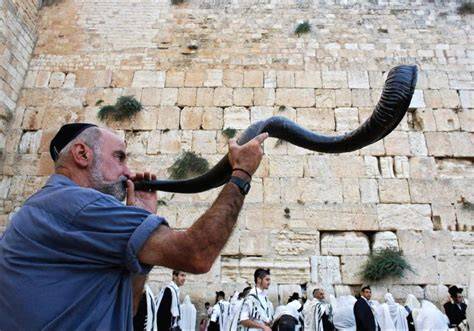
The phrase is a call to sound an urgent public warning. The trumpet or ram’s horn was used to summon Israel at solemn moments: for worship, assembly, war, and national crisis.
The shofar summoned Israel at solemn moments: for worship, assembly, war, and national crisis. Its blast from Zion, Jerusalem, the spiritual and political center of Israel, announces that the danger confronting Judah comes from the Lord Himself and demands an immediate response.
In Joel, the trumpet is not merely a musical instrument used in worship. Its sound signals that a decisive event is approaching. The people must listen, recognize the seriousness of the moment, and gather before the LORD.
Why Zion Is Mentioned
Mount Zion, where the temple stood, belonged uniquely to the Lord as the center of His covenant presence among His people. The alarm from His holy mountain declares that coming judgment is not a random disaster but God’s righteous action against covenant unfaithfulness.
Zion is therefore both a geographical location and a theological symbol. It represents Jerusalem, the place associated with the temple, the covenant community, and the presence of God among His people.
Psalm 2:6 says:
“I have installed My King on Zion, upon My holy mountain.”
Joel 3:17 adds:
“So shall ye know that I am the LORD your God dwelling in Zion, my holy mountain: then shall Jerusalem be holy, and there shall no strangers pass through her any more.”
Psalm 87:1 describes Zion in these words:
“A Psalm or Song for the sons of Korah. His foundation is in the holy mountains.”
The Meaning of “Sound the Alarm”
The second part of Joel 2:1 interprets the trumpet blast: “sound the alarm on my holy mountain.” The sound is a warning that danger is approaching and that the people must not remain passive.
The same pattern appears in Jeremiah 4:5-6:
“Announce in Judah, proclaim in Jerusalem, and say: ‘Blow the ram’s horn throughout the land. Cry aloud and say, ‘Assemble yourselves and let us flee to the fortified cities.’ Raise a signal flag toward Zion. Seek refuge! Do not delay! For I am bringing disaster from the north, and terrible destruction.’”
Zephaniah 1:16 also associates the trumpet with judgment:
“a day of horn blast and battle cry against the fortified cities, and against the high corner towers.”
The trumpet is thus a public signal. It announces that the community must assemble, recognize the crisis, and respond to God’s warning.
The Biblical Use of the Ram’s Horn
Several translations render “trumpet” as “ram’s horn,” “horn,” or “shofar.” These expressions reflect the Hebrew practice of using a horn as a signal in religious, military, and national settings.
Joshua 6:4-5 describes the use of rams’ horns during the fall of Jericho:
“Have seven priests carry seven rams’ horns in front of the ark. Then on the seventh day, march around the city seven times, while the priests blow the horns. And when there is a long blast of the ram’s horn and you hear its sound, have all the people give a mighty shout. Then the wall of the city will collapse and all your people will charge straight into the city.”
Numbers 10:9-10 explains that trumpet blasts could be used in both battle and worship:
“When you enter into battle in your land against an adversary who attacks you, sound short blasts on the trumpets, and you will be remembered before the LORD your God and saved from your enemies. And on your joyous occasions, your appointed feasts, and the beginning of each month, you are to blow the trumpets over your burnt offerings and peace offerings to serve as a reminder for you before your God. I am the LORD your God.”
Hosea 5:8 gives another warning connected with the horn:
“Blow ye the cornet in Gibeah, and the trumpet in Ramah: cry aloud at Bethaven, after thee, O Benjamin.”
Isaiah 27:13 presents a future gathering associated with a great ram’s horn:
“And in that day a great ram’s horn will sound, and those who were perishing in Assyria will come forth with those who were exiles in Egypt. And they will worship the LORD on the holy mountain in Jerusalem.”
These passages show why Joel’s trumpet command carries such force. The sound could summon worshipers, gather a nation, announce war, warn of danger, call for urgent movement, or proclaim a decisive act of God.
The Day of the LORD
The reason for the trumpet blast is stated directly: “the day of the LORD is coming; it is near.” In Joel, the day of the LORD is a time when God acts decisively in judgment and salvation.
Joel 2:2 describes it as:
“a day of darkness and gloom, a day of clouds and blackness.”
The chapter portrays an overwhelming force moving across the land:
“Like dawn spreading across the mountains a large and mighty army comes, such as never was in ancient times nor ever will be in ages to come.”
“Before them fire devours, behind them a flame blazes. Before them the land is like the garden of Eden, behind them, a desert waste-nothing escapes them.”
“They have the appearance of horses; they gallop along like cavalry.”
“With a noise like that of chariots they leap over the mountaintops, like a crackling fire consuming stubble, like a mighty army drawn up for battle.”
“At the sight of them, nations are in anguish; every face turns pale.”
“They charge like warriors; they scale walls like soldiers. They all march in line, not swerving from their course.”
“They do not jostle each other; each marches straight ahead. They plunge through defenses without breaking ranks.”
“They rush upon the city; they run along the wall. They climb into the houses; like thieves they enter through the windows.”
“Before them the earth shakes, the heavens tremble, the sun and moon are darkened, and the stars no longer shine.”
The passage concludes this description by identifying the LORD as the commander of the army:
“The LORD thunders at the head of his army; his forces are beyond number, and mighty is the army that obeys his command. The day of the LORD is great; it is dreadful. Who can endure it?”
Related Scriptures About the Day of the LORD
The phrase “the day of the LORD” appears throughout Scripture as a description of divine intervention, judgment, and deliverance.
First Thessalonians 5:2 says:
“For you are fully aware that the Day of the Lord will come like a thief in the night.”
Second Peter 3:10 says:
“But the Day of the Lord will come like a thief. The heavens will disappear with a roar, the elements will be destroyed by fire, and the earth and its works will be laid bare.”
Malachi 4:1 says:
“For behold, the day is coming, burning like a furnace, when all the arrogant and every evildoer will be stubble; the day is coming when I will set them ablaze,” says the LORD of Hosts. “Not a root or branch will be left to them.”
Ezekiel 30:3 says:
“For the day is near, the Day of the LORD is near. It will be a day of clouds, a time of doom for the nations.”
Zephaniah 1:14 says:
“The great Day of the LORD is near-near and coming quickly. Listen, the Day of the LORD! Then the cry of the mighty will be bitter.”
Amos 5:18-20 warns those who expected the day of the LORD to bring only blessing:
“Woe to you who long for the Day of the LORD! What will the Day of the LORD be for you? It will be darkness and not light. It will be like a man who flees from a lion, only to encounter a bear, or who enters his house and rests his hand against the wall, only to be bitten by a snake. Will not the Day of the LORD be darkness and not light, even gloom with no brightness in it?”
These passages emphasize that the day of the LORD is not to be treated casually. It is a day of exposure, accountability, judgment, and decisive divine action.
“Let All Who Dwell in the Land Tremble”
Joel 2:1 calls every inhabitant of the land to tremble. The response is not limited to soldiers, rulers, priests, or a particular group. The entire community is confronted by the seriousness of the coming day.
Psalm 96:9 says:
“Worship the LORD in the splendor of His holiness; tremble before Him, all the earth.”
Psalm 99:1 says:
“The LORD reigns; let the nations tremble! He is enthroned above the cherubim; let the earth quake!”
Habakkuk 3:16 describes the prophet’s physical response to hearing about the coming day of distress:
“I heard and trembled within; my lips quivered at the sound. Decay entered my bones; I trembled where I stood. Yet I must wait patiently for the day of distress to come upon the people who invade us.”
The trembling in Joel is not merely panic. It reflects recognition of God’s holiness, authority, and judgment. The command exposes the seriousness of the situation and prepares the people for repentance.
The Call to Repentance
After describing the approaching day of the LORD, Joel gives a direct call to return to God:
“Even now,” declares the LORD, “return to me with all your heart, with fasting and weeping and mourning.”
The prophet then explains the kind of repentance God seeks:
“Rend your heart and not your garments. Return to the LORD your God, for he is gracious and compassionate, slow to anger and abounding in love, and he relents from sending calamity.”
The contrast between the heart and the garments is important. An outward sign of grief is not enough if the inner person remains unchanged. Joel calls for genuine repentance that involves the whole heart.
Isaiah 66:2 expresses a related principle:
“For all those things hath mine hand made, and all those things have been, saith the LORD: but to this man will I look, even to him that is poor and of a contrite spirit, and trembleth at my word.”
Psalm 119:120 also connects trembling with reverence for God’s judgment:
“My flesh trembleth for fear of thee; and I am afraid of thy judgments.”
“Who Knows?” and the Possibility of Mercy
Joel’s warning is severe, but it is not presented as a message without hope. The prophet says:
“Who knows? He may turn and relent and leave behind a blessing-grain offerings and drink offerings for the LORD your God.”
The possibility of mercy is connected with returning to the LORD, fasting, weeping, mourning, and sincere repentance. The people are urged to respond because God is described as gracious, compassionate, slow to anger, and abounding in love.
The warning therefore serves a redemptive purpose. The trumpet does not merely announce destruction; it creates an opportunity for the people to turn back to God before the day arrives.
“Blow the Trumpet in Zion” as a Call to a Sacred Assembly
Joel 2:15 repeats the trumpet command in a more specific form:
“Blow the trumpet in Zion, declare a holy fast, call a sacred assembly.”
The following verses explain who must gather:
“Gather the people, consecrate the assembly; bring together the elders, gather the children, those nursing at the breast. Let the bridegroom leave his room and the bride her chamber.”
The gathering includes the elders, children, nursing infants, newly married people, and the entire congregation. No ordinary responsibility or personal celebration is treated as more urgent than the communal appeal to God.
The priests are also called to intercede:
“Let the priests, who minister before the LORD, weep between the portico and the altar. Let them say, ‘Spare your people, LORD. Do not make your inheritance an object of scorn, a byword among the nations. Why should they say among the peoples, ‘Where is their God?’’”
The trumpet therefore summons the community to three connected actions:
- Gathering: the people assemble together before God.
- Consecration: the assembly is set apart for a holy purpose.
- Intercession: the priests appeal to the LORD to spare His people.
The LORD’s Response to His People
Following the people’s call for mercy, Joel describes the LORD’s response:
“Then the LORD was jealous for his land and took pity on his people.”
“The LORD replied to them: ‘I am sending you grain, new wine and olive oil, enough to satisfy you fully; never again will I make you an object of scorn to the nations.’”
The chapter then describes the removal of the invading force:
“I will drive the northern horde far from you, pushing it into a parched and barren land; its eastern ranks will drown in the Dead Sea and its western ranks in the Mediterranean Sea. And its stench will go up; its smell will rise.”
The mood changes from fear to encouragement:
“Surely he has done great things! Do not be afraid, land of Judah; be glad and rejoice.”
“Do not be afraid, you wild animals, for the pastures in the wilderness are becoming green. The trees are bearing their fruit; the fig tree and the vine yield their riches.”
“Be glad, people of Zion, rejoice in the LORD your God, for he has given you the autumn rains because he is faithful. He sends you abundant showers, both autumn and spring rains, as before.”
“The threshing floors will be filled with grain; the vats will overflow with new wine and oil.”
The LORD also promises restoration:
“I will repay you for the years the locusts have eaten-the great locust and the young locust, the other locusts and the locust swarm-my great army that I sent among you.”
This promise follows the trumpet warning and the call to repentance. The movement of Joel 2 is from alarm, to trembling, to repentance, to mercy, restoration, and renewed knowledge of God.
The Locust Army in Joel 2
Joel 2 describes the approaching force with the imagery of a disciplined army. The passage calls it “a large and mighty army” and compares its appearance and movement to horses, cavalry, chariots, warriors, and soldiers.
The chapter also uses the language of fire and devastation:
“Before them fire devours, behind them a flame blazes.”
“Before them the land is like the garden of Eden, behind them, a desert waste-nothing escapes them.”
At the end of the restoration section, the LORD refers to the locusts as “my great army that I sent among you.” The passage therefore presents the disaster within the framework of divine sovereignty and judgment.
The expression “Blow the trumpet in Zion” introduces this scene so that the people will understand that the crisis is not ordinary. The trumpet announces a day requiring immediate spiritual attention.
Darkness, Clouds, and Cosmic Signs
Joel’s description of the day of the LORD includes darkness, clouds, blackness, a trembling earth, shaking heavens, and the darkening of the sun and moon.
The chapter says:
“The earth shakes, the heavens tremble, the sun and moon are darkened, and the stars no longer shine.”
Later, Joel speaks of events associated with the day of the LORD:
“I will show wonders in the heavens and on the earth, blood and fire and billows of smoke. The sun will be turned to darkness and the moon to blood before the coming of the great and dreadful day of the LORD.”
These images communicate the cosmic scale of the event. The warning is not presented as a minor local disturbance but as a moment that affects the land, the nations, the heavens, and the entire created order.
Deliverance and Calling on the LORD
Joel’s prophecy does not end with judgment. It also promises deliverance:
“And everyone who calls on the name of the LORD will be saved; for on Mount Zion and in Jerusalem there will be deliverance, as the LORD has said, even among the survivors whom the LORD calls.”
This promise places the trumpet warning within a larger message. The day of the LORD is great and dreadful, but the people who turn to the LORD are given hope of salvation and deliverance.
The chapter also promises the outpouring of God’s Spirit:
“And afterward, I will pour out my Spirit on all people. Your sons and daughters will prophesy, your old men will dream dreams, your young men will see visions.”
“Even on my servants, both men and women, I will pour out my Spirit in those days.”
Thus, Joel 2 moves beyond the immediate alarm to a promise of restoration, spiritual renewal, and deliverance for those who call on the name of the LORD.
How the Cross-References Clarify Joel 2:1
The Trumpet as a Call to Assemble
Numbers 10:3 says that when the trumpets are blown, the assembly gathers at the entrance of the tent of meeting. This helps explain why Joel’s trumpet call leads to a sacred assembly.
The Trumpet as a Military Warning
Numbers 10:5-7 describes alarm blasts that direct the movement of the camps. Numbers 10:9 connects the trumpet with battle against an adversary. Joel uses this familiar signal to announce that a powerful force is approaching.
The Trumpet as a Warning from a Watchman
Ezekiel 33:3-6 describes the responsibility of a watchman who sees the sword coming upon the land and blows the trumpet to warn the people. Joel’s command carries a similar sense of urgent public responsibility.
The Trumpet as a Sign of Impending Evil
Amos 3:6 asks:
“Shall a trumpet be blown in the city, and the people not be afraid? shall there be evil in a city, and the LORD hath not done it?”
The question assumes that a trumpet blast in a city should produce an immediate response. In Joel, the trumpet announces an event that requires the inhabitants of the land to tremble and seek God.
Joel 2:1 and Joel 2:15 Compared
| Reference | Command | Purpose |
|---|---|---|
| Joel 2:1 | “Blow the trumpet in Zion; sound the alarm” | Announce the approaching day of the LORD and warn the inhabitants of the land. |
| Joel 2:15 | “Blow the trumpet in Zion, declare a holy fast, call a sacred assembly” | Gather the community for repentance, fasting, prayer, and intercession. |
The repeated command shows that the alarm is meant to lead to action. The people are not merely informed about judgment; they are summoned to respond to God with humility and repentance.
Key Themes in “Blow the Trumpet in Zion”
- Urgency: the day of the LORD is coming and is near.
- Public warning: the message must be heard by all the inhabitants of the land.
- Divine judgment: the approaching crisis is associated with God’s righteous action.
- Holiness: Zion and the holy mountain represent the LORD’s covenant presence.
- Communal responsibility: the entire population is called to gather.
- Repentance: the people are told to return to God with all their heart.
- Inner transformation: Joel says to rend the heart and not merely the garments.
- Intercession: the priests plead, “Spare your people, LORD.”
- Mercy: the LORD is gracious and compassionate, slow to anger, and abounding in love.
- Restoration: the LORD promises provision, renewal, and repayment for the years the locusts have eaten.
- Deliverance: everyone who calls on the name of the LORD will be saved.
- Spiritual renewal: the LORD promises to pour out His Spirit on all people.
A Concise Explanation of the Verse
“Blow the trumpet in Zion” means to sound an urgent warning from the place associated with God’s holy presence. The trumpet announces that the day of the LORD is near, that judgment is approaching, and that all the inhabitants of the land must recognize the seriousness of the moment.
In the surrounding passage, the warning leads to a call for wholehearted repentance. The people are summoned to fast, gather in a sacred assembly, and seek mercy from the LORD. The verse therefore combines warning and invitation: it announces judgment while calling the people to return to a gracious and compassionate God.
Joel 2:1 in the Flow of the Chapter
- Joel 2:1-11: the trumpet announces the approaching day of the LORD and the terrifying army.
- Joel 2:12-14: the LORD calls the people to return with fasting, weeping, mourning, and sincere repentance.
- Joel 2:15-17: the trumpet summons a holy fast and sacred assembly, while the priests intercede for the people.
- Joel 2:18-27: the LORD shows compassion, removes the threat, restores the land, and promises abundance.
- Joel 2:28-32: the LORD promises the outpouring of His Spirit and deliverance for everyone who calls on His name.
The trumpet blast is therefore the opening signal of a complete prophetic movement: warning, repentance, prayer, mercy, restoration, spiritual renewal, and deliverance.