An apostolic blessing from the Pope, also called a papal blessing, is a formal blessing granted directly or indirectly by the Pope and issued for specific sacraments, religious milestones, anniversaries, and significant birthdays. When requested in writing, it is presented as an artistic parchment prepared by the Vatican’s Office of Papal Charities, also known as the Apostolic Almoner’s Office.
The official parchment blessing can be requested in person in Vatican City or through the authorized online procedure. Applicants select the occasion, choose a parchment template, provide the required personal and event details, select collection or delivery, and make the required contribution by credit card.
What an Apostolic Blessing Is
An apostolic blessing (Latin: benedictio apostolica or Papal Blessing (Latin: Benedictio Papalis) is a formalized benediction imparted by the Pope, either directly or by designation through another bishop sometimes by audience or by written parchment accompanied with a dry seal of the Apostolic See.
The Apostolic Blessing, also known as the Papal Blessing, is a special blessing recognised by the Catholic Church. It is called apostolic because it is granted directly or indirectly by the Pope, Bishop of Rome, whose church is named after the apostles Peter and Paul.
The Papal Blessing, also known as the Apostolic Blessing, is a special blessing bestowed for specific occasions. It is often associated with plenary indulgence, the remission of all temporal penalties due to sins.
The Apostolic Blessing is released on a special, artistic parchment, making it even more memorable.
Who Can Impart the Apostolic Blessing
The Pope can personally impart this blessing, confer it as part of a ceremony, or send it in writing to those who request it, following a particular procedure.
The titular bishop or archbishop of a diocese, which is also its residential seat, or the titular priest of a diocese, can also dispense the Apostolic Blessing.
Bishops may grant it three times a year and any priests may do so for the sick and the dying.
The apostolic blessing is not to be confused with an episcopal blessing, also known as a Pontifical blessing, which bishops can impart at any time by their own competent authority.
The Urbi et Orbi Blessing
A particularly solemn form of imparting the apostolic blessing is as an Urbi et Orbi blessing granted to the city of Rome and the entire world.
The Pope gives his blessing in many forms and may use, with or without the introductory liturgical greeting, Dominus vobiscum, the formula of Pontifical blessing that any other bishop may use.
Within his own diocese, a bishop may impart the apostolic blessing three times a year on solemn feasts. The same holds, within their territories, for non-bishop prelates, such as an apostolic prefect, recognized by canon law as juridically equivalent to diocesan bishops.
In exceptional circumstances, they can impart it also on other occasions. The blessing is imparted in place of the normal blessing at the end of Mass, using a particular formula.
Spiritual Meaning and Plenary Indulgence
While the Apostolic Blessing invokes divine protection and grace, the plenary indulgence purifies the soul, eliminating the temporal penalties of sin.
Both are profound expressions of God’s mercy and love, and have always been tools to strengthen the faith and spirituality of the faithful.
A plenary indulgence is granted to those who devoutly receive the papal blessing when imparted by the pope himself in the Urbi et Orbi form or by their own bishop in accordance with this authorization.
It is granted also to those who are unable to be present at the rite itself and who instead follow it piously by radio, television, or the internet.
The ritual on the Pastoral Care of the Sick uses the term “Apostolic Pardon” for what elsewhere, for instance in the Enchiridion Indulgentiarum, is called the “Apostolic Blessing with attached plenary indulgence.”
When a Papal Blessing Parchment Can Be Requested
The Vatican strictly regulates the occasions for which an Apostolic Blessing can be issued. They are granted for sacraments such as baptism, first Communion, confirmation, marriage, ordination to the priesthood or permanent diaconate, and religious profession.
The blessing can only be requested for the following milestones:
- Baptism
- First Holy Communion
- Confirmation
- Marriage
- Priestly ordination
- Ordination to the permanent diaconate
- Religious profession
- Significant anniversaries of marriage, priestly ordination, or religious profession
- Significant birthdays
- General blessings for a practicing Catholic or a single family unit, provided a priest verifies their active faith standing
Sacraments and Religious Milestones
The occasions for which Papal Blessing Parchments are granted are: Baptism, First Holy Communion, Confirmation (only for a single person), Marriage, Priestly Ordination, Religious Profession, and Ordination of Permanent Deacons.
The blessing is also granted on the occasion of the ordination of a priest, the profession of religious vows, the secular consecration of a layman, and the permanent ordination of a deacon.
Anniversaries
Significant wedding anniversaries, such as the 25th, 50th, and 60th anniversaries, may qualify for a Papal Blessing.
Authorized anniversary occasions include the 10th, 15th, 20th, 25th, 30th, 35th, 40th, 45th, 50th, 55th, 60th, 65th, 70th, 75th, and 80th anniversaries of marriage, priestly ordination, or religious profession.
Birthdays
Birthdays may qualify when they mark significant milestones, including the 18th, 30th, 40th, 50th, 55th, 60th, 65th, 70th, 75th, 80th, 85th, 90th, 95th, and 100th through 110th birthdays.
Other examples of significant ages include 18, 30, 75, or 100 years.
For requests for blessings for birthdays, the requested date is the date of the birthday, not the date of birth.
Individual Catholics and Families
Individual faithful or families may request general blessings for a practicing Catholic or a single family unit, provided a priest verifies their active faith standing.
In some cases, such as wedding anniversaries or birthdays, the applicant is asked to provide a “declaration of suitability” attesting that the recipients are practicing Catholics.
Occasions That Do Not Qualify
Papal Blessings cannot be granted posthumously, for deceased individuals, or for occasions not listed above, such as the blessing of a house, a business, an animal, or a regular birthday or anniversary.
Requests for papal blessings for occasions other than those indicated cannot be considered.
Unfortunately, requests for papal blessings for occasions other than those specified cannot be considered in online submissions.
On certain occasions, such as the anniversary of a parish, it may be possible to request a Papal blessing by visiting the office of the Papal Charities in person.
Eligibility and Priest’s Recommendation
To receive a Papal Blessing, the recipient or recipients must be practicing members of the Roman Catholic Church.
Every application requires a Priest’s Recommendation. Your local parish priest must sign the application form or provide a letter on parish letterhead certifying that the applicant is a practicing Catholic in good standing.
This step is mandatory before the diocese or the Vatican can process the request.
When an asterisk is given, the person ordering the parchment is asked to make a “declaration of eligibility,” in other words, that the persons for whom the Blessing is intended are both Catholic and practicing, expressed simply by a short declaration, by one’s own responsibility, agreeing to the necessary conditions.
Where to Request the Parchment
The Office of Papal Charities, also known as the Apostolic Almoner’s Office or the Apostolic Almsgiving, handles requests and issues official parchment blessings.
The easiest way of requesting a parchment blessing is by visiting the website of the Office for Papal Charities.
The only site authorized for online application is the official site of the Apostolic Almsgiving.
Applications by regular mail, fax, or email are not accepted, and any requests made outside of authorized channels will be automatically rejected.
In Person in Vatican City
It is possible to enter in person the Office of Papal Charities inside Vatican City, by entering Saint Anne’s Gate, on the right side of the colonnade of Saint Peter’s Square.
Those who choose the in-person method should go to the offices located within Vatican City, entering through the Porta di Sant’Anna, to the right of the colonnade in St. Peter’s Square.
Parchments can be requested here by choosing from all the templates available, which are then to be collected in person or sent by post.
If you are visiting Rome, you may collect your Papal Blessing directly from their office inside the Vatican.
Office Hours
| Days | Opening hours |
|---|---|
| Monday, Wednesday, Friday, and Saturday | 8:30 a.m. to 1:30 p.m. local time |
| Tuesday and Thursday | 8:30 a.m. to 5:30 p.m. local time |
| Sunday | The office is closed on Sundays. |
The office is open from 8:30 a.m. to 1:00 p.m. on Mondays, Wednesdays, Fridays, and Saturdays and from 8:30 a.m. to 5:30 p.m. on Tuesdays and Thursdays.
Because the available office information gives two slightly different closing times for Mondays, Wednesdays, Fridays, and Saturdays, applicants should verify the current schedule before traveling.
Online
For those not in Rome, the digital process is equally accessible.
Through the official website of the Apostolic Almoner’s Office, the only authorized site for this purpose, applicants must follow several steps.
The online request process must be followed by supplying the necessary data and by following the instructions indicated in the various sections.
How to Apply Online
- Choose the occasion for which the Apostolic Blessing is being sought.
- Choose the parchment template according to the various occasions.
- Enter the data needed for the preparation of the parchment.
- Register the person making the request.
- Choose collection at the Vatican or mailing by DHL Express Courier.
- Pay the contribution by credit card.
The first step is to select the occasion for which the blessing is being requested, such as a baptism, marriage, or anniversary; then, choose the style of parchment; then, enter the information that should appear on the document; and finally, register the applicant, choose the delivery method, and make a donation by credit card.
The system also allows users to open a personal account for future requests.
One can create a personal account which can be used for future requests.
Information Required
The requested information includes the full name of the recipient or recipients of the blessing, the specific occasion, the date and location of the event in the case of sacraments or anniversaries, as well as the sender’s complete address, email address, and phone number.
The information needed to request parchments includes the name and surname of the person or persons for whom the Blessing is being requested, the reason or occasion prompting the request, and the date, the name of the church, and the place where the occasion is taking place.
These details are necessary in the case of a Sacrament, religious profession, or an anniversary.
The address, together with email address and phone number with international prefix, is required for the location where the parchment is to be posted.
Delivery or Collection
Applicants may choose collection in the Vatican or mailing to anywhere in the world by DHL Express Courier.
Collection at the Vatican is available only for requests from Rome.
The destination address can be different from the address of the person making the request.
Once the transaction is confirmed, the Apostolic Almoner’s Office will send a confirmation email with the estimated delivery or pickup date.
An email is then sent from the Charities office that confirms the process has been completed correctly.
Payment
The contribution is paid by credit card, and only Visa and MasterCard are accepted.
A donation is then made by credit card.
Applying Through a Diocese
If you require assistance or cannot use the online portal, you can submit your request through a diocesan office that assists parishioners with the application process.
The local diocesan pathway generally requires downloading and printing the Papal Blessing Request Form, presenting the form to the parish priest for a signature and parish seal, and submitting the completed form with the specified fee.
The Chancellor or Vice Chancellor will review the application and forward it to the Vatican on your behalf.
Diocesan paper applications require more time because they include local processing, international mailing, and Vatican production timelines.
Processing Times
The processing time for the request is approximately 25 days if picked up at the Vatican office and 30 days for international deliveries.
| Method | Approximate time |
|---|---|
| Collection at the Vatican office | About 25 days |
| International delivery | About 30 days |
| Online application for a special event | Allow at least 6 to 8 weeks |
| Diocesan paper application | Allow at least 3 to 4 months |
Because all authentic certificates are printed, individually inscribed, and shipped directly from Rome, you must allow ample time for processing.
If you are requesting a blessing for a wedding or a major anniversary, we highly recommend submitting your application as early as possible.
If the blessing is for an upcoming event, the parchment can be sent to your local parish so your pastor can present it on the day of the celebration.
The information provided for the request states that the date of the occasion cannot be more than 6 months, or less than 4 months, from the day of request.
Because the stated timeframes differ according to the collection method and the type of application, applicants should allow the longer planning period when a parchment is needed for a specific celebration.
Cost of the Parchment and Shipping
The cost of the parchment ranges between 20 and 30 euros, depending on the style, plus shipping costs.
The parchments range from 21 to 30 Euros according to the template chosen.
Mailing by DHL Express Courier starts from 15 Euros, with prices calculated according to quantity and destination.
Shipping costs vary depending on the destination, from 15 euros for destinations within Italy to 40 euros if sent to Africa.
| Item | Amount or condition |
|---|---|
| Parchment | 20 to 30 euros, depending on the style |
| Parchment by template | 21 to 30 Euros |
| DHL Express shipping | Starting from 15 Euros |
| Shipping to Africa | Up to 40 euros |
The cost of the Apostolic Blessing is not fixed and varies depending on the size and style of the parchment chosen.
The costs mainly cover the production and shipping costs of the parchment.
The offering includes the parchments, mailing by DHL Express Courier, and a contribution to the Pope’s charitable works.
How the Offering Supports Charity
It is worth noting that, after deducting the processing and shipping costs, all proceeds go entirely to the charitable works carried out by this office in the name of the pope to help those most in need.
The Apostolic Almsgiving is the Office of the Holy See in charge of exercising charity towards the poor in the name of the Pope.
The Dicastery for the Service of Charity is the Holy Father’s special office for charity activities among the most poor, less advantaged, and most marginalized across the globe.
The Dicastery’s main objective is to administer, act, and deliver on behalf of the Holy Father his personal financial budget dedicated to charity.
Through his daily activities, the Almoner of His Holiness makes possible the Holy Father’s special and direct attention, as Head of the Universal Church, toward those in extreme poverty, the socially excluded, and victims of natural disasters.
The Dicastery is responsible for receiving and collecting financial donations for the Holy Father’s charitable activities and acts of mercy toward the poor and those in need.
The Almoner, who serves as the Head of the Dicastery, is likewise mandated to issue Parchments with Apostolic Blessings for specific occasions.
All offerings received from the issuance of these Parchments are devoted entirely to charity.
It is the Almoner’s duty to utilize all donations in the spirit of the Gospel to directly assist those most in need.
Historical Role of the Apostolic Almoner
In the early Church, it was the Deacons who were in charge of collecting offerings and redistributing them among the most needy; however, over the centuries, official institutions were established for this activity.
The Almoner of His Holiness, who has archbishopric dignity, is part of the Papal Family and participates in the liturgical celebrations and official audiences of the Pope.
Under Pope Leo XIII, the Almoner was granted the faculty to issue the Apostolic Blessing on parchment, authenticated with his signature and the stamp of the office.
Written Papal Blessings on Parchment for various special occasions are distributed by the Office of Papal Charities, the Elemosineria Apostolica, in the Vatican.
This office both collects alms for the Holy Father’s charities and produces Papal Blessings.
The Apostolic Blessing at Papal Events
In addition to the parchment certificate, the Pope imparts the Apostolic Blessing during major public events in Rome.
Every Sunday at noon, following the Angelus Domini, the Holy Father appears at the window of the Apostolic Palace and imparts his Apostolic Blessing to the faithful gathered in St. Peter’s Square.
Every Wednesday morning the Pope holds a General Audience, either in St. Peter’s Square or in the Paul VI Audience Hall, depending on the season.
At the conclusion of the Audience, the Holy Father once again bestows the Apostolic Blessing, offering it not only to all those in attendance, but also to their loved ones and to religious articles they bring with them, such as rosaries, medals, crosses, statues, and sacred images.
A plenary indulgence is granted to those who devoutly receive the papal blessing when it is imparted by the Pope himself in the Urbi et Orbi form, subject to the applicable conditions.
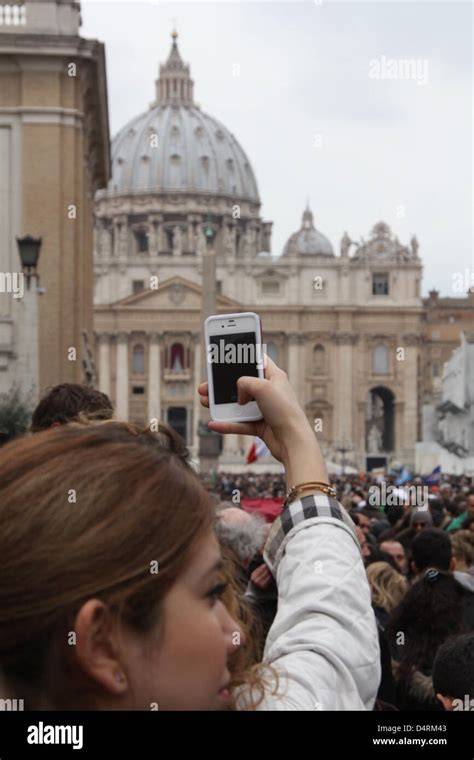
The Sunday Blessing
Every Sunday at noon, a deeply moving event unfolds in the heart of Vatican City.
As the bells of St. Peter’s Basilica ring out, thousands of pilgrims and visitors gather below the Apostolic Palace to hear the voice of the Pope and receive the Apostolic Blessing.
Standing at his window, the Holy Father offers a reflection on the Gospel or the issues of the day, followed by a warm greeting to pilgrims from around the world.
Then, with great solemnity, he raises his hand and imparts the blessing, calling upon divine grace and peace to descend upon all those present and upon those watching from afar.
This moment of connection is both intimate and universal, a visible reminder of the unity of the Church and the spiritual guidance of the Successor of Peter.
It is a time of prayer, contemplation, and renewal, embraced by faithful hearts across every continent.
The Wednesday General Audience
In addition to the Sunday Angelus, the Wednesday General Audience is another cherished opportunity to receive the Papal Blessing.
Held in St. Peter’s Square or inside the Paul VI Audience Hall depending on the time of year, the Audience is an occasion for teaching, encouragement, and prayer.
At the conclusion of the Audience, the Pope offers his Apostolic Blessing to all those present.
This includes not only the faithful in attendance but also their loved ones and any devotional objects brought to be blessed.
It is a gesture of spiritual closeness and fatherly care from the Holy Father, bringing comfort, strength, and hope to Catholics everywhere.
Apostolic Blessing and the Sick or Dying
Priests are urged to impart the Apostolic Blessing with attached plenary indulgence to the gravely sick and the dying.
If a priest cannot be had, the Church grants a plenary indulgence, to be acquired at the moment of death, to any rightly disposed Christian who in life was accustomed to say some prayers, with the Church itself supplying the four conditions normally required for gaining a plenary indulgence.
These conditions include recent sacramental confession, reception of Holy Communion, prayers for the monthly intentions of the Pope, and detachment from all sin.
Important Practical Points
- Use only the official online procedure or apply in person at the Vatican office.
- Requests by post, fax, or email are not accepted.
- Check that the occasion is one of those authorized by the Vatican.
- Confirm that the recipient or recipients meet the Catholic and practicing-faith requirements.
- Prepare exact names, dates, church details, location, address, email address, and international phone number.
- Allow additional time when the parchment is needed for a wedding, anniversary, ordination, or other scheduled event.
- Remember that the date entered for a birthday request is the date of the birthday, not the date of birth.
- Consider that delivery times and shipping costs depend on the chosen method, destination, and quantity.
Obtaining an apostolic blessing is not only a symbolic gesture of communion with the successor of Peter but also direct support for the charitable works the pontiff carries out on behalf of the entire Church.