Catholic country singers bring Catholic faith into country music through personal testimony, conversion stories, grief, service, and songs about God’s presence in ordinary life. Among the best-known examples are Craig Morgan and Collin Raye, whose careers and family experiences have been deeply shaped by their faith. Their stories show how country music can become a vessel for prayer, reflection, consolation, and public witness.
Craig Morgan entered into full communion with the Catholic Church at the Easter Vigil in 2017, after his wife and two sons joined the Church a year earlier. Collin Raye became Catholic in 1983 after a period of spiritual searching, and his Catholic faith later guided him through professional difficulties, family tragedies, and charitable work.
Craig Morgan’s Catholic conversion
As country star Craig Morgan looks back on his life, from his military service to his multi-decade music career, he said one thing has always remained the same. “It’s all about God,” Morgan said. “It’s that simple.” “Nothing that has happened in my life and my career hasn’t been part of God’s plan, and I can assure you of this because I know this firsthand, I’m doing things in my life that I didn’t plan on,” he explained.
“I didn’t plan to be a country music singer. The only reason I’m in this industry is I wanted to write songs, but God had all these things lined up. He knew everything, and it just blows my mind.” In 2017, yet another thing happened that he didn’t realize God had in store for him - coming into full communion with the Catholic Church at the Easter Vigil.
The process really got started after his wife and two sons joined the church a year before him. And at first, he said, he was slightly skeptical. But as he studied more about the faith, “I started finding out just how Catholic I was my whole life,” he said.
Morgan grew up in various Christian denominations, predominantly Baptist and, for a time, Presbyterian. But there were some things that didn’t sit quite right with him until he began studying the Catholic faith.
The Eucharist and the Church
One of the big things was the celebration of the Last Supper, or as Protestants refer to it, the Lord’s Supper. “I always felt like when (the Protestant Church) did that, something just wasn’t 100 percent. I always felt a little weird,” Morgan explained in an interview with the Tennessee Register, newspaper of the Diocese of Nashville.
“I never thought it was nearly as respectful as it should have been. Even if it was just seen as a representation of Christ, I felt that it had to be more respectful than just passing bread down the aisle. “Then I learned and started studying that there was something more to that,” he said. “That was God and the Holy Spirit tugging on me.”
The Protestant view of the Bible was another thing that came up in his studies. “Most Protestants believe everything you need to know is in the Bible, and I think they fail to recognize that Christ didn’t leave us a Bible,” Morgan said.
“Christ left us a church, and I found that so fascinating. “The more I studied, the more I realized the church was more responsible for our Christian faith than even the Bible. That’s the church Christ started,” he continued.
And while now, the Christian faith has split into multiple denominations, “the church that Christ started, the Catholic Church, has never split, and I just love it.” The more he continued to study the history of the faith, the more fascinated he became and the more he realized where God was leading him.
“I tell people all the time now. All Christians are Catholic. They just don’t know it yet,” he said. “But I have such a great appreciation for the blessings that God gave me in the Baptist Church, in the Presbyterian Church, and in our fellow Christians. It was all part of my walk that brought me to this place.”
Craig Morgan, parish life, and service
Morgan and his family are parishioners of St. Christopher Church in Dickson. For the last two years, he’s become a key highlight for the Knights of Columbus’ annual Supreme Convention, performing at the welcoming concert at the Grand Ole Opry in 2022, and again at this year’s convention in Orlando, Florida.
It was during that performance that he was invited to be a lifetime member. “It’s exciting,” Morgan said of the invitation. “It’s just another item that I didn’t know enough about before, and after that I did a little research and realized what a positive impact the Knights have had not only in the Church but in the world.”
It gave him the same feelings that he also had about serving in the military, he said. “You get that feeling of doing and being a part of something that is bigger and greater than yourself.”
That feeling is partly what led him to decide to reenlist in the U.S. Army Reserve. He was sworn-in on the Opry stage July 29, 2023. He began six weeks of full-time duty, attending Warrant Officer Candidate School at Fort Novosel, Alabama, Nov. 6.
The decision came after having already completed nearly 18 years of active duty and reservist service from 1985 until 2004. “It’s an opportunity for me to go back and finish something that I started so many years ago,” Morgan explained.
“It’s a big deal to spend 20 years at any job, but the military especially because of everything that goes on and the sacrifices that are made. “To be given the opportunity to go back and finish, that was the primary reason,” he said.
“Second was the opportunity to help with Army recruiting. It’s at an all-time low. This is an opportunity for me to show the country that, if I can do this, anybody can do it, and, hopefully, it will encourage young people, in particular, but everyone to spend time serving the country,” Morgan said.
“It’ll give you such a great deal of appreciation for our country and how fortunate and blessed we are in spite of all the negatives that may be taking place.”
Music as a vessel for faith and grief
Before he left for military duty, his brand new extended-play album, “Enlisted,” was released Oct. 20. While the title is a play on his recent decision to reenlist into the Army Reserves, it also plays on the decision to “enlist” his friends to help him with the project.
The six-track EP includes duet recordings of his biggest hits - “Redneck Yacht Club” with Blake Shelton, “Almost Home” with Jelly Roll, “That’s What I Love About Sunday” with Gary LeVox, and “International Harvester” with Lainey Wilson - as well as two new original duets - “Raise the Bar” with Luke Combs and “That Ain’t Gonna Be Me” with Trace Adkins.
With so many new and exciting things happening in his life, he said, he continues to see the way God has worked. But his music has become, in ways, a vessel for God.
None more so than when he penned his 2019 single, “The Father, My Son, and the Holy Ghost,” which tells the story of the grief he has experienced since losing his son in a drowning accident in 2016.
“I did not write that song. God wrote that song,” Morgan said. “The last thing I wanted to do was put my pain and hurt out there in such a way that everyone could see it and hear it and feel it, but God did.”
Through his music and now his time in the Army, and, most importantly, through his faith and belief in the Catholic Church, he said he wants to spread love. “I love the message that our pope has about love,” Morgan said.
“A lot of people misinterpret a lot of things our pope has said, but I think it’s because the devil wants so badly to destroy the church and that’s the last standing foundation piece of our faith.”
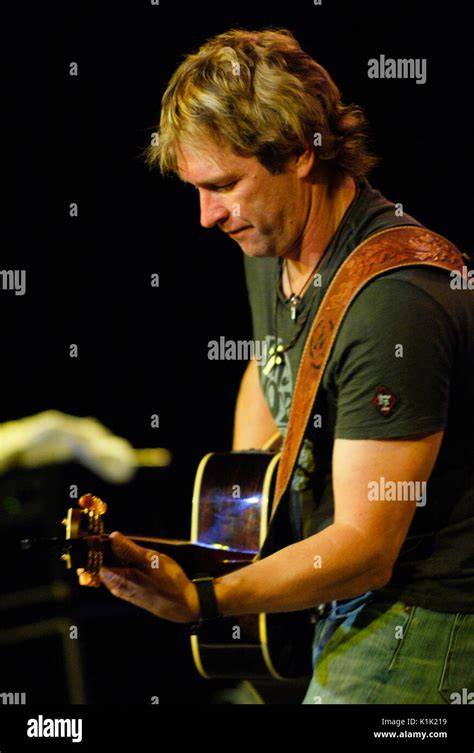
Collin Raye’s path to Catholicism
Catholic country singer Collin Raye is pictured in an undated photo. Raye says his Catholic faith has guided him through life's ups and downs including the death of a granddaughter in 2010.
Every life is filled with highs and lows, but for country singer Collin Raye, the peaks and valleys have been particularly dramatic. He has had five platinum albums, 24 Top 10 records, 16 No. 1 hits, and five nominations each by the Country Music Association and the Academy of Country Music as male vocalist of the year.
He also has suffered through the near-death of his wife and child, followed by his wife’s yearlong hospitalization, the end of his marriage, career difficulties and bankruptcy, and the death of his granddaughter after years of an undiagnosed disease.
The peaks and valleys are documented in his recent autobiography, “A Voice Undefeated” - a book that Raye wasn’t even sure he wanted to write. “Am I important enough to write a book about myself?” he said he remembered thinking.
The notion of an autobiography had never occurred to him, but once he was asked to write one, he realized the project could be used for a greater good. “Obviously, God is wanting me to do this because I have been (through) some ups and downs, and been through some extraordinary circumstances, both on the upside and the downside,” he said.
“Hopefully it will be a book he can use for his own good, because that’s what it’s all about.”
Born Floyd Elliot Wray Aug. 22, 1960, in De Queen, Arkansas, Raye - renamed by his record label - experienced a number of ups and downs early on including his family’s frequent moves, the launching of a band that people paid to hear in concert and his brother’s near-fatal car accident when Raye was about to enter seventh grade.
There were a few constants in his life: his hard-working mother, the Christian faith she instilled in her two sons and his passion for music.
Raye’s encounter with the Catholic faith
It was not until he was 23 - a professional musician in a band, a young husband and soon-to-be-father - that Raye encountered the Catholic faith. “My heart told me there was something missing in my life,” he writes in his book. “I felt empty.”
Then he met two fans, Lil and Dick Ellington, and discovered they were Catholic. “I was really searching at that time, and I think God sent them to me very purposely,” he says now.
“It set them back on their heels when I asked if I could go to Mass with them. They weren’t expecting that.” Raised Baptist, Raye was challenged by some teachings and traditions of the church - the place of Mary and the role of confession among them.
But his very first experience inside a Catholic church opened his heart and he decided to learn more. Raye became a Catholic in 1983. His infant daughter was baptized with him in 1983.
Though he was already baptized, he asked to be baptized again to experience it as a sacrament, rather than “an obligation to make my mom happy.” Years later, his by-then ex-wife also became Catholic.
Faith and Raye’s musical identity
It was Raye’s faith that opened his mind to the possibility of changing his name. Known as “Bubba” - he never went by Floyd - Raye understood that people outside the South might not appreciate the name, and if he continued spelling his last name as Wray, it would be tough for fans to find his records in the record store, since they would almost certainly look under the letter R.
“My first thought: ‘This just seems wrong to change my name,’ but I quickly remembered Jesus changed the name of the apostles. Not that this was for the same reason he changed Simon to Peter!” Raye quipped. “But I thought at least the precedent was there.”
That name change kicked off a long and successful career - though it was not without its challenges, particularly after staffing changes at his recording label, Sony. “After years of sustained success, of platinum records and hit songs, of fame and fortune,” he writes, “my Nashville career went down in flames virtually overnight.”
Floyd Collin Raye is an acclaimed country music singer, known professionally as Collin Raye. He made his debut on the American country music scene in 1991 with the release of his debut album All I Can Be, which produced his first Number One hit in “Love Me”.
All I Can Be was the first of four consecutive albums released by Raye to achieve platinum certification in the United States for sales of one million copies each. Between 1991 and 2007, Raye charted 30 singles on the U.S. country charts.
Four of Raye’s singles have reached Number One on the Billboard country music charts: 1992’s “Love, Me” and “In This Life”, 1994’s “My Kind of Girl”, and 1998’s “I Can Still Feel You”.
He has also recorded a total of eleven studio albums, counting a Christmas album and a compilation of lullabies, in addition to releasing a Greatest Hits compilation, a live album, and a live CD/DVD package.
Family tragedy, charity, and trust in God
Fighting to continue recording and releasing hit songs, to fill concert venues, and to maintain his income, Raye also was focused on being as present to his children - and, eventually, his two granddaughters - as his career permitted.
Problems persisted: his granddaughter Haley’s mysterious disease and then his son’s horrific car accident. “Looking back, it’s easy to see how God’s hand was still guiding me,” Raye writes.
“Had I stayed at the top of the charts with all the demands that come with that life, I could not have given (my family) as much as they needed at the time.” Though he always worked to do the right thing, and to put his celebrity to the service of good causes, “I was probably an obstacle to (God) more than I care to admit,” Raye writes.
Now his life is unfolding in new directions, and he’s content to let it unfold. Along with his daughter Britanny, he started the Haley Bell Blessed Chair Foundation.
Named for Raye’s granddaughter, who died in 2010, the foundation assists families struggling to meet the basic medical needs of disabled family members because of a low income or lack of adequate health insurance. The foundation has distributed more than 80 specialty wheelchairs for children with major disabilities.
In December, Raye released “Still on the Line: The Songs of Glen Campbell.” It has taken him years to understand “how to be still and turn things over to him,” Raye said.
And he still struggles to do that consistently. But through all the ups and downs, the one constant has been drawing nearer to God.
“It takes a lot of time and a lot of negative circumstances to bring you down to your knees on a regular basis before you can say, ‘Lord I’ve got nothing here, and I’m going to have nothing tomorrow. Please take this and do what you will with it,’” he said.
Country music, religious questions, and the outlaw tradition
At Nashville’s Ryman Auditorium, country artist Johnny Cash recorded his friend Kris Kristofferson’s “Sunday Mornin’ Comin’ Down,” a song about a solitary, hard-drinking musician walking through town on Sunday morning and catching glimpses of a communal life from which he’s been sundered.
Introducing the song, Cash talked about how everyone has experienced being a “drifter at heart” at one time or another. “Today, like yesterday, there’s many that are on that road headin’ out. Not searchin’ maybe for work, as much as for self-fulfillment, or understanding of their life,” he said.
This quest for meaning is a theme running through the subgenre of music known as outlaw country, with which Cash, Kristofferson, and others are associated. Their songs frequently deal with rebels on society’s margins and wrestle with perennial questions about good, evil, salvation, damnation, God, and the devil.
In his book, Too Sick to Pray: A Theology of Outlaw Country, theologian C. M. Howell explores how these musicians found, in their status as outsiders, a creative space for engaging with religious questions that haunt the American landscape.
The theology they articulate is not formal or orthodox but can speak to other rebels and dreamers who linger in liminal spaces, neither in the church nor wholly outside of it-and to those who push back against the societal conventions determining who is in and who is out.
A musician himself, Howell notes that outlaw theology is articulated in the music itself, as well as in the stories the lyrics tell.
What is outlaw country?
Outlaw country was a quest for artistic creativity associated with the release of a 1976 album called Wanted! The Outlaws. At that time, most country music was recorded in Nashville by RCA Records.
In their attempt to make country music sell as well as pop, they infected country music with pop sophistication, putting in string sections instead of steel guitars and overlaying harmonies instead of three-part harmonies.
The studios had their own producers and musicians. They prescribed the composition, meter, key, and content of the songs. It was called the Nashville Sound.
The outlaw musicians felt stifled by this. They built their own studios, became their own producers, hired the musicians they toured with, and wrote their own songs.
Some, like Kris Kristofferson, used new poetic meters. Some, like Waylon Jennings, didn’t even have choruses. The content of the songs was different.
Ironically, they sold better than anything RCA had produced. The musicians didn’t call themselves “outlaws.” It was a promotional effort.
The outlaw archetype and religious imagination
The term outlaw implies living on the edge of some boundary. The myth has such a hold in the American imagination. Think of Clint Eastwood’s The Man with No Name Trilogy.
The outlaw is an anti-hero, neither the bad guy nor the good guy. He’s sort of selfish but acts out of an autonomous navigation of morality.
There’s a great quote from a Rolling Stone review of Willie Nelson’s 1975 Red Headed Stranger album. It talks about a man trapped in “that curious nether world between comic innocence and tragic experience . a lost and forsaken son slain only to rise again with the promise of a glorious but distant new childhood in exchange for a worn out hopeless path.”
Artists associated with outlaw country
It’s hard to understand American culture, especially in the South, without understanding these artists. Johnny Cash, for an entire generation, was bigger than Elvis Presley.
Willie Nelson is another one who’s become a cultural icon. You see him popping up everywhere. Some of the songs he wrote are timeless, like “Crazy,” which we usually hear sung by Patsy Cline.
He set up the Farm Aid festival, which is still going on. And he reinvents himself every 10 years. The last reinvention was him and Snoop Dogg singing “Roll Me Up and Smoke Me When I Die.”
He appears on Beyoncé’s Cowboy Carter record, which gives her legitimacy as a country artist.
Outlaw country is marked by the complexity of the artists’ songs and stories. Kris Kristofferson’s music has a depth that is almost unparalleled.
He was extremely intelligent and highly educated. When he was a senior at Pomona College, the Atlantic Monthly, now The Atlantic, had a short story contest.
He submitted four stories and won first place, second place, and two honorable mentions. That led to him getting a Rhodes Scholarship and moving to Oxford, where he studied philosophy.
But he dropped out to be a songwriter. Then there’s Townes Van Zandt, who slips behind the scenes, because he was his own worst enemy when it came to popularization.
His lyrics are, I think, the most poetic of any of the outlaw musicians. He came from a family of poets and went to private schools.
By the time he was a teenager, he was writing sonnets of his own. Then, in college, he went through a depressive phase and underwent shock therapy, which erased his memory.
While he and Kristofferson came from comfortable backgrounds, the others came from farm families. They grew up picking cotton and pushed themselves to self-educate.
A lot of them spent their time on the road reading philosophy, theology, and poetry. As poets, they provide a place to go to reflect on life’s big questions-songs you can go back to countless times and find countless different answers.
Faith in outlaw country
One content change that happened with the outlaws was that Willie Nelson recorded country music’s first concept record, Yesterday’s Wine.
He got the idea while studying Christology in a little town in Texas while preparing to teach Sunday School. He ran across a book by Levi Dowling, The Aquarian Life of Jesus, an astrological reading of the Bible, and this inspired him.
Yesterday’s Wine opens with this discourse: God and the angels are saying they need a new messenger to send to humanity because perfect man has already come. They need imperfect man.
Willie Nelson becomes the imperfect incarnation to spread the message of the Aquarian God. When he presented this to RCA, they had no clue what to do with it.
Everyone found it offensive in some way. So theological themes were at the core of the outlaw tradition from the start.
In their attempt to get creative control over their music, the outlaws tapped into something on an existential level that they couldn’t find any language for, except religious language.
They’re playing with theology more than doing theology-appropriating what they have inherited from their culture.
Theological play in country music
In my book, I was originally going to look for doctrines that align with the artists. I was going to compare Kris Kristofferson’s song “Jesus Was a Capricorn” with Christology.
Then it hit me: He doesn’t actually believe Jesus was a Capricorn. He’s doing something else.
A common reaction among theologians and pastors who have interacted with these artists is, “Kristofferson’s a genius, but I wish he hadn’t said Jesus was a Capricorn.”
They praise the song but say they wish he hadn’t made it as he did. That gets theology and the arts into a dilemma, where one has to take precedence over the other.
That’s where the concept of play comes in. Play does not mean something immature; the theologian Romano Guardini says that play is the most sacred, serious activity that can happen.
In the modern philosophical tradition, play means three things. First, it’s elusive. It isn’t a material object that can be understood in terms of cause and effect.
It dances in front of us and has a luster that attracts us, so even when we can’t really figure out what’s going on in a song, we return to it over and over again, because it draws our attention.
Play also means that no interpretation is ever certain. The best you can get is, “This seems right.” But you can never say, “This is the conclusive meaning.”
And play resists the idea that an artist is in full control of their art’s meaning. The audience might have different interpretations, or art might present differently in different contexts.
The outlaws are doing theological play, because the way they use religious symbols and language isn’t like what pastors or theologians do.
It’s the echo of the church bell. Being out on the fringe-not in the church, but close enough to hear the bell-gives them this space where they don’t have to participate in the service.
They are near enough to find consolation without making a commitment.
Christian culture and fire-and-brimstone teaching
I like Flannery O’Connor’s phrase that the South is a Christ-haunted place. It isn’t that everyone believes, but everyone has to deal with the question of belief, because it’s so ingrained in their culture.
All the outlaw artists dealt with this question differently. Waylon Jennings was the one who really struggled with the fire-and-brimstone teaching.
He’s the only one who didn’t explore other options in literature or theology. He said that life was presented to him as black and white, good or evil.
He could never fit into a civilized society, so he was condemned as evil, but he sought to find his own line in that shade of gray.
Townes Van Zandt knew alternative theologies, but he writes in this sort of hopelessness. It’s like he knows God is the only hope for the world, but God can’t be found.
He has a line, “It’s like the sound of empty harps.” Then there’s Billy Joe Shaver, who operates with the same idea as Jennings, that you’re either good or bad-but he wraps it up in this self-proclaimed mysticism, where you’re only judged on what you’re doing the moment you die.
The creativity and power of their songs comes from this existential angst. They’re dealing with questions too big for them to bear.
Tragedy, addiction, and the search for salvation
These men lived intense lives and struggled with addiction, mental illness, and loss. Pretty much all of them had tragic stories.
Kristofferson is the only one who didn’t. Nelson was abandoned by his parents and raised by relatives. Some people say it’s just his demeanor to look at the bright side of things.
But I think part of the reason he studied theology was him wrestling with, “What’s the point of all this?”
Jennings was poor growing up, and his best friend was Buddy Holly. Jennings played bass for him and was supposed to be on the plane that crashed and killed Holly and others, but he gave his seat up to the Big Bopper.
As a joke he told Holly, “I hope your plane crashes.” Those last words haunted him. He treated his survivor’s guilt with alcohol and drugs.
The first line of Billy Joe Shaver’s biography is, “I wasn’t even born yet the first time my father tried to kill me.” Tragic isn’t even the word for how much grief he went through.
Van Zandt, like I said, lost his memories due to shock therapy. He used to joke that he’d been told he had a really good childhood; he just can’t remember any of it.
So that’s part of what leads them into this wildness: They have no basis, no structure, no examples good or bad.
They find ways that salvation or the gospel help them through tragedies, but it isn’t good news. It’s a last resort.
Christian symbols, protest, and social justice
The most fundamental idea they have from church is that Jesus is good and the devil is bad. But religious symbols get stretched beyond good and evil and used in unexpected ways.
Kristofferson was inspired by the poet William Blake, especially his poem “The Marriage of Heaven and Hell.” At the end of it, Blake says he’s learned to live with the devil, and they sit down and read the Bible together.
Kristofferson struggled with a lack of self-confidence well into his life. One way he deals with it is by presenting himself as this artist who’s trying to do good, but no one seems to see it: He’s being crucified for what he believes.
He has melded his own goodness with the symbol of Jesus, a prophet who isn’t accepted in his hometown. At other points he knows he’s doing something wrong.
In “The Silver-Tongued Devil and I,” he’s sitting at a bar and sees a girl and knows he can walk over and pick her up-and he does. In the song, the chorus is him telling the girl that he’s the devil.
He sees himself doing wrong but does it anyway. As the outlaws developed their careers, they did other things with the symbols of Jesus as good and the devil as bad.
Kristofferson made a political record, Third World Warrior, which comes out against U.S. military interventions in Central America.
He points out that El Salvador means the Savior, and America is crucifying El Salvador, crucifying the Savior.
There are layers to this. Most immediately, the outlaws were protesting RCA in Nashville. But at various times, they were actively pushing against the culture.
When Kristofferson dropped out of Oxford and moved to Nashville, he was sleeping in a janitor’s closet. Johnny Cash was sleeping in a car on the streets.
For a while, they were starving artists. The feeling that they didn’t fit in made them identify with other struggling groups and oppressed peoples more readily.
One of the first things Johnny Cash did when he got creative control is record an album called Bitter Tears.
President Lyndon Johnson was going to build a dam that was going to flood the native lands of the Seneca Tribe, and Cash wrote this album in protest of that.
One of the first songs Kristofferson recorded was called “The Best of All Possible Worlds,” an idea originally from the philosopher Leibniz.
It’s a story about getting drunk in Nashville. At one point in the song, he asks a cop why he’s never seen anyone in jail that’s “neither Black nor as poor as me?”
RCA made him change the line. Jennings’ most theological song is called “I Do Believe.” It’s almost a confession of faith.
He wrote it in honor of a pastor called Will Campbell, who directed his pastoral energy toward issues of racial and economic oppression.
He eventually was removed from his ordination because of this, but he worked with Martin Luther King, Jr. He knew he had a voice that Black pastors and theologians didn’t have, and he used that voice to promote them.
Waylon said that was the only pastor he ever met who felt like he was saying something real.
Contemporary Catholic music and country influences
The Catholic Church has been the patron of the arts for hundreds of years, so why does it sometimes feel like there isn't any beautiful Catholic music?
A revival of vibrant Catholic music is emerging, from rising stars like Seth Schlueter and Marie Miller to more seasoned artists like Matt Maher, Brother Isaiah, Sarah Kroger, and The Hillbilly Thomists.
These talented Catholic musicians draw audiences to Christ and his church through beauty.
Kelly Hunt is a Memphis-born Americana / country / folk singer based in Kansas City. Her single “Across the Great Divide” was featured in Rolling Stones’ 10 Best Country and Americana Songs in May 2019.
Kelly taught herself the banjo, and her love for music kept calling to her, even when she pursued other careers. Hunt says: “I wanted to get serious about a responsible career choice, but music kept bubbling up.”
“I was writing a lot and playing a lot and started to not be satisfied just playing to my walls of my room.”
Harrison Lemke writes and records lo-fi indie folk in Austin, TX. His latest album, “Thy Tender Care”, is a series of memories, maybe real, maybe invented, of his insular Idaho childhood.
In these songs, he probes the mystery of divine love, the way it presses on us with a strange insistence in the most humdrum of circumstances, long before we can merit it, or respond, or understand.
Katy Wehr’s And All the Marys explores the lives of women in the Gospels who knew or were healed by Jesus.
Each track is a different woman, beginning with The Virgin Mary and ending with Mary Magdalene as the first witness of the Resurrection of Christ.
Katy Wehr weaves together scripture, Catholic tradition, visual art cues and original ideas to present each woman as a distinct individual who has her own story to tell about Jesus.
Through these women we get a portrait of Christ as promised and prophetic, compassionate, wise and truly loving.
The album style is folk that leans a bit toward Celtic with Katy’s clear lyric voice and an ensemble of guitar, mandolin, drums, bass and flute.
This is her third solo album and digital downloads can be found on iTunes, Spotify, Amazon, CDBaby and all the usual places.