Catholic teaching rejects astrology when it is used for divination, fortune-telling, or gaining control over the future. The Catechism of the Catholic Church states: “All forms of divination are to be rejected,” including “consulting horoscopes, astrology, palm reading, interpretation of omens and lots, the phenomena of clairvoyance, and recourse to mediums.” Such practices “conceal a desire for power over time, history, and, in the last analysis, other human beings, as well as a wish to conciliate hidden powers.” They “contradict the honor, respect, and loving fear that we owe to God alone” (CCC 2116).
At the same time, studying the stars, planets, constellations, calendars, and the historical relationship between astrology and astronomy is not identical to consulting a horoscope for guidance. Christian theologians such as St John Damascene, Hugh of St Victor, and St Thomas Aquinas discussed the influence of heavenly bodies on earthly life while insisting that the stars cannot abolish human freedom or determine a person’s moral actions.
Why Catholics are warned against astrology
The belief that the movement of heavenly bodies shapes or predicts events has been around for thousands of years and can be found in many ancient cultures. Even today, some people look to their horoscopes when seeking insight on life decisions. Others read their horoscopes just for fun, without really believing in astrology, or using it to make serious choices. Still others would never dream of reading their horoscopes, viewing this as a form of divination or witchcraft which could open the door to demonic forces.
The Catechism of the Catholic Church lists astrology among other divination practices, including conjuring the dead, palm reading, and recourse to mediums, that Catholics should avoid. Pope Francis reminded the faithful to cling to Jesus, not horoscopes or fortunetellers, for security in life.
The central concern is not simply that people observe the heavens. The concern is the attempt to discover or control the future through hidden powers, to treat celestial positions as decisive explanations of human destiny, or to surrender responsibility for one’s choices.
Astrology, astronomy, and the ancient sky
Astrology is commonly understood by people as kind of a hybrid. It both is regarded as a scientific enterprise by people who believe in it, but it also has a kind of mystical element to it as well.
Humans have always looked at the sky and when anything unusual has happened, they’ve taken it as a sign. If you’re a caveman and an eclipse happens and the sun goes dark in the middle of the day, what do you make of that? I mean, that’s a pretty disturbing thing and so people would look at eclipses, both of the sun in the moon, as signs in the heavens.
Similarly comets will show up periodically and a comet is a weird looking star that hangs in the sky for maybe a few months and then disappears. Comets historically have been regarded as bad omens, as a sign that something really bad is going to happen. The Greek word kometes means longhaired, so a kometes aster means longhaired star.
One of the Roman emperors, when a comet showed up on his watch, said, “Oh yeah, it is a sign of disaster, but not for me. It’s a sign disaster for the Parthian emperor because he’s got long hair.” Similarly, when Julius Caesar died, a comet was reported to appear and it was interpreted as a good sign, actually it was interpreted as Caesar’s soul ascending to the gods.
Originally what developed into astrology was kind of celestial omen reading, where something would happen in the sky and you would note what happened on earth and then the next time the thing happens in the sky, you say, “What happened last time?”
You weren’t calculating where all the planets were going to be at any given moment, you would just wait for something to happen and then take that as a sign. And that’s actually the way Babylonian astrology worked.
Babylonian astrology and the origins of celestial omens
The Babylonians were the ones who came up with the constellations that we use, at least the constellations of the Zodiac that we use today, and it was from them that key astrological ideas spread to the Greeks and the Romans and so forth.
In Babylonian astrology, it was essentially omen-based. They had long lists of what are called planetary omens. If Jupiter appears in a certain position, it means wolves are going to attack people on the highways. Or if it appears in another position in the sky, it means there’s going to be a flood and things like that.
One of the things that the Babylonians were quite concerned with was their king, and in fact, this is true of a lot of early astrology, it doesn’t really deal with you as an individual person, it deals with big, important affairs of state, like battles and how are we going to feed everybody and are there going to be natural disasters and what’s going to happen with the king?
In Babylonian astrology, one of their signs was if an eclipse occurs and Jupiter is not visible in the sky, then it means the king’s going to die. They had a way of dealing with that: they appointed a condemned criminal as a substitute king, dressed him in kingly robes, and gave him kingly food, while the previous king was referred to as “the farmer.”
For a hundred days, the previous king got to be the farmer. Almost no one got to see him and he didn’t go out of the palace, but all of his officials in their official correspondence referred to him as “the farmer.”
We’re making it really clear to the gods, “This is the new king, he’s the one who’s going to die. The old king, he’s just a farmer. So he’s not the target anymore.” In up to a hundred days, the new king’s time would be up and they would execute him because he was a condemned criminal. Then the farmer would suddenly get promoted again and get to be king again.
Astrology in Greek and Roman culture
The practice of astrology spread to the Greeks and they ran with it. The most famous set of astrological texts was by a philosopher named Claudius Ptolemy. He wrote four books, and in Greek four books is Tetrabiblos, so his four books of astrology are called the Tetrabiblos.
In the ancient world, astronomy and astrology were united and were not distinguished in the way they commonly are today. Astrology was actually part of a standard liberal arts education that any well-educated person would have.
There were seven liberal arts. You took the first three of them in a unit called the Trivium, and it included things like logic and rhetoric. After completing the Trivium, you took another four courses called the Quadrivium. In the Quadrivium, you learned music and higher mathematics, and you learned astronomy.
The planetes aster in Greek means wandering star. The sun and the moon wander against the background stars, or the fixed stars as they’re called that form the constellations. Mercury, Venus, Mars, Jupiter, and Saturn also wander against those stars, and so those were the seven classical planets, including the sun and the moon.
Ancient cultures identified gods with the planets. Jupiter was the king of the gods, Mars was the god of war, Venus was the goddess of love, and Mercury was the messenger. It was natural for people in that religious environment to look to the planets as communicating information from the gods.
The pagan religious background
The pagan world was dominated by belief in astrology. Pagans believed that the stars were divinities, or that they were controlled by divinities. Apollo was the god of the sun, his sister Diana was the goddess of the moon, and the known planets were named after gods as well: Mercury, Venus, Mars, Jupiter, and Saturn.
Because of this common pagan belief, the Old Testament contains repeated injunctions against star-worship (Deut. 4:19, 17:3; 2 Kgs. 17:16, 21:3-5, 23:4; Jer. 8:2, 19:12-13; Zeph. 1:4-6).
In the New Testament age, astrologers taught that all things were in the grip of Fate, which could assign one destiny to one man and another destiny to another. Fate was extremely powerful and sometimes was even said to rule the gods. However, what destiny Fate would assign to a man could be determined by reading the stars.
How early Christians opposed astrology
Some suggest that Christianity originally held many occult beliefs, such as astrology. But the early Christians, like the early Jews, were vehemently opposed to astrology, even attributing it to demonic origin.
The Church Fathers were willing to impose strong sanctions against astrology to protect their flocks. In A.D. 120, the noted mathematician Aquila Ponticus was excommunicated from the Church at Rome for astrological heresies. Augustine records that such sanctions were still in force in his day, three centuries later, and could result in a person’s being excommunicated.
Tatian the Syrian
Tatian the Syrian argued that demons introduced Fate through the interpretation of the stars: “Under the influence of demons men form the material of their apostasy. For, having shown them a plan of the position of the stars, like dice-players, they introduce Fate, a flagrant injustice.”
He also wrote: “But we are superior to Fate, and instead of wandering demons, we have learned to know one Lord, who wanders not.”
Tertullian
Tertullian wrote: “Of astrologers, there should be no speaking even; but since one in these days has challenged us, defending on his own behalf perseverance in that profession, I will use a few words.”
He maintained that the angels who had deserted God were the discoverers of astrology and that the art was condemned because it attributed God’s power to the stars.
The Recognitions of Clement
The Recognitions of Clement stated that astrologers, “being ignorant of such mysteries, think that these things happen by the courses of the heavenly bodies.” It argued that “it is not the course of the stars but the operation of demons that regulates these things.”
The text also accused demons of deceiving people through astrological calculations so that when people suffered punishment for sin, the astrologer would appear to have predicted the truth.
Hippolytus
Hippolytus criticized the attempt to compare human personalities with the names of stars. He asked what similarity there was between constellations and human conduct, or what basis existed for claiming that a person born in Leo should be irascible like a lion, that a person born in Virgo should be moderate like a virgin, or that a person born in Cancer should be wicked like a crab.
He also stated that the teachings of the Peratae were altered in name only from the art of the astrologers.
Lactantius
Lactantius described demons as “the enemies and harassers of men” and said that they were “the inventors of astrology, and of soothsaying, and divination, and those productions which are called oracles, and necromancy, and the art of magic.”
He further wrote that demons “brought to light astrology, and augury, and divination,” and that although these things were false, demons governed them in such a way that people believed them to be true.
Synod of Laodicea
The Synod of Laodicea declared: “They who are of the priesthood or of the clergy shall not be magicians, enchanters, [planetary] ‘mathematicians,’ or astrologers” (Canon 36, A.D. 362).
Athanasius
Athanasius criticized astrologers for producing astrological tables and assigning the names of saints to stars. He described astrology as “a lying and contemptible science” that could lead the ignorant and simple astray from the right faith.
Basil the Great
Basil the Great rejected the interpretation of Genesis as an authorization for casting horoscopes. He argued that the lights of heaven were given “for signs and for seasons,” but that this referred to variations of weather and changes of seasons rather than the distribution of human destinies.
He described astrological claims as the belief that when planets cross in the signs of the zodiac, figures formed by their meeting produce different destinies.
John Chrysostom
John Chrysostom urged Christians to reject horoscopes, superstitious observances, omens, auguries, and presages. He wrote that many people “fortify themselves with the horoscope” instead of living by faith and virtuous conduct.
Augustine
Augustine described astrological divination as lying and impious. He used the example of twins, who may be born so close together that the difference in their birth times cannot be meaningfully represented in the planetary figures examined by an astrologer.
Esau and Jacob, Augustine argued, would have had essentially the same astrological figures, yet the same things did not happen to them. Therefore an astrologer would either speak falsely or fail to give the same prediction from the same figures.
Augustine also wrote that heretics and astrologers both come from the serpent and seek to corrupt the Church’s purity of faith.
The Catechism of the Catholic Church
The Catechism of the Catholic Church states: “All forms of divination are to be rejected: recourse to Satan or demons, conjuring up the dead or other practices falsely supposed to ‘unveil’ the future.”
It specifically includes “consulting horoscopes, astrology, palm reading, interpretation of omens and lots, the phenomena of clairvoyance, and recourse to mediums.”
The Catechism explains that these practices conceal “a desire for power over time, history, and, in the last analysis, other human beings,” as well as “a wish to conciliate hidden powers.” They contradict the honor, respect, and loving fear owed to God alone.
This teaching applies most directly to astrology as divination: using a birth chart, planetary configuration, horoscope, or astrological reading to learn what will happen, determine what one should do, identify a supposedly fixed destiny, or obtain supernatural guidance.
Does the Bible forbid studying the stars?
The mere mention of astrology will have some Christians running for the hills, but is that fear warranted? Astrology, as a field of study, is not in conflict with the Catholic faith, with a few important caveats.
Genesis says: “And God said, ‘Let there be lights in the firmament of the heavens to separate the day from the night; and let them be for signs and for seasons and for days and years, and let them be lights in the firmament of the heavens to give light upon the earth.’ And it was so” (Genesis 1:14-15).
Contemplating the mysteries of the cosmos by learning about constellations and planets is not the same as attempting to predict the future or abdicating responsibility for one’s actions, which are the real dangers cautioned against in the Catechism.
The biblical references to signs and seasons can be understood in connection with timekeeping, calendars, weather, agriculture, and the ordering of human life. They do not automatically authorize the interpretation of celestial movements as messages that determine an individual’s fate.
St John Damascene: the stars do not cause everything
St John Damascene, the last of the Church Fathers and Doctor of the Church, discussed the influence of heavenly bodies on those living in the world below in his eighth-century work An Exposition of the Orthodox Faith.
He wrote that the Creator arranged the luminaries “for signs, and for seasons, and for days and years.” He also acknowledged the twelve signs of the zodiac and the movement of the sun through them.
However, St John Damascene stated: “We say that the stars do not cause anything to happen.” He allowed that the stars might be signs of events and that the condition of the atmosphere, determined by the sun, moon, and stars, could in various ways favor different temperaments, habits, and dispositions.
Nevertheless, he insisted that habits remain under human control because, insofar as they are subject to reason, they may be controlled and cultivated by it.
Hugh of St Victor: natural and superstitious astrology
Writing four centuries later, the mystical theologian Hugh of St Victor discussed the role of astrology in human life. To St Victor, astrology had two components: the natural and the superstitious.
He saw the only valid application of astrology to be in the realm of the “temper or ‘complexion’ of physical things.” He cautioned against reading too much into chance happenings or things subject to free choice.
Hugh of St Victor rightly condemned astrological fortune-telling for being both exploitative and superstitious.
St Thomas Aquinas: heavenly influence does not destroy free will
Many scholastic works of the twelfth and thirteenth centuries discussed the role of astral influences on humanity and events on earth. A common thread was the belief that free will could not be nullified by the movement of the stars.
In the Summa Theologica, St Thomas Aquinas wrote that celestial forms can “make an impression on the human body, and consequently on the sensitive powers which are acts of bodily organs having an inclination for human acts.” However, “man is able, by his reason, to act counter to the inclination of the heavenly bodies.”
In other words, the sun, moon, planets, and stars may possess unique qualities and may imbue people with certain characteristics or tendencies, but they cannot override or direct the will.
Aquinas further wrote: “The majority of men follow their passions, which are movements of the sensitive appetite, in which movements of the heavenly bodies can cooperate: but few are wise enough to resist these passions.”
Consequently, he said, astrologers could foretell the truth “in the majority of cases, especially in a general way,” but not in particular cases, because nothing prevents a person from resisting passions by free will.
Aquinas’s position distinguishes between inclination and determination. A physical or emotional tendency may influence a person, but it does not force a moral decision. Human beings remain responsible for what they freely choose.
C.S. Lewis and the “master of the stars”
The Christian apologist C.S. Lewis referenced Aquinas’s words in a letter to the English writer Dorothy L. Sayers in 1957.
Lewis wrote that the orthodox position was summed up in the Latin phrase sapiens dominabitur astris, meaning “the wise man will be master of the stars.”
He explained the idea in this way: physical, economic, or psychological causes for behavior may be operative, but they always leave room for free will. “They dispose but do not determine.”
Lewis affirmed Aquinas’s belief that fortune-tellers could be right at least some of the time because most human beings lack the fortitude to overrule their own nature.
The phrase sapiens dominabitur astris, cited by both C.S. Lewis and St Thomas Aquinas, has a long history in discussions about the relationship between astrology and religion.
Free will, causation, and the medieval Christian view
During the period from the thirteenth through the seventeenth centuries, the question was not simply one of free will versus fatalism. It was a question of how free will existed within a larger framework where some things were, in fact, predetermined, and how natural cause and effect existed in a cosmos where both people and God possessed agency.
For most European Christians of all religious denominations between the late thirteenth and late seventeenth centuries, astrology, when practiced appropriately, offered convincing answers to these questions.
The distinction was therefore between astrology used as a form of natural knowledge and astrology used as superstition or divination. The first could involve observations of seasons, weather, bodily conditions, or astronomical cycles. The second claimed access to hidden knowledge about destiny or sought power over future events.
Agriculture, seasons, and the practical observation of the sky
The sun clearly has an influence on life on earth. It makes it day, makes crops grow, and does all kinds of things like that. The moon also has an effect, even though ancient people did not know that the moon causes the tides.
It was natural for people to see correlations between the stars and earthly events and then assume that correlation was causation. For example, when you plant your crops, when you need to plant your crops, is determined by what stars are currently in the sky.
There is a good season to plant, but if you miss that planting window and different stars are in the sky, your crops are going to fail. In an agricultural society, watching the sky was an important activity, and people would get in the habit of paying very close attention to what was happening above them.
Hugh of St Victor’s discussion of the natural use of astrology and St John Damascene’s description of the heavenly bodies as signs and markers can be understood in relation to such practical observations. Observing the heavens to recognize seasons is different from treating a horoscope as a supernatural command.
The Nile, Sirius, and agricultural calendars
A famous example comes from Egypt. The only fertile land was right around the Nile, on the banks of the Nile. Egypt was a major civilization with all these people to feed, so the success of crops was extremely important.
Every year, a melt-off occurring farther south in Africa caused the Nile to flood. Egypt had three seasons: before the inundation, the inundation, and the period when the water dried out again.
Farmers needed to time crop planting to the flooding of the Nile, when there would be water to feed the crops. Sirius rose every year right before the flooding of the Nile, so the rising of Sirius was an extremely important event in the agricultural cycle and, correspondingly, in astronomical interpretations.
| Celestial observation | Practical significance |
|---|---|
| The sun | Daylight and crop growth |
| The moon | Visible cycles and natural timing |
| The rising of Sirius | A marker associated with the annual flooding of the Nile |
| Constellations and zodiac signs | Seasonal timekeeping and calendar organization |
The zodiac in medieval Christian art
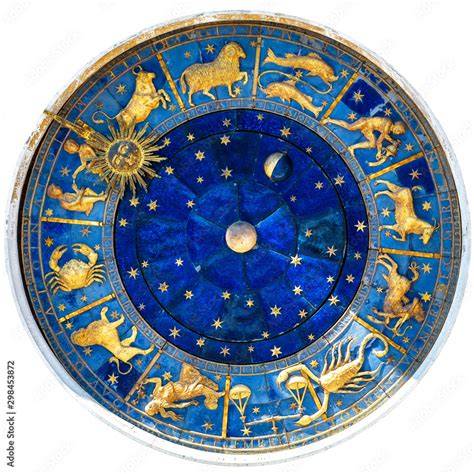
The signs of the zodiac feature prominently in medieval religious art and architecture. They appear on illuminated manuscripts and stained-glass windows, including those of Chartres Cathedral.
In “The Zodiac on Church Portals: Astrology and the Medieval Cosmos,” Shelley Morwenna Williams discusses the relationship between the seasonal rhythms of agriculture, the constellations of the zodiac, and church decoration.
She writes: “The connection between the stars and seasonal work is critical because tracking the movement of the stars was an essential timekeeping method for farmers.” She also notes that the unification of zodiacal signs with the Labors of the Month conveys a close association.
Many medieval churches feature sculpted zodiac signs on their exteriors. A common motif was a series of zodiac and labors systems above portal entrances.
The Très Riches Heures and the Labors of the Months
One of the most beautiful examples of the Labors of the Months depicted together with the zodiac can be found in the Très riches Heures of the Duke of Berry.
This illuminated Book of Hours was crafted in the fifteenth century by the Limbourg brothers for the Duke of Berry, but it was never completed because the Duke died in 1416.
While it is not common to see the zodiac portrayed in a private prayer book, the twelve signs were a widely accepted element of medieval natural science and were included in many cosmological and medical diagrams.
The presence of zodiacal imagery in Christian art does not by itself mean that the Church endorsed horoscope-based fortune-telling. In this context, the signs could represent the order of creation, the passage of time, agricultural labor, or the structure of the medieval cosmos.
Stars, calendars, and the Church year
The medieval Church used complex tables that tracked the movements of the stars, first worked out by the Venerable Bede, to calculate moveable feasts in the Church year, including Easter.
This use of astronomical observation demonstrates that the Church’s rejection of divination is not a rejection of every form of attention to the heavens. Calendrical calculation and astronomical study serve practical and intellectual purposes without claiming that the stars control human destiny.
What about reading horoscopes for fun?
Some people read horoscopes just for fun, without really believing in astrology or using it to make serious choices. The Catholic warning, however, concerns the nature and direction of the practice rather than only the intensity of a person’s belief.
A horoscope becomes spiritually and morally problematic when a person treats it as a source of hidden knowledge, lets it govern important decisions, seeks reassurance or security from it, or uses it to discover an allegedly fixed future.
Even when presented as entertainment, astrology can encourage habits of superstition if a person begins to rely on it, organize life around it, or attribute personal identity and responsibility to the stars.
Extreme caution is warranted because many people claiming to give astrological advice are either scammers who know what they are saying is not true, or are very poorly trained and are not putting the work in that one would have to do astrology in a classical way.
Can astrology predict the future?
The Catholic objection is especially strong when astrology claims to predict future events or determine a person’s destiny. The early Christian writers rejected the idea that Fate ruled human beings and that the stars could reveal an unavoidable course of life.
The Catechism describes divination as an attempt to “unveil” the future and associates it with a desire for power over time and history. This conflicts with Christian trust in God and with the belief that human beings act freely and are morally accountable.
Even St Thomas Aquinas, who allowed that heavenly bodies might influence bodily conditions and general tendencies, insisted that they could not determine particular choices. The stars cannot make a person commit a sin, perform a virtue, or abandon responsibility for an action.
Does the Star of Bethlehem make astrology acceptable?
The birth of Jesus seems to be predicted astrologically. This question is sometimes raised because the Magi in the Gospel of Matthew follow a star.
The fact that a star appears in the biblical account of Christ’s birth does not establish horoscope-based divination as a Christian practice. In the Bible, God can use created signs in a particular act of providence, but this is not the same as instructing believers to consult astrology as a method of discovering their personal future.
The biblical narrative must therefore be distinguished from the routine use of horoscopes, astrological charts, or fortune-tellers as sources of guidance.
Astrology, demons, and Christian discernment
Early Christian authors often attributed astrology to demonic influence because it was closely connected with pagan worship, the divinization of the stars, and belief in Fate.
The Catechism likewise warns against recourse to Satan or demons and against practices that seek to conciliate hidden powers. This does not mean that every casual reference to a constellation is equivalent to deliberate occult practice. It means that Christians should not seek supernatural knowledge or power through astrological methods.
The practical question is whether a person is merely learning about the history and symbolism of astrology or is using it as a spiritual authority. The former can be academic or cultural; the latter conflicts with Catholic teaching.
What Catholics may study
Contemplating the mysteries of the cosmos by learning about constellations and planets is not the same as attempting to predict the future or abdicating responsibility for one’s actions.
A Catholic may study the history of astrology, ancient astronomy, zodiacal art, planetary movements, calendars, agricultural timekeeping, and the development of scientific ideas. A Catholic may also examine how Christian theologians and artists engaged with the celestial world.
The Church’s theological tradition includes serious reflection on the stars, seasons, bodily influences, natural causation, human reason, and free will. These subjects can coexist with faith when they do not become divination or a replacement for trust in God.
What Catholics should avoid
- Consulting horoscopes to discover the future.
- Using astrology to make serious personal, professional, medical, financial, or relationship decisions.
- Believing that planetary positions determine moral choices or an unavoidable destiny.
- Seeking hidden powers, supernatural knowledge, or security through astrologers and fortune-tellers.
- Treating the stars or planets as divinities.
- Using astrological predictions as a substitute for prayer, prudence, moral reasoning, or responsibility.
A clear Catholic distinction
| Practice | Catholic assessment |
|---|---|
| Studying constellations and planets | Not the same as divination |
| Observing stars to understand seasons | A practical form of timekeeping |
| Studying zodiac imagery in Christian art | A historical and cultural subject |
| Using celestial cycles to calculate calendars | An astronomical and calendrical activity |
| Reading horoscopes for supernatural guidance | Rejected by the Catechism |
| Allowing astrology to determine choices | Incompatible with free will and Christian responsibility |
| Seeking predictions from astrologers | A form of divination Catholics should avoid |
Why free will matters
The Catholic understanding of human freedom is essential to the question of astrology. A person may have bodily conditions, emotional tendencies, inherited traits, social pressures, or psychological inclinations, but these do not eliminate the capacity to reason and choose.
Aquinas stated that heavenly bodies may influence sensitive powers connected with bodily organs, but man remains able by reason to act against the inclination of the heavenly bodies.
Lewis expressed the same principle by saying that physical, economic, or psychological causes may be operative, but they dispose rather than determine. The existence of influences does not mean that the will is controlled.
Christian morality depends on this distinction. If the stars determined every action, praise and blame would lose their meaning. The Catholic tradition instead maintains that people remain responsible for the actions they freely perform.
The place of astrology in Christian history
Christianity has regarded astrology in more than one way across the centuries. Early Christian writers generally opposed it because of its relationship to pagan gods, Fate, divination, and occult practice.
Later Christian theologians distinguished between superstitious astrology and natural observations of celestial influence. Medieval scholars discussed the stars in relation to physical conditions, temperaments, seasons, medicine, agriculture, and the structure of the cosmos.
Medieval churches and manuscripts could use zodiacal signs while the Church simultaneously rejected fortune-telling. This apparent tension becomes clearer when one distinguishes symbolic, calendrical, artistic, and natural uses from divinatory uses.
For most European Christians of all religious denominations between the late thirteenth and late seventeenth centuries, astrology, when practiced appropriately, offered convincing answers to questions about free will, natural cause and effect, human agency, and divine agency.
How to approach astrology responsibly
A Catholic approach begins by asking what astrology is being used for. If it is being studied as a historical practice, a cultural symbol, or an early attempt to understand the heavens, it is not automatically a religious danger.
If it is being used to obtain hidden knowledge about the future, to explain away personal responsibility, or to secure control over events, it falls within the practice rejected by the Catechism.
When decisions matter, Catholics should cling to Jesus, not horoscopes or fortunetellers, for security in life. The stars may be studied as part of creation, but they should not receive the trust, obedience, or fear owed to God alone.
The Hidden History of Astrology in Early Christianity | The Forgotten Connection
The stars can inspire wonder, support the measurement of time, illuminate the history of science and art, and deepen appreciation for the created cosmos. They cannot replace God, determine the will, or reveal an unavoidable human fate.
tags: #catholicism #and #astrology