Episcopal churches in Waco combine historic Anglican worship, Holy Sacraments, spiritual formation, fellowship, and practical service to the wider community. The city’s Episcopal heritage begins with St. Paul’s Episcopal Church, whose parish was organized in 1868 and whose historic church building remains in use by its congregation today.
Waco’s Episcopal community includes St. Paul’s Episcopal Church, St. Alban’s Episcopal Church, and Holy Spirit Episcopal Church. St. Paul’s emphasizes Holy Sacraments, spiritual formation, and lifelong community; St. Alban’s proclaims the grace of God in Jesus Christ while welcoming all; and Holy Spirit Episcopal Church describes itself as a place of personal transformation where Jesus feeds people so they can heal their souls, grow their faith, and bless the world.
What Episcopal churches in Waco believe
Episcopal churches in Waco are rooted in the Anglican tradition and center their common life on Jesus Christ, Christian worship, the Holy Sacraments, spiritual growth, and service. At St. Alban’s, the congregation describes its purpose as proclaiming to all the grace of God in Jesus Christ and welcoming all as members follow Jesus.
At Holy Spirit Episcopal Church, faith is presented as a process of personal transformation: Jesus feeds people so they can heal their souls, grow their faith, and bless their world. St. Paul’s likewise describes itself as a community of people coming together to support one another and worship God.
Episcopal identity in Waco is therefore expressed not only through Sunday worship but also through lifelong community, spiritual formation, hospitality, outreach, and care for neighbors. St. Paul’s history shows how these commitments have been practiced through military ministry, disaster relief, partnerships with local organizations, meals for people in need, and support for the civic life of the city.
The beginning of Episcopal life in Waco
Saint Paul’s began as a small group of Episcopalians creating a community, supporting each other, and worshiping God in the new city of Waco Texas. From 1863-1868 Saint Paul’s parishioners gathered in homes or rented the Odd Fellows Hall so that they could form a community and worship together.
On January 9, 1868, Bishop Alexander Gregg appointed Rev. Silas Dean Davenport to establish an Episcopalian mission within Waco. In 1868, the first Bishop of Texas, The Rt. Rev. Alexander Gregg, visited the community and officially organized them as “The Parish of St. Paul’s.”
The Parish of St. Paul was subsequently organized on March 19, 1868, and the Reverend W. W. Patrick served as its first rector. The new parish of about 50 people created a building fund, elected their first Rector, and began building a small and temporary worship space on the corner of Fourth Street and Webster.
St. Paul’s first Rector, the Rev. W.W. Patrick, is also elected. The name St. Paul was suggested by parishioner Mrs. S.D. Howe.
St. Paul’s first buildings and early worship
St. Paul’s original congregants met outdoors and in private homes prior to the construction of a building on Fourth and Webster in 1870. St. Paul’s first church building is built on the corner of 4th Street and Webster Ave.
The building was a simple, one room wooden structure with a steeple. At the time, St. Paul’s had about 100 communicants that met for services in this small church.
In 1875, the children of St. Paul’s Sunday School gifted a large bell to the church to mark the Advent season. St. Paul’s Sunday School presents the church with a 1,027 pound bell cast by the McNeely Bell Foundry in West Troy, New York.
The bell is later moved from the original Webster Avenue location to the Columbus Avenue church and is still in use today. The inscription on the rim reads “’Come ye, and let us go to the house of the Lord’ Presented to St. Paul’s Parish, Waco by the children of the Sunday School, Advent 1875.”
While plans for a new and larger church building began in 1873, the cornerstone for the new building is not laid until August 8, 1878. The new building is located on the corner of 6th Street and Columbus Ave.
Although the church has undergone several renovations and been enlarged, this church is the same building that St. Paul’s uses today. St. Paul’s first service in their new nave is held on June 6, 1879. The total cost of the new church building is $14,500.
When the first structure was sold to the city of Waco in 1878, the church moved to North Fifth Street and Columbus Avenue. While the new sanctuary was under construction, parishioners temporarily attended services in the building’s basement.
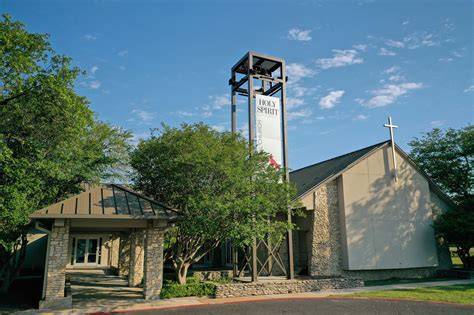
The historic St. Paul’s church building
St. Paul’s Episcopal Church continues to thrive after 150 years in the heart of the city. The Episcopal church downtown stands as the oldest church building in town.
St. Paul’s has the distinction of being Waco’s oldest-standing church building still in use by its current congregation. Valued for both its rich history and present ministry, St. Paul’s Episcopal Church remains a dynamic member of Waco’s greater faith community.
The church we use today has changed - a longer nave, new rooms to meet in, and a school to name just a few renovations - but the history of the church is still present. Beautiful stained glass windows, original hardwood floors, and the somewhat pieced together footprint of the building all point to Saint Paul’s rich history.
The church bears the marks of its long history. For example, cracks in the wooden floor of the sanctuary mark where the original walls stood before the expansion in 1897. If one looks close, numerous divots in the wood created from years of wear from high-heeled shoes are also visible.
Stained glass and the bell tower
The church contains beautiful stained glass windows. The windows all have stories of their own due to their association with donors.
For instance, the windows of the four apostles were presented to the church by the Pidcoke family of Pidcoke, Texas, to serve as a memoriam to their parents who had long since passed and whose grave sites were unknown. Rumor has it that the depiction of Saint Luke bears a striking resemblance to Reginald Pidcoke himself.
These windows depicting St. Matthew, St. Mark, St. Luke, and St. John were part of the original stained glass art adorning the 1878 church building. R. C. Pidcocke donated the windows in memory of his parents, the Reverend Richard Burton and his wife Harriet Millicent Pidcocke of Staffordshire, England.
Not limited to the sanctuary, stained glass windows adorn many other areas of the church, including the bell tower. The stained glass window found on the second-story platform of the tower is attractive for more than its colorful panes.
All around the edge of the window, one can find the penciled-in signatures of the men who worked to build the bell tower. St. Paul’s bell tower is three stories tall and only accessible by ladder.
It houses St. Paul’s antique bell. The bell is the only known item left from the original St. Paul’s location on the corner of Fourth and Webster. Though over a hundred years old, the bell still rings to welcome parishioners to church services every Sunday.
Growth, fire, and renovation
In 1890, a fire begins in the rectory and spreads to the church. The rectory burns down and the south side of the church is damaged by the fire.
The vestry votes to begin rebuilding immediately. The nave is also enlarged and is lengthened by 50 feet to accommodate a growing congregation.
In 1897, in order to accommodate increased numbers, the sanctuary underwent further renovations. The cornerstone for the new Parish House is laid in 1906, and construction on the Parish House finished in 1907.
The Parish House has undergone several renovations, but it is still used by the church today. The Maria Neville Brown Memorial Chapel and several of the children’s rooms are located in the Parish House.
In 1917, St. Paul’s purchases an $8,000 organ built by the Austin Organ Company. The instrument has 20 stops, 583 pipes, and three manuals (keyboards).
The new organ is considered to be one of the finest in Texas. This organ can still be heard at our church services today, although some of the pipes and stops are no longer used.
In 1930, renovations to the church cover the wood building in stucco, creating the smooth gray appearance of the building that can be seen today. A cloister entrance to the nave is also added although it is not enclosed.
For unknown reasons, the Rose Window is also covered and will not be rediscovered for many years. In 1956, an enclosed Narthex is built by enclosing the previously constructed cloister.
During this renovation, the Rose Window is rediscovered and uncovered. The Rose Window is now visible in the back of the Nave.
St. Paul’s service to Waco
St. Paul’s has long been a staple of the Waco Community. Centrally located as a downtown church, we have been a part of the action since the beginning.
St. Paul’s served soldiers stationed in Camp McArthur and Rich Field during World War I with dances, parties, marriages, and services. When James Connelly Airbase and Fort Hood were built at the beginning of World War II, Saint Paul’s again did what they could to serve soldiers stationed there.
Throughout the years, St. Paul’s has continued to flourish, surviving the Civil War and Reconstruction, the 1918 flu epidemic, the Great Depression and a devastating tornado in 1953, which killed more than 100 people and destroyed much of downtown Waco.
During the 1953 tornado that tore through downtown, Saint Paul’s offered their building as a relief center. St. Paul’s served as an important relief center in weeks following the storm.
In that same tradition, St. Paul’s once again responded to disaster in 2013, lending a hand in the aftermath of the West fertilizer plant explosion. With help from neighboring Episcopal churches, St. Alban’s and Holy Spirit, as well as individuals throughout the Diocese of Texas, St. Paul’s hopes to raise enough money to fund a Habitat for Humanity home for a West family.
For many years, Saint Paul’s has partnered with Mission Waco to serve a free Thanksgiving meal for anyone who would like to come. Parishioners have worked hard in the past 159 years to make Saint Paul’s a beautiful and thriving place of worship for Episcopalians in Waco.
St. Paul’s education and formation
St. Paul’s Episcopal Day School opens in 1930 thanks to the dedication of parishioner and school founder Mrs. Spencer Neville Brown. Her vision to create a school with exemplary standards and Christian values for her daughter, Maria Brown, can still be seen today in the classrooms at St. Paul’s School.
St. Paul’s emphasizes spiritual formation as part of its identity. The congregation’s history includes Bible studies featuring the sermons of one of St. Paul’s first rectors, the Rev. Otis Hackett, whose handwritten sermons from the 1870s are saved in the church archives.
St. Paul’s also represents a growing and diverse community, including young and old, lifetime Episcopalians and newcomers. The church’s life includes worship, education, children’s activities, service, fellowship, and opportunities for people to become part of the parish’s continuing story.
St. Alban’s Episcopal Church
St. Alban’s Episcopal Church is located at the corner of Columbus Avenue and North 30th Street. The graceful neo-gothic tower of St. Alban’s Episcopal Church has stood for nearly seventy years as a symbol of faith, worship, and service.
With its carillon of thirty-six bells, this strong tower has represented the values of St. Alban’s itself: beauty in worship, boldness in service, and an ever-present witness to the community of the Gospel of Jesus Christ.
Every Sunday, the bells in the tower ring out treasured hymns as worshipers pour out of the church’s great brass doors to “go forth in peace to love and serve the Lord.”
In 2016, St. Alban’s celebrated the 70th anniversary of its founding. The first congregational meeting was March 15, 1946, and the first church service was on Palm Sunday, April 14 of that same year.
St. Alban’s describes its mission as serving Waco and beyond by proclaiming to all the grace of God in Jesus Christ and welcoming all as the congregation follows Jesus.
St. Alban’s partnership with Malawi
St. Alban’s has developed a parish partnership with All Saints in Nambiti, in southeast Malawi, a small and peaceful African country. The parish is comprised of 5 different churches spread across 5 villages, with villages in-between.
On any given Sunday, the rector may only celebrate in one to three of the locations. So far, St. Alban’s has sent two teams to Malawi.
The first trip was really more relationship building and focused on assessing the situation. The second trip involved a health and well-being focus.
The team gave about 2000 doses of vitamin A and albendazole, an anti-parasitic, to children under 5, and weighed and measured all of them. While the Malawi government mandates this program, they don’t have the resources to make it happen so they’re quite happy with these results.
St. Alban’s also sponsored a Malawi opthamalogist who worked with the team to see over 1500 patients. Thanks to Lions Club International, the team was able to pass out about 500 pairs of eyeglasses to those who needed them.
The team also tested 26 sites for water quality. Thankfully, the rectory’s well is giving good quality water.
Currently, St. Alban’s is planning another trip for the future and raising funds for a chicken coop. Raising chickens will provide the people of Nambiti with income, as well as a sustainable protein source.
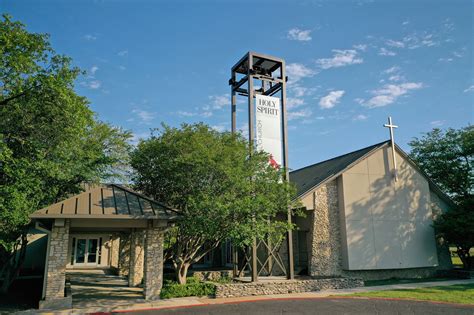
Holy Spirit Episcopal Church
Holy Spirit Episcopal Church is a place of personal transformation where Jesus feeds us so we can heal our souls, grow our faith, and bless our world.
The congregation’s description connects worship with inward renewal and outward service. Personal transformation is understood as a movement toward healing, deeper faith, and blessing the wider world.
What worship may include
Episcopal worship in Waco is shaped by the Anglican tradition and includes communal prayer, Scripture, hymns, preaching, spiritual formation, and the Holy Sacraments. St. Paul’s historic worship life has included services in homes, rented halls, temporary spaces, historic naves, and a sanctuary where the antique bell and organ remain part of the congregation’s present life.
In celebration of the church’s 150th anniversary, parishioners worshipped with the first American Prayer Book and sang hymns that Civil War-era Wacoans may have sung.
The historic character of St. Paul’s remains visible during worship through stained glass windows, original hardwood floors, the bell tower, the bell gifted by the Sunday School, and the Austin Organ Company instrument.
At St. Alban’s, Sunday bells ring out treasured hymns as worshipers leave the church’s great brass doors to “go forth in peace to love and serve the Lord.” This language reflects the Episcopal connection between gathered worship and a life of service beyond the church building.
Community, fellowship, and belonging
St. Paul’s continues to be a community of people coming together to support one another and worship God. Our parishioners continue to support each other and our church, and our church continues to support Waco.
Today, St. Paul’s represents a growing and diverse community, including young and old, lifetime Episcopalians and newcomers. The celebration of St. Paul’s vibrant past only serves to point the way towards an exciting future.
“This is a lot of fun for some of the older parishioners to be able to say to everyone else: This is St. Paul’s. This is our history,” Robertson said. “This is part of the reason we really want you to be part of us, because we want you to be part of this story.”
St. Paul’s also serves as a home for much of the civic leadership in the community, including current Waco mayor Malcolm Duncan Jr. and his father, former mayor Malcolm Duncan Sr., as well as current and past city council members, at least one past state senator, and countless others involved in creating a better Waco.
For St. Paul’s rector, the Rev. Chuck Treadwell, the real enthusiasm lies, not in the past, but in the present and future. The church is embarking on new initiatives to reach out to their neighbors, including a partnership with a middle school just down the street.
“The thing I’m most excited about is the next 150 years,” Treadwell said. “There is sort of a renaissance going on at St. Paul’s in regards to ministry. Last year we really focused on how to disciple people, and this year our mission has turned to outreach and how we can become more involved in the community.”
Episcopal churches and Waco’s wider faith community
Waco has a broad range of Christian congregations, including Anglican, Baptist, Methodist, Lutheran, Presbyterian, Catholic, Orthodox, Church of Christ, Nazarene, Assembly of God, and non-denominational churches. Among the Episcopal congregations listed in the city are Holy Spirit Episcopal Church, St. Alban’s Episcopal Church, and St. Paul’s Episcopal Church.
At All Saints Waco, an Anglican congregation, the stated desire is to be an outpost of God’s Kingdom, rooted in the Anglican tradition, in and for Waco and the world. Christ Church Waco is an ACNA Anglican parish ministering to the greater Waco area with a growing and flourishing community of believers committed to worship, fellowship, and service.
The presence of several Anglican and Episcopal communities gives people exploring this tradition different forms of congregational life while preserving shared emphases on Christian worship, community, and service.
Why the history still matters
St. Paul’s history demonstrates how an Episcopal parish can remain connected to both tradition and present ministry. The congregation has preserved historic worship spaces, stained glass, an antique bell, an organ, parish archives, and long-standing patterns of Christian fellowship.
At the same time, St. Paul’s has repeatedly adapted to changing circumstances. It rebuilt after fire, expanded as the congregation grew, served military personnel, responded to the 1953 tornado and the 2013 West fertilizer plant explosion, partnered with Mission Waco, supported education, and pursued new relationships with neighbors.
While a lot has changed over Saint Paul’s long history, the congregation is still at its core a community of people coming together to support one another and worship God. Saint Paul’s is a historic and beautiful community that uses its past to drive forward into a faithful future.
Episcopal church life in Waco can therefore be understood through four connected elements: a long local history beginning in the nineteenth century, worship shaped by the Anglican tradition, faith expressed through the Holy Sacraments and spiritual formation, and community service directed toward Waco and the wider world.