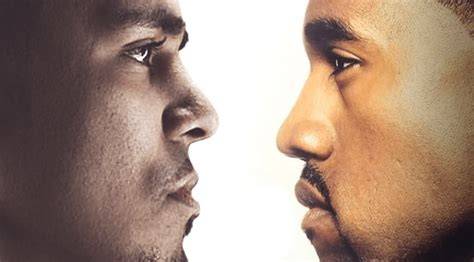
J. Cole’s “False Prophets” is widely understood as a critique of Kanye West, although Cole does not mention him by name. The verse focuses on the collapse of an admired artist who once appeared principled and authentic but later seemed controlled by ego, materialism, weak advisers, and the expectations surrounding celebrity.
The song is also about disillusionment: the painful realization that an artist treated as a hero may be flawed, compromised, or less independent than fans believed. Cole includes possible references to Drake, Wale, Lil’ Yachty, and Lil’ Uzi Vert elsewhere in the two songs released during the rollout of 4 Your Eyez Only, but “False Prophets” itself is primarily associated with Kanye West.
What “False Prophets” means
Released late Thursday night and sandwiched into a Tidal-exclusive studio documentary about his next album, 4 Your Eyez Only, the lyrics lay out extremely specific criticisms of an old idol. Cole doesn’t name names, but that person sounds a lot like Kanye.
“False Prophets” presents a celebrity as a symbolic false prophet: someone who once appeared capable of offering truth, inspiration, and moral guidance, but who ultimately failed to live according to those ideals. The song is not simply an attack on another rapper’s career; it is a reflection on what happens when admiration turns into disappointment.
Cole expresses some sympathy on “False Prophets,” but the verse is dominated by resentment and disappointment. He feels betrayed by Kanye for giving in to what he sees as the materialistic side of himself, after letting Cole and a legion of fans fall in love with his righteousness.
“There was a time when this nigga was my hero, maybe/That’s the reason why his fall from grace is hard to take,” he raps.
The Kanye West interpretation
The case for Kanye is simple. Throughout the verse, we can attribute recent moments in Kanye’s career and life, to lines in the song.
One verse goes: “Ego in charge of every move, he’s a star/And we can’t look away due to the days that he caught our hearts.” He also rhymes, “When he tell us he a genius but it’s clearer lately/It’s been hard for him to look into the mirror lately.”
“Ego in charge of every move, he’s a star” portrays Kanye as an artist whose public identity and personal decisions have become dominated by his ego. The line does not deny his influence or talent; instead, it suggests that those qualities have become inseparable from a self-image that he can no longer control.
“And we can’t look away, due to the days that he caught our hearts” points toward the emotional bond created by Kanye’s earlier music. In the interpretation most often associated with the song, those years include “College Dropout” through “My Beautiful Dark Twisted Fantasy,” at least.
In real life terms - from a 26 year-old producer turned rapper, on the rise, on through his engagement/marriage to Kim K. He’s fallin’ apart, but we deny it. Literally, he was checked into a hospital for paranoia and depression, about a week before this song.
Admiration turning into betrayal
There was a time when this nigga was my hero, maybe/That’s the reason why his fall from grace is hard to take/’Cause I believed him when he said his shit was purer and he/The type of nigga swear he real but all around him’s fake.
These lines explain why the song feels more complicated than a conventional diss track. Cole is not criticizing a distant rival whom he never respected. He is describing the emotional consequences of having believed in someone’s message and then watching that person appear to violate it.
Just three years ago, he was competing with Kanye in an attempt to be on the same level as him. Now, disillusioned, he paints Kanye as an irresponsible fraud who he’s equally repulsed by and sympathetic for.
J. Cole has complicated relationships with his idols. He was dismissed after traveling to Roc The Mic Studio and waiting three hours to give Jay Z a beat CD. Years later, he signed a deal with Jay.
When his new boss demanded a single for radio, Cole released the poppy “Work Out”-only to get a call telling him that another idol, Nas, was disappointed with the song. Cole chronicled the experience on his 2013 album Born Sinner, which he pushed up the release date for in order to compete with another rapper he looked up to: Kanye West.
He went head-to-head with West’s divisive Yeezus because, in his words, “I worked too hard to come a week later after Kanye West drops an amazing album…. Nah, I’m going to see him on that date.”
While he ultimately didn't outperform Kanye's album, Cole came very, very close: Born Sinner debuted at 297,000 units sold, just 30,000 behind Yeezus. The feat proved that Cole had arrived, and was on the same playing field as the artist he looked up to.
But the achievement perhaps didn’t mean as much to Cole as he expected it to. “I only get brief moments to appreciate things,” he told Noisey. “I might get a two minute thought of like, ‘Wow, you really did sell more than Kanye…." [At the time he had moved more units, according to Billboard.] "Then I’m back to focusing on what’s next.”
“Justifying that half-ass shit he dropped”
Justifying that half-ass shit he dropped, we always buy it.
Although Yeezus and The Life of Pablo were receipted warmly, it wasn’t arguable that they were a drop-off from his first five albums. In the context of “False Prophets,” this line reflects the conflict between Kanye’s earlier artistic reputation and the reception of his later work.
The criticism is not necessarily that the later albums had no value. Rather, Cole suggests that Kanye’s audience continued to defend and purchase his work because of the emotional authority established by his earlier music. Fans were not judging every new release in isolation; they were also responding to the legacy of the artist who had “caught our hearts.”
Today, it’s a cliche for fans to say they miss “the old Kanye”-something West pointed out himself on The Life of Pablo. A revisit of College Dropout suggests that Kanye foreshadowed his own downfall.
Songs like “All Falls Down” and “Jesus Walks” aren’t just indictments of materialism and indulgence, but a recognition of Kanye’s own attachment to them and the fears of being defeated by them.
The irony of Kanye’s earlier music
In J. Cole’s mind, Kanye has fallen victim to all of the demons he warned us-and himself-about. In the same way a self-conscious woman, and Kanye himself, were the figures at the heart of the cautionary tales of “All Falls Down,” J. Cole makes Kanye the central figure in the cautionary tale that is “False Prophets”-someone who has fallen victim to his demons, and is living an unfulfilled life as a result.
This is the central irony of the song. Kanye’s earlier work often examined the dangers of consumerism, insecurity, fame, and social pressure. Cole’s reading is that Kanye eventually became trapped by the very forces he had once analyzed.
“False Prophets” therefore treats Kanye’s career as a cautionary narrative. The artist who once warned listeners about the emptiness of status and possessions now appears, from Cole’s perspective, to be surrounded by the symbols and institutions of that same emptiness.
“All around him’s fake” and the role of yes-men
The women, the dickriders, you know, the yes men/Nobody with the balls to say somethin’ to contest him/So he grows out of control/Into the person that he truly was all along, it’s startin’ to show.
After being enabled by “the women, the dickriders, you know, the yes men,” Cole raps, Kanye “grows out of control into the person that he truly was all along.”
“All around him’s fake,” is painstakingly obvious, considering he is married to the most materialistic, media-infested, celebritized, family of the 21st century - the Kardashians.
In this reading, the people surrounding the artist do not challenge him because they benefit from his fame, influence, or wealth. The absence of honest criticism allows his ego to expand without correction. Cole’s accusation is that a star can become increasingly disconnected from reality when everyone around him confirms every decision.
Further, Cole has always made it apparent that Kanye was one of his idols. Also, the “his shit was purer” line, embodies Kanye’s self-righteousness, that used to be inspiring, but became less cute as he got more successful.
Why the song is more than a simple diss
Many will label this song a diss track-and at some points, Cole takes some seemingly petty shots. Even if he’s personally disenchanted with Kanye for enlisting songwriters and jacking sounds, he had to have known about those things for years before releasing this; some of the subject matter here feels like it's coming out of nowhere.
Kanye would be well within reason to be upset about the shots taken in “False Prophets.” If the two of them don’t have a personal relationship, who is J. Cole to criticize him like this?
Especially when Kanye appears to have just had a breakdown that forced him to cancel his Saint Pablo tour prematurely and spend time in the hospital; after a robbery left his family traumatized.
That timing makes the verse sound both harsh and unusually personal. Cole is criticizing Kanye during a period when the artist appeared vulnerable, which creates an ethical tension: the song can be interpreted as honest artistic criticism, but also as an attack delivered when its target was under visible pressure.
The mirror in the song
The part of “False Prophet's that hasn't received enough attention is Cole’s role in this process; disillusionment inevitably begins with idolization. And J. Cole knows he has fallen for it.
“Maybe it’s my fault for idolizing niggas based off the words they be rappin’,” he rhymed. “Damn, that’s what I get for lyin’ to myself.”
These lines shift the song’s focus from Kanye to Cole and his audience. If a fan transforms an artist into a moral authority, the artist can never fully satisfy that role. The disappointment is partly caused by the distance between a public persona and a private human being.
But without idolizing artists like Kanye West and Nas, what would Cole have been inspired to make? How would those early albums have sounded?
“Somebody should’ve told me it would be like this,” he laments, without digging into how the industry, and life, may have chewed Kanye up and spit him back out.
The song thus contains an unresolved contradiction. Cole recognizes that idolization helped shape his own artistic development, yet he also recognizes the danger of assigning artists a level of purity they cannot maintain.
Success, happiness, and the instability of fame
In his first interview after the release of his last album, 2014’s 2014 Forest Hill’s Drive, J. Cole spoke about the unstable nature of success.
“Some people base their happiness off of material things, money, women, or whatever,” Cole told A Tribe Called Quest’s Ali Shaheed Muhammad in an interview with NPR’s Microphone Check. “I was basing my happiness off of success, or what I thought was success,” Cole said. “I gotta base my happiness on what I have. Which is the people I have in my life, the love I have in my life, the-just the moments I have.”
That appears to be the lens through which Cole is taking shots at Kanye West on his latest song, “False Prophets.” Cole’s criticism is connected to his own fear of becoming dependent on achievement, recognition, and public validation.
In this sense, Kanye functions as both a target and a warning. Cole sees a successful artist who may have allowed fame, status, admiration, and material surroundings to become substitutes for inner stability.
Possible references to Drake
Other lyrics allude to rappers who don’t write their own lyrics and are quick to jump on new musical styles. Drake has been accused of not writing some of his own rhymes this year.
Maybe it’s my fault for idolizing niggas/Based off the words they be rappin’/But come to find out, these niggas don’t even write they shit/Hear some new style bubblin’ up, then they bite the shit.
These are the four lines supposedly aimed at Drake. While the part touching on Drake’s lack of penmanship is reasonable, the next line isn’t as fair of an argument.
While he could be talking about Drake’s infamous ability to jump on up-and-comers songs, a la “Tuesday” and “Versace”, Drake has always been known for paving his own lane, most recently, on the Caribbean vibe - “One Dance”, “Controlla”, “Work”, “Too Good”.
Then again, even the Caribbean vibe was bitten from Caribbean dancehall artists, so maybe Cole does have a point.
The Drake interpretation is therefore less conclusive than the Kanye interpretation. The lyrics can refer to questions about authorship and musical imitation, but they can also be read more broadly as criticism of artists who adopt successful sounds after those sounds become popular.
The possible Wale connection
I got a homie, he a rapper and he wanna win bad/He want the fame, the acclaim, the respect that’s been had/By all the legends, so every time I see him, he stressin’/Talkin’ ‘bout, niggas don’t fuck with him, the shit is depressin’.
And I know he so bitter he can’t see his own blessings/Goddamn, nigga, you too blind to see you got fans, nigga/And a platform to make a classic rap song/To change a nigga’s life, but you too anxious livin’ life.
Many believe that this verse is about Wale, who is a close friend of Cole’s. This was confirmed to be true two days later when Wale responded with “Groundhog Day.”
2015 was a rough year for Wale; despite dropping an album that did fairly well critically and commercially, he had a feud with MMG labelmate Meek Mill who attempted to kick Wale off the label.
Wale also tweeted about how he feels misunderstood and slighted by some of his peers. The verse can therefore be interpreted as a personal observation rather than a broad attack: Cole is describing a friend whose desire for recognition has become so intense that it prevents him from appreciating the audience and opportunities he already has.
“Everybody Dies” and the other rumored targets
After the release of the two songs - “False Prophets” and “Everybody Dies” - while it became apparent that Cole had a lot to say, who he is talking about, is less clear.
A string of allusions began to unfold across the internet, with the subject of Cole’s subliminal disses pointing to - Kanye, Drake, Wale, Lil’ Yachty, and Lil’ Uzi Vert.
Although some lines are more transparent than others, the jury is still out, in regards to who or whom, is the target of Cole’s jabs.
“Everybody Dies” is essentially Kendrick’s “Control” verse, minus his sheer disregard for subjectiveness. While Cole is subliminal in not revealing rappers by name, his intent is anything but.
“Lil’ whatever”
I hate these rappers; Especially the amateur eight week rappers, Lil’ whatever - just another short bus rapper.
In a mostly subliminal song, this line is the most transparent, as he takes aim at “Lil’ whatever”, which presumedly is Lil’ Yachty and/or Lil’ Uzi Vert, since even the most diehard Hip-hop head had the same reaction upon learning about their 2016 ascendance - “Lil’ who?
Rappers associated with drug-dealing personas
Fake drug dealers turn tour bus trappers.
In 2016, the only rappers who still pride themselves on their drug dealing past, is Rick Ross and Meek Mill. Thus, I would say Cole had those two in mind.
“Napoleon complex” rappers
Napoleon complex, you this tall rappers.
Here is a list of the ten shortest rappers in the game: Lil’ Chuckee - 5'1", Lil’ Uzi Vert - 5'5", Ja Rule - 5'5", Lil’ Wayne - 5'5", Kendrick - 5'6", Rakim - 5'6", Kanye - 5'7", Big Sean - 5'7", Nas - 5'8", & Eminem - 5'8".
We can remove Nas, Rakim, and Eminem on the fact that they are three of the top five or seven rappers of all-time, thus, it would be dumb to diss them; Despite being borderline irrelevant for quite some time, it’s not Lil’ Wayne; He spends the next song pretty clearly calling out Kanye, therefore, it’s not him; Depending on where you’re from, Big Sean is insignificant, so it can’t be him.
We’re left with Lil’ Chuckee, Lil’ Uzi Vert, and Ja Rule. And so, either Cole felt the need to call out Uzi multiple times on one song, he decided to start beef with a rapper - Chuckee - who peaked at the age of twelve by sheer affiliation with Young Money, or he wants to tap into his inner 50 Cent a la 2003, and end Ja Rule’s, already dead career. My money is on Uzi.
“Pitchfork rappers”
The streets don’t fuck with you, you Pitchfork rappers; Chosen by the white man, you hipster rappers.
Music site Pitchfork has often been criticised for poor reviews and being “hipster.” Cole doesn’t care for rappers that get a Pitchfork cosign, and echoes Kanye’s claim that it is a “white publication.”
With that said, Cole may be retaliating to Pitchfork’s 6.9 rating for his previous album Forest Hills Drive, which gained generally higher reviews elsewhere. It also sold incredibly well, being certified double platinum, confirming that the streets and hip hop fans ride with him regardless of critical scores.
And so, the only target that comes to mind is rap group, Run the Jewels, who’s 2014 album topped Pitchfork’s 2014 list of Top 50 Albums.
Then again, despite 1/2 of the duo being made up of a James Corden look alike - EI P - the group has pretty much received unanimous respect, directly related to their rapping ability, which Cole seemingly would accept.
Why Kanye remains the primary subject
Right away, rap pundits unanimously understood the lyrics to be directed at Kanye, Drake, and Wale. The case for Kanye is simple.
Thus, it’s not much of a discussion, Cole is talking about Kanye West.
Arguments have broken out online, with some suggesting that Cole could be talking about Drake, Lil Wayne (or some combination of the two), Wale (who has since released a response), or even that the lyrics are aimed at Cole himself. But consensus says that Kanye is the primary subject here.
The Kanye reading is strongest because several details converge in one portrait: an artist once treated as a hero, repeated claims of genius, an apparent personal and creative decline, dependence on approval, and a public life increasingly associated with materialism and celebrity.
The relationship between fans and artists
However, Cole taps into something specific to fans’ relationship with Kanye. The fact of the matter is that, lately, many long-term supporters feel betrayed by someone they invested energy and identity into.
Kanye arguably said it most accurately himself: “If you’re a Kanye West fan, you’re not a fan of me, you’re a fan of yourself.” Recently, that’s been a tough thing for a Kanye fan to agree with.
Feeling both let down by, and empathetic for, a celebrity you feel personally connected to is at the heart of “False Prophets,” and it’s a far cry from Drake’s dickish, unsympathetic diss against a hospitalized Kid Cudi on “Two Birds, One Stone.”
The song captures the strange intimacy of celebrity fandom. Listeners can feel that an artist’s work helped form their identity, while the artist remains a stranger whose real life is known only through interviews, performances, music, and media coverage.
The title and the idea of false guidance
“False Prophets” suggests that artists can become cultural guides even when they never explicitly ask for that role. Their lyrics, public statements, and creative decisions may be treated as lessons about how to live.
When the artist later appears to abandon those values, fans can experience the change as a personal betrayal. Cole’s use of the title reflects that emotional process: the “prophet” was not necessarily truthful or pure, but the audience believed in the message.
The title also points back toward Cole’s self-criticism. If the artist is a false prophet, the listener may have been a false believer-someone who confused powerful music with proof of permanent moral integrity.
What the verse says about J. Cole
Regardless of who Cole is targeting in the aforementioned tracks, it’s refreshing to see a rapper, in 2016, cause an uproar with “buzz” singles during the rollout of his upcoming album.
Whether or not Kanye, Drake, Wale, or “Lil’ Whatever” respond, it’s obvious that Cole doesn’t care. He said it himself.
Do I do it for the love of the music or is there more to me? Do I want these niggas to worship me? False prophets.
Those closing questions complicate the posture of superiority that can appear in a diss track. Cole asks whether he is truly making music for its own sake or whether he also wants admiration, worship, and cultural authority.
That self-questioning is essential to the meaning of the verse. Cole is not merely saying that Kanye became too invested in fame; he is asking whether any artist can criticize that tendency without sharing some part of it.
As usual with celebrity criticism, it’s often best to look in the mirror and in one’s surroundings; if not, you may end up as the tragic subject of someone else's song.
Key interpretations of the song
| Interpretation | Reason in the lyrics |
|---|---|
| Kanye West is the main target | Hero worship, claims of genius, personal decline, materialism, yes-men, and “fall from grace” |
| Drake may be referenced elsewhere | Questions about songwriting credit and adopting new musical styles |
| Wale may be the “homie” | Desire for recognition, frustration with peers, and the response “Groundhog Day” |
| Lil’ Yachty or Lil’ Uzi Vert | The “Lil’ whatever” line in “Everybody Dies” |
| J. Cole himself | His admission that idolization and the desire for worship may also involve him |