The apostles were the closest followers of Jesus Christ and the primary teachers of his gospel message in the first century. The word apostle comes from the Greek apóstolos, meaning “messenger,” “envoy,” or, more precisely, “one who is sent out.”
During Jesus’ earthly ministry, his twelve followers were commonly called disciples: they followed Jesus, learned from him, and were trained by him. After his resurrection and ascension, Jesus sent them out to be his witnesses, and they were then referred to as the twelve apostles.
The Twelve Apostles
The original twelve apostles were Peter, Andrew, James the Greater, John, Philip, Bartholomew, Thomas, Matthew, James the Less, Thaddaeus, Simon the Zealot, and Judas Iscariot.
The New Testament gives lists of the Twelve in Matthew 10:2-4, Mark 3:16-19, Luke 6:13-16, and Acts 1:13. The names vary slightly between the lists, but they refer to the same group of individuals.
| Apostle | Original or alternate name | Language | Meaning or identification |
|---|---|---|---|
| Peter | Simon; Petros | Hebrew and Greek | “He has heard”; “rock” |
| Andrew | Andreas | Greek | “Manly” or “courageous” |
| James the Greater | Ya’akov | Hebrew | “Supplanter” or “one who follows” |
| John | Yochanan | Hebrew | “Yahweh is gracious” |
| Philip | Philippos | Greek | “Lover of horses” |
| Bartholomew | Nathanael; Bar-Tolmai | Hebrew and Aramaic | “Gift of God”; “son of Tolmai” |
| Matthew | Levi; Mattityahu | Hebrew | “Gift of Yahweh” |
| Thomas | Ta’oma; Didymus | Aramaic and Greek | “Twin” |
| James the Less | Ya’akov | Hebrew | “Supplanter” or “one who follows” |
| Thaddaeus | Judas, son of James | Aramaic and Hebrew | “Heart” or “praise” |
| Simon the Zealot | Shimon | Hebrew | “He who hears” or “obeys” |
| Judas Iscariot | Yehudah | Hebrew | “Praise”; probably “man from Kerioth” |
Disciples and Apostles: What Is the Difference?
The word disciple refers to a learner or follower. The word apostle means “one who is sent out.” The twelve disciples followed Jesus Christ, learned from him, and were trained by him.
After his resurrection and ascension, Jesus sent the disciples out to be his witnesses. They were then referred to as the twelve apostles. However, even when Jesus was still on earth, the terms disciples and apostles were used somewhat interchangeably.
The Gospel of Mark explains that Jesus appointed the Twelve “to be with him, and to be sent out to proclaim the message, and to have authority to cast out demons.” Their calling therefore involved both close fellowship with Jesus and a mission carried out on his behalf.
How Jesus Called the Apostles
All four canonical Gospels record the calling of at least some of Jesus’ disciples. The accounts emphasize the immediacy of their response: fishermen left their nets, Matthew left his tax booth, and others accepted Jesus’ invitation to follow him.
According to the Gospel of John, Andrew, who had been a disciple of John the Baptist, and another unnamed disciple traditionally believed to be John, followed Jesus after hearing the Baptist identify him as the “Lamb of God.” For this reason, the Eastern Orthodox Church honors Andrew with the name Protokletos, meaning “the first called.”
Matthew describes Jesus meeting James and John shortly after recruiting Simon and Andrew. Matthew and Mark identify James and John as sons of Zebedee, while Luke adds that they worked as a team with Simon and Andrew.
Despite Jesus only briefly requesting that the apostles join him, they are all described as immediately consenting, even abandoning fishing nets to do so. Another explanation is that some of the disciples may have heard of Jesus beforehand, as implied by the Gospel of John, which states that Andrew was a disciple of John the Baptist.
Fishermen from Galilee
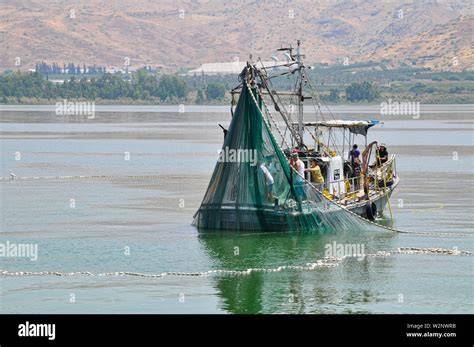
According to the Gospel version of Matthew, Andrew, Peter, along with James and John, followed by Philip, were the first apostles selected. They were all fishermen; in fact, most of the Twelve were fishermen.
They had that special virtue found in every fervent fisherman, the virtue of patience; they threw their lines or nets into the water and waited. This virtue would serve them when Christ called them to be fishers of men.
Most apostles were based in Capernaum and the northern Sea of Galilee region, which served as Jesus’ ministry headquarters. Visitors can see excavations of homes, synagogues, and fishing villages directly tied to their lives.
Matthew the Tax Collector
The Synoptic Gospels later describe Jesus noticing a tax collector in his booth. The tax collector is called Matthew in Matthew 9:9 and Levi in Mark 2:14 and Luke 5:27.
Matthew or Levi accepted Jesus’ call and then invited him for a meal with his friends. Tax collectors were seen as villains in Jewish society, and the Pharisees asked Jesus why he was eating with such disreputable people.
The reply Jesus gave is now well known: “It is not the healthy who need a doctor, but the sick. I have not come to call the righteous, but sinners to repentance.”
The Twelve Apostles in Detail
Peter: Simon Peter, the Rock
Peter was originally called Simon, son of Jonah. His Hebrew name, Shimon, means “he has heard” or “he who hears.” Jesus gave him the name Peter, derived from the Greek Petros, meaning “rock,” to indicate his role as the foundational “rock” of the Church.
Peter is always placed first in the lists of apostles, which must reflect that he was a true leader. He was not over the others; they only had one master, who was Jesus. But Peter was primus inter pares, “a first among equals.”
Peter and his brother Andrew were fishermen. They came from Bethsaida, and they were both probably followers of John the Baptist before Jesus called them.
In the Gospel according to Luke, Jesus initially met Peter, James, and John at the Lake of Gennesaret, where they had been fishing all night but had caught nothing. Jesus suggested that the fishermen lower their nets again.
Peter complained because of their earlier experience but eventually agreed. Suddenly they had so many fish they could not bring in the nets. Peter fell to his knees in front of Jesus and said, “Depart from me, Lord, for I am a sinful man.” Jesus told him not to be afraid, then said to the three fishermen, “From now on you will be catching men.”
Peter demonstrated a lack of faith and even argued with Jesus on occasion. He showed little faith when he attempted to walk on the water toward Jesus; as long as his attention was on his savior, he was fine, but once he took his eyes off Jesus, he began to sink.
Peter argued with Jesus when he said he would be killed by the Jews and again when Jesus wanted to wash his feet. Along with James and John, Peter fell asleep during Christ’s agony in the garden.
Peter denied Jesus three times on the night he was arrested, “before the cock crows twice,” just as Jesus predicted. Yet even after this grievous rejection, Jesus forgave Peter and singled him out as the head of the Church on earth.
Peter became the prince of the apostles, and through the gifts of the Holy Spirit was the first to spread the Good News to the Jews. Peter not only evangelized the Jews but was responsible for the first Gentile conversion: the centurion Cornelius.
Jesus gave Simon the name Peter, derived from Greek, to indicate his role as the foundational “rock” of the Church. This dual naming illustrates the intersection of Jewish heritage and the Hellenistic culture of the early Christian community.
Places associated with Peter
- Capernaum: Peter’s home and a center of Jesus’ ministry; the healing of Peter’s mother-in-law is recorded in Mark 1:29-31.
- The Sea of Galilee: Peter’s fishing grounds and the setting of his calling by Jesus.
- Tabgha: Associated with the appearance of the risen Christ and the command, “Feed my sheep.”
- Caesarea Philippi, or Banias: The setting of Peter’s confession of Jesus as Messiah.
- Jerusalem: The setting of Pentecost, the early church, and Peter’s imprisonment.
Peter has the most well-defined sites connected directly to events in the New Testament, including Capernaum, the Sea of Galilee, Tabgha, Banias or Caesarea Philippi, and Jerusalem sites such as St. Peter in Gallicantu.
Andrew: The First Called
Andrew’s Greek name, Andreas, means “manly” or “courageous.” Although he was a Galilean Jew, his Greek name suggests the cultural blending of Hellenistic regions and Jewish society in first-century Judea.
Andrew is often seen bringing others to Jesus, including Peter himself. He brought initiative and action to the apostolic group, even though he was not as prominent as his outspoken brother.
Andrew was Peter’s brother and came from Bethsaida. He was one of the first disciples called by Jesus and was associated with the Sea of Galilee, Capernaum, and Jerusalem.
Places associated with Andrew
- Bethsaida: Andrew’s hometown.
- Capernaum: A center of ministry with Peter and Jesus.
- The Sea of Galilee: The setting of fishing, teaching, and miracles.
- Jerusalem: Associated with major events of Holy Week.
James the Greater: Son of Zebedee
James the Greater was the son of Zebedee and the brother of John. His Hebrew name, Ya’akov, is connected with the meaning “supplanter” or “one who follows.” The title “the Greater” distinguishes him from the other apostle named James.
James and John were fishermen, and their family was wealthy enough to employ other workers and to help support Jesus and his disciples. Jesus called James and John “Boanerges,” meaning “sons of thunder,” probably because of their intense and vehement personalities.
On one occasion they wanted to destroy a Samaritan city that had rejected Jesus. Their mother also asked Jesus that her sons sit one on his left and one on his right in his kingdom.
Jesus explained that positions of authority come from the Father, from a divine calling rather than personal ambition. He added, “Whoever wishes to be great among you shall be your servant; whoever wishes to be first among you shall be your slave.”
James, John, and Peter formed the inner circle among the Twelve. They were the only apostles present with Jesus at the raising of Jairus’ daughter, the Transfiguration, and the agony in the Garden of Gethsemane.
James the Greater was the first apostle to shed his blood for Jesus. He was murdered under the direction of King Herod Agrippa in A.D. 44, an act described as pleasing to the Jews.
Places associated with James the Greater
- Capernaum: A ministry base shared with Peter and John.
- The Sea of Galilee: A setting of frequent ministry and travel.
- Mount Tabor: Traditionally identified with the Mount of Transfiguration, where James witnessed Christ’s transfiguration.
- Jerusalem: The place of his martyrdom under Herod Agrippa I.
John: The Beloved Disciple
John was the brother of James and the son of Zebedee. His Hebrew name, Yochanan, means “Yahweh is gracious.” His Gospel emphasizes love and grace, aligning closely with the meaning of his name.
John was part of Jesus’ inner circle with Peter and James. The three were present at the raising of Jairus’ daughter, the Transfiguration, and the agony in Gethsemane.
John was the only apostle at the cross when Jesus was crucified; the others had run away. From the cross, Jesus gave his mother Mary to John’s care, indicating a unique bond between Jesus and John.
John appears frequently in the New Testament and was responsible for five New Testament books. He seems to have lived longer than any of the other apostles, dying at an advanced age according to Christian tradition.
Places associated with John
- Capernaum: A ministry base.
- The Sea of Galilee: A setting of ministry with Peter.
- Mount Tabor: Traditionally associated with the Transfiguration.
- Jerusalem: Associated with the crucifixion, resurrection appearances, and early church leadership.
- Patmos: Outside the Holy Land, Patmos is associated with John’s reception of the Revelation.
Philip: The Connector and Messenger
Philip’s Greek name, Philippos, means “lover of horses.” The name reflects nobility, strength, and energy in Greek culture. Philip’s role as a connector and messenger mirrors these associations.
In the city of Galilee, Jesus summoned Philip to be an apostle. Philip then sought out Bartholomew and told him that the one about whom Moses and the prophets had written had been found.
Philip was worried about how five thousand people would be fed at the multiplication of the loaves. He said, “Two hundred days’ wages worth of food would not be enough for each of them to have a little bit.” Philip watched as Jesus turned the few fish and bread into enough to feed all the people.
Later, at the Last Supper, Philip asked, “Master, show us the Father, and that will be enough for us.” Jesus responded, “Have I been with you so long, and yet you do not know me, Philip?”
Philip the apostle should not be confused with Philip the Evangelist, who carried the message of Jesus to Samaria and baptized the Ethiopian eunuch on the desert route between Jerusalem and Gaza.
Places associated with Philip
- Bethsaida: Philip’s hometown.
- The road to Gaza: Associated with Philip the Evangelist’s ministry with the Ethiopian eunuch.
- Caesarea Maritima: The residence of Philip the Evangelist and his four prophesying daughters.
- Jerusalem: Associated with the early church.
Bartholomew, Also Called Nathanael
Bartholomew’s dual names reflect Jewish tradition and Hellenistic society. Nathanael means “gift of God,” while Bar-Tolmai means “son of Tolmai,” identifying him through family lineage.
Philip told Bartholomew that Jesus was the one whom Moses and the prophets had written about, but Bartholomew replied, “Can anything good come from Nazareth?” Philip nevertheless brought him to Jesus.
Bartholomew then recognized Jesus as the true Messiah, saying, “Rabbi, you are the Son of God; you are the King of Israel.” This proclamation resembles Peter’s later confession: “You are the Messiah, the Son of the living God.”
The Gospel of John uses the name Nathanael, while the Synoptic Gospels use Bartholomew. Nathanael and Bartholomew were undoubtedly the same person according to the identification commonly made in Christian tradition.
Places associated with Bartholomew
- Cana of Galilee: Associated with his hometown and the wedding miracle.
- The Sea of Galilee: Associated with resurrection appearances.
- Bethlehem and Jerusalem: Likely connected with ministry and Passover events.
Matthew, Also Called Levi
Matthew was a tax collector before he followed Jesus. His Hebrew name, Mattityahu, means “gift of Yahweh.” His Greek name, Matthaios, helped make his Gospel accessible to Greek-speaking audiences.
Matthew describes himself as “the tax collector,” thereby calling attention to the dishonorable business that had occupied him before Jesus’ call. His words are probably a humble acknowledgment of God’s grace to him.
Matthew’s calling took place at a tax booth in Capernaum. He accepted Jesus’ invitation and invited him to a feast with his former colleagues and friends.
The meaning of Matthew’s name aligns with his role as a “gift” to the Church, documenting Jesus’ life and teachings.
Places associated with Matthew
- Capernaum: The location of the tax collector’s booth and Matthew’s calling.
- The Sea of Galilee: Associated with ministry with the other apostles.
- Jerusalem: Associated with early church events and Passover gatherings.
Thomas: The Twin
Thomas’s Aramaic name, Ta’oma, literally means “twin.” His Greek name, Didymus, repeats the same meaning.
Thomas is remembered as the apostle who doubted when told that Christ had been resurrected and had appeared to the other apostles in the Upper Room. Thomas was not convinced until he placed his hands in Christ’s wounds.
His initial unbelief is understandable because Christ had been crucified and sealed in a tomb. According to Pope Gregory the Great, the disbelief of Thomas strengthened the faith of later Christians because Thomas touched Christ’s wounds and became a witness to the reality of the resurrection.
Thomas was also courageous. When Jesus decided to return to Judea, Thomas said, “Let us also go, that we may die with him.” His story highlights a journey from skepticism to belief, and from fear to courage.
Places associated with Thomas
- Galilee and Judea: Regions of ministry with Jesus.
- Jerusalem: The place where Thomas encountered the risen Christ.
- Mount of Olives: Associated with the apostles’ gathering after the Ascension.
- The Sea of Galilee: Likely connected with post-resurrection appearances.
James the Less: Son of Alphaeus
James the Less was the son of Alphaeus and shared the Hebrew name Ya’akov with James the Greater. “The Less” may refer to his age, physical size, or relative prominence.
The designation distinguishes him from James the son of Zebedee. Although James the Less is mentioned less frequently in the Gospels, early Christian tradition consistently associates him with an important leadership role in the earliest church in Jerusalem.
James the Less is often identified with James “the brother” or relative of Jesus, the bishop of Jerusalem mentioned in Acts 15. This identification remains disputed among scholars.
Places associated with James the Less
- Jerusalem: Associated with leadership of the Jerusalem church.
- The Temple Mount: Early tradition links the site with his martyrdom.
- Mount of Olives: Likely associated with post-Ascension gatherings.
Thaddaeus, Also Called Jude
Thaddaeus is also identified as Judas, son of James, and may be the same person as the Judas who appears in the Gospel of John as “Judas, not Iscariot.” The name Thaddaeus is Aramaic, while Judas comes from the Hebrew Yehudah.
The names are associated with “heart” and “praise.” Thaddaeus’s question during the Last Supper shows a reflective and seeking character: “Lord, how is it that you will reveal yourself to us, and not to the world?”
Thaddaeus’s dual identity in the Gospels demonstrates how names can reveal character, spiritual focus, and lineage.
Places associated with Thaddaeus
- Galilee: Associated with ministry with Jesus.
- Jerusalem: Associated with the Last Supper, Pentecost, and the early church.
- The Temple Mount: Likely visited during ministry in Jerusalem.
Simon the Zealot
Simon the Zealot’s Hebrew name, Shimon, means “he who hears” or “obeys.” The designation “the Zealot” distinguishes him from Simon Peter.
The Zealots were a party of Jewish nationalists, so Simon the Zealot probably had past political associations involving opposition to Roman rule. His zeal, originally political, was redirected toward Christ.
The meaning of his name highlights transformation from earthly fervor to spiritual dedication. Simon’s story shows how a person’s former convictions can be redirected toward a new mission.
Places associated with Simon the Zealot
- Galilee and Judea: Regions of ministry with Jesus.
- Jerusalem: Associated with early church gatherings after the Ascension.
Judas Iscariot
Judas Iscariot’s Hebrew name, Yehudah, means “praise.” His surname probably identifies him geographically as a “man from Kerioth,” a town in Judea.
Judas was the treasurer of the apostolic band, but the Gospel of John says that he was not honest. He objected to Mary’s use of valuable perfume to anoint Jesus.
Judas betrayed Jesus after receiving thirty pieces of silver. His Hebrew name conveys praise, yet his betrayal shows the contrast between a name and a person’s actions.
After Jesus was arrested, Judas regretted what he had done. The New Testament records his death in Matthew 27:3-5 and Acts 1:15-19, with the accounts differing in their presentation of the event.
Places associated with Judas Iscariot
- Jerusalem’s Upper Room: Associated with the Last Supper.
- Garden of Gethsemane: The place where Judas led guards to arrest Jesus.
- The Temple Mount: Associated with Judas’s return of the thirty pieces of silver.
- Akeldama, or the Field of Blood: A site in the Hinnom Valley associated with Judas’s death.
The Inner Circle of the Twelve
Peter, James the son of Zebedee, and John formed an informal inner circle among the Twelve. Jesus invited them to be the only apostles present at three notable events during his public ministry.
- The raising of Jairus’ daughter.
- The Transfiguration.
- The agony in the Garden of Gethsemane.
Peter and John were additionally sent by Jesus into the city to prepare for the final Passover meal, the Last Supper. They were also the only two sent by the collective apostles to visit newly converted believers in Samaria.
The Apostles’ Mission
Jesus called the Twelve not only to remain with him but also to be sent out. Mark 6:7-13 states that Jesus initially sent them in pairs to towns in Galilee.
Their initial instructions were to heal the sick and drive out demons. They were told to take nothing for their journey except a staff, sandals, and one tunic, and if a town rejected them, they were to shake the dust from their feet as they left.
Jesus first restricted the Twelve to teaching his message to Jews: “Do not go into pagan territory. Go rather to the lost sheep of the house of Israel.” Later, after his resurrection, he gave them the Great Commission to make disciples of all nations.
Jesus said, “Go therefore and make disciples of all nations, baptizing them in the name of the Father, and the Son, and the holy Spirit, teaching them to observe all that I have commanded you.”
After issuing the Great Commission and just before he ascended to the Father, Jesus told them to wait in Jerusalem for the promise of the Father. They would not be ready to carry out their mission until they received the Holy Spirit.
Training with Jesus
For three years the apostles lived with Jesus, listened to him, watched him perform miracles, and were prepared for a great mission.
Jesus passed on his divine gifts, including forgiveness of sins, healing, and turning bread and wine into his body and blood, to the apostles. He also gave them the words necessary to profess his Good News.
The twelve apostles were ordinary men whom God used in an extraordinary manner. Among the Twelve were fishermen, a tax collector, and a revolutionary.
Most were probably under the age of thirty, and some may have been teenagers. Being young and fishermen, they were probably in good health, which was necessary to follow Jesus around Galilee.
Most were uneducated, except perhaps Matthew, the tax collector. They were not well traveled, not sophisticated, and lived and worked locally.
The Weaknesses of the Apostles
The Gospels do not present the apostles as flawless heroes. They record the constant failings, struggles, and doubts of the twelve men who followed Jesus Christ.
These were imperfect men. They sometimes doubted, denied, and even betrayed Jesus; they were slow to understand and questioned some of his actions.
Peter denied the Lord three times. Thomas rejected the story that Christ was alive, and most of the apostles did not believe the women on Easter morning when they said that Jesus had been resurrected.
Philip demonstrated a lack of faith by questioning how Jesus could feed five thousand people with a few fish. Judas betrayed Jesus, and all except John abandoned him during his passion.
Before Pentecost they fled in fear. After Pentecost they willingly praised his name to the ends of the earth, even though doing so meant that they would be despised, beaten, and imprisoned.
Pentecost and the Transformation of the Apostles
After Jesus’ resurrection and ascension into heaven, the Holy Spirit transformed the disciples and apostles into powerful witnesses who turned the world upside down.
Their transformation was rooted in the fact that they had “been with Jesus.” They had lived with him, heard his teaching, witnessed his miracles, seen his death, and encountered him after the resurrection.
Their first converts were all Jews. The apostles did not begin evangelizing non-Jews until some ten years later, and they received help from others such as Barnabas and Timothy in accomplishing this sacred work.
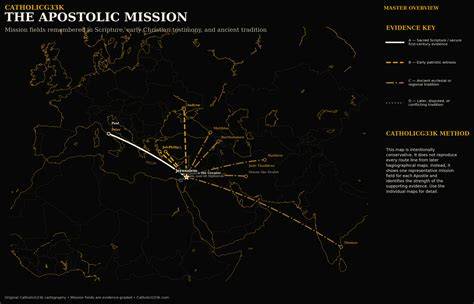
The apostles spread the message of Jesus through small Christian communities across the Mediterranean world and the Middle East. They had to undertake long and dangerous journeys, deal with many different cultures, and remain aware that Romans and many Jews wanted to persecute them.
Soon Christianity was no longer merely a by-product of Judaism but was growing into a universal, or catholic, church.
What Happened to the Apostles?
The Scriptures explicitly record the deaths of only two apostles: James the Greater, who was murdered by Herod, and Judas Iscariot, who died after betraying Jesus.
There is abundant testimony in the early Church that Peter was martyred in Rome, along with Paul. Christian tradition holds that Peter was crucified upside down.
Tradition also holds that Andrew was crucified in the shape of an X, Bartholomew was flayed alive, Matthew was stoned and then beheaded, and Thomas was speared to death.
James the Less is traditionally said to have been martyred by stoning in Jerusalem in the A.D. 60s. Philip may have been martyred in Hierapolis, although some uncertainty remains about the identity of the person associated with his tomb.
Tradition also holds that Simon the Zealot and Jude or Thaddaeus were martyred. John is generally understood to have died a normal death at an advanced age.
Most accounts of the apostles’ deaths come from tradition or legend rather than from direct New Testament narratives. The manner of death is therefore more certain for some apostles than for others.
Judas Iscariot’s Replacement: Matthias
After Judas betrayed Jesus and died, the apostles numbered eleven. Before Pentecost, Peter advised the believers that another man should take Judas’s place.
The candidate had to be someone who had accompanied Jesus and the apostles from the baptism of John until the Ascension and who could become a witness to Jesus’ resurrection.
Between the Ascension and Pentecost, the remaining apostles elected Matthias by casting lots, a traditional Israelite way to determine the will of God. The lot fell upon Matthias according to Acts 1:26.
The original Twelve Apostles therefore became a restored group of twelve after Matthias was chosen to replace Judas Iscariot.
Paul and the Wider Meaning of Apostle
Paul was not one of the original Twelve, but he became one of the most important figures in the spread of Christianity. Formerly called Saul of Tarsus, he described himself as an apostle called by the resurrected Jesus on the road to Damascus.
Jesus called Paul “a chosen instrument of mine to carry my name before Gentiles, kings, and Israelites.” Paul later described himself as “an apostle to the Gentiles.”
Paul had supported the persecution of Christians and was present at the stoning of Stephen. While traveling to Damascus to capture additional followers of Christ, he was confronted, blinded, and converted by Jesus.
After he regained his sight and was baptized, Paul became the greatest of the evangelizers and the Apostle to the Gentiles. He established at least fourteen Christian communities and preached to thousands of individuals while traveling through the Middle East and Europe.
Paul’s letters to the communities he established fill much of the New Testament. Although he was not part of the original Twelve, his work became foundational to the expansion of the Christian movement.
The New Testament uses the term apostle in an expanded sense. Anyone who had received a mission from God or Christ to other people could be called an apostle. Paul also describes Andronicus and Junia as outstanding among the apostles.
Other Important People Who Were Not Among the Twelve
The story of the Gospels includes many key figures who were not among the Twelve. John the Baptist prepared the way for Jesus and played a crucial prophetic role.
Mary Magdalene witnessed the resurrection and became a messenger of the good news. Lazarus, Nicodemus, and Joseph of Arimathea each contributed in their own way to the unfolding story of salvation.
These individuals remind us that the Christian mission involved a diverse cast of people, each with a unique purpose.
Where Did the Apostles Live and Work?
Most apostles lived and worked in Galilee, especially around Capernaum and the Sea of Galilee. The region was the center of Jesus’ ministry and the setting of many callings, teachings, miracles, and resurrection appearances.
Capernaum was a principal ministry base. It was associated with Peter’s home, Matthew’s tax booth, the ministry of Peter, Andrew, James, and John, and the work of Jesus among the fishing villages of Galilee.
The Upper Room in Jerusalem is the primary site associated with the apostles gathering together, especially for the Last Supper and later Pentecost, when the Holy Spirit descended.
Jerusalem was also central to the apostles’ later ministry. It was the setting of the crucifixion, resurrection appearances, Pentecost, the early church, apostolic preaching, imprisonment, and debates about the future of the Christian movement.
The Cultural Background of the Apostles’ Names
The names of the Twelve reveal the multicultural world of first-century Judea. Hebrew, Aramaic, and Greek roots intermingle, reflecting Jewish heritage, Hellenistic influence, family lineage, geography, and personal identity.
Peter carried the Hebrew name Simon and the Greek name Petros. Thomas had the Aramaic name Ta’oma and the Greek name Didymus. Bartholomew and Nathanael reflect the use of a family designation alongside a personal name.
Andrew and Philip had Greek names even though they were Galilean Jews. Matthew’s name expressed devotion to Yahweh, while Judas’s name meant “praise,” creating an especially striking contrast with his betrayal.
The apostles’ names are therefore more than identifiers. They are windows into culture, history, family, language, and spiritual identity.
Why the Apostles Matter
The apostles were not distant historical figures. They were ordinary men chosen for an extraordinary purpose.
They came from dramatically different backgrounds: fishermen hauling nets, a tax collector counting coins, and a zealot shaped by opposition to Roman rule. Jesus gathered them into one community despite their different temperaments, occupations, education, and political experiences.
Peter was outspoken and impulsive, while Thomas was often pessimistic and hesitant. Simon the Zealot had once belonged to a nationalist movement, while Matthew had worked for the Roman taxation system. Peter, John, and Matthew became known through their writings, while James the Less remained comparatively obscure.
What united them was not social status or natural perfection but their relationship with Jesus. They followed him, learned from him, witnessed his death and resurrection, received the Holy Spirit, and were sent to proclaim the gospel.
The apostles’ story demonstrates how Jesus could gather people from entirely different backgrounds and unite them into one family. Their weaknesses remain visible in the Gospels, but their transformation after the Resurrection became central to the spread of Christianity.
The twelve apostles are Peter, Andrew, James the son of Zebedee, John, Philip, Bartholomew, Thomas, Matthew, James the son of Alphaeus, Thaddaeus, Simon the Zealot, and Judas Iscariot. Matthias later replaced Judas, while Paul became a foundational apostle to the Gentiles.