Getting married in the Vatican is possible, but it is reserved for Catholic couples who can satisfy specific canonical, administrative, and scheduling requirements. The process begins with the couple’s local parish priest and normally involves baptismal and confirmation records, a declaration of freedom to marry, marriage-preparation documentation, diocesan approval, and formal permission from the relevant Vatican authorities.
A Vatican wedding is not simply a destination ceremony in a beautiful church. It is the celebration of the Catholic sacrament of marriage in a highly regulated sacred setting, with limited dates, strict protocol, approved liturgical music, modest attire, and carefully controlled access. Couples should begin the process at least six months in advance, while applications for the Choir Chapel in St. Peter’s Basilica may require a year or more.
Why Couples Choose a Vatican Wedding
Vatican City is the smallest independent state in the world and the spiritual heart of Catholicism, a place where centuries of faith, art, and history converge. Nestled within the eternal beauty of Rome, it offers couples a rare and deeply meaningful opportunity to celebrate the sacred sacrament of marriage in one of the most revered and exclusive locations on earth.
Getting married inside the Vatican City will make you feel the embracement of Christ and the Catholic faith and a concentration of hundreds of history inside the ancient walls of this ecclesiastical state where official documents of the Holy See are still issued mainly in Latin. The love a couple shares is a sacramental sign and there is no better place where to celebrate a union than the cradle of Roman Catholicism, the Italian Capital city: the Eternal Rome.
A Vatican wedding is far more than a beautiful celebration-it is a profound return to the very roots of Christian faith. Exchanging vows where Saint Peter laid the foundation of the Church gives every word, prayer, and blessing a timeless spiritual depth.
Beyond its religious importance, the Vatican represents continuity, tradition, and devotion passed down through centuries. Choosing to marry here is a conscious decision to embrace a sacred legacy and to celebrate love in a setting that transcends time, fashion, and trends.
Where Can You Get Married in Vatican City?
Vatican weddings are intimate, exclusive affairs available only in specific churches. The principal venues described for Catholic weddings are the Choir Chapel inside St. Peter’s Basilica, the Church of Saint Anne, and St. Stephen of the Abyssinians.
| Venue | Typical capacity | Availability and character |
|---|---|---|
| Choir Chapel, St. Peter’s Basilica | Up to 30 guests in an intimate arrangement, with other descriptions allowing up to 100 seated guests | Highly restricted dates, formal approval, and a long application process |
| Church of Saint Anne | Up to 80 guests | Parish setting, generally easier to request, with dates sometimes available several months ahead |
| St. Stephen of the Abyssinians | Approximately 40-50 guests | Very exclusive, small, historic church in the Vatican Gardens |
St. Peter’s Basilica and the Choir Chapel
The well-known St. Peter’s Basilica is a late Renaissance Church that is considered one of the holiest Catholic sites in the world. Apart from being famous for pilgrimage, it is possible to obtain a permission for a Catholic Wedding for non residents inside one of the Chapels of the Basilica.
The Choir Chapel is a hidden baroque jewel within St. Peter’s Basilica, reserved for intimate and refined ceremonies with up to 30 guests. Its artistic richness and serene atmosphere make it one of the most exclusive wedding venues in the world.
Catholic weddings usually are allowed in the Choir Chapel of the side chapels that is quite large, holding up to 100 guests. The chapel is quite large and the seating arrangement can hold up to 100 seats. With much more standing room up to another abundant 100 places.
Matrimony is performed in Cappella del Coro also called Chapel of the Choir. A side chapel found approximately half way through the church on the left nave side when entering the cathedral through the main gates.
Exact rules limit the number of weddings per year and a personal letter written by the couple and their priest is the first step to be done to specifically request a date. People from all over the world ask to celebrate their wedding in St. Peter’s Basilica, explained Father Agnello Stoia.
While 95 couples married in St. Peter’s Basilica in 2024, weddings in the Renaissance basilica are halted during the Jubilee Year 2025 due to scheduling challenges.
Church of Saint Anne
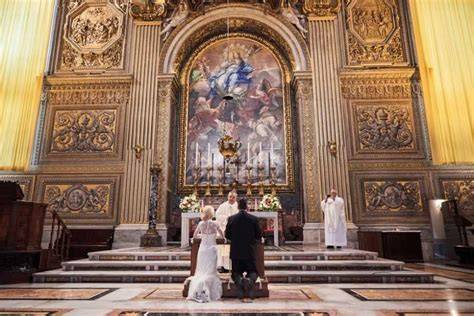
Church of Saint Anne, located just steps from the Vatican gates, welcomes ceremonies of up to 80 guests in a vibrant and historic parish setting. The church is dedicated to St. Anne, mother of the Blessed Virgin Mary.
The other lovely church inside the Vatican City is the church of St. Anna, known also as the Parish church of the Vatican, the first church you come across after entering the Vatican City from the famous Porta Angelica.
It is definitely easier to obtain the permission for a Catholic Wedding inside this Church since there are not specific restrictions and dates can be booked well in advance. English speaking priests are available, floral decorations and music are allowed.
Being a bit separated from the most touristic areas of the Vatican, this church offers a more intimate and warm atmosphere. This Church is also famous for being a masterpiece among Vignola's buildings on an elliptic plan with a dome over it.
Church of Saint Anne is the other church option available to celebrate matrimony in the Vatican city. The church is also found within the Vaticano walls. But not inside Saint Peter’s cathedral.
To gain access to the church you will have to use the porta Sant’Anna entry found on the right hand side of Saint Peter’s square. Next to the Swiss guard security checkpoint.
Jami and Mike Johnson said they have a special devotion to Sts. Anne and Joachim, and that is why they wanted to marry in St. Anne’s Church in Vatican City on Jan. 31, 2023.
St. Stephen of the Abyssinians
Within Vatican walls lies this rare pearl, a 5th-century Ethiopian rite church granted sparingly, like a secret vow between lovers. It is very exclusive, not routinely used for weddings, but with the right connections, it bends to your will.
The Italian couple married in St. Stephen of the Abyssinians Church, which is in the Vatican Gardens in the shadow of St. Peter’s Basilica. Possibly dating from as early as the fifth century, it is the oldest surviving church inside Vatican City.
Russo and Allegra liked the church’s simple Roman architecture and columns for their July 6, 2024, wedding. Allegra grew up in Rome and had the chance to visit the Vatican many times since childhood, so he was already familiar with the church.
Allegra said the sacred edifice helped them to begin their lives together in holy matrimony. “[Inside the Vatican] there is peace and tranquility.”
Who Can Marry in the Vatican?
The short answer is no. A Vatican wedding is not about choosing a beautiful location, but about faith, meaning, and respecting a very specific process. There are clear requirements and official permissions involved.
At minimum, one spouse must be Catholic, and all canonical requirements must bloom. It is a journey starting at your local parish and culminating in Vatican approval.
A Vatican wedding is not for everyone. It is a path for couples who value symbolism, faith, and structure, and who find beauty in meaning rather than spectacle. The right wedding is not the most exclusive one, but the one that truly aligns with who you are.
Can couples of different nationalities marry here? Yes, with appropriate documentation from both dioceses. If one partner is not Catholic, mixed marriages are possible with special ecclesiastical permission.
Step-by-Step Vatican Wedding Process
1. Meet With Your Local Parish Priest
The process begins with an initial meeting with your church pastor. First, an initial meeting with your church pastor is the first step to learn about the diocesan and requirements.
Your parish priest will determine which documents are required, begin the canonical investigation, confirm that you are free to marry, and guide the request through your diocese. Formal meeting with your parish priest or bishop who issues the Nulla Osta.
It is a journey starting at your local parish and culminating in Vatican approval. Every couple’s situation is different, which is why this process needs to be handled carefully. Nothing can be rushed or improvised.
2. Complete the Canonical Marriage Preparation
Recent Marriage Preparation Course Certificates: Complete a Pre-Cana or equivalent (online/in-person options abound). Vatican insists on this soul-deepening prep.
Pre-Cana Certificate: Proof that you have completed the Catholic marriage preparation course. The course should be completed early enough for the certificate to be included in the canonical file.
Completed canonical documents, including Pre-Nuptial Inquiry, Baptism and Confirmation certificates, and a declaration of freedom to marry.
3. Obtain Diocesan Permission
Nihil Obstat: The most important document. It is the formal permission from your local Bishop to get married outside your diocese (in Rome).
Letter of introduction from your local bishop addressed to the Vicariate of Vatican City. Your local diocese may also require additional forms or approvals, particularly if one partner is not Catholic, if either person has been married before, or if the couple is marrying outside their home country.
Dispensation Forms: If needed for mixed marriages, age gaps, or non-Catholic elements. This is handled via the Diocese.
4. Submit the Written Request
Your application should be made in writing by your parish priest and sent to the Parish Office up to twelve months ahead of the desired wedding date. The letter should include a personal note from your priest on your behalf.
The request should include your first three choices of dates for your marriage, in order of preference. They will evaluate your eligibility and, if accepted, will give you the first date that is available from among your choices.
Exact rules limit the number of weddings per year and a personal letter written by the couple and their priest is the first step to be done to specifically request a date.
For the Vatican office you can write to: Parish Office c.a. Padre Mario Basilica of Saint Peter 00120 Vatican City.
5. Wait for Approval and Date Confirmation
Vatican dates are very limited, confirmed only post-full approval. Permissions and availability mean couples should start well in advance, often earlier than a traditional destination wedding.
If the request is accepted, the Vatican office will provide an available date from the choices submitted. A date should not be treated as confirmed until the required documentation has been reviewed and the official approval has been received.
The Vatican no longer allows wedding planners and, consequently, we no longer work there. But you can do the process on your own.
Required Documents
Getting married at the Vatican involves spiritual and administrative requirements, including documentation, approvals, and timing. Gather early, apostille where needed, and translate officially to Italian/English.
| Document | Purpose or requirement |
|---|---|
| Full Baptismal Certificates | Recent certificates, usually issued within six months, with relevant annotations |
| Confirmation Records | Required where Confirmation is not recorded on the baptismal certificate |
| State of Freedom to Marry Affidavits | Confirmation that neither person has an existing marriage bond |
| Pre-Cana Certificate | Proof of completed Catholic marriage preparation |
| Nulla Osta | Formal diocesan permission to marry outside the home diocese |
| Civil Documents | Birth certificates, identification, passports, and proof of civil status |
| Dispensation Forms | Required in certain mixed-marriage or other special situations |
| Nullity Documentation | Required when either person was previously married and the marriage was annulled |
Baptism and Confirmation Certificates
Full Baptismal Certificates: Recent (within 6 months), with notation of confirmation if applicable. Proves your Catholic roots. Request from your parish of baptism.
Baptism Certificates: Must be newly issued (dated within 6 months of the wedding) and include annotations of Confirmation and Freedom to Marry.
Confirmation Records: Essential for the practicing faithful; shows spiritual maturity. Confirmation Certificates are required if the date is not noted on the Baptism certificate.
Freedom to Marry
State of Freedom to Marry Affidavits: Sworn statements from you, witnesses, and pastors confirming no prior bonds. Often notarized.
Letter of Freedom (Status Liber): A sworn statement or letter from your priest declaring you have never been married before.
Civil Documents and Legal Validity
Civil Documents: Birth Certificates (long-form, apostilled) and ID/Passports for all parties, plus proof of civil status.
If you want the marriage to be legally recognized (Concordatario), you must also present a Civil Marriage License from your country or prepare the civil documents for the Italian state.
For St. Peter’s Basilica (Choir Chapel), your legal wedding must precede the Catholic rite. Civil first, sacramental bliss second.
Most couples choose to do the civil part in their home country beforehand to simplify the process.
Previously Married Couples
Official Translations and Nullity Declarations: If previously married (annulled), full proofs required. Submit via your parish priest, who forwards to the Vatican Chancery.
Any prior marriage requires careful examination by the couple’s parish and diocese before a Vatican date can be approved.
How Far in Advance Should You Apply?
Strongly recommended: Start the process right away. A Vatican wedding cannot be planned last minute.
The process requires time, patience, and early planning due to permissions and documentation. Time allows space for intention and preparation, so when the day arrives, everything feels calm and effortless.
The general documentation process should begin approximately six months before the wedding date. Submission of all required documentation at least 3-6 months prior to the ceremony date.
For St. Peter’s Basilica, the application should be started significantly earlier. We need to start the procedure at least one year and a half before the wedding because it is necessary to forward a request and then wait a few months to receive the approval.
At least a year in advance if not more is recommended for a wedding in St. Peter’s Basilica. The couple who married in the Chapel of the Choir in 2022 said it was at least an eight-month process to set the date and to collect and submit the requested documents.
| Planning stage | Recommended timing |
|---|---|
| Local parish meeting and documentation | Approximately six months before the wedding |
| Church of Saint Anne | Often three to six months may be sufficient, depending on availability and approval |
| Choir Chapel, St. Peter’s Basilica | At least one year, and in some cases one year and a half |
| Written application | Up to twelve months ahead of the desired wedding date |
Choosing the Date
Vatican dates are limited, and schedules may change because of liturgical celebrations, papal events, renovations, security requirements, or special periods such as a Jubilee Year.
Weddings in Saint Peter’s Basilica are celebrated Monday through Friday at 10:30 am with the exception of Wednesday. Wednesday is reserved for the official papal audience and the newlywed sposi novelli blessing.
Ceremonies in the Choir Chapel have also been described as taking place at 10:00 AM, skipping Sundays, Wednesdays, and August. The exact schedule must therefore be confirmed directly with the relevant Vatican office.
Matrimonies in Sant’Anna Church may be performed any day of the week with the exception of Sunday.
Avoid peaks: Holy Week, papal events, August heat. Vatican schedules are precise and must be strictly respected.
One couple experienced a change in venue arrangements when the basilica announced a renovation to the Chapel of the Choir that was scheduled to begin shortly after their wedding date. Their ceremony was ultimately moved to the Saturday before the renovation.
Language of the Ceremony
The ceremony is usually celebrated in English, but other languages may be possible depending on approvals. This is an important aspect to discuss early in the planning process.
Each church stirs the soul differently, but all share Vatican magic: officiated potentially by a Vatican Archbishop. While ceremonies are usually in English, other languages may be possible depending on approvals.
International priests weave cultures: Italian passion, English tenderness, global unity. The archbishop’s voice, resonant with authority, seals vows in languages of your heritage.
Couples should confirm in advance whether their own Catholic priest may celebrate the wedding. You are welcome and encouraged to bring your own priest to celebrate the wedding.
Can we bring our own priest? Yes, provided he is Catholic and officially authorized by the Vatican.
The Catholic Rite and Ceremony Guidelines
Only Catholic rites are permitted within Vatican churches. The ceremony follows the approved liturgical form rather than a fully personalized destination-wedding format.
The goal is to support the meaning of the ceremony, not to personalize it through popular songs. Liturgical or sacred music is permitted only when it is approved.
Music
Music must respect the sacred nature of the ceremony. Only appropriate liturgical or sacred music is allowed, and each choice must be approved.
Yes. However only church music is permitted and the instruments which are allowed are the organ and a tenor vocalist. For this reason the Vatican prefers to assigns musicians themselves if the couples wishes to include music.
Classical or sacred repertoire only, subject to liturgical approval. Music and flowers selections must follow sacred traditions and be approved by the Vatican liturgical office.
Flowers and Decorations
Floral arrangements, candles, and religious icons, such as the crucifix and the prominence of white as a symbol of purity, reinforce the sacredness and elegance of a Vatican wedding.
Floral Styling: Elegant, understated arrangements that enhance rather than overpower the sacred setting.
Floral decorations and music are allowed in the Church of Saint Anne, subject to the applicable church rules and approvals.
Attire
Attire should reflect respect for the sacred setting. Shoulders and knees must be covered for both the couple and guests.
Elegant, modest, and formal choices are essential, while revealing, casual, or overly bold outfits should be avoided. Dress Code: Covered shoulders and modest attire are required in full respect of liturgical decorum.
The dress code for brides is a white gown or dress. Formal attire for the groom as well as for the participating guests.
Requirements may vary slightly depending on the venue, with stricter rules inside St. Peter’s Basilica.
Photography and Access
Photography is discreet and limited, allowed only in designated areas. Photographers and videographers are permitted to shoot inside St Peter’s basilica prior to authorization request.
Photography approximately one month’s notice should be given to the photographer and/or the videographer to ask for shooting permissions especially if the matrimony is planned in the Chapel of the Choir.
Punctuality is essential. Vatican schedules are strictly observed, with no delays permitted.
Entry to Vatican areas may require advance vehicle authorization and official ID verification.
Guests, Witnesses, and Family Participation
The authorities prefer to have matrimonies celebrated among friends and family within the context of your local community. When requesting for a destination matrimony to take place in the Vatican, it would be best to show the participation of friends and family as opposed to presenting the request for an elopement wedding made up of just the bride and groom.
Can our children or family members participate? Yes, through readings, offertory roles, or special blessings.
Marriage is supported by family, witnesses and friends, and being married in Rome means entering the sacrament in the holy mystical presence of the community of saints who have a history and connection to these sacred and historic basilicas.
Guests may be subject to access, security, identification, and seating requirements. These details should be confirmed when the ceremony date is approved.
Vatican Wedding Costs
Costs are tailored based on each wedding, hinging on guests, services, and church choice. Religious and administrative costs must be distinguished from optional expenses such as photography, transport, accommodation, reception services, flowers, and music.
Getting married in St. Peter’s Basilica costs nothing except a free-will donation, he underlined, and the pastoral office, which he has headed for three years, is trying to also make the process for getting married in the world’s largest church a little easier.
Approx. cost estimates may vary depending on the Vatican’s rules and procedures in effect. Once all the documentation has been sent in, the administration will evaluate the request feasibility.
| Payment or expense | Amount or timing stated in the material |
|---|---|
| Deposit after acceptance | 200 EURO |
| Remaining balance | Approx. 1000 EURO, due 3 months before the wedding date |
| Photography | Approximately 300€ for a 1 hr session |
| Modern car service | 250€ for a modern Mercedes E class sedan and minimum service of 3 hrs |
| Vintage car service | Between 300€ and 600€ depending on the type of car |
If the request is accepted, you will be required to pay a 200 EURO deposit payment. This will secure your date and time to get married in St. Peter’s basilica.
The remaining balance of approx. 1000 EURO will need to be paid 3 months before the wed date. Both deposit and balance payments are non refundable.
As a suggestion, not a requisite, a token of appreciation may be given to the priest after the marriage.
Other estimates describe tailored packages based on guest numbers, church choice, and additional services, but exact fees should be confirmed through the official Vatican or parish office because rules and procedures may change.
Planning the Day
Time allows space for intention and preparation, so when the day arrives, everything feels calm and effortless. A detailed timetable should cover the couple’s preparation, guest arrival, security checks, ceremony, photography, and departure from the Vatican area.
Develop a comprehensive schedule covering every aspect of the day, from the couple’s preparation to the conclusion of the ceremony, to keep everything on track.
Vatican schedules are precise and must be strictly respected. Punctuality is especially important because ceremonies take place within an active religious and visitor environment.
Technical and logistical checks should be completed in advance. Test all equipment, including audio, lighting, and video, in advance and ensure that each space is set up to welcome guests safely and comfortably.
After the Ceremony in Rome
After the ceremony, continue your celebration in the Eternal City with a reception designed to reflect your personal style and sense of elegance.
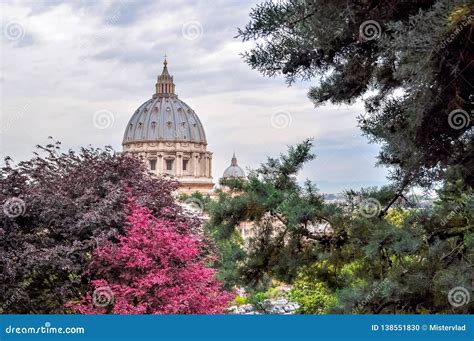
Rome offers an extraordinary selection of venues, including rooftop dinners with breathtaking views over St. Peter’s dome, historic Roman palaces ideal for grand and formal receptions, and charming villas and boutique hotels for intimate gatherings.
For post-ceremony events such as receptions or photography sessions, consider nearby locations that echo the sacred ambiance of the Vatican while ensuring visual and thematic consistency.
Private access to the Vatican Gardens for moments of reflection or discreet post-ceremony photography may be available subject to authorization. Exclusive guided visits to the Sistine Chapel or Vatican Museums are also subject to special authorization.
Common Challenges
A Vatican wedding cannot be planned last minute. The process requires time, patience, and early planning due to permissions and documentation.
Couples may face language barriers, differences in administrative procedures, limited dates, strict schedules, and changes caused by liturgical or institutional events.
Steven recalled that “the time difference, language barrier, and, let’s just say, different priorities made working with the Vatican very challenging.”
For couples who waded through language barriers and paperwork, receiving the sacrament with such a beautiful and meaningful backdrop was worth the logistical effort.
“It was a dream come true,” according to Xavier Kerrand and Gloria Alvizo, a French-Mexican couple who were married in 2022 in St. Peter’s Basilica.
Mike said being in Rome for their wedding, visiting churches and basilicas, and climbing the Holy Stairs, was “transformational” and “overwhelming emotionally” for both of them.
On the day of the wedding, “we felt a very deep sense of calm and peace . wash over us.” Mike said, “You felt the love of Jesus.”
Frequently Asked Questions
Can anyone get married in the Vatican?
No. A Vatican wedding requires at least one Catholic spouse, completion of the canonical process, appropriate documentation, diocesan approval, and official Vatican permission.
Can non-residents marry at St. Peter’s Basilica?
Apart from being famous for pilgrimage, it is possible to obtain a permission for a Catholic Wedding for non residents inside one of the Chapels of the Basilica.
How far in advance should we begin?
Ideally between 6 and 12 months before the wedding date. For the Choir Chapel in St. Peter’s Basilica, couples should consider beginning at least a year ahead, and in some cases one year and a half before the wedding.
Is a civil wedding required first?
For St. Peter’s Basilica (Choir Chapel), your legal wedding must precede the Catholic rite. Civil first, sacramental bliss second.
Can couples of different nationalities marry in the Vatican?
Yes, with appropriate documentation from both dioceses. Documents may need official translation and, where applicable, apostille certification.
What if one partner is not Catholic?
Mixed marriages are possible with special ecclesiastical permission. The required dispensation is handled through the diocese.
In which language is the ceremony celebrated?
The ceremony is usually celebrated in English, but other languages may be possible depending on approvals. This is an important aspect to discuss early in the planning process.
Can we bring our own priest?
Yes, provided he is Catholic and officially authorized by the Vatican. You are welcome and encouraged to bring your own priest to celebrate the wedding.
Are popular songs allowed?
Only appropriate liturgical or sacred music is allowed, and each choice must be approved. The instruments which are allowed are the organ and a tenor vocalist.
Are flowers allowed?
Floral decorations are allowed, but selections must follow sacred traditions and be approved by the Vatican liturgical office. Elegant, understated arrangements are appropriate.
What should the couple and guests wear?
Shoulders and knees must be covered for both the couple and guests. Elegant, modest, and formal choices are essential, while revealing, casual, or overly bold outfits should be avoided.
Can children and relatives participate?
Yes, through readings, offertory roles, or special blessings, subject to the approved liturgical format.
Does the Vatican wedding automatically provide civil legal recognition?
If you want the marriage to be legally recognized (Concordatario), you must also present a Civil Marriage License from your country or prepare the civil documents for the Italian state. Most couples choose to do the civil part in their home country beforehand to simplify the process.
Can the ceremony be held during every season?
Availability depends on the church, liturgical calendar, papal events, renovations, and other Vatican schedules. Holy Week, August, Sundays, Wednesdays, and major events may be unavailable for particular venues.