In the Bible, “Hellenists” generally refers to Greek-speaking Jews, especially Jewish people from the Diaspora who had adopted the Greek language and some elements of Greek culture while retaining their Jewish faith and practices. The clearest reference appears in Acts 6:1, where Hellenistic Jewish believers complained that their widows were being overlooked in the daily distribution of food.
The term does not always have exactly the same meaning in every passage. In Acts 6:1 it describes Greek-speaking Jewish Christians, while in Acts 9:29 it refers to Greek-speaking Jews who opposed Paul. In Acts 11:20, the context may indicate Greek-speaking Gentiles, which explains why some translations use “Greeks.”
What Does “Hellenist” Mean?
Hellenist is a word that means one who speaks Greek, not simply a Greek person. In its basic form Hellenist could refer to anyone from any country who assimilated into Greek culture.
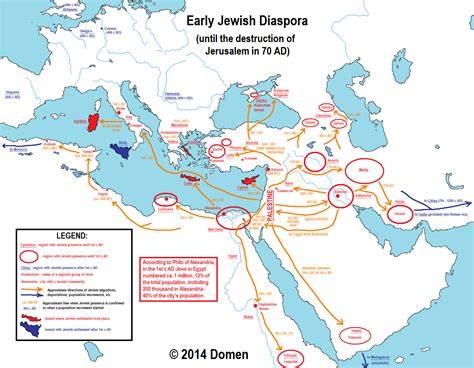
The term “Hellenist” appears in the New Testament and is used to describe a group of Greek-speaking Jews. These individuals were part of the Jewish diaspora, having been dispersed from Israel and settled in various parts of the Greek-speaking world.
As a result, they adopted the Greek language and, to some extent, Greek customs, while still maintaining their Jewish faith and practices. The Hellenists as a body included not only the proselytes of Greek or foreign parentage, but also those Jews who, by settling in foreign countries, had adopted the prevalent form of the current Greek civilization, and with it the use of the common Greek dialect.
Hellenists and Hellenization
To “Hellenize” is to adopt Greek culture and ideas. Hellenism is the name given to the manifold achievements of the Greeks in social and political institutions, in the various arts, in science and philosophy, in morals and religion.
It is customary to distinguish two main periods, between which stands the striking figure of Alexander the Great, and to apply to the earlier period the adjective “Hellenic,” that of “Hellenistic” to the latter.
The Hellenistic age was the result of the expansion of Greek language and culture throughout the Mediterranean and the Near East. After the conquests of Alexander the Great, Greek became a widely used language of administration, education, commerce, and public life.
This cultural diffusion had a significant impact on Jewish communities outside of Palestine, leading to the development of a distinct Hellenistic Jewish identity. Hellenistic Jews often found themselves at the intersection of Jewish and Greek cultures.
The Historical Background of Hellenistic Jews
Before the coming of the Hellenic peoples into what we now call Greece, there existed in those lands a flourishing civilization to which we may give the name “Aegean.” The Hellenic peoples later established communities throughout the Greek mainland, the islands of the Aegean, Asia Minor, Egypt, North Africa, southern Italy, Sicily, and other regions.
In the 8th and 7th centuries B.C., two great movements of colonial expansion set in, one toward the Hellespont and to the shores of the Pontus, or Black Sea, beyond, the other westward toward Southern Italy, Sicily, and beyond as far as Gades in Spain.
To the 7th century belongs also the colonization of Naucratis in Egypt and of Cyrene in Libya. With the enforced internal peace imposed by Macedonia came the resumption of colonial and military expansion in a measure before undreamed of.
In a few years the empire of Alexander embraced Thrace, Asia Minor, Egypt, and Asia eastward beyond the Indus. The easternmost regions soon fell away, but Asia Minor, Syria and Egypt long continued under Greek rule, until Rome in the 1st century B.C. made good her claims to sovereignty in those lands.
The result was a broad Greek-speaking world in which Jewish communities lived outside Judea. These communities preserved Jewish identity while participating in the surrounding Hellenistic culture.
The Septuagint and the Language of Hellenistic Jews
Hellenistic Jews commonly spoke Greek and used the Greek translation of the Old Testament, called the Septuagint. This distinguished them from Jewish people in Judea who primarily used Hebrew or Aramaic in daily life and religious settings.
The use of the Septuagint was especially significant because it made Israel’s Scriptures accessible to Jews throughout the Greek-speaking world. It also provided a shared biblical text for Jewish communities living in different countries.
Although Hellenistic Jews had adopted Greek language and some Greek customs, they did not necessarily abandon Jewish beliefs. Their identity was both Jewish and Hellenistic: Jewish by faith, ancestry, and religious practice, and Hellenistic by language and cultural environment.
Hellenists and Hebrews in Acts 6:1
The Main Biblical Reference
The Hellenistic Jews are first mentioned in the Bible in Acts 6:1: “In those days when the number of disciples was increasing, the Hellenistic Jews among them complained against the Hebraic Jews because their widows were being overlooked in the daily distribution of food.”
Acts 6:1 records the same event in these words: “Now in these days when the disciples were increasing in number, a complaint by the Hellenists arose against the Hebrews because their widows were being neglected in the daily distribution.”
The believing Jews were here divided into two groups. There were those who had remained in Judea, near Jerusalem, who used the Hebrew language, and who were appropriately called “Hebrews.”
The other group consisted of those who were scattered among the Gentiles, who spoke the Greek language, and who used the Greek translation of the Old Testament, called the Septuagint. These were called “Hellenists,” from a word meaning “Greek” or “Greek-speaking.”
| Group | Language and background | Situation in Acts 6 |
|---|---|---|
| Hellenists | Greek-speaking Jews from the Diaspora who had adopted Greek cultural elements | Their widows were being overlooked in the daily distribution |
| Hebrews | Jewish believers born and raised in Israel who used Hebrew or Aramaic | They belonged to the other major Jewish group in the Jerusalem church |
The Difference Between Hellenists and Hebrews
As referred to in this passage, “the Hellenists” are the Christian converts among the Jews who had returned to Judea after having lived abroad in the Greek world. Despite being Jewish, the Hellenists had adopted Greek cultural elements and spoke Greek.
“The Hebrews” in this verse are the Christian converts among the Jews who were born and raised in Israel. The difference was therefore primarily linguistic, geographical, and cultural rather than a difference in basic religious identity.
The Hebraic Jews prided themselves on the fact that they had always lived in the land of the patriarchs and that they used the language that their fathers spoke. They were near the temple and regularly worshiped there.
On the other hand, the Hellenistic Jews from other parts of the world were jealous of the first group and made to feel like outsiders. Their conversion to Christianity did not automatically eliminate the social and cultural distinctions between them.
Why Were the Hellenistic Widows Neglected?
The church was going through some growing pains of trying to keep up with everyone in the midst of rapid growth, and had neglected, most probably without intent, the widows among the Hellenists.
The passage does not require the conclusion that the apostles or the Hebrew believers deliberately discriminated against the Hellenists. The problem arose within a rapidly expanding community that was trying to administer regular assistance to vulnerable people.
Sadly, the strife between the two groups was not automatically eliminated by their conversion to Christianity, as the complaints concerning food distribution to widows of the two groups show.
The dispute nevertheless revealed a serious concern. Widows were among the people most dependent on communal care, and an unequal distribution threatened both justice within the church and the unity of the Christian community.
The Apostles’ Response to the Complaint
The twelve summoned the full number of the disciples and said, “It is not right that we should give up preaching the word of God to serve tables.”
Acts 6:2 records the statement in another translation: “Then the twelve summoned the multitude of the disciples and said, ‘It is not desirable that we should leave the word of God and serve tables.’”
With only twelve apostles to tell the tens of thousands of new and multiplying Christians about Jesus, the most pressing need was “the ministry of the word.”
The apostles were not saying that manual labor was somehow below them, but that telling people about Jesus could not be held up while they performed roles that others could perform.
What Does “Serving Tables” Mean?
In this context, to “serve tables” did not even mean to serve food on tables, but to “tend to business,” which were conducted on tables, of church management.
The expression therefore includes the practical administration of the church’s charitable distribution. It involved the organization of material assistance rather than merely the physical act of handing out meals.
The apostles recognized that both preaching and administration were necessary, but they also recognized that the church needed a clear distribution of responsibilities.
The Appointment of the Seven
The apostles instructed the church: “Therefore, brothers, pick out from among you seven men of good repute, full of the Spirit and of wisdom, whom we will appoint to this duty.”
They continued: “But we will devote ourselves to prayer and to the ministry of the word.” The proposal pleased the whole gathering, and the church selected seven men.
And what they said pleased the whole gathering, and they chose Stephen, a man full of faith and of the Holy Spirit, and Philip, and Prochorus, and Nicanor, and Timon, and Parmenas, and Nicolaus, a proselyte of Antioch.
These they set before the apostles, and they prayed and laid their hands on them. The appointment demonstrated that the problem would be addressed through shared responsibility, spiritual qualifications, and the participation of the whole congregation.
- Stephen, a man full of faith and of the Holy Spirit
- Philip
- Prochorus
- Nicanor
- Timon
- Parmenas
- Nicolaus, a proselyte of Antioch
The names of all seven men are Greek names. This may indicate that they were Hellenists or that they were particularly suited to serve the Greek-speaking section of the church, although the passage does not explicitly identify every one of them as a Hellenist.
The appointment of the seven deacons in Acts 6, including Stephen and Philip, was a direct response to the needs of the Hellenistic believers.
The Result: Unity and Growth
After the appointment of the seven, “the word of God continued to increase, and the number of the disciples multiplied greatly in Jerusalem, and a great many of the priests became obedient to the faith.”
In a wonderful example of godly wisdom and Christian unity, the early church worked through the dispute, and the office of deacon was formed.
The solution did not treat practical service as unimportant. Instead, it gave practical service an organized place within the mission of the church while allowing the apostles to remain devoted to prayer and the ministry of the word.
Hellenists in Acts 9:29
After Acts 6, the Hellenists appear again in Acts 9:29, when Paul “talked and debated with the Hellenistic Jews, but they tried to kill him.”
The KJV translates the word for the group as “Grecians.” The passage concerns Greek-speaking Jews in Jerusalem who heard Paul’s testimony after his conversion but rejected his message about Jesus.
Among the Grecian Jews, just as among the Hebraic Jews, there were those who rejected Jesus as the Christ and resisted the preaching of the gospel, even to the point of trying to kill the Christian missionaries.
This reference shows that “Hellenist” does not automatically mean Christian. The term identifies a linguistic and cultural group, and that group included both people who accepted Jesus and people who opposed the Christian message.
Hellenists in Acts 11:20
In the New Testament it is only used in Acts, and referred to Greek-speaking Jewish Christians, Greek-speaking Jewish non-Christians, and more.
The country of Greece itself is written Hellas in Greek, so the reference simply to “Hellenists” in Acts 11:20 could refer to Greek-speaking Gentiles, which is why some translations actually just say “Greeks.”
Part of the confusion is Luke’s use of the term “Hellenists” in 6:1 to describe Greek-speaking Jewish Christians, but in 9:29 with reference to Greek-speaking Jews who were not Christians.
In Acts 11:20, “Greeks” would be more naturally natives of Greece, but “Hellenists” in this context would be Greek-speaking Gentiles more generally.
The context defines more precisely in each case what sort of Greek-speaking person Luke has in mind, ranging from Jewish Christians, to Jews, to pagans.
Hellenists and the Spread of the Gospel
In any case, through the book of Acts it is clear the gospel was reaching the Hebrew Jews, the Greek-speaking Jews, and Greek-speaking Gentiles.
The presence of Hellenists in the early Christian church played a crucial role in the spread of the Gospel beyond Jewish communities. Their language and cultural connections helped bridge the world of Palestinian Judaism and the wider Greek-speaking world.
These events illustrate how Hellenistic Jews were instrumental in the early church’s mission to reach diverse populations, bridging cultural and linguistic divides.
Stephen
Stephen, a Hellenist, became the first Christian martyr, as described in Acts 7, after he was accused of blasphemy by the Sanhedrin.
Acts records Stephen’s speech as one of the major speeches in the book. The speeches in Acts are an important part of Luke’s historical account, and they make up nearly a third of the book.
Stephen’s witness demonstrates that the Hellenistic section of the church was not peripheral to the Christian mission. It was central to the church’s public testimony and to the expansion of the gospel beyond the initial Jerusalem community.
Philip
Philip, another Hellenist, is noted for his evangelistic work in Samaria and his encounter with the Ethiopian eunuch in Acts 8:26-40.
Philip’s ministry illustrates the outward movement of the gospel from Jerusalem into surrounding regions and toward people from different ethnic and geographic backgrounds.
The Ethiopian eunuch was one of the many kinds of people welcomed into the expanding family of God. Acts also describes the inclusion of a Roman centurion, lame men, a merchant woman, a Philippian jailer, members of the religious elite in Athens, and magicians and sorcerers.
The Hellenistic World and the Book of Acts
Acts is a sequel to the Gospel of Luke. Both were written by Luke, a physician who traveled with the apostle Paul.
Luke’s purpose for writing his Gospel applies to Acts as well: to give an “orderly” account of the early church after Christ’s resurrection. Dedicating the two-volume work to Theophilus, Luke wanted him to have “certainty” about what he had been taught.
The book of Acts records the spread of the gospel from Jerusalem to Rome, thus fulfilling the risen Christ’s words to his apostles in Acts 1:8.
Acts begins in Jerusalem, the capital city of the Jews, but ends in Rome, the capital city of the Gentiles. It begins with the ministry of Peter, apostle to the Jews, but ends with the ministry of Paul, apostle to the Gentiles.
The direction of Acts is one of ever-expanding global reach. Acts 1:8 sums up the global significance of the book: “But you will receive power when the Holy Spirit has come upon you, and you will be my witnesses in Jerusalem and in all Judea and Samaria, and to the end of the earth.”
Hellenists and the Reversal of Babel
In Genesis 11 the pride of mankind led to the building of the tower of Babel. But God brought low mankind’s arrogance. He scattered the human race throughout the earth and gave different languages to different people groups.
In Acts 2, the curse of Babel is reversed. Instead of one language becoming many, many languages become one.
As travelers from distant lands descend on Jerusalem at Pentecost, the Holy Spirit falls on the disciples and they speak in tongues, “and at this sound the multitude came together, and they were bewildered, because each one was hearing them speak in his own language.”
With the pouring out of the Spirit right after Christ’s ascension, God was beginning to undo the effects of sin. Peter said that Pentecost was the beginning of the “last days” predicted by Joel.
The gospel’s global reach is thus beautifully depicted in the events of Acts 2. The presence of many languages and peoples does not prevent the proclamation of one gospel; through the Holy Spirit, the message becomes understandable across linguistic and cultural boundaries.
The Broader Cultural Meaning of Hellenism
Throughout the course of Greek development and expansion, the strong individuality of the Hellenic population manifested itself everywhere in its civilization.
Greek civilization became typical of all western civilization. The city-state, often confederated with other city-states, displaced the organization of tribe or clan, thus substituting a new unit and a new interest for the old.
The centers thus created radiated Hellenic influence and made for order and good government everywhere. In the Hellenistic age, individualism gradually preponderated where the lessening power of creative genius did not lead to simple imitation.
The life of the Greeks, essentially urban and dominated by political interests fostered in states in which the individual counted for much, was of a type wholly different from the oriental.
There was thus a powerful stimulus to mutual tolerance and concession which, supported as it was by the strong love of personal independence and the cultivation of individuality, led to the development of liberty and the recognition of the rights of man.
The amenities of life were many, and were cultivated no less in the name of religion than of art, literature, and science. Greek art was largely developed in the service of religion, while Greek philosophy and literature influenced the intellectual environment of the Mediterranean world.
Hellenistic Jews and Jewish Tradition
Hellenistic Jews did not simply become Greeks in a religious sense. They remained connected to the Scriptures, Jewish worship, Jewish communal life, and the hope of Israel.
At the same time, their use of Greek language and their contact with Greek customs created differences between them and Jews who lived in Judea. These differences could be seen in speech, education, social networks, religious habits, and the translation of Scripture used in worship and instruction.
This dual identity sometimes led to tensions with more traditional Jews who lived in Judea and adhered strictly to Hebrew customs and language.
The tensions in Acts 6 therefore reflect more than a simple disagreement about food. They reveal the challenge of forming one community from people with different languages, origins, and cultural experiences.
Theological Significance of the Hellenists
The inclusion of Hellenists in the early church reflects the universal nature of the Christian message. It underscores the breaking down of barriers between different ethnic and cultural groups.
The tensions and resolutions between Hellenists and Hebrews in the early church serve as a testament to the transformative power of the Gospel, which calls for unity and reconciliation among believers from diverse backgrounds.
Paul expressed this unity in Galatians 3:28: “There is neither Jew nor Greek, slave nor free, male nor female, for you are all one in Christ Jesus.”
The distinction between Hellenists and Hebrews was real, but it was not allowed to become the final definition of the church. The early Christian community had to acknowledge differences while ensuring that those differences did not produce neglect, exclusion, or division.
Word and Deed in the Church
Throughout Acts, ministry involves both word and deed, both speaking and doing, both preaching and serving.
Miraculous acts of healing, for example, were “signs and wonders” that pointed to the life-changing power of the gospel. In Acts 14:3, Paul and Barnabas were “speaking boldly for the Lord, who bore witness to the word of his grace, granting signs and wonders to be done by their hands.”
Christians sometimes emphasize either word or deed to the neglect of the other. The New Testament teaches us to make God’s Word our first priority in ministry, yet the gospel must be clothed in love and good deeds, lest we “unsay” with our actions what we say with our lips.
The situation involving the Hellenistic widows demonstrates that doctrinal proclamation and practical care belong together. The apostles continued the ministry of the word, while other qualified believers assumed responsibility for the church’s material administration.
Gifts, Service, and Shared Responsibility
Each Christian is given gifts by God and believers should focus on using them to glorify Him: “For as we have many members in one body, but all the members do not have the same function, so we, being many, are one body in Christ, and individually members of one another.”
“Having then gifts differing according to the grace that is given to us, let us use them: if prophecy, let us prophesy in proportion to our faith; or ministry, let us use it in our ministering; he who teaches, in teaching; he who exhorts, in exhortation; he who gives, with liberality; he who leads, with diligence; he who shows mercy, with cheerfulness.”
All the roles deserve esteem. “For as the body is one and has many members, and all the members of that one body, being many, are one body, so also is Christ.”
“For by one Spirit we were all baptized into one body-whether Jews or Greeks, whether slaves or free-and have all been made to drink into one Spirit.”
“For in fact the body is not one member but many. If the foot should say, ‘Because I am not a hand, I am not of the body,’ is it therefore not of the body?”
“But God composed the body, having given greater honor to that part which lacks it, that there should be no schism in the body, but that the members should have the same care for one another.”
“And if one member suffers, all the members suffer with it; or if one member is honored, all the members rejoice with it.”
Should Teachers Only Teach?
Teaching should remain the focus of those truly called by God to teach, but they are not precluded from serving tables in church or even working to provide for themselves.
After all, Jesus washed His disciples’ feet, and the apostle Paul continued to work as a tent maker during his ministry.
The apostles’ decision in Acts 6 does not create a hierarchy in which preaching is honorable and practical service is inferior. It establishes a wise division of labor so that different members can serve according to their gifts and responsibilities.
Christian Generosity and Care for the Vulnerable
The church is called to be kind and generous to all those made in God’s image. Yet believers are to show special kindness to one another.
We see this beautifully in Acts, as believers share possessions in common with one another in a bold sacrifice of love. As Christ poured his life out in self-giving compassion for us when we were in need, so we give of ourselves to others who are in need.
The neglect of the Hellenistic widows was therefore not a minor administrative inconvenience. It threatened the church’s visible commitment to generosity and mutual care.
The appointment of responsible servants showed that Christian unity includes fair treatment of people whose language, origin, or cultural background differs from that of the majority.
The Holy Spirit and the Mission of the Church
The worldwide mission of the church began only when the Holy Spirit came upon God’s people. Acts declares to the church today that it is by the power of the Spirit that the gospel will go forth to the end of the earth.
In a day when the Spirit is often the most neglected person of the Trinity, especially in the Christian West, the global church must learn from Acts to treasure the Spirit and his presence and power.
Evangelistic effectiveness does not depend ultimately on human cleverness and sophisticated strategies. Global fruitfulness comes as weak Christians depend on the Spirit and look to him for strength.
The Hellenists in Acts illustrate this Spirit-empowered expansion. Greek-speaking Jewish believers were included in the church, entrusted with service, involved in witness, and connected to the movement of the gospel beyond Jerusalem.
Hellenists in the Global Structure of Acts
The first seven chapters of Acts show the gospel spreading in Jerusalem. Chapters 8-9 describe its spread to the surrounding regions. Chapters 10-28 show the gospel going to the end of the earth, to Rome itself.
In this way Acts 1:8 becomes an outline of the whole book of Acts. Even the final verse of Acts records the unstoppable spread of the gospel: Paul was “proclaiming the kingdom of God and teaching about the Lord Jesus Christ with all boldness and without hindrance.”
The gospel’s global expansion fulfills the ancient promises to Abraham that in him all the nations of the earth would be blessed.
The end of the Bible completes the global explosion of the gospel that begins in Acts. In Revelation 5 John sees twenty-four elders fall down before the Lamb and sing, “Worthy are you to take the scroll and to open its seals, for you were slain, and by your blood you ransomed people for God from every tribe and language and people and nation.”
Apostles and Deacons (Acts 6:1:7) — A Sermon by R.C. Sproul
Key Biblical References to Hellenists
- Acts 6:1: Greek-speaking Jewish believers complain that their widows are being overlooked in the daily distribution.
- Acts 6:2-6: The apostles appoint seven qualified men to oversee the practical responsibility.
- Acts 7: Stephen, one of the seven, gives a major speech and becomes the first Christian martyr.
- Acts 8:26-40: Philip carries out evangelistic ministry and encounters the Ethiopian eunuch.
- Acts 9:29: Paul debates with Hellenistic Jews in Jerusalem, and some of them try to kill him.
- Acts 11:20: The term may refer to Greek-speaking Gentiles, depending on how the context and translation are understood.
- Acts 2:6-11: People from many language groups hear the gospel at Pentecost in their own languages.
- Galatians 3:28: The unity of believers in Christ is expressed across ethnic, social, and gender distinctions.
Meaning of Hellenists in the Bible
In the Bible, Hellenists are best understood as Greek-speaking people connected with Jewish or early Christian communities, especially Jews of the Diaspora who had adopted Greek language and elements of Greek culture.
In Acts 6:1, they are Greek-speaking Jewish Christians whose widows were overlooked in the daily distribution. In Acts 9:29, they are Greek-speaking Jews who opposed Paul. In Acts 11:20, the term may describe Greek-speaking Gentiles.
The Hellenists are important because they show how the early church confronted cultural difference within its own fellowship and how the gospel moved from Jerusalem toward the wider Greek-speaking world.
Their story also shows that Christian unity does not mean pretending that linguistic and cultural differences do not exist. It means addressing injustice, sharing responsibility, honoring different gifts, and allowing the Holy Spirit to unite people from different backgrounds in the one mission of Christ.
tags: #hellenists #in #the #bible