Taraweeh prayer usually lasts between one and two hours in a mosque, although the exact duration depends on the number of rakahs, the amount of Qur’an recited, the imam’s pace, and the breaks taken during the prayer. In some mosques, Taraweeh may be shorter because fewer verses are recited, while a mosque that recites one juz of the Qur’an each night may continue for approximately one and a half to two hours.
At home, Taraweeh can be as long or as short as a person’s ability, energy level, and recitation allow. It is a voluntary night prayer performed after Isha during Ramadan, and it may be prayed individually, with family, or in congregation. The prayer is completed before Witr, which is the last prayer of the night.
Typical Duration of Taraweeh
The cycles of Taraweeh last much longer than your five daily prayers due to the lengthy amounts of Quran being recited. The prayer’s duration is anywhere from one to two hours, depending on how the mosque conducts things. It definitely can be a challenge-both spiritually to stay engaged and even physically to stand for longer amounts of time in prayer than we are used to during the rest of the year.
In a mosque, if one juz’ is recited, the Tarawih will last for one and a half or two hours, but some mosques recite less than that. You can inquire how much they recite in each Prayer and how long it takes. If there is more than one mosque in your area, you can choose which one to attend.
| Setting or arrangement | Possible duration or description |
|---|---|
| Mosque reciting one juz nightly | One and a half or two hours |
| Many congregational Taraweeh prayers | Anywhere from one to two hours |
| Prayer at home | As long or short as the worshipper’s ability, recitation, and energy allow |
| Shorter recitation | The prayer may take less time, depending on the mosque |
Why Taraweeh Can Take So Long
There are twenty cycles of prayer, usually performed in sets of two. In many mosques, the leader (imam) of Taraweeh is someone who memorized the entire Quran. He recites about one part (juz) of the Quran nightly to complete all thirty parts before the conclusion of the month.
Many mosques follow the tradition of completing one juz (chapter) each night, inspired by the practice of the Prophet Muhammad (PBUH). Thus performing Tarawih in the mosque imparts a special flavor to Ramadan, especially if one is able to do so every night and hear the whole Qur’an recited during the month.
Completing the Qur’an during Taraweeh is a great goal, but it is not compulsory. You can recite any surahs (chapter) you know, whether long or short. Ramadan is the month of the Qur’an, so focus on sincere recitation and reflection. Whether you recite a little or a lot, each effort brings you closer to Allah (SWT).
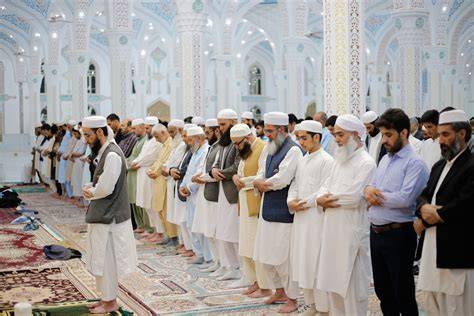
How Many Rakahs Are in Taraweeh?
Taraweeh consists of an even number of rak`ahs, performed two by two (as Fajr Prayer is performed). The number of rak`ahs is not fixed, but it usually is either 8 or 20. It is recommended to take a short break after every four rak`ahs.
There are various traditions on the total number, with some reporting 8 and others 20. Taraweeh is prayed in sets of 2 until completion at 8, 12 or 20 rakats. Some narrations state that a complete Taraweeh is 8 rakats while others say it is 12 or 20.
When attending Taraweeh at a masjid, the Imam will usually pray the full 20 rakats as all four schools of thought support these narrations. When attending taraweeh at a mosque, the most important aspect is to finish praying with the imam regardless of the number of rakahs he prays and not leaving early.
Breaks During Taraweeh
The word Taraweeh means rest or relaxation. It is recommended to take a short break after every four rak`ahs. In a mosque, there may be a short religious talk or du`aa’ (supplication) or dhikr (remembrance of Allah) at this time.
Here’s one variation, with a simple step-by-step breakdown of how to pray Taraweeh:
- Pray 4 rakahs fardh of isha.
- Pray 2 rakahs sunnah of isha.
- Set intention to start praying taraweeh/qiyam.
- Pray the first 4 rakahs of taraweeh, 2 rakahs at a time.
- Take a short break after each interval of 4 rakahs.
- Pray another 4 rakahs of taraweeh.
- Rest.
- Either end taraweeh here or pray the remainder until 12 or 20 total rakahs have been completed.
- End the night with witr prayer.
When Taraweeh Is Performed
Taraweeh begins after the night prayer (Isha) and is prayed in congregation in the mosque. It can also be prayed individually at home. Taraweeh prayer is observed at night any time after the obligatory Isha prayer but before Witr, as the Witr prayer is the last prayer of the night.
Tarawih does not have to be performed immediately after `Isha’. Muslims can postpone it till later, but in a mosque it is performed after the people have prayed two rak`ahs of Sunnah following `Isha’ Prayer.
Note that the Islamic day begins at sunset. Thus the first Tarawih Prayer of Ramadan will be performed the evening before the fast actually begins. Likewise, after the fast on the 29th day of Ramadan, the Tarawih Prayer is delayed until it is determined whether the new moon has been sighted, marking the end of Ramadan, or whether there will be one more day of fasting. If the new moon is sighted, there is no Tarawih Prayer.
Can Taraweeh Be Prayed at Home?
Yes, Taraweeh can be performed at home. In fact, the Prophet Muhammad (PBUH) performed most of his Taraweeh prayers at home, but it is highly encouraged for men to perform the prayer at the mosque as the reward is higher.
It can be performed at home, alone or in congregation, or at a mosque. Worshipping Allah (SWT) alone or with family at home is still greatly rewarding.
Tarawih is a voluntary prayer performed during Ramadan. It is prayed in units called rakahs, and can pardon the past sins of a believer. It is a sunnah of the Prophet (peace and blessings be upon him), which means that it was his practice to perform Tarawih and Muslims are encouraged to do likewise, but it is not obligatory.
How Long Should Taraweeh Be According to the Recitation?
The length of Taraweeh is connected to the amount of Qur’an recited and the pace of the prayer. If the recitation in tarawih prayer is kept short, then the number of rak`ahs is increased to 41 rak`ahs, as some of the imams said. If a person wants to limit himself to eleven rak`ahs or thirteen rak`ahs in tarawih prayer, then he should lengthen the recitation and other essential parts of the prayer.
It is proven in al-Sahih that the Prophet (peace and blessings of Allah be upon him) used to pray eleven rak`ahs at night in Ramadan and at other times, but he would make the recitation and other essential parts of the prayer so long that on one occasion he recited more than five juz in a single rak`ah, reciting slowly and carefully.
And it is proven that he would get up halfway through the night, or shortly before or after that, and he would carry on praying until it was close to dawn, so he would pray thirteen rak`ahs in approximately five hours. This requires making the recitation and other essential parts of the prayer lengthy.
And it is proven that when `Umar united the Companions in praying Tarawih, they would pray twenty rak`ahs, reciting approximately thirty verses of al-Baqarah in each rak`ah, i.e., roughly four or five pages, so they would recite Surah al-Baqarah in eight rak`ahs, and if they recited it in twelve rak`ahs they would think that it was short.
This is the Sunnah in Tarawih prayer: if the recitation is kept short then the number of rak`ahs is increased to forty-one rak`ahs, as some of the imams said. If a person wants to limit himself to eleven rak`ahs or thirteen rak`ahs, then he should lengthen the recitation and other essential parts of the prayer.
There is no set number for Tarawih prayer, rather what is required is to pray in the time that will enable you to attain tranquillity and not rush, no less than an hour or so.
Taraweeh and Witr
After the Tarawih, there is the Witr Prayer of three rak`ahs. In Ramadan, these can be performed in congregation and aloud. In a mosque, short surahs are usually recited during these rak`ahs.
The Witr should be the last Prayer performed before dawn. So if you are praying Tarawih in congregation and wish to perform additional Tahajjud (optional Late Night) Prayers later, you may skip the Witr in congregation and perform it after Tahajjud.
After the ruku` (bowing) of the last rak`ah, it is a Sunnah for the imam to supplicate aloud before prostrating. The congregation should answer “ameen” after each line of the du`aa’ (supplication). This supplication after ruku` is known as qunoot.
What Is Recited During Taraweeh?
Taraweeh Prayer is recited aloud. Muslims who are praying alone or leading others and can read Arabic, may hold the Qur’an in their hands and read aloud from it during Tarawih.
If you cannot read Arabic, you may recite Qur’an from memory. Tarawih may be as long or short as you like, depending on your ability to read or recite, and on your energy level.
If needed, you may also hold a Qur’an to read during prayer, according to the Hanbali, Maliki and Shafi’i schools of thought. You can also make personal duas in your own language to connect with Allah sincerely.
Supplication During Taraweeh
It’s encouraged to increase your supplications and remembrance of Allah (SWT) during taraweeh. There isn’t a specific dua that must be recited, but you can use this opportunity to ask Allah for forgiveness, guidance, and blessings.
A commonly recited dua for seeking forgiveness is:
اللَّهُمَّ إِنَّكَ عَفُوٌّ تُحِبُّ العَفْوَ فَاعْفُ عَنِّي
Transliteration: ‘Allahumma innaka afuwwun tuhibbul afwa fa’fu anni’
Translation: O Allah, You are all Forgiving and love forgiveness, so forgive me.
This dua is particularly powerful during Ramadan, as it is a month of mercy and forgiveness.
Why Many Muslims Spend Time in Taraweeh
During Taraweeh prayers, mosques attract a large crowd of Muslims looking to spend their Ramadan nights wisely in worship. As it is a highly recommended Sunnah, mosques across the world hold congregational Taraweeh prayers for men and women on every night of the blessed month.
Abu Hurayrah narrated that the Messenger of Allah said, “Whoever establishes prayers during the nights of Ramadan faithfully out of sincere faith and hoping to attain Allah’s rewards (not for showing off), all his past sins will be forgiven.”
The Prophet (PBUH) said: “He who observes optional prayer (Tarawih prayers) throughout Ramadan, out of sincerity of Faith and in the hope of earning reward will have his past sins pardoned.” (Al-Bukhari and Muslim)
Taraweeh is a wonderful opportunity to connect deeply with the Qur’an. Whether you recite a little or a lot, each effort brings you closer to Allah (SWT).
How to pray Taraweeh? What Surahs to recite in it after fateha? - Sheikh Assimalhakeem
What It Feels Like to Complete Taraweeh
Upon completing the Taraweeh prayers, a person experiences a sense of accomplishment. Two hours really is not that much time in the grand scheme of things, but because of the challenge involved following a day of fasting you just feel good after its completion!
It definitely can be a challenge-both spiritually to stay engaged and even physically to stand for longer amounts of time in prayer than we are used to during the rest of the year. If you happened to be getting a little tired, the repetition of familiar verses woke you up.