Jesus Christ Superstar is a rock opera by Andrew Lloyd Webber and Tim Rice that tells the story of the last week of Jesus Christ’s life, primarily from the perspective of Judas Iscariot. The work is loosely based on the Gospels of Matthew, Mark, Luke and John, but it presents the Passion narrative through modern rock music, psychological conflict and the personal relationships among Jesus, Judas, Mary Magdalene, the disciples, the Roman authorities and the religious leadership.
The story is told entirely through song, without spoken dialogue. Its best-known numbers include “Superstar,” “I Don’t Know How to Love Him,” “Gethsemane,” “Heaven on Their Minds,” “Hosanna” and “King Herod’s Song.” First released as a concept album in 1970, the work opened on Broadway on October 12, 1971, generated intense controversy, ran for almost two years and helped establish rock music as a legitimate resource for composers of contemporary musical theatre.
What Jesus Christ Superstar is about
The plot follows Jesus and his disciples during the final week of Jesus’ life. Much of the focus of the rock opera is on the doubts that both Jesus and his disciples feel. Judas Iscariot serves as the viewpoint character and is written in a more sympathetic voice than in many other Passion plays.
Judas worries about the growing popularity of Jesus, whom he doubts is the true son of God. He is also fascinated by the historical and political circumstances surrounding Jesus in Roman-occupied Israel. After seeing the crowd celebrating Jesus’ entry into Jerusalem and hearing Simon the Apostle, or the Zealot, encouraging Jesus to lead his followers against Roman imperialism, Judas becomes increasingly concerned about the direction of the movement.
The Pharisees already distrust Jesus and are concerned about what the Roman reaction might be to his large following. Judas goes to the religious authorities, who offer him 30 pieces of silver to betray Jesus by identifying him with a kiss.
After a tense Last Supper scene, Judas leaves and returns with Roman soldiers, who arrest Jesus and take him to Pontius Pilate, the Roman prefect of Judaea. Pilate, who is portrayed as a somewhat conflicted character, does not consider Jesus’ actions to be capital offenses and sends him to King Herod, the Roman-appointed ruler of Judaea, to avoid making a decision himself.
After Jesus refuses to perform a miracle on demand, Herod returns him to Pilate. Pilate gives in to the throng of people demanding Jesus’ execution and delivers him to that fate, “washing his hands” of Jesus. Judas, overcome by guilt, hangs himself. Jesus is crucified as the musical ends.
The central characters
Jesus Christ
Jesus is portrayed as a figure burdened by the weight of his destiny. He grapples with his divine role while facing betrayal, suffering and the ultimate sacrifice. The musical emphasizes not only his public position as a religious leader but also his uncertainty, exhaustion and emotional isolation.
His powerful ballad “Gethsemane” reveals his internal conflict in one of the show’s most emotional moments. The song presents Jesus confronting the consequences of his mission and questioning whether he can endure what lies ahead.
Judas Iscariot
Judas is the viewpoint character and the dramatic center of the rock opera. Torn between his faith in Jesus and his fears about the movement’s direction, he makes the fateful decision to betray his friend, believing it to be an act of necessity.
His song “Heaven on Their Minds” sets the stage for his inner turmoil. Judas fears that the growing popularity of Jesus will provoke the Roman authorities and bring disaster upon the movement. By making Judas articulate political and personal concerns rather than presenting him only as a villain, Jesus Christ Superstar gives the betrayal a psychological and dramatic complexity unusual in traditional Passion plays.
Mary Magdalene
Mary Magdalene is a steadfast follower of Jesus who struggles with her feelings and admiration for him. Her iconic ballad “I Don’t Know How to Love Him” symbolizes the uncertainty surrounding her devotion and her relationship with Jesus.
The musical’s treatment of Mary Magdalene was controversial because it suggests an emotionally intimate relationship between her and Jesus. Her implied romantic relationship with Jesus was contentious, although the idea of such a relationship between the two has been suggested throughout the centuries and is not accepted by most Christians.
The disciples and religious authorities
Peter, one of Jesus’ most devoted disciples, plays a heartbreaking role in fulfilling Jesus’ prophecy. His actions underscore the loneliness and inevitability of Jesus’ fate.
Simon represents a different perspective among Jesus’ followers by urging him to rebel and lead a resistance against Roman rule. His actions emphasize the tension between faith and politics.
Caiaphas is the high priest of the Sanhedrin and a primary antagonist. Viewing Jesus as a threat to both religious authority and political stability, he orchestrates the plan to have him arrested and tried and is a major force behind Jesus’ downfall.
Annas, an ally of Caiaphas, plays a key role in the religious court that condemns Jesus and pressures the council to act against him. He reinforces the notion that the religious leaders are just as invested in Jesus’ downfall as the Roman authorities.
King Herod adds a flamboyant yet sinister presence to Jesus Christ Superstar. His ridicule reflects the widespread skepticism about Jesus’ divinity and further emphasizes how those in power dismiss him as a false prophet rather than a true king.
Musical numbers
The score uses songs as dramatic scenes rather than as interruptions to spoken action. Each major number advances the plot, reveals a character’s perspective or intensifies the conflict.
- “Overture”
- “Heaven on Their Minds”
- “What’s the Buzz?”
- “Strange Thing Mystifying”
- “Everything’s Alright”
- “This Jesus Must Die”
- “Hosanna”
- “Simon Zealotes”
- “Poor Jerusalem”
- “Pilate’s Dream”
- “The Temple”
- “Everything’s Alright (Reprise)”
- “I Don’t Know How to Love Him”
- “Damned for All Time/Blood Money”
- “The Last Supper”
- “Gethsemane”
- “The Arrest”
- “Peter’s Denial”
- “Pilate and Christ”
- “King Herod’s Song”
- “Could We Start Again, Please?”
- “Judas’s Death”
- “Trial Before Pilate”
- “39 Lashes”
- “Superstar”
- “Crucifixion”
- “John 19:41”
How the rock opera was created
In April 1965, seventeen-year-old Andrew Lloyd Webber, who had a classical music background and a desire to compose for the musical theater, was introduced to twenty-year-old Tim Rice, who had an encyclopedic knowledge of pop music and a desire to write hit lyrics.
After three years of unprofitable collaboration, they were asked to write a short cantata, with at least some minimal religious significance, for Colet Court, a preparatory school. The result was a twenty-five-minute work called Joseph and the Amazing Technicolor Dreamcoat.
In composing Joseph, the two discovered they could relate action entirely in song without a narrative line. They experimented, changing musical styles freely throughout the piece and discovering a kind of opera in the popular idiom. An expanded Joseph was recorded and unexpectedly became a hit album in England.
Jesus Christ Superstar was their third collaboration, after The Likes of Us and Joseph and the Amazing Technicolor Dreamcoat. With the success of Joseph, Rice and Lloyd Webber concentrated on finding a suitable new project.
From Moses to Judas
With suggestions of a sequel following the performance of Joseph and the Amazing Technicolor Dreamcoat at St Paul’s Cathedral, Andrew and Tim Rice toyed with the idea of writing a story about Moses. They thought of starting it with the tune that Andrew had written on a table napkin in the restaurant Carlo’s Place in Fulham, which became the tune of “Superstar” from Jesus Christ Superstar and had the first-draft words that went “Samuel, Samuel, this is the first book of Samuel.”
As talks of a follow-up to Joseph grew, Tim Rice became intrigued by Bob Dylan’s question, “Did Judas Iscariot have God on his side?” so he and Andrew explored the idea of dramatizing Jesus’ last days from Judas’s perspective.
Rice was struck by a question posed in a Bob Dylan song: “Did Judas Iscariot have God on his side?” Thinking it over, Rice got the idea to relate the story of the Passion of Jesus from the viewpoint of Judas. Lloyd Webber liked the idea, and the pair wrote Jesus Christ Superstar.
Earlier projects and reused musical ideas
In early 1969, Andrew sent a letter with the Joseph album to Sefton Myers, a property man involved in showbiz, seeking support for a pop memorabilia museum. Sefton quickly responded and arranged a meeting.
At the meeting in Mayfair, Myers and his advisor David Land, impressed by the album, offered Andrew a management contract with a three-year guaranteed income. While working with David Land, Andrew and Tim Rice wrote music and lyrics to a story about England’s Richard the Lionheart called “King Richard.”
Some of these tunes resurfaced elsewhere. The melody they wrote for a song called “Saladin Days” was used when they applied to enter the Eurovision Song Contest with Rita Pavone under the title “Try It and See.” This song then became “King Herod’s Song” in Jesus Christ Superstar.
Recording “Superstar”
In the summer of 1969, when Andrew and Tim Rice finished writing the song “Superstar,” they discussed the possibility of some kind of musical piece about Jesus with Mike Leander, who was the A&R chief at MCA Records, and Brian Brolly, the boss of the British office.
Andrew and Tim played their new song “Superstar” to them both on their office piano, and they were both rather enthusiastic about recording a single. Andrew envisioned the new single “Superstar” as a blend of symphony orchestra, soul brass section, gospel choir and rock band, with a bluesy lead vocal complementing the three-chord verse.
Brian Brolly agreed to fund a full symphony orchestra along with all the other elements, giving Andrew and Tim Rice the freedom to produce “Superstar” themselves. Tim suggested Murray Head for the lead vocal, knowing his soulful, bluesy voice could effortlessly shift to a silky smooth tone.
The recording of “Superstar” began at Olympic Studios in southwest London, chosen for its capacity to host a full symphony orchestra and expertise in both rock and orchestral music. The Trinidad Singers provided the gospel choir, while the “soul trio” consisted of singers Sue and Sunny, augmented by singer-songwriter Lesley Duncan, who later famously duetted with Elton John.
The team behind “Superstar” sought a leading clergyman’s endorsement and approached Martin Sullivan of St Paul’s Cathedral. Martin eagerly supported them, writing, “Some may be shocked by this record. I ask them to listen and think again. Who are you, Jesus Christ? Is the urgent enquiry and a very proper one.”
It was announced that the new “Superstar” single would be released on November 21, 1969, and that it should be called “Superstar” from the Rock Opera “Jesus Christ.” Brian Brolly secured releases in every major territory; the most important was the United States, where Brian’s ultimate boss Mike Maitland quickly became the project’s unstinting champion.
On November 21, 1969, the song “Superstar” was released by Decca Records / MCA Records as a single ahead of the full album that would be released in 1970. This version was sung by Murray Head with the Trinidad Singers and recorded at Olympic Studios.
From single to double album
In autumn 1969, it was confirmed that the rock opera Jesus Christ would be a double album, leading Andrew and Tim Rice to craft the storyline through music and lyrics alone, without visual elements or dialogue.
Brian Brolly wanted the album to be released by autumn 1970, so Andrew and Tim set out to complete the writing by Easter and the orchestration by May; however, they finished both early, which allowed the recording at Olympic Studios to begin sooner.
Soon after a listening session of the newly recorded double album of Jesus Christ with MCA Records and Universal at Advision Studios in London, Mike Leander suggested that “Superstar” be added to the working title “Jesus Christ,” which everyone agreed to.
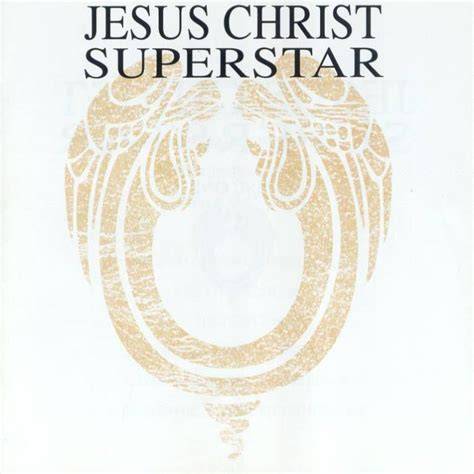
The original album of Jesus Christ Superstar was released in the United Kingdom on October 16, 1970, and then released in the United States the following week on October 27, 1970. The original concept album, containing the hit “Superstar,” was certified gold by the end of 1970 and platinum by the end of 1995. It received a Grammy nomination for best album.
Why Jesus Christ Superstar was controversial
The play was controversial from the outset. The notion that Jesus Christ would be portrayed as someone with moments of doubt and singing rock-influenced songs upset many Christians.
Centering the play’s action on Judas, one of history’s most famous villains, was also contentious. The musical action addresses Jesus’ relationship with Mary Magdalene, who is seen supporting him emotionally and even anointing his head and feet with oil.
Many religious organizations condemned the blasphemy of a rock music version of the Passion of Christ, whereas others praised the musical. In the early 1970s, the Vatican’s radio station played the album, although the official Vatican newspaper frowned on it.
The album’s relative irreverence created controversy in England and the United States. Some U.S. stations played the whole double album without commercials, helping make the recording a major cultural event.
The Broadway production of 1971
The world premiere and original Broadway production of Jesus Christ Superstar opened at the Mark Hellinger Theatre on October 12, 1971. This was the first time one of Andrew’s musicals would open on Broadway before the West End.
When Jesus Christ Superstar opened in October 1971, almost three million double record albums of the music had already been sold. The show’s “I Don’t Know How to Love Him” was an established hit single.
Unauthorized concert productions of the album’s music were being closed by the copyright holders on a weekly basis, while the professional tour sold thousands of tickets at unprecedented prices. The album had created a huge demand for a Broadway production.
Starring Ben Vereen as Judas and Yvonne Elliman, reprising her role from the concept album, as Mary, the show received five Tony nominations. In 1972, the original Broadway production was nominated for five Tony Awards, including best original score and best featured actor, Ben Vereen, as Judas Iscariot.
As a result of the original Broadway production, Andrew Lloyd Webber won the 1972 Drama Desk Award for “Most Promising Composer.”
Critical response
When a production of Jesus Christ Superstar opened on Broadway on October 12, 1971, new controversies erupted over the quality of the music and lyrics as musical theater and especially over the staging.
Some denounced Rice’s lyrics as limp doggerel and Lloyd Webber’s music as not only bad theater music but also bad rock and roll. Others praised the achievement of using rock lyrics in a theatrical idiom and rock music as a flexible framework for the show.
There was, however, almost universal disdain for Tom O’Horgan’s staging. Christ made his first entrance, draped in a silver robe, emerging upright from a silver chalice; Herod was a campy drag queen on platform shoes; gigantic caterpillar-like creatures wormed their way onto the stage for no apparent reason; and Judas returned from the grave on a trapeze, surrounded by feathered chorus girls.
It was agreed that the direction served primarily to obscure the text of the libretto. Lloyd Webber hated the irrelevant spectacle and moved to ensure that the Broadway staging was never revived.
Despite the negative reviews, the public’s enthusiasm sustained the Broadway production for almost two years. The production ran for 711 performances according to one account, while another records a run of 720 performances.
Why the production mattered to Broadway
When the Broadway theater season began in 1971, Broadway had witnessed a decade of declining ticket sales, the fragmentation of its audience, few openings and even fewer hits. The traditional Broadway musical had stagnated.
Stephen Sondheim had scored in 1970 with Company, his first “concept musical,” which the elite theater community had hailed as the dawning of a new era. They were less than optimistic about the arrival of Jesus Christ Superstar, viewing it as nothing more than the opportunistic staging of a hit record album written by a pair of young British rock-and-rollers with no background in the musical theater.
When the production opened on October 12, it was generally panned and dismissed, but it did not go away. Instead, it ran for almost two years. As a record, a concert and again as a Broadway musical, it found a young, fresh audience for an otherwise ailing theater.
The content and status of rock music had changed rapidly from 1965 to 1970. Bob Dylan had given rock intellectual respectability, and the Beatles had stretched the boundaries of rock recording when they released the first concept album, Sgt. Pepper’s Lonely Hearts Club Band, in 1967.
The Who had released the first rock opera, Tommy (1969), which was performed only in concert because it was not theatrically cohesive. Broadway had its first successful rock musical, Hair (1968), full of hit songs that commented on, but did not develop, the action or characters.
It was the logical extension of these events for Andrew Lloyd Webber and Tim Rice to incorporate such developments in a rock opera for the stage. Jesus Christ Superstar demonstrated that rock could be used not merely to provide popular songs but also to organize dramatic action, reveal character and carry an entire theatrical narrative.
From Broadway to London
When Jesus Christ Superstar moved to London, Jim Sharman directed a scaled-down version that enhanced the score and libretto. Recognizing that O’Horgan’s Broadway staging obscured the libretto, the writers worked for continually more restrained productions.
The original London production of Jesus Christ Superstar opened at the Palace Theatre on August 9, 1972, with Paul Nicholas as Jesus Christ, Stephen Tate as Judas Iscariot and Dana Gillespie as Mary Magdalene.
The first West End production closed in 1980 after 3,358 performances, becoming the longest-running West End production to that point. By 1980, Superstar had become the longest-running musical in West End history at the time.
Its long London run established the British reputation of Lloyd Webber and Rice in musical theater. It also showed that a production developed from a recording could become a sustained theatrical event rather than a short-lived presentation of a popular album.
International success and the rise of the British musical
Jesus Christ Superstar went international with professional productions in twenty countries, developing audiences for musical theater everywhere it went. Other accounts record that the work has been professionally produced in 42 countries around the world.
The original Australian production opened at the Capitol Theatre in Sydney on May 4, 1972, with Trevor White as Jesus Christ, Jon English as Judas Iscariot and Michelle Fawdon as Mary Magdalene.
When Lloyd Webber and Rice returned to Broadway in 1979 with Evita, the New York theater was in much better health. Broadway had discovered a new audience, but it was no longer homogeneous; the new Broadway provided a variety of shows for a fragmented audience.
As it was generally too expensive and risky to originate a show on Broadway, many other producers followed the pattern of developing a show elsewhere: in regional theaters, universities and showcases and in Off-Broadway and London productions.
Through the 1980s, Great Britain nourished its contemporary theater and sent its best to Broadway, creating a theatrical “British invasion” much as the Beatles had done in pop music two decades earlier.
Almost unbelievably, the British producers shifted the center of musical theater from Broadway to London. It seemed as though every substantial Broadway musical had been preceded by a record album, a successful London run and unprecedented advance ticket sales.
| Production or adaptation | Key date or result |
|---|---|
| Concept album | Released in the United Kingdom on October 16, 1970 |
| U.S. album release | Released on October 27, 1970 |
| Broadway premiere | Opened on October 12, 1971 |
| Original Broadway production | 711 performances |
| Original West End production | 3,358 performances |
| Broadway revivals | 1977, 2000 and 2012 |
| Film adaptations | 1973 and 2000 |
| NBC live concert | Easter Sunday, April 1, 2018 |
Influence on musical theatre
Artistically, Jesus Christ Superstar began the movement toward merging opera and musical theater later exemplified by Phantom of the Opera, Sondheim’s Sweeney Todd (1979) and Boublil and Schönberg’s Les Misérables.
Lloyd Webber and Rice legitimated rock as a tool for the contemporary musical theater composer and songwriter, demonstrating the medium to have great versatility for theatrical application.
Unlike traditional musicals that rely on dialogue to advance the plot, a rock opera like Superstar uses its powerful music and lyrics to convey emotion, character development and storytelling. Songs such as “Gethsemane,” “Superstar” and “Heaven on Their Minds” are not just performances but pivotal moments that express the inner conflicts of Jesus, Judas and others.
The show’s energetic, electrified sound and rebellious edge make it feel modern and urgent, reinforcing its themes of faith, power and betrayal in a way that resonates with audiences across generations.
The work also changed the relationship between the recording industry and the stage. The album came first, the songs built a public audience and the stage production followed. This reversed the traditional assumption that a musical had to be developed in a theater before it could reach a mass audience through recordings.
The method established by Lloyd Webber and Rice
Lloyd Webber and Rice believed that Jesus Christ Superstar had alienated the New York critics, so they established another precedent: opening a show in London and allowing it to become established before moving it to Broadway.
After Jesus Christ Superstar, Lloyd Webber decided to venture in a completely new direction, writing the music for Alan Ayckbourn’s Jeeves (1975). He completely abandoned the rock idiom, trying to write a score in the style of Jerry Herman.
When Jeeves flopped, Lloyd Webber decided never to write for a book musical again, and he resolved to try out everything he wrote before taking it public. It was a wiser but humbler Lloyd Webber who went back to Tim Rice, agreeing to write the music for a show about Eva Perón.
Evita (1976) solidified the artistic approach that had been so successful in Jesus Christ Superstar. Every aspect of Rice and Lloyd Webber’s technique, however, had advanced, from the musical style and cohesiveness of the score to the dramatic structure of the libretto, which related character and narrative through lyrics.
They did not want another O’Horgan to subvert the musical with an appliquéd concept, so they contacted veteran Hal Prince, who listened to the music and wrote a three-thousand-word memo with his suggestions for rewrites.
Lloyd Webber and Rice did not want to be subservient to anyone, however, so they finished writing the show and recorded the album before beginning a production. This unique approach became the pair’s method for ensuring artistic control whether working on projects alone or together.
They would write a show and then record it, releasing singles to become hits and using the album to generate public interest before stage production began. For better or worse, producers could thus make few changes in the work.
Evita and the continuing partnership
Evita opened in London in June 1978 to generally positive reviews. The American production opened in Los Angeles and then San Francisco.
As with Jesus Christ Superstar, some theater critics were confused by the operatic quality of a musical that had no dialogue and doubted the theatricality of a production that had first been a record.
When Evita opened on Broadway on September 25, 1979, the pair’s worst nightmares proved true. The critics savaged everything about Lloyd Webber and Rice’s abilities, from their subject matter to their ability to write music and lyrics.
Once again, however, popular response to Evita established it as a solid hit. The production enjoyed a four-year run.
Although Lloyd Webber and Rice did not continue to collaborate after Evita, they remained business partners. Jesus Christ Superstar and Evita established the artistic approach that both would use on their independent projects.
Andrew Lloyd Webber and Tim Rice after Jesus Christ Superstar
During the 1980s, Rice wrote the librettos for two musicals, Blondel (1983) and Chess (1986). Chess was an enormous hit in England but ran for less than two months on Broadway.
Lloyd Webber, on the other hand, became the most financially successful composer in the history of musical theater by composing the music for Cats (1981), Song and Dance (1985), Requiem (1985), Starlight Express (1984), Phantom of the Opera (1987) and Aspects of Love (1989).
Despite his success, he continued to be criticized for pandering to the lowest common denominator of an undiscerning public, for relying on repetitive and derivative themes and for requiring overblown technical theatrics to mask his deficiencies.
His supporters countered that he displays a genius for melody and a unique ability to combine classical, show and popular music in a way that appeals to a universal audience.
His later works in the 1990s and early twenty-first century enjoyed mixed success, especially in the United States, where, even when they made Broadway, they often met critical reviews and failed financially owing to the costs or casting problems.
Stage productions, films and revivals
Jesus Christ Superstar has been onstage through tours and licensed productions regularly since its premiere. It has been revived on Broadway three times, most recently in 2012.
The 2000 iteration was nominated for best revival of a musical, as was the 2012 run, which also received a best featured actor nomination for Josh Young as Judas Iscariot.
A 1996 West End revival was nominated for an Olivier Award, and a 2016 revival was nominated for six Olivier Awards, taking the prize for best musical revival.
It was adapted for the silver screen in 1973, earning an Oscar nomination for best music. A second film adaptation was released on DVD in 2000 and aired in 2001 as part of PBS’s Great Performances.
On Easter Sunday, April 1, 2018, NBC aired a live concert version of the show, featuring John Legend as Jesus, Sara Bareilles as Mary Magdalene, Brandon Victor Dixon as Judas, Alice Cooper as King Herod, Norm Lewis as Caiaphas and Ben Daniels as Pilate.
In 2012, Lloyd Webber produced a reality show called Superstar to find the next Jesus for a new arena tour. Ben Forster won. Matilda and Groundhog Day scribe Tim Minchin played Judas, while the Spice Girls’ Melanie C was Mary.
Professional revivals in the early twenty-first century demonstrated that the work had retained its excitement and relevance, and the show remained an active part of the worldwide musical theater repertoire.
Key facts and production history
- Creators: Andrew Lloyd Webber and Tim Rice
- Genre: Rock opera
- Subject: The last week of Jesus Christ’s life
- Viewpoint: Primarily Judas Iscariot’s perspective
- Dialogue: The stage version contains no spoken lines
- First single: “Superstar,” released on November 21, 1969
- Original concept album: Released in 1970
- Broadway premiere: October 12, 1971, at the Mark Hellinger Theatre
- Original West End premiere: August 9, 1972, at the Palace Theatre
- Original Broadway Judas: Ben Vereen
- Original Broadway Mary Magdalene: Yvonne Elliman
- Original London Jesus: Paul Nicholas
- Original London Judas: Stephen Tate
- Original London Mary Magdalene: Dana Gillespie
- Broadway revivals: 1977, 2000 and 2012
- Film adaptations: 1973 and 2000
- NBC live concert: Broadcast on April 1, 2018
Why Jesus Christ Superstar remains important
Jesus Christ Superstar remains one of the most unique and influential musicals ever created, blending history, faith and rock music in a way that continues to captivate audiences.
Its continuing importance rests on several connected achievements: it made a traditionally sacred story accessible through contemporary popular music, placed Judas at the center of the drama, used lyrics to carry character and narrative, challenged the conventions of the Broadway musical and helped create a worldwide market for musicals that could move between albums, concerts, London productions, Broadway runs, films and international stages.
The success of professional revivals has demonstrated that the work has retained its excitement and relevance. More than five decades after its first recordings and its controversial Broadway premiere, Jesus Christ Superstar remains an active part of the worldwide musical theater repertoire.