To become a theology professor, you generally need advanced education in theology or a related discipline, substantial experience in research and writing, teaching ability, and, for tenure-track positions, a terminal degree such as a Ph.D. in Theology or a related field. A master’s degree may qualify you for some seminary teaching, adjunct, advising, or spiritual-director roles, while a doctorate is normally expected for a long-term academic career.
The path also requires more than formal credentials. Theology professors teach religious beliefs, practices, and texts; conduct research; publish scholarly work; mentor students; and, in many seminaries, connect academic study with spiritual formation, ministry practice, and the life of the church.
What Theology Professors Do
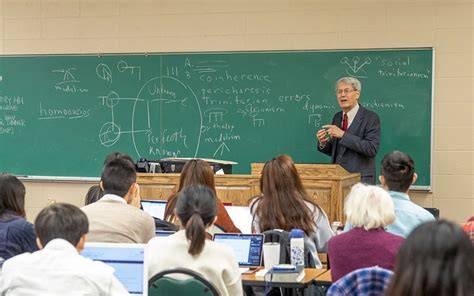
Theology Professors are educators and scholars who specialize in the study of religious beliefs, practices, and texts. They teach courses, conduct research, and publish scholarly work in the field of theology. A theologian concentrates on the rational study of religious history and modern day religious issues.
If you’ll turn to the letter T in Webster’s Dictionary you’ll see that theology is defined as the study of God and of God’s relation to the world. Most theologians are found in seminaries -- religious schools -- studying religious texts and passing on what they learn to others.
The theologian teaches the religious leader (priest, rabbi), and in turn the religious leader teaches the lay person. Theologians, utilizing the tools and methods of biblical research, spend a great deal of their time reading and writing.
A theologian is described as someone who studies diverse denominations from many cultures, are biblically and theologically responsible, professionally competent, intellectually astute, and spiritually mature. A theologian strives to raise his or her mind to the contemplation of God and one who seeks to understand what He believes.
The Difference Between a Theology Professor and a Seminary Teacher
The role can vary depending on the institution, denomination, academic discipline, and level of appointment. Some Seminary professionals occupy formal faculty roles, while others serve as adjunct instructors or take on positions as advisors or spiritual directors.
These roles enable individuals to contribute to seminary teaching and student mentoring without having to meet the rigorous academic standards required for tenure-track faculty positions. Regardless of the specific role, seminary teachers share a common mission: to develop future leaders who will lead through faith and service.
At junior levels, such as Assistant Professor, the focus is on teaching and developing research. Senior roles, such as Distinguished Professor or Endowed Chair, involve leadership in academic research, mentoring junior faculty, and contributing to the broader academic community.
Responsibilities of a Theology Professor
Seminary educators fulfill responsibilities that reach beyond teaching in their classrooms. Seminary educators teach theology and ministry practice, but they also serve as mentors who guide students to become future faith leaders.
Seminary teachers routinely prepare lectures for delivery, lead discussions, and guide students through theological studies. Apart from these duties, this position includes building strong relationships and fostering students’ spiritual and intellectual growth.
Seminary educators make a sustained impact on students by giving personalized feedback, mentoring them through academic and spiritual difficulties, and demonstrating ethical leadership that extends far outside the classroom. Your role as a teacher involves crucial guidance so students can unite their faith with their knowledge and skills to prepare for ministry or other theological careers.
Seminary educators also contribute to curriculum development, helping maintain ministry education’s relevance in changing times. Through scholarly research, they produce publications that support theological growth while benefiting the entire Christian community.
Seminary professionals find great satisfaction through their ability to guide students in discovering and cultivating their unique purposes. Students at seminaries represent varied backgrounds, which enhance their studies by bringing individual life experiences and perspectives.
In some theological settings, the professor’s responsibilities also include defending doctrine, interpreting Scripture, preserving historical theological knowledge, and helping students prepare for pastoral ministry.
In behalf of our church the curators charge thee, esteemed brother, with the task of instructing and establishing in the knowledge of God’s Word the students who hope once to minister in His church. Expound to them the mysteries of the faith; caution them in regard to errors and heresies of old, but especially of the new day; seek to explain how they not alone as teachers are to instruct but also as pastors are to shepherd the flock of the Lord.
Assist in maintaining order and discipline among the disciples, that our seminary may continue to enjoy the respect and support, the appreciation, the love, and the prayer of the church. Be a good example to the students, that they may not only profit from thy learning, but also find in thee a living illustration of the power and practice of true godliness.
Choose the Type of Theology You Want to Teach
There are, of course, many paths to teaching, especially in systematic theology. ST as a discipline really doesn’t exist at secular universities and colleges.
At Yale, there were courses called “systematic theology,” but those were basically courses in modern theology from Schleiermacher to the present. You couldn’t take a course there in ST in the traditional sense, namely studying what Scripture says on some subject or subjects.
Since these schools reject biblical authority, they have also abandoned systematic theology. You can get a doctorate in ST at a few evangelical schools: Westminster, Fuller, Trinity (I think), maybe some of the Scottish, Dutch, or South African universities.
The phrase “theology professor” can therefore describe several academic specialties, including systematic theology, biblical studies, church history, philosophy, philosophical theology, religious studies, ethics, practical theology, ministry, and interreligious studies.
Understand the Main Academic Routes
Most young theologians with teaching on their mind, start off as associate professors. After a few years, they may become full professors, and eventually become deans of the religious studies department.
In some settings, a theologian can move on to an administrative role, such as principals of private schools or presidents of seminaries. An academic career has begun to take shape at this point.
Theologians have either made tenure at the university where they started, found another university which will give them tenure, or left the profession. Tenure-track faculty positions typically demand applicants to have earned a Doctor of Ministry (D.Min.) or a Ph.D. in Theology or a related discipline.
| Career stage or role | Typical emphasis |
|---|---|
| Adjunct instructor | Teaching individual courses alongside academic advancement or vocational exploration |
| Assistant Professor | Teaching and developing research |
| Associate Professor | More specialized teaching, research, publication, and progress toward tenure |
| Full Professor | Established scholarship, advanced teaching, mentoring, and institutional service |
| Distinguished Professor or Endowed Chair | Leadership in academic research, mentoring junior faculty, and contributing to the broader academic community |
| Dean or seminary president | Academic and institutional leadership |
Earn the Appropriate Educational Credentials
A master’s degree serves as the basic educational prerequisite for most seminary teaching positions. Programs such as the Master of Divinity (M.Div.), Master of Ministry (M.Min.) or Master of Arts in Christian Ministries (M.A.C.M.)Theology develop essential skills in biblical studies, theology, and practical ministry application.
Tenure-track faculty positions typically demand applicants to have earned a Doctor of Ministry (D.Min.) or a Ph.D. in Theology or a related discipline. Some teaching positions, like adjunct faculty roles or advising positions, do not require terminal degrees, allowing seminary education to remain accessible to those pursuing teaching vocations without committing to doctoral studies.
The appropriate degree depends on the position you want. A master’s degree can support teaching, advising, ministry, or educational work, while a doctorate is the more typical qualification for independent scholarly research and tenure-track university or seminary appointments.
Consider the Difference Between a Ph.D. and a D.Min.
A Ph.D. in Theology or a related discipline is generally the more direct route for a career centered on academic research, publication, and tenure-track teaching. A Doctor of Ministry (D.Min.) can be valuable for ministry-focused teaching and professional theological education, particularly when combined with substantial pastoral experience.
Some teaching positions, like adjunct faculty roles or advising positions, do not require terminal degrees. This makes it possible to gain teaching experience before deciding whether doctoral study is necessary for your long-term goals.
Applicants should examine the requirements of the institutions where they hope to teach because academic standards vary between research universities, seminaries, denominational schools, and professional ministry programs.
Build a Strong Foundation in Biblical Studies and Theology
If you want to teach ST, to get some experience with mainstream liberal thought, having gotten your basic biblical grounding at a place like RTS. So there are advantages to going to a secular university to do doctoral work, even though ST as such is not available there.
Now if you do go to a secular school for a doctorate, there are three possible subjects that will be useful in preparing you to teach ST: biblical studies, church history, and philosophy (or philosophical theology).
Some noteworthy thinkers have come to ST by each of these routes: B. B. Warfield and Richard Gaffin from biblical studies, John Gerstner and many others through church history (see my essay, “Traditionalism” at for some caveats), Van Til, Paul Helm, and others from a background in philosophy.
The choice of doctoral field should reflect both the requirements of the institutions where you want to work and the kind of theological questions you want to study. Biblical studies can provide a strong basis for exegesis, church history can provide historical and doctrinal perspective, and philosophy can prepare you to analyze arguments and engage major intellectual debates.
Develop Biblical Languages and Research Skills
If you enter the ST discipline by the philosophical route, you will be well-prepared to enter into arguments and debates. But you will need to discipline yourself to become an exegete.
Though I’m a philosopher by background, I agree with John Murray that exegesis is the heart of the systematic theologian’s work. I was pretty well prepared to do that by my seminary studies at RTS, but I’ve sometimes wished I were even more fluent in Greek, Hebrew, and biblical hermeneutics.
Strong preparation in Greek, Hebrew, biblical hermeneutics, historical research, theological method, and critical reading can make a major difference in doctoral study and later teaching. Theologians, utilizing the tools and methods of biblical research, spend a great deal of their time reading and writing.
The professor of theology studies Scripture as a whole. He labors to compare Scripture with Scripture. He does not write about “the theology of Moses” and “the theology of Paul.”
The Bible contains one organic, beautifully harmonious and consistent revelation of the truth of God. This is a very important labor in our day, when many contradictory and conflicting doctrines are promoted in the churches.
Gain Pastoral or Ministry Experience
It is a good tradition in our churches that one of the requirements for new professors of theology is that they have served for a number of years as pastors of the churches in our denomination.
A seminary ideally should have a group of specially-gifted pastors of the denomination as its professors, who are training other men to be pastors. The professor of theology must be an ordained minister, or sometimes also called a teaching elder.
He is one who devotes himself to the special aspect of teaching to prepare other men to be teachers. The role therefore combines scholarly competence with knowledge of ministry, pastoral responsibilities, church life, and the practical needs of future religious leaders.
This expectation is not universal. Some seminaries and universities appoint scholars without pastoral ordination, while others consider ministry experience an important or essential qualification. Aspiring professors should therefore determine whether their intended institution emphasizes academic scholarship, denominational service, pastoral practice, or a combination of these.
Develop Teaching Experience Before Applying for Faculty Positions
Aspiring seminary teachers often begin their careers by developing teaching skills through smaller roles, such as Bible study leaders and workshop facilitators. These roles enhance pedagogical capabilities while building networks within the ministry education sphere.
Some individuals start their seminary teaching careers as adjunct instructors, teaching individual courses alongside their academic advancement or vocational exploration. Teaching experience can help candidates learn how to organize a course, explain complex ideas, lead discussion, assess student work, and respond to students with different backgrounds and learning needs.
Teaching requires the ability to present complex theological ideas clearly, engagingly, and with real-life applications for students. Seminary educators aid students who face spiritual or vocational challenges, making emotional intelligence a vital trait.
Creating a welcoming and inclusive environment is essential for teaching in multidenominational and multicultural settings where students bring diverse viewpoints and life experiences.
Learn to Teach in Multidenominational and Multicultural Settings
Students at seminaries represent varied backgrounds, which enhance their studies by bringing individual life experiences and perspectives. Diverse Perspectives: The mix of different theological perspectives and cultural experiences creates a learning space that invites students to explore and understand diverse viewpoints.
This teaching method develops sSeminary professionals’ ability to educate and guide students from various backgrounds, making it a crucial capability for today’s global society. Seminary educators must be able to explain theological ideas accurately while also recognizing that students may approach faith, Scripture, ministry, and religious identity from different traditions.
Inclusive teaching is particularly relevant for institutions that serve multiple denominations, cultures, and faith traditions. The ability to communicate across differences can support classroom learning, student mentoring, interfaith engagement, and public theological work.
Develop Research, Writing, and Publication Skills
Academic success in theology depends heavily on sustained reading, disciplined research, clear writing, and publication. An academic career has begun to take shape at this point.
The theologian has probably published a couple of books or major research projects and has established clear areas of expertise. In addition, he/she has been promoted to associate professor, the final step before tenure.
Associate professors have more control over their teaching schedules; they are likely to be teaching fewer low-level classes and more classes and seminars in their areas of specialization with older undergraduates and graduate students.
As academic marketability is determined by a university's specific needs for expertise, professors become more able to move around between institutions as they establish themselves in theology. A clear research specialization can therefore strengthen a candidate’s academic profile and make it easier to demonstrate value to potential institutions.
Understand the Importance of Exegesis and Doctrinal Study
There should be men devoted to the special task of professor of theology arises out of the fact that the church of Jesus Christ must always be engaged in very careful, profound study of the Word of God.
The Word of God is inexhaustible in its depths and richness of meaning, glory, and blessedness. The church of Jesus Christ until the return of her Lord must always be growing and developing in her understanding of the Word of God.
The professors of theology have a leading role in helping the church grow more and more in knowledge and love for the Word of God and the discernment of His truth. The professor of theology devotes himself to labor in the science of theology.
The reason why there can be such a science called theology is that Scripture contains a grand and glorious unified system of doctrine. This doctrine is one organic whole.
The Scriptures are not a compilation of many disconnected truths. As God is one, so His truth is one. The professor of theology studies Scripture as a whole.
Study Church History and Historical Doctrine
The professor of theology must be well acquainted with the history of doctrine through all the ages of the church. He must be faithful to the historic confessions of the church.
For our churches, these are specifically the three forms of unity. The professor of theology must have a thorough knowledge of the heresies that have arisen in the churches in the past, to help in keeping these same heresies out of the churches today.
There are always many of these. The professor of theology ideally must do a tremendous amount of reading and study both of past and modern theology.
As long as there have been religious texts, there have been theologians studying and writing about them. St. Augustine and Thomas Aquinas are two of the most famous early theologians whose writings are still studied today.
Theological study in America has its start in the early 18th century when individual pastors would take one or two students under their tutelage. In 1812, the Theological Seminary of the Presbyterian Church at Princeton in New Jersey was founded.
This was the first institute to focus on the education of theology in a systematic way. Today, there are hundreds of seminary schools and University religious programs that focus on the study of God.
Learn to Address Contemporary Religious Issues
A theologian concentrates on the rational study of religious history and modern day religious issues. Professors of theology have the calling to lead the churches in maintaining sound doctrine.
He must also be well acquainted with the subtleties and deceptiveness of modern-day heresies. There are always many of these.
Professors of theology have the calling to lead the churches through writing and through public teaching and lecturing in the churches. Professors of theology need to stand strong and courageous against popular heresies of the day.
For the strong stands they take they will often be ridiculed and hated by leaders and acclaimed scholars in the apostate church of our day. The ability to participate in difficult debates requires intellectual discipline, historical awareness, ethical judgment, and clear communication.
Balance Tradition and New Scholarship
There is a common evil desire in the church for that which is new and different. There are times when such desire in the church has led the church away from the historic basis of her faith.
The doctrine of God is, after all, unchangeable from age to age. The church has, under the guidance of the Holy Spirit, been developing the doctrine of Scripture for many centuries.
Each new generation must build on the knowledge of the truth from the past generations. The faithful church is founded on centuries of developing of understanding of doctrine.
When in these last days someone comes out with a new doctrine never before heard, the church rightly views such with a healthy measure of caution and even suspicion. Often that which is new is heretical.
On the other hand, there is the need in the church to give new expression to the wonderful unchanging truth of God in new books and new systematic theologies.
We ought to be very thankful to God when our professors can write new books on various important doctrines of the Word for the benefit of the churches in general. By doing so, the professors of our seminary serve to encourage the members of the churches always again to study the Word of God with fresh interest and excitement.
Connect Scholarship with the Church and Community
Professors must not be cold and aloof from the churches. They should not do their theology in an “ivory tower” by themselves.
They must do their theology in living connection with the church of Jesus Christ for whom they labor. It is of utmost importance that our professors labor to train men to be sound in doctrine and faithful to the Scriptures.
They must teach men with great seriousness and devotion and scholarliness. Our future ministers must be trained to be profound theologians.
Theology is important for the ministry. Sound and orthodox theology is the foundation of the true church.
But our future ministers must be trained also to be pastors of the flock of God. Our professors must be models for future ministers, examples to them of the power and practice of true godliness.
The distinctive position merges academic discipline with spiritual guidance, benefiting both the church and the community over time. This role merges teaching expertise with theological ministry passion.
Use Technology in Theological Education
The influence of technology on theological education continues to grow, generating new possibilities for seminary educators. Through online courses and virtual learning platforms, teachers can connect with students worldwide.
Seminaries are actively seeking educators who can incorporate digital tools in their instruction. Building competencies in online course development or hybrid learning methods makes candidates more appealing to institutions that value innovative educational approaches.
Technology can expand access to lectures, seminars, research materials, discussion groups, and pastoral or theological training. It also requires professors to adapt course design, student interaction, assessment, and communication to online and hybrid environments.
Understand Tenure and Academic Progression
Five years out, an academic career has begun to take shape. The theologian has probably published a couple of books or major research projects and has established clear areas of expertise.
In addition, he/she has been promoted to associate professor, the final step before tenure. Associate professors have more control over their teaching schedules; they are likely to be teaching fewer low-level classes and more classes and seminars in their areas of specialization with older undergraduates and graduate students.
By ten years out, theologians have either made tenure at the university where they started, found another university which will give them tenure, or left the profession.
The tenure process can differ by institution, but it commonly depends on research, publication, teaching effectiveness, service, and the institution’s specific expectations. Academic marketability is determined by a university's specific needs for expertise.
Prepare for Different Types of Seminary Employment
Some Seminary professionals occupy formal faculty roles, while others serve as adjunct instructors or take on positions as advisors or spiritual directors. These roles enable individuals to contribute to seminary teaching and student mentoring without having to meet the rigorous academic standards required for tenure-track faculty positions.
Seminary training equips graduates to work in educational institutions and organizations dedicated to spiritual development. Spiritual directors, retreat leaders, and advisors assist others in discovering their life’s purpose while fostering a deeper connection to God.
These positions involve active listening techniques, guidance skills, and creating secure environments for reflection and growth. Seminary education establishes a foundation that enables graduates to pursue diverse careers that honor service-oriented values, faith, and community principles.
Explore Related Careers in Theology and Ministry
Although many students attend seminary to become teachers, the training and expertise developed during seminary education enable graduates to pursue numerous valuable career options.
Ministry Leadership
After completing seminary, numerous graduates work as pastors, youth ministers, or chaplains in hospitals, prisons, and military environments. These roles require spiritual leaders to support individuals and communities in their spiritual development through counseling and assistance during difficult periods of life.
Seminary training endows future leaders with theological knowledge and ministry skills while teaching them to approach modern life challenges with compassionate wisdom.
Nonprofit and Social Justice Work
The curriculum of seminary education prepares people to serve in nonprofit organizations focusing on social justice, community outreach, and interfaith conversation. Graduates operate in fields where they address systemic inequities, provide resources, and foster reconciliation within underserved communities.
Seminary-trained professionals use their roles to demonstrate their faith through active work, expanding their reach well beyond church boundaries.
Theological Writing and Scholarship
Seminary graduates often establish themselves as authors, writing books, articles, and other theological resources about theology, ethics, and pastoral care. Some create accessible online content that enables people to deepen their understanding of faith and spirituality.
Those with strong communication skills find opportunities to reach and motivate larger groups through this route.
Spiritual Development Roles
Seminary training equips graduates to work in educational institutions and organizations dedicated to spiritual development. Spiritual directors, retreat leaders, and advisors assist others in discovering their life’s purpose while fostering a deeper connection to God.
Graduates can customize their professional work to fit their special talents and interests, ensuring their education has a lasting impact.
Understand the Personal Qualities the Role Requires
The journey to become a seminary teacher requires academic success, specific personal traits, and a strong sense of calling. Aspiring seminary educators must follow essential steps to prepare for their vocation, despite variations in paths based on roles and institutions.
Material gain isn’t really on the mind of most theologians. The study of God is a lifelong pursuit with no guarantees in finding the answers until it’s too late to cash in on them.
Strong Communication Skills: Teaching requires the ability to present complex theological ideas clearly, engagingly, and with real-life applications for students.
Empathy and Emotional Intelligence: Seminary educators aid students who face spiritual or vocational challenges, making emotional intelligence a vital trait.
Inclusive Teaching Environment: Creating a welcoming and inclusive environment is essential for teaching in multidenominational and multicultural settings where students bring diverse viewpoints and life experiences.
The role also demands patience, intellectual curiosity, openness to sustained revision, respect for students, ethical seriousness, and the ability to work independently for long periods.
Expect Extensive Reading, Writing, and Preparation
This kind of labor takes place most often away from the notice of the community of the churches. These labors take a lot of time and discipline and intense study.
The members of the churches must have a great appreciation for the many hours that professors must spend devoting themselves to the study of doctrine. Professors of theology must do their work well and energetically and zealously.
They need to give large blocks of time to prepare class courses, enriching these courses again and again over the years. They may not just present the same thing year after year.
Doing theology often takes place for them as they are preparing class lectures. Many of the greatest theologians of the past have developed theology in connection with preparing their class lectures.
Understand the Spiritual and Vocational Dimension
Many pursue academic preparation in theology because they feel a profound purpose guiding them in this path. Seminary professionals find deep meaning in their job as they lead students through academic lessons and spiritual development from the lectern.
Seminary teaching combines professional responsibilities with a divinely inspired mission to develop future ministry leaders through inspiration and education. In your capacity as a seminary teacher, you’ll hold an essential position to provide students with theological insights, practical abilities, and spiritual guidance.
This enables them to demonstrate leadership through wisdom and compassion. The distinctive position merges academic discipline with spiritual guidance, benefiting both the church and the community over time.
The path to becoming a seminary teacher offers a deeply rewarding experience. This journey enables educators to explore theology deeply while training future leaders and supporting faith communities worldwide.
Learn from Faculty Mentors and Practical Training
United’s programs combine academic study with practical training to prepare students effectively. Students study theological concepts while gaining opportunities to apply their learning in real-world settings.
Through internships and ministry placements, students combine academic knowledge with practical skills, preparing them for leadership roles as teachers and mentors. Practical internship opportunities and ministry work placements help students refine their skills through hands-on experience.
United Theological Seminary employs a seasoned faculty composed of theologians and ministry practitioners who act as mentors and role models to their students. By studying under these accomplished leaders, students gain essential insights into seminary teaching and ministry.
Faculty members at United demonstrate a strong commitment to student achievement, offering ongoing support and guidance throughout their academic experience. United prepares seminary teachers with extensive training and resources while fostering a nurturing community that instills confidence.
Apply to Graduate and Doctoral Programs
United Theological Seminary provides a structured and supportive pathway for individuals who wish to become Seminary professionals or theological professionals. United offers advanced degree programs such as the M.Div. and Master of Arts in Theology.
Accessible Information: United’s website and informational sessions (available in-person or virtually) allow prospective students to explore programs in detail. Admissions Process: A detailed checklist helps applicants prepare materials like transcripts, letters of recommendation, and personal statements.
Financial aid options and scholarships may make seminary education accessible to students from diverse backgrounds. Prospective students are encouraged to contact the financial aid office early in the application process to explore available resources.
Campus visits, classes, faculty meetings, current-student conversations, virtual tours, and online open houses can help applicants compare programs and understand the academic and spiritual environment before enrolling.
Prepare a Competitive Academic Application
A strong application normally presents a coherent academic direction, evidence of theological preparation, relevant ministry or teaching experience, and a clear explanation of future goals. Applicants should show how their previous study and work prepare them for the degree and the type of teaching they hope to pursue.
Admissions materials may include transcripts, letters of recommendation, and personal statements. References who know an applicant’s academic ability, character, teaching potential, research skills, or ministry experience can provide particularly relevant support.
Doctoral applicants should be prepared to explain their intended area of research and demonstrate the ability to work with primary sources, scholarly literature, theological arguments, and sustained independent study.
Build a Professional Academic Profile
As academic marketability is determined by a university's specific needs for expertise, professors become more able to move around between institutions as they establish themselves in theology.
A professional profile can include published articles, books, major research projects, conference presentations, teaching experience, course materials, public lectures, service on academic committees, and participation in denominational or community education.
Senior roles, such as Distinguished Professor or Endowed Chair, involve leadership in academic research, mentoring junior faculty, and contributing to the broader academic community. These positions normally reflect an established record rather than an entry-level qualification.
Be Ready to Defend and Explain Your Theological Position
The Church Order of Dordt has this statement in Article 18 concerning the office of the Professor of Theology: The office of the professor of theology is to expound the Holy Scriptures and to vindicate sound doctrine against heresies and errors.
It is rather interesting that this article does not even mention the training of students for the ministry, though of course that is the main task of the professor of theology. The Church Order emphasizes the role that professors of theology have in “expounding the Holy Scriptures and vindicating sound doctrine against heresies and errors.”
We use the terminology “professor of theology” in the broad sense, meaning that we include not only those who specifically teach in the department of theology or dogmatics at the theological school but all the professors of the various disciplines.
The ability to defend a position should be accompanied by the ability to explain it fairly, engage opposing arguments accurately, distinguish historical differences from contemporary ones, and teach students how to reason carefully.
Recognize the Need for Lifelong Development
The church also has the calling to be ever growing and developing in the knowledge of the truth. Even the church that is sound in doctrine must always be on her guard against the great evil of dead orthodoxy.
History has proven what appalling effects ‘dead orthodoxy’ can have on the churches, destroying her spiritual life and zeal for true godliness. The truth of God must live in the minds and hearts of God’s people.
She must have a living and spiritual appreciation of the truth of God. Professors of theology must labor to maintain this perspective in the churches.
Continuing development can involve new research, updated courses, engagement with contemporary religious questions, deeper knowledge of languages and history, improved pedagogy, and ongoing participation in the communities the professor serves.
Follow a Practical Sequence
- Choose a theological direction. Decide whether your primary interest is systematic theology, biblical studies, church history, philosophy, philosophical theology, practical theology, ethics, religious studies, or another field.
- Complete foundational study. Build knowledge through an undergraduate or graduate program that develops biblical, theological, historical, philosophical, and research skills.
- Earn a master’s degree when appropriate. An M.Div., M.Min., or M.A. can provide preparation for ministry, seminary teaching, advising, and further academic study.
- Develop language and research competence. Strengthen Greek, Hebrew, biblical hermeneutics, historical research, writing, and critical reading.
- Gain ministry or teaching experience. Lead Bible studies, facilitate workshops, serve in ministry, teach individual courses, or work as an adjunct instructor.
- Complete doctoral study for a long-term academic career. A Ph.D. in Theology or a related discipline is typically expected for tenure-track research and teaching positions, while a D.Min. may be especially relevant to ministry-focused teaching.
- Publish and establish an area of expertise. Produce scholarly work, present research, develop courses, and demonstrate sustained contribution to theological scholarship.
- Apply for appropriate faculty roles. Consider adjunct, visiting, assistant professor, seminary faculty, advising, or other positions according to your credentials and experience.
- Continue developing as a teacher and scholar. Revise courses, mentor students, engage contemporary issues, participate in academic and church communities, and continue research.
The strength and faithfulness of our theological school, the high standard of training that is given there, the depth of theological study engaged in, will play a very large role in giving the churches ministers of the highest caliber, well prepared to preach the Word and shepherd the churches of Jesus Christ.
This in turn, by the grace of God, will keep our churches strong and steadfast in the truth, serving the glory of the Lord and the cause of His kingdom in the world.