Christians celebrate Christmas on December 25 because the date became established through an early Christian calculation that connected Jesus’ conception and death with March 25, exactly nine months before December 25. The Bible does not give the date of Jesus’ birth, and no one knows the precise day on which he was born.
The December date may also have coincided with Roman midwinter festivals, but the popular claim that Christians deliberately chose December 25 simply to “Christianize” pagan celebrations is not the only explanation and is not supported by the earliest Christian evidence. The date reflects intertwined theological, historical, cultural, and calendrical factors.
What the Bible Says About Jesus’ Birth
The Bible offers few clues: Celebrations of Jesus’ Nativity are not mentioned in the Gospels or Acts; the date is not given, not even the time of year. The biblical reference to shepherds tending their flocks at night when they hear the news of Jesus’ birth (Luke 2:8) might suggest the spring lambing season; in the cold month of December, on the other hand, sheep might well have been corralled.
Yet most scholars would urge caution about extracting such a precise but incidental detail from a narrative whose focus is theological rather than calendrical. We have no solid evidence for when Jesus was born. The gospels offer no date for Jesus’ birthday.
The earliest gospel, Mark, does not mention Jesus’ birth. The earliest writings-Paul and Mark-make no mention of Jesus’ birth. The Gospels of Matthew and Luke provide well-known but quite different accounts of the event-although neither specifies a date.
Some people object against a December birthday because shepherds didn’t typically keep their sheep outside during the cold winter months and would have taken their flocks elsewhere, where it would be warmer. But most scholars would urge caution about extracting such a precise but incidental detail from a narrative whose focus is theological rather than calendrical.
We do know that shepherds who raised sheep that would be offered as temple sacrifices kept them in the nearby hills so they were readily available for pilgrims and worshippers. This corresponds with the Migdal Eder theory of where Jesus was born.
Why the Early Church Did Not Initially Celebrate Christmas
Early Christians did not celebrate his birth, and no one knows on which date Jesus was actually born. The early church did not seem overly preoccupied with this, and the earliest gospel, Mark, does not mention it.
There is no mention of birth celebrations in the writings of early Christian writers such as Irenaeus (c. 130-200) or Tertullian (c. 160-225). Origen of Alexandria (c. 165-264) goes so far as to mock Roman celebrations of birth anniversaries, dismissing them as “pagan” practices-a strong indication that Jesus’ birth was not marked with similar festivities at that place and time.
As far as we can tell, Christmas was not celebrated at all at this point. Some Early Church leaders actually argued against trying to determine a date for Jesus’ birthday.
Instead, the emphasis was on Jesus’ death and on the specific days and events leading up to his crucifixion and resurrection (since those details are given in Scripture). Since there is so little information about Jesus’ birth, the Early Church was always content to simply emphasize the virgin birth without knowing when exactly Jesus was born.
This stands in sharp contrast to the very early traditions surrounding Jesus’ last days. Each of the Four Gospels provides detailed information about the time of Jesus’ death.
Jesus’ ministry, miracles, Passion and Resurrection were often of most interest to first- and early-second-century C.E. Christian writers. But over time, Jesus’ origins would become of increasing concern.
When Christians Began Trying to Date Jesus’ Birth
The early evidence shows that it wasn’t until the late 2nd Century until people started trying to figure out what date Jesus was born. In the second century C.E., further details of Jesus’ birth and childhood are related in apocryphal writings such as the Infancy Gospel of Thomas and the Proto-Gospel of James.
These texts provide everything from the names of Jesus’ grandparents to the details of his education-but not the date of his birth. Finally, in about 200 C.E., a Christian teacher in Egypt makes reference to the date Jesus was born.
According to Clement of Alexandria, several different days had been proposed by various Christian groups. Clearly there was great uncertainty, but also a considerable amount of interest, in dating Jesus’ birth in the late second century.
| Period | Development |
|---|---|
| First and early second centuries | Christian writers focused primarily on Jesus’ ministry, death, and resurrection. |
| About 200 C.E. | Clement of Alexandria recorded several proposed dates for Jesus’ birth. |
| Fourth century | December 25 in the West and January 6 in the East became widely recognized dates. |
| 336 C.E. | The church in Rome formally celebrated Christmas on December 25 during the reign of Constantine. |
| About 400 C.E. | Augustine of Hippo referred to Christmas celebrations on December 25. |
How December 25 Became Associated With Christmas
By the fourth century, however, we find references to two dates that were widely recognized-and now also celebrated-as Jesus’ birthday: December 25 in the western Roman Empire and January 6 in the East (especially in Egypt and Asia Minor).
The earliest mention of December 25 as Jesus’ birthday comes from a mid-fourth-century Roman almanac that lists the death dates of various Christian bishops and martyrs. The first date listed, December 25, is marked: natus Christus in Betleem Judeae: “Christ was born in Bethlehem of Judea.”
The church in Rome began formally celebrating Christmas on December 25 in 336, during the reign of the emperor Constantine. By 336 AD, the emperor Constantine established December 25th as the date when Christians celebrate Christ’s birth.
He didn’t choose a random date. Christians had discussed various dates for this celebration, and December 25th must have become an established precedent for quite some time beforehand, for Constantine often chose the most widely attested viewpoint since it would receive the least controversy.
The December 25 feast seems to have existed before 312-before Constantine and his conversion, at least. As we have seen, the Donatist Christians in North Africa seem to have known it from before that time.
In about 400 C.E., Augustine of Hippo mentions a local dissident Christian group, the Donatists, who apparently kept Christmas festivals on December 25, but refused to celebrate the Epiphany on January 6, regarding it as an innovation.
Since the Donatist group only emerged during the persecution under Diocletian in 312 C.E. and then remained stubbornly attached to the practices of that moment in time, they seem to represent an older North African Christian tradition.
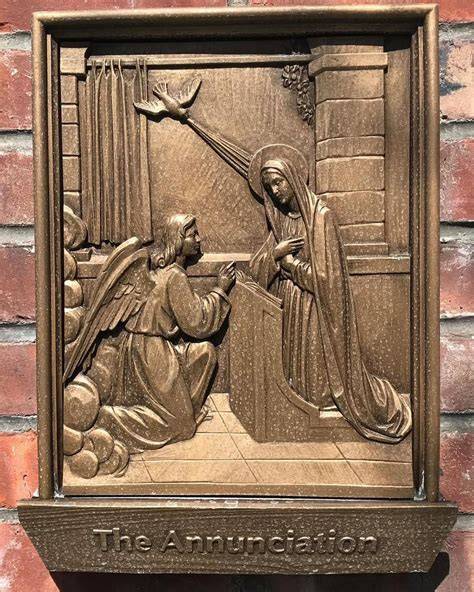
The Annunciation, Jesus’ Death, and December 25
The most influential explanation connects Christmas with the date of Jesus’ death and the date of his conception. The birth date of Jesus is directly connected to attempts to calculate the death of Jesus.
According to tradition, as attested and calculated by Tertullian (around the year 200), who used the Gospel of John as his source, Jesus was crucified on the 14th day of the Jewish month of Nisan. This translated to March 25 of the Roman calendar.
Tertullian of Carthage reported the calculation that the 14th of Nisan (the day of the crucifixion according to the Gospel of John) in the year Jesus died was equivalent to March 25 in the Roman (solar) calendar.
According to early Christian tradition, the day of Jesus’ death was also the same date as the Annunciation, when Gabriel announced to Mary that she would conceive of the Holy Spirit and give birth to the Messiah.
March 25 is exactly nine months before December 25, and therefore December 25th was selected as the date for Christ’s birth. Thus, Jesus was believed to have been conceived and crucified on the same day of the year. Exactly nine months later, Jesus was born, on December 25.
In the theological symbolism of the time, which saw patterns and rhythms in salvation history just as in the natural world, it made sense that the dates of Jesus’ conception and death would coincide, since both are essential for salvation.
Jesus was born as the lamb of God who would be sacrificed to take away the sin of the world. The baby Jesus flies down from heaven on the back of a cross, in this detail from Master Bertram’s 14th-century Annunciation scene.
It may be no coincidence, then, that the early church celebrated Jesus’ conception and death on the same calendar day: March 25, exactly nine months before December 25.
This idea appears in an anonymous Christian treatise titled On Solstices and Equinoxes, which appears to come from fourth-century North Africa. The treatise states: “Therefore our Lord was conceived on the eighth of the kalends of April in the month of March [March 25], which is the day of the passion of the Lord and of his conception. For on that day he was conceived on the same he suffered.”
Based on this, the treatise dates Jesus’ birth to the winter solstice. Augustine, too, was familiar with this association.
In On the Trinity (c. 399-419) he writes: “For he [Jesus] is believed to have been conceived on the 25th of March, upon which day also he suffered; so the womb of the Virgin, in which he was conceived, where no one of mortals was begotten, corresponds to the new grave in which he was buried, wherein was never man laid, neither before him nor since. But he was born, according to tradition, upon December the 25th.”
The Eastern Christian Calculation
In the East, too, the dates of Jesus’ conception and death were linked. But instead of working from the 14th of Nisan in the Hebrew calendar, the easterners used the 14th of the first spring month (Artemisios) in their local Greek calendar-April 6 to us.
April 6 is, of course, exactly nine months before January 6-the eastern date for Christmas. In the East, too, we have evidence that April was associated with Jesus’ conception and crucifixion.
Bishop Epiphanius of Salamis writes that on April 6, “The lamb was shut up in the spotless womb of the holy virgin, he who took away and takes away in perpetual sacrifice the sins of the world.”
The Eastern Church celebrates the Annunciation on April 6th, thus Christmas is observed on January 6th. Even today, the Armenian Church celebrates the Annunciation in early April (on the 7th, not the 6th) and Christmas on January 6.
The modern Armenian church continues to celebrate Christmas on January 6; for most Christians, however, December 25 would prevail, while January 6 eventually came to be known as the Feast of the Epiphany, commemorating the arrival of the magi in Bethlehem.
The period between became the holiday season later known as the 12 days of Christmas. The days between December 25 and January 6 are known as the twelve days of Christmas.
The Pagan Festival Theory
The most popular explanation people offer for Christmas on December 25 claims that Church wanted to “Christianize” pagan celebrations. It is argued that the Church assumed more people would embrace Christmas if it was seen as a replacement-option from their pagan holiday.
In the 3rd century, the Roman Empire, which at the time had not adopted Christianity, celebrated the rebirth of the Unconquered Sun (Sol Invictus) on December 25th. This holiday not only marked the return of longer days after the winter solstice but also followed the popular Roman festival called the Saturnalia, during which people feasted and exchanged gifts.
It was also the birthday of the Indo-European deity Mithra, a god of light and loyalty whose cult was at the time growing popular among Roman soldiers. The Romans had their mid-winter Saturnalia festival in late December; barbarian peoples of northern and western Europe kept holidays at similar times.
To top it off, in 274 C.E., the Roman emperor Aurelian established a feast of the birth of Sol Invictus, the Unconquered Sun, on December 25. Christmas, the argument goes, is really a spin-off from these pagan solar festivals.
According to this theory, early Christians deliberately chose these dates to encourage the spread of Christmas and Christianity throughout the Roman world: If Christmas looked like a pagan holiday, more pagans would be open to both the holiday and the God whose birth it celebrated.
Some people say we only celebrate it on December 25 because it is close to the date of the winter solstice, and Christian evangelists wanted to reach non-Christians who celebrated various feasts around that time.
Why the Pagan Theory Is Not Conclusive
However, this actual theory was never voiced until the 12th Century. It was much more common for early Christians to distinguish themselves from non-Christian practices, rather than trying to accommodate or “Christianize” them.
This doesn’t necessarily mean the pagan connection is false, merely that it wasn’t presented as the motivation for celebrating Christ’s birth on December 25th until the 12th Century.
Despite its popularity today, this theory of Christmas’s origins has its problems. It is not found in any ancient Christian writings, for one thing.
Christian authors of the time do note a connection between the solstice and Jesus’ birth: The church father Ambrose (c. 339-397), for example, described Christ as the true sun, who outshone the fallen gods of the old order.
But early Christian writers never hint at any recent calendrical engineering; they clearly don’t think the date was chosen by the church. Rather they see the coincidence as a providential sign, as natural proof that God had selected Jesus over the false pagan gods.
It’s not until the 12th century that we find the first suggestion that Jesus’ birth celebration was deliberately set at the time of pagan feasts. A marginal note on a manuscript of the writings of the Syriac biblical commentator Dionysius bar-Salibi states that in ancient times the Christmas holiday was actually shifted from January 6 to December 25 so that it fell on the same date as the pagan Sol Invictus holiday.
In the 18th and 19th centuries, Bible scholars spurred on by the new study of comparative religions latched on to this idea. They claimed that because the early Christians didn’t know when Jesus was born, they simply assimilated the pagan solstice festival for their own purposes, claiming it as the time of the Messiah’s birth and celebrating it accordingly.
More recent studies have shown that many of the holiday’s modern trappings do reflect pagan customs borrowed much later, as Christianity expanded into northern and western Europe. The Christmas tree, for example, has been linked with late medieval druidic practices.
This has only encouraged modern audiences to assume that the date, too, must be pagan. Later generations of Christians undoubtedly borrowed from pagan holidays.
There are problems with this popular theory, however, as many scholars recognize. Most significantly, the first mention of a date for Christmas (c. 200) and the earliest celebrations that we know about (c. 250-300) come in a period when Christians were not borrowing heavily from pagan traditions of such an obvious character.
Granted, Christian belief and practice were not formed in isolation. Many early elements of Christian worship-including eucharistic meals, meals honoring martyrs and much early Christian funerary art-would have been quite comprehensible to pagan observers.
Yet, in the first few centuries C.E., the persecuted Christian minority was greatly concerned with distancing itself from the larger, public pagan religious observances, such as sacrifices, games and holidays.
This was still true as late as the violent persecutions of the Christians conducted by the Roman emperor Diocletian between 303 and 312 C.E. This would change only after Constantine converted to Christianity.
From the mid-fourth century on, we do find Christians deliberately adapting and Christianizing pagan festivals. A famous proponent of this practice was Pope Gregory the Great, who, in a letter written in 601 C.E. to a Christian missionary in Britain, recommended that local pagan temples not be destroyed but be converted into churches, and that pagan festivals be celebrated as feasts of Christian martyrs.
At this late point, Christmas may well have acquired some pagan trappings. But we don’t have evidence of Christians adopting pagan festivals in the third century, at which point dates for Christmas were established.
Thus, it seems unlikely that the date was simply selected to correspond with pagan solar festivals. However much or little the earliest Christmas celebrations borrowed from pagan tradition may be up for debate, but it seems like a stretch to say Christmas was placed on December 25 as a way to “Christianize” a pagan holiday.
Another Proposed Date: Jesus’ Birth in Late Summer or Early Autumn
A final view is based off John the Baptist’s birthday. John’s father, Zecheriah, was a priest in the line of Abijah.
While he was offering incense before the altar of God, the LORD promised him a son: John. Later, when Mary was pregnant, she went to visit her elderly cousin who was also miraculously pregnant: Elizabeth, John’s mother.
The angel Gabriel told Mary that Elizabeth was six months pregnant at the time of the annunciation (Luke 1:36). So, Jesus’s birthday is roughly six months after John’s.
As a priest in the line of Abijah, Zecheriah would serve in the temple twice each year. One of those times would take place during the rainy season when travel would be difficult, making it an unlikely time for governors to call for a census.
That means his temple service likely took place during the late-Spring. We don’t know how much time elapsed between his service in the temple and Elizabeth’s pregnancy, but it was most likely a short time.
Accordingly, Elizabeth became pregnant in May/June, gave birth to John the Baptist in February/March, and then Jesus would be born six months later in August/September.
This is the least discussed theory that I believe holds some credibility. But, of course, it runs contrary to church tradition and it’s difficult to determine when Zecheriah’s service in the temple actually took place.
Joseph Lenard has a helpful explanation, though there’s definitely plenty of room here for further scholarly research. My gut tells me that if we could easily discover when he was in the temple, then the early Christians would’ve had an easier time finding an answer to that same question-and they didn’t.
Or, maybe they did-and that’s why they celebrated Jesus’ birth in December/January.
Why December 25 Remains Important to Christians
We may not celebrate Jesus’ birth on the exact “right” calendar date, but if that was crucial then God would’ve included those details in Scripture.
The exact date of Jesus’ birth is not recorded in the Scriptures. “The Evangelical Dictionary of Theology” explains that the earliest Christians did not have a time when they regularly observed Christ’s birth.
However, by the late fourth century it was generally celebrated in churches. December 25 became recognized as Christmas day because it provided a Christian alternative to pagan festivals related to the Roman god Saturn and the winter solstice.
Although the date of the Christmas celebration is not found in the Bible, it is not wrong for us to remember Christ’s birth during the Christmas season. It can be an opportunity for us to grow closer to Jesus and point others to faith in Him.
To me, the second theory seems like a more reasonable explanation for how the Church landed on December 25th as the day to celebrate Christmas. McGowan concludes his article with this, “In the end we are left with a question: How did December 25 become Christmas? We cannot be entirely sure.
Elements of the festival that developed from the fourth century until modern times may well derive from pagan traditions. Yet the actual date might really derive more from Judaism-from Jesus’ death at Passover, and from the rabbinic notion that great things might be expected, again and again, at the same time of the year-than from paganism.”
Ultimately, the specific date when Jesus was born is not as important as HOW or WHY he was born. The good news of Christmas is this: God entered into his creation and gave himself to rescue us from sin.
“For God so loved the world, that he gave his only Son, that whoever believes in him should not perish but have eternal life. For God did not send his Son into the world to condemn the world, but in order that the world might be saved through him.” John 3:16-17