Lewis Sperry Chafer’s Systematic Theology is an eight-volume, complete and unabridged exposition of premillennial and dispensational theology. Published in 1947 after ten years of work, it presents the doctrines of Scripture in a systematic form and discusses bibliology, theology proper, anthropology, soteriology, ecclesiology, angelology, Christology, pneumatology, typology, and eschatology.
In Systematic Theology, Lewis Sperry Chafer, the founding president of Dallas Theological Seminary, seeks to make the teachings of Bible conferences accessible to other programs of formal theological education. It is the first dispensational, premillennial systematic theology ever published. Chafer defined systematic theology as “the collecting, systematically arranging, comparing, exhibiting, and defending of all facts concerning God and his works from any and every source.”
Lewis Sperry Chafer and the origins of the work
Lewis Sperry Chafer (1871-1952), American Presbyterian clergyman and educator, was born in Rock Creek, Ohio; studied at New Lyme Academy and Oberlin Conservatory and College, both in Ohio; studied under C. I. Scofield; and was ordained in 1900. In 1924, he founded the Evangelical Theological College (now Dallas Theological Seminary) and was its president and professor of systematic theology until his death.
His many other works include Satan, True Evangelism, Grace, and Major Bible Themes. He published his 8-volume Systematic Theology in 1947, the culmination of 10 years of work. The result of ten years of reducing the studies of a lifetime to writing was recently completed and has now been reproduced in eight beautiful volumes, totalling 2,700 pages.
Chafer’s work was shaped by extensive Bible study, dispensational interpretation, and the teaching tradition associated with C. I. Scofield, Bible institutes, prophetic conferences, and Bible conferences. “The very fact that I did not study a prescribed course in theology made it possible for me to approach the subject with an unprejudiced mind and to be concerned only with what the Bible actually teaches.”
Historical setting
Protestant systematic theology had its origin in the early works of the Reformers. Among the first was the Loci Theologici of Melanchthon published in 1521. Zwingli produced his Commentarius de vera et falsa religione in 1525. William Farel brought out his theological manual in 1534 with the title, Summaire briefue declaration daucuns lieux fort necessaires a ung chascun Chrestien pour mettre sa confiance en Dieu et ayder son prochain.
The most famous early work was that of John Calvin, Institutes of the Christian Religion, first published in 1536, and later entirely rewritten and enlarged through successive editions until the definitive edition of 1559. No one can question that these works shaped the theological thinking of their own and successive generations and played a large part in the formation of creeds still recognized today.
They were in the main a return to Biblical teaching in the fields of bibliology, anthropology, soteriology, and ecclesiology. The issues were the doctrine of illumination-the work of the Holy Spirit teaching the Scriptures without the medium of priest or church, the priesthood of every believer, justification by faith, and the authority of the Bible. The Protestant theology of the Reformers was occasioned by the revolt against the corruption and misuse of Biblical revelation. It concerned itself largely with correcting these abuses by a return to the Scriptures.
The Reformation also emphasized the deity of Christ and substitutionary atonement for which the Reformers stood. In eschatology, amillennialism became more vocal, divided into different systems of interpretation within themselves, and postmillennialism, an offshoot of Socinianism, came into vogue.
For the most part, the Roman background of amillennialism and the unitarian background of postmillennialism did not deter many who continued in the Reformed theology as a whole from embracing one or the other view of eschatology. While theologians were grinding out reproductions of Reformed theology, it remained for a widespread movement for direct Biblical studies to find the fatal defect in the Reformed treatment of Roman doctrine.
The rise of premillennial and dispensational theology
Springing from Bible study groups such as the Plymouth Brethren, attention was directed to the teachings of the Scripture on such important subjects as the nature of the true church, the need for consistent literal interpretation of Scripture, and the important place given to eschatology in the Bible.
The result was a revived interest in the second coming of Christ, a movement away from the established church as a decadent institution, and a return to the more simple Biblical and apostolic concepts, methods, and beliefs. The movement was not without its excesses, but it came as a refreshing breath of new life to Biblical interpretation.
In the course of time, this new interest in Bible study and the new recognition that the Bible was intended to be understood by all Christians in its apparent literal meaning gave rise to many new groups. Bible institutes sprang up. There were great revivals. Gradually the doctrines of the new movement came to be known by the name of Fundamentalism and by similar titles.
Without any organizational unity, a system of doctrine gradually developed, greatly aided by the widespread use of the Scofield Reference Bible, the teachings of Bible institutes, prophetic conferences, and summer Bible conferences. The divine program for the ages, the contribution of prophecy as a whole, the divinely purposed illustrations afforded in typology, and the blessed hope of the imminent return of Christ are important doctrines which determine the value and content of the message of the preacher.
These doctrines were either denied or ignored in the traditional method of theological study. The need for a new definitive work in systematic theology which would be unabridged, premillennial, dispensational, and following a literal interpretation of Scripture became imperative. President Chafer felt called of God to undertake this sacred and unprecedented task.
The distinctive approach of Chafer’s theology
The appearance of the eight-volume work in Systematic Theology by President Lewis Sperry Chafer of Dallas Theological Seminary is without question an epoch in the history of Christian doctrine. Never before has a work similar in content, purpose, and scope been produced.
Its appearance in a day when liberal interpretation and unbelief have riddled the Biblical basis for theological study is in itself highly significant. The importance of this new treatise in the field of systematic theology is highlighted by the current disrepute of theology.
The inroads of higher criticism on the doctrine of the inspiration and infallibility of Scripture and the current indifferentism and secularism in the organized church have reduced the recent notable theological works to a trickle. About the only works which have gained widespread recognition in theology have been the restatements of modernism and liberal theology in the form of crisis theology and neo-orthodoxy which have in some respects indicated a reaction from extreme liberalism.
As far as furnishing a new and effective approach to Biblical studies their doctrines have been utterly opposed to the theology of the Reformation as well as to modern premillennialism. Modern Christianity has too often been reduced to promotion of an idealistic moralism and a desire for organizational unity.
The general features of Systematic Theology by President Chafer make it clear that we have here something entirely different than any previously written theology. For the first time the whole scope of theology is considered from the standpoint of premillennial interpretation.
The work is remarkably Biblical. The appeal is constantly to Biblical authority rather than to philosophy, tradition, or creed. There has been proper appreciation of the doctrinal heritage of the Church Fathers and the Protestant Reformers. The work is in no sense iconoclastic.
In the treatment of bibliology and theology proper as well as in later discussions President Chafer quotes extensively with approbation from the best theological statements extant. In general a broad and moderate Calvinism is followed in the theology. The work as a whole definitely belongs within the limits of Reformed theology with certain important additions and qualifications.
It is however quite distinct from various restatements of Reformed theology. It is a fresh and creative work, a pioneer in a new field, a gathering together in theological system of an interpretation of Biblical doctrines never before treated in this way.
Contents of the eight volumes
Chafer’s work is organized as a comprehensive theological system. The original eight volumes now complete and unabridged in four. The four-volume edition contains the complete and unabridged Systematic Theology.
| Volume | Subject | Primary emphasis |
|---|---|---|
| Volume I | Systematic theology | Foundational theological subjects and the organization of the system |
| Volume II | Anthropology | Human nature, sin, and the divine remedy for sin |
| Volume III | Soteriology | Christ as Savior, election, atonement, salvation, grace, and eternal security |
| Volume IV | Eschatology | Premillennial interpretation and the divine program for the ages |
| Volume V | Christology | The person, work, incarnation, resurrection, ascension, and return of Christ |
| Volume VI | Pneumatology | The person and work of the Holy Spirit |
| Volume VII | Doctrinal Summarization | One hundred and eighty-four important subjects in alphabetical order |
| Volume VIII | Index | Scriptural, author, and subject indexes, with a biographical sketch |
Anthropology and sin
Of great value from a practical viewpoint is the discussion of the divine remedy for sin, whether the sin nature, imputed sin, or sin in the life of the Christian. The treatment is again fresh, original, Biblical, and practical. The discussion covers a field which is usually neglected in most discussions of anthropology.
Soteriology
The contribution of President Chafer in the field of soteriology has been hailed as the most important of all his theological works. The treatment is divided into six sections, the first dealing with Christ as the Savior.
The positions of Christ, His offices, His sonship, the hypostatic union, and the sufferings of Christ are included in this discussion. The doctrine is presented in such a complete way that it is difficult to make adequate comparisons.
The second and third sections deal with the doctrine of election and the answer to the question, “For whom did Christ die?” In general the Calvinistic position characterizes the teaching here, but the viewpoint of unlimited atonement is maintained.
The saving work of God and the doctrine of eternal security occupy the fourth and fifth sections. The wonders of the saving work of God, the grace of God and the contrasting positions of Calvinism and Arminianism on eternal security are discussed in full.
The discussion of soteriology concludes with a division on the terms of salvation in which the simple exhortation of “Believe” is contrasted to all confusions which arise from adding other conditions. The final section is most practical and helpful.
The volume on soteriology, if it stood alone, would in itself assure the author a place among notable writers of Christian doctrine. There is no volume in the field of systematic theology which approaches it in Biblical insight, spiritual comprehension of the saving work of God, and unabridged treatment of the great work of God in salvation.
It deals fully with the technical problems of theology in this field and yet is brilliant and moving in its presentation. The volume is distinguished by its close adherence to Biblical teachings and by its unfolding of premillennial truth in this field.
Eschatology
The entire volume again reflects the original approach of the author and constitutes a new landmark in the field of eschatological literature. Chafer’s theological system gives eschatology a central place rather than treating it as a secondary or isolated subject.
For the first time these doctrines have been reduced to a written system of theology, related to theological problems, and expanded into all the fields in which revelation has provided teaching. It provides for all who hold the premillennial interpretation of the Scriptures a systematic statement of the content, implications, and relations of their doctrines.
Christology
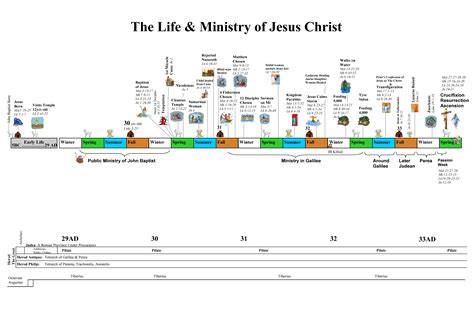
Having treated the doctrine of Christ in theology proper and soteriology, President Chafer presents here the entire doctrine systematically in new form and additional content. In general following the chronological pattern, the preincarnate person and work of Christ are considered first.
Major attention is given to the incarnation, which is presented as an event of immense theological significance. Considered first are His birth, childhood, baptism, temptation, transfiguration, miracles, and His extensive teachings.
The sufferings and death of Christ and the resurrection which followed are treated historically and doctrinally. A thorough discussion follows on the ascension and heavenly session of Christ-material often omitted from theologies.
The treatment of Christology is concluded by discussion of the second coming of Christ, the Messianic kingdom and His eternal kingdom.
Pneumatology
The need for a comprehensive statement of the entire doctrine of the person and work of the Holy Spirit called for this volume. After an introductory chapter on the name of the Holy Spirit, the deity of the Spirit is sustained by delineation of the Scriptural evidence found in His divine attributes and in His divine works.
Also treated are the types of the Holy Spirit, the Holy Spirit in the Old Testament, and the distinct character of His present work. With rare clarity and insight into Scriptural revelation, President Chafer presents the work of the Holy Spirit in the world and in the Christian.
The Holy Spirit convicts the world. He regenerates, indwells, baptizes, and seals the Christian. All of these great works of the Spirit are accomplished simultaneously in the believer when he is saved.
Of greatest importance is the presentation of the believer’s responsibility in relation to the Holy Spirit. The indwelling Spirit is presented as the source of power to overcome sin and is the author of the fruit of the Spirit.
The filling of the Spirit is offered to all who meet the three conditions: “Grieve not the Holy Spirit,” “Quench not the Spirit,” and “Walk in the Spirit.” The same clear distinctions which have made his earlier work, He That Is Spiritual, such a blessing to the Christian public are followed in this volume.
It presents material almost always omitted from systematic theologies. The writer knows no volumes on systematic theology that even approach the clarity and insight into the doctrine which appear here. Like the volume in Christology, Pneumatology is complete in itself and at the same time gathers together previous material in the series on the subject.
Doctrinal Summarization
The value of a doctrinal summarization is apparent. In presenting a system of theology various aspects of important doctrines are necessarily treated separately in different places and are often subordinated to the doctrine being considered.
The need for gathering pertinent material on important Biblical and theological themes is apparent not only to the theologian but also to the preacher. In this unique volume, one hundred and eighty-four important subjects are treated in alphabetical order.
The volume stands on its own merits and presentation and is also a summary of the doctrinal material which precedes it. The value of this volume to those seeking material on a particular subject is obvious.
It is an invaluable source-book for doctrinal teaching and preaching. It constitutes almost an encyclopedia of Scriptural doctrines.
Indexes and reference material
To provide easy access to related material in the entire series a separate volume of indices has been prepared, including a Scriptural index, an index of authors, and a subject index.
The index to Scripture references has been limited to passages which are actually discussed, comprising several thousand entries. The index to the authors is arranged alphabetically and provides a bibliography of all quotations.
The subject index provides the key to discussion of themes which appear repeatedly throughout the seven preceding volumes. A brief biographical sketch of the author is included, written by Dr. C. F. Lincoln, who has been closely associated with President Chafer for many years.
Relationship to Reformed theology
The work is essentially an exposition and systematization of premillennial and dispensational theology rather than an apology for it. The doctrines which it contains have been preached in various forms by most of the great premillennial Bible teachers of the last fifty years.
It provides for all who hold the premillennial interpretation of the Scriptures a systematic statement of the content, implications, and relations of their doctrines. For those who would be instructed in what are the proper inclusions of premillennialism it provides an ordered statement of the doctrine as a whole such as has never been provided in one work before.
Regardless what theological position may be assumed by the reader, he will find this work definitive in its field. The work as a whole definitely belongs within the limits of Reformed theology with certain important additions and qualifications.
Chafer was a classical dispy, which has bigger implications that most give acknowledgment to (its not just about the Church and Israel or some version of premillennialism that includes a "secret" rapture). He held to a hybrid view of "free" grace. He was Ameraldian in his view of the atonement. and at parts, he "suffered" from a fundamentalist/prohibitionist hermeneutic.
Strengths and limitations
Chafer, despite his flaws (ad there are "many"), clearly loved Jesus. And this is evident in what he writes and how he writes. He is humble and much of what he has to say has a doxological tone to it.
And for that, Chafer's systematic is commendable over against others who may have better content, but for whom theology is "sport". But still, there are certain, noteworthy shortcomings in this set.
That said, there are certain, noteworthy shortcomings in this set. Obviously, he was a product of his time. But despite his misguided theology, grace seems to me more prevalent (and genuinely real!) in his writings than it is found elsewhere in most protestant, English speaking systematicians.
Chafer’s approach is therefore both doctrinal and devotional. It seeks to present a detailed theological system while maintaining a warm, practical, often devotional, and entirely Christ-centered character.
Publication formats and edition information
The original eight volumes now complete and unabridged in four. The work is available as a four-volume hardcover edition with 2,880 pages, a size of 6 x 9 inches, and publication listed as 1993.
The published edition carries ISBN 9780825423406. The digital edition is listed with a publication date of January 01, 2003.
- Original structure: eight volumes
- Four-volume edition: complete and unabridged
- Format: 4 Hardcover
- Pages: 2880
- Size: 6 x 9 inches
- Published: 1993
- ISBN: 9780825423406
Why the work remains important
Systematic Theology is one of the heavyweight works of the evangelical movement, and it remains highly relevant today. Its importance lies not only in its size but also in the way it gathers the doctrines of premillennial and dispensational theology into a single ordered system.
For the first time the whole scope of theology is considered from the standpoint of premillennial interpretation. It covers crucial topics that many earlier theological texts neglected, including ecclesiology, angelology, and typology.
Chafer also discusses bibliology, theology proper, anthropology, soteriology, and eschatology. The work’s continuing value is connected with its broad scope, direct appeal to Biblical authority, extensive treatment of salvation, detailed doctrine of Christ and the Holy Spirit, and practical usefulness for theological study, preaching, and Christian edification.
“Though scholarly in the true sense of the word, this work can also be read and understood by those not formally trained in theology.” -Charles C. Ryrie
tags: #lewis #sperry #chafer #systematic #theology