“Pray that your flight will not be in the winter, neither on the Sabbath day” is Jesus’ instruction in Matthew 24:20 to those who would need to escape rapidly from Judea during a time of severe danger. The “flight” refers to a literal escape, while winter and the Sabbath represent circumstances that could make that escape more difficult.
The verse is not a direct command for Christians to observe the Sabbath. Jesus tells His followers to pray that they will not have to flee at an inconvenient or dangerous time, especially when bad weather, restricted travel, closed gates, and social opposition could hinder their escape.
The biblical setting of the warning
Jesus’ instruction follows His warning about the “abomination of desolation” and the urgent need for those in Judea to flee to the mountains. “When the time comes, then, that you see the ‘abomination of desolation’ prophesied by Daniel ‘standing in the sacred place’-the reader should note this-then is the time for those in Judea to escape to the hills.
A man on his house-top must not waste time going into his house to collect anything; a man at work in the fields must not go back home to fetch his clothes. Alas for the pregnant, alas for those with tiny babies at that time! Pray God that you may not have to make your escape in the winter or on the Sabbath day, for then there will be great misery, such as has never happened from the beginning of the world until now, and will never happen again!
Yes, if those days had not been cut short no human being would survive. But for the sake of God’s people those days are to be shortened.”
The parallel warning in the King James Version reads: “But pray ye that your flight be not in the winter, neither on the sabbath day: for then shall be great tribulation, such as was not since the beginning of the world to this time, no, nor ever shall be.”
What does “your flight” mean?
The “flight” points back to the warning two verses earlier: “then let those in Judea flee to the mountains” (Matthew 24:16). It is a literal escape from a literal danger-the “abomination of desolation” (v. 15).
Jesus commands His disciples to seek God’s mercy and providence as they face the urgent necessity of escape. Prayer does not remove the call to act, but it acknowledges dependence upon the Lord for protection, wisdom, and a providentially opened path.
God has often called His people to swift evacuation when judgment loomed: “Run for your lives! …Flee to the mountains” (Genesis 19:17, Lot leaving Sodom). “The woman fled into the wilderness to a place prepared by God” (Revelation 12:6).
Such flight underscores God’s protective care and our responsibility to obey promptly (Luke 21:21). Jesus’ warning therefore combines urgency with dependence: those in danger must not delay, yet they should pray for circumstances that make escape possible.
Why would winter make escape difficult?
Why it would not be prudent to flee in winter is obvious. Adverse weather conditions would hamper flight and put those fleeing at risk from the elements.
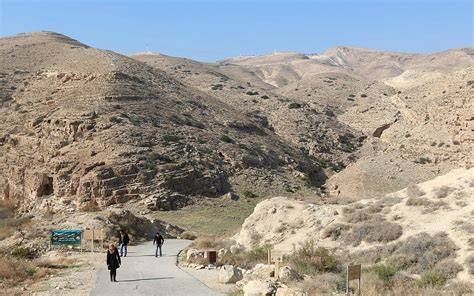
Winter travel in the Judean hills means cold nights, flooded wadis, and impassable routes. Ezra’s assembly “trembled…because of the heavy rain” (Ezra 10:9), illustrating how weather can paralyze movement.
The weather in winter, which means the rainy season, might render the roads impassable, and would, of course, prevent any hope of obtaining food by the wayside from cornfield or fruit tree.
Jesus urges prayer that the timing spare His people these added hardships: fewer daylight hours, greater exposure to cold, supply shortages and difficult shelter.
Paul warned sailors that “sailing was already dangerous” when winter approached (Acts 27:9-10). The biblical references to winter therefore emphasize practical dangers associated with travel during a season of cold, rain, difficult roads, and limited resources.
Jesus’ concern reveals His compassion for the physical vulnerability of those forced to leave homes and possessions behind. Pregnant women, nursing mothers, children, older people, and anyone lacking adequate shelter would face especially severe conditions.
Why mention the Sabbath?
For observant Jews, the Sabbath restricts travel and commerce. The disciples knew exactly what “Sabbath day’s journey” meant (Acts 1:12).
Since the Jews honored Moses’ laws, they believed it was wrong to take long journeys on the Sabbath. They even had a measurement for the maximum distance to be traveled on this day, which was called a “Sabbath day’s walk” (Acts 1:12). This was a short distance.
In Luke’s example it was the distance between the Mount of Olives, on the perimeter of Jerusalem, and the city itself. But Jesus’ warning was given in the context of a catastrophe on the city and Judea, which would have required getting much further out of the area than a limited “Sabbath day’s walk” might allow.
Exodus 16:29 says: “Understand that the LORD has given you the Sabbath; that is why on the sixth day He will give you bread for two days. On the seventh day, everyone must stay where he is; no one may leave his place.”
Jeremiah 17:21-22 records the warning: “This is what the LORD says: Take heed for yourselves; do not carry a load or bring it through the gates of Jerusalem on the Sabbath day. You must not carry a load out of your houses or do any work on the Sabbath day, but you must keep the Sabbath day holy, just as I commanded your forefathers.”
Closed gates and restrictions in Jerusalem
Further, the gates of Jerusalem were locked on the Sabbath day, which would have prevented people from fleeing the city.
Nehemiah 13:19 describes this practice: “When the evening shadows began to fall on the gates of Jerusalem, just before the Sabbath, I ordered that the gates be shut and not opened until after the Sabbath. I posted some of my servants at the gates so that no load could enter on the Sabbath.”
Such closures would trap residents at the worst possible moment. A person who needed to leave immediately could find the city gates inaccessible until the Sabbath had ended.
The Sabbath, which was a day of rest and worship, could therefore become a serious practical obstacle during an emergency requiring immediate and extended travel. A short journey would not place people beyond the danger threatening Jerusalem and Judea.
Social and religious opposition to escape
The Jews also had authority to police their own people regarding certain religious matters. The zealots would have tried to prevent fellow Jews from taking long journeys on the Sabbath.
They would have tried to prevent anyone from fleeing Jerusalem and Judea while the war with the Romans was in progress (A.D. 66-70). Such fleeing would have been considered a traitorous action by the Jews battling the Romans.
Exiting en masse on the Sabbath could also provoke outrage from hostile authorities zealous for Sabbath regulations (Exodus 20:10). Sabbath restrictions, closed city gates, and the religious opposition that could arise against travel would make escape more difficult for Jewish believers.
Jesus gave His warning to the disciples because of the possibility that Jewish people in Jerusalem and Judea would have prevented Christians from fleeing on the Sabbath.
Note that the warning was given “to those who are in Judea” (verse 16), not to disciples in other parts of the world. It is preserved only in Matthew’s Gospel, which was probably written to Jewish Christians.
Does Matthew 24:20 command Christians to keep the Sabbath?
Jesus told His followers to “pray that your flight will not take place in winter or on the Sabbath” (Matthew 24:20). Some people claim that in doing so, Matthew was indicating that Christians should keep the Sabbath.
But if we carefully read Jesus’ statement, we find no command for Christians to observe a Sabbath rest. Jesus simply advises His followers at that time that, for circumstantial reasons, they should pray that the need to flee will not arise on the Sabbath or in winter.
Jesus doesn’t say, “Keep the Sabbath holy.” He says that those who are in Judea should hope they don’t need to flee in winter or on the Sabbath day. That is not a command to keep a rest day; it is advice about adverse conditions for fleeing.
His warning was not a command to rest on the Sabbath any more than it was a command to rest in winter. These were simply inconvenient times to flee.
Jesus taught that it was permissible to help people on the Sabbath, to save lives. It would not be wrong to flee on a Sabbath-but it would be inconvenient if society was enforcing a Sabbath rest.
The context in which the warning about fleeing is given leads us to conclude that it has nothing to do with any supposed command for Christians to keep the Sabbath rest.
Why Matthew includes the Sabbath reference
Thus, the passage tells us more about the religious practices and social regulations regarding the Sabbath of non-Christian Jews in Jerusalem and Judea, than what the church would be doing.
Jesus gave His warning not because the church would be keeping the Sabbath, but because Christians in Judea and Jerusalem might find it difficult or impossible to flee on that day.
It is characteristic of St. Matthew, as writing for Jews, that he alone records the words “nor on the Sabbath day.” Living as the Christians of Judæa did in the strict observance of the Law, they would either be hindered by their own scruples from going beyond a Sabbath day’s journey, which would be insufficient to place them out of the reach of danger, or would find impediments-gates shut, and the like-from the Sabbath observance of others.
The warning places the coming judgment within the actual life and customs of Judea while calling Christ’s followers to remain watchful, prayerful, and ready to obey Him without delay.
Prayer, providence, and human action
Jesus says, “Pray that your flight will not occur…” (Matthew 24:20). Even in prophetic events that must unfold, He calls His people to intercede.
Prayer aligns our hearts with God’s will and can affect the circumstances that surround us, just as He urged the disciples, “Watch and pray so that you will not enter into temptation” (Matthew 26:41).
Scripture consistently links prayer to peace in crisis-“Be anxious for nothing, but in everything, by prayer and petition…present your requests to God” (Philippians 4:6).
Rules were given for flight where the conditions lay within their own power. Other incidents which lay outside their will might lawfully be the subjects of their prayers.
He bids them pray to and worship God, in order that he may give them a favourable time for flight. The clause introduced with the final particle does not directly denote the subject of the petition, as our version gives the impression, but rather the aim of the petitioners.
He spake of personal hindrances in the last verse; here he speaks of external circumstances over which man has no control, except by prayer.
The importance of readiness
Jesus’ warning encourages believers to be spiritually and practically prepared for difficult times, trusting in God’s provision and timing.
The call to prayer does not cancel the need for alertness. The disciples are told to watch, recognize the danger, and flee without delay when the sign appears.
Sensitivity to God’s timing highlights the importance of remaining flexible and responsive to the circumstances He allows. The mention of winter and the Sabbath shows that faithful obedience may require action under difficult conditions.
While the Sabbath is a day of rest, Jesus’ teaching reminds us that there are times when action is necessary, urging believers to balance rest with readiness to act when God calls.
Jesus combines certainty-tribulation will come-with compassion-pray for merciful conditions. He anticipates practical obstacles: harsh weather and Sabbath restrictions can hinder escape.
The verse urges readiness, dependence on God, and confidence that He cares about the details of our deliverance as much as the deliverance itself.
Was the warning only about a distant future?
Those who interpret Matthew 24 as applying only to a future time claim the warning in verse 20 has nothing to do with the practices of Jews in the first century. Thus, Jewish customs with regard to the Sabbath would not have any relevance for explaining this verse.
They note that Jewish authorities today-an example for the future, they believe-would not prevent people from fleeing the city or the area of ancient Judea. Matthew 24, they claim, is a warning for the future “time of the end” of the world.
In this context, they teach that verse 20 is, indeed, an implicit command for the Sabbath to be kept. This idea of a future context to the warning in verse 20 is fraught with difficulties.
Problems with a purely future interpretation
First, we have no idea what Jewish authorities might or might not allow during an unknown future time when it is claimed that all of the Holy Land will be in the throes of military, social and natural destruction and upheaval.
Today’s modern military power is overwhelming in its ability to pinpoint, corner and destroy. When Israel invaded Palestinian territory in April 2002 to prevent suicide bombers from killing Israelis, there was no escape for groups of people from any town, and certainly not from the area.
We have no way of knowing what might or might not be possible in terms of fleeing an area to safety-and any escape seems doubtful.
Second, leaving this hypothetical argument aside, we need to repeat that there is no command in Matthew 24:20 for Christians to keep the Sabbath.
Third, if the warnings given throughout Matthew 24, including those about fleeing on the Sabbath, were meant only for some future “end times,” then they would have had no meaning for the Christians to whom they were originally spoken, and then written.
The hearers would have been confused by the meaning of such assertions. The existence of these warnings-in a future scenario-would require an explanation to the effect that Jesus was talking only to people living in some distant “end time.” But no such explanation is evident in Matthew 24:20.
The disciples who first heard these warnings are addressed throughout the chapter. In fact, Jesus says the following after giving such warnings: “I tell you the truth, this generation will certainly not pass away until all these things have happened” (verse 34).
Fourth, the idea that Matthew 24 refers to specific events in some future “end time” is speculation. Christians have been trying to understand how to interpret this chapter without great success or agreement for 1900 years.
Some Christians believe that all the events mentioned in Matthew 24 were fulfilled before A.D. 70 and have no application for the subsequent history of the church, or for the future. The interpretation that these events are yet future is by no means proven.
The meaning of winter and the Sabbath together
Winter and the Sabbath are different kinds of obstacles. Winter represents natural and physical conditions that could make travel hazardous, while the Sabbath represents religious, social, and civic conditions that could restrict movement.
Jesus’ warning therefore covers both the environment and society. The rain, cold, flooded ravines, impassable roads, lack of shelter, restricted travel, closed gates, and resistance from authorities could combine to make an urgent escape extremely difficult.
The mention of both circumstances also shows that the prayer concerns the timing of the crisis rather than the legitimacy of escape. The followers of Jesus were to pray that they would not have to flee under conditions that could prevent them from reaching safety.
| Expression | Meaning in the context |
|---|---|
| Flight | A literal escape from danger, especially from Judea to the mountains. |
| Winter | Cold, rain, flooded ravines, impassable roads, limited food, and difficult shelter. |
| Sabbath | Restricted travel, closed gates, limited distance, and possible social opposition. |
| Prayer | Dependence on God for protection, timing, wisdom, and a possible path of escape. |
Connections with other passages
Luke 21:36 says: “So keep watch at all times, and pray that you may have the strength to escape all that is about to happen and to stand before the Son of Man.”
Genesis 19:17 records the warning given to Lot: “As soon as the men had brought them out, one of them said, ‘Run for your lives! Do not look back, and do not stop anywhere on the plain! Flee to the mountains, or you will be swept away!’”
Psalm 55:6-8 expresses the desire to escape danger: “I said, ‘Oh, that I had wings like a dove! I would fly away and find rest. How far away I would flee! In the wilderness I would remain. Selah. I would hurry to my shelter, far from this raging tempest.’”
Mark 13:18 gives the parallel instruction: “Pray that this will not occur in the winter.” Matthew’s account adds the reference to the Sabbath, reflecting the particular setting and audience of the Gospel.
Acts 1:12 refers to a “Sabbath day’s journey,” while Exodus 16:29, Jeremiah 17:21-22, and Nehemiah 13:19 illustrate the restrictions and practices that explain why Sabbath travel could be a serious obstacle.
Key teaching points
- The importance of prayer: Jesus instructs His followers to pray about the timing of their flight, emphasizing the necessity of seeking God’s guidance and intervention in times of crisis.
- Understanding cultural context: Recognizing the significance of the Sabbath in Jewish culture helps us understand the practical challenges Jesus’ audience would face, reminding us to consider cultural and historical contexts in Scripture.
- Preparedness for tribulation: Jesus’ warning encourages believers to be spiritually and practically prepared for difficult times, trusting in God’s provision and timing.
- Sensitivity to God’s timing: The mention of winter and the Sabbath highlights the importance of being attuned to God’s timing and the circumstances He allows, encouraging believers to remain flexible and responsive to His leading.
- Balancing rest and readiness: While the Sabbath is a day of rest, Jesus’ teaching reminds us that there are times when action is necessary, urging believers to balance rest with readiness to act when God calls.
Answers to common questions
What is the meaning of Matthew 24:20?
Matthew 24:20 means that those who would need to escape from Judea should pray that the crisis would not occur during winter or on the Sabbath, because both circumstances could make rapid travel difficult or impossible.
Why does Jesus emphasize winter?
Winter travel in Judea could involve cold, heavy rain, flooded ravines, impassable roads, reduced daylight, limited food, and difficult shelter. These conditions would increase the suffering of anyone forced to flee quickly.
Why does Jesus emphasize the Sabbath?
The Sabbath could restrict travel, close Jerusalem’s gates, limit the distance that people could travel, and provoke opposition from those enforcing Jewish religious regulations. These restrictions would be especially serious during an emergency requiring immediate flight far from the danger.
Does Matthew 24:20 command Christians to keep the Sabbath?
No. The verse contains no command to keep the Sabbath as holy time. It describes the practical difficulty of fleeing on a Sabbath in Judea, where religious and social regulations could hinder escape.
How does the verse relate to the destruction of Jerusalem?
The warning is addressed to those in Judea and describes circumstances connected with an urgent escape from a catastrophe involving Jerusalem and the surrounding region. The references to local geography, Jewish customs, Sabbath travel, and the gates of Jerusalem fit the actual life and regulations of Judea.
What does the passage teach Christians today?
The passage teaches watchfulness, prayer, readiness, obedience without delay, compassion for people facing physical danger, and dependence on God’s providence. It also shows that faith does not ignore practical circumstances such as weather, travel, shelter, and social restrictions.