Replacement theology, also called supersessionism or fulfillment theology, teaches that the Christian church has replaced Israel in God’s plan and that the promises made to Israel in the Bible are fulfilled in the church rather than in the Jewish people or the nation of Israel.
Its central claim is that Christianity has superseded Judaism as the recipient of the divine-human covenant, leaving the older religion and people behind and marginalized in theological terms. Other Christian views distinguish Israel and the church, teaching that the church is an entirely new creation while God retains future purposes for Israel.
What replacement theology means
Replacement theology holds that Christians and Christianity have fully replaced Jews and Judaism as the recipients of the divine-human covenant, leaving the older religion and people behind and marginalized in the theological dust. The theology is also referred to as supersessionism, in which Christianity is thought to have superseded Judaism.
It is closely related to fulfillment theology, which holds that Christianity has fulfilled the divine promises signaled in the Hebrew Bible. Softer terms such as “supersessionism” or “fulfilment theology” are preferred, but they all end up with the same result - Israel is replaced in their thinking by the church, with no further function or role in God’s plans.
Replacement theology teaches that the church is the replacement for Israel and that the many promises made to Israel in the Bible are fulfilled in the Christian church, not in Israel. The prophecies in Scripture concerning the blessing and restoration of Israel to the Promised Land are spiritualized or allegorized into promises of God’s blessing for the church.
Replacement theology, covenant theology, and dispensationalism
Among the different views of the relationship between the church and Israel are the church has replaced Israel, the church is an expansion of Israel, or the church is completely different and distinct from Israel.
Replacement theology holds that Christians and Christianity have fully replaced Jews and Judaism as the recipients of the divine-human covenant. Covenant theology generally describes the church as an expansion or continuation of God’s covenant people. Dispensationalism, in contrast, is a Christian doctrine holding that God interacts with different groups of people at different times and in different manners and that different messages are part of an unfolding divine plan.
| View | Relationship between Israel and the church |
|---|---|
| Replacement theology | The church replaces Israel in God’s plan. |
| Covenant theology | The church is an expansion of Israel. |
| Dispensationalism | The church and Israel are completely different and distinct. |
Replacement theology removes from Israel a national destiny back in the land of Canaan because of her rejection of Jesus and his Messianic credentials. All the biblical statements of Israel enjoying future blessings in the land of Canaan are said to be descriptions of the spiritual blessings that now accrue to the Church.
The expectation of a physical kingdom has been spiritualized, taken from Israel, and given to the Gentiles, even though Jesus never denied that the physical kingdom would be restored to Israel.
Bible verses used to support replacement theology
Jeremiah 31:31-32 and Hebrews 8
Hints of a new covenant can be found in pre-Christian Hebrew literature, such as in Jeremiah 31:31-32: The days are surely coming, says the Lord, when I will make a new covenant with the house of Israel and the house of Judah. It will not be like the covenant that I made with their ancestors when I took them by the hand to bring them out of the land of Egypt-a covenant that they broke, though I was their husband, says the Lord.
In the Letter to the Hebrews, the author quotes these lines from Jeremiah. The Letter to the Hebrews potentially supports this concept of Christian covenantal superiority when it asserts that Jesus has “obtained a more excellent ministry, and to that degree he is the mediator of a better covenant, which has been enacted on the basis of better promises” (Hebrews 8:6).
In the same chapter, God expresses displeasure with the Hebrews and plans a new covenant, superseding the Sinai covenant, and the author declares, “In speaking of a new covenant, he has made the first one obsolete, and what is obsolete and growing old will soon disappear” (Hebrews 8:13).
This translation then makes possible an interpretation of Christians as replacing Jews as those for whom God is most concerned. Many theologians in Christian history have cited the Letter to the Hebrews to make similar supersessionist arguments.
Galatians 3:6-9 and Abraham’s descendants
In Letter to the Galatians, St. Paul redefines the descendants of Abraham as those who have faith, particularly in God and Jesus Christ. Thus, the heirs of the covenant between God and Abraham are not exclusively Jews, who claim ancestry from Abraham, but also all non-Jews, or Gentiles, who have faith.
By emphasizing Abraham’s belief in God, St. Paul shifts the understanding of the divine covenant to establish religious identity on doctrine and belief rather than limiting religious identity to ancestry and ethnicity: Just as Abraham “believed God, and it was reckoned to him as righteousness” [Genesis 15:6], so, you see, those who believe are the descendants of Abraham.
And the scripture, foreseeing that God would reckon as righteous the gentiles by faith, declared the gospel beforehand to Abraham, saying, “All the gentiles shall be blessed in you” [Genesis 22:18]. For this reason, those who believe are blessed with Abraham who believed. (Galatians 3:6-9)
Replacement theologians may understand this passage to mean that the church has become the true heir of Abraham’s covenant. However, the passage can also be understood as teaching that Gentiles are included in Abraham’s blessing through faith without eliminating God’s distinct purposes for Israel.
Galatians 3:15-18 and the “seed” of Abraham
The Reconstructionist view lays emphasis on Paul’s teaching in the Book of Galatians concerning God’s promise in Abraham being made not to his “seed”, plural, that is the people of Israel, but to his “seed” singular, meaning Jesus (Galatians 3:15-18).
Therefore, they conclude that since the “seed” (Christ) has come, the promise to the “seed” of Abraham as in plural - meaning the people - has been removed. They have forfeited the land.
The truth is Paul also uses the term “Abraham’s seed” in the plural several times in the New Testament, for example, Romans 9:6-7. In other words, both interpretations of the term “seed” are true. Abraham’s seed is singular and plural.
The blessing God promised in Abraham is only in Christ Jesus because He died for the whole world, but the mediation or means by which this blessed “seed” comes into the world is through the “seed” plural - the people of Israel. The one truth does not contradict the other.
Matthew 21:43 and the kingdom
Replacement theology interprets Matthew 21:43 as teaching that the kingdom has been taken from Israel and given to another people. The expectation of a physical kingdom has been spiritualized, taken from Israel, and given to the Gentiles (Matthew 21:43).
However, Jesus never denied that the physical kingdom would be restored to Israel (Acts 1:6-7). One of the main challenges facing Replacement Theology is that it directly contradicts several teachings found in the New Testament itself.
Bible verses that challenge replacement theology
Romans 9-11: Has God rejected Israel?
Paul’s Letter to the Romans explicitly denies that Christianity replaces Judaism when he states, “I ask, then, has God rejected his people? By no means! I myself am an Israelite, a descendant of Abraham, a member of the tribe of Benjamin. God has not rejected his people whom he foreknew” (Romans 11:1).
In Romans 11:1-2 Paul testifies that he himself is proof God did not forsake Israel because he himself a Jew who follows Jesus: I ask then, did God reject His people? Certainly not! I am an Israelite myself, a descendant of Abraham, from the tribe of Benjamin. God did not reject His people, whom He foreknew.
Paul includes himself and all those who are ethnically Jewish in the possibility of the new covenant. Furthermore, Paul also emphasizes that God has not abandoned His people and points to the fact there is still a remnant of believers within Israel who follow Jesus.
While Israel may not be at the center of attention at this moment, this is only temporary (Romans 11:25). The salvation of the Gentiles is intertwined with the salvation of Israel (Romans 11:25-26), and the fulfillment of the promises made to Israel is a crucial aspect of God’s plan for the world.
Romans 11:25-29 and irrevocable gifts
The rebelliousness of the people of Israel is not a permanent condition, and their salvation is tied to the promises of the New Testament regarding the future restoration of Israel in their land.
It is not because Israel will turn perfect, but because “God’s gifts and his call are irrevocable.” (Romans 11:29) If God were to change his mind about his promises to Israel, how could anyone trust His promise of salvation?
God will not reject His people, no matter how unfaithful they are (2 Timothy 2:13). Paul’s passionate response to the idea of God rejecting Israel highlights the importance of our faith in a God who stands behind his words.
Romans 3:1-4 and God’s faithfulness
In Romans 3:1-4, Paul declares that Israel’s rejection of Jesus has not invalidated God’s faithfulness to His promises: What advantage, then, is there in being a Jew, or what value is there in circumcision? Much in every way! First of all, the Jews have been entrusted with the very words of God.
What if some were unfaithful? Will their unfaithfulness nullify God’s faithfulness? Not at all! Let God be true, and every human being a liar. As it is written: “So that you may be proved right when you speak and prevail when you judge.”
Acts 1:6-7 and the restoration of the kingdom
One such example is Acts 1:6-7, where Jesus’ disciples asked whether He would restore the kingdom to Israel at that time. Jesus did not correct them but answered that it was not for them to know when.
While it is true that Christ is present in the hearts of believers, the Bible also teaches that Yeshua will return to establish a physical kingdom. The passage does not present the disciples’ expectation of a restored kingdom as a theological mistake; it places the timing of that restoration in God’s authority.
Romans 15:7-9 and the promises to the patriarchs
Jesus came to confirm the promises to the Fathers, not to reconstruct them (Romans 15:7-9). Confirm means CONFIRM! He takes away nothing but reinforces every promise that God made to the fathers, meaning the Patriarchs (Acts 3:22-26).
Peter affirms that there must be a time of “the restoration of all things” before Messiah returns. This “restoration of all things” is spoken about by all the prophets - meaning a final regathering to the Land of Canaan and repentance leading to salvation in Messiah’s atonement.
Jeremiah 31:35-36 and Israel’s continuing identity
In Jeremiah 31, God makes a promise stating that the descendants of Israel will never cease to be His people as long as the laws of nature remain in place:
This is what the Lord says, he who appoints the sun to shine by day, who decrees the moon and stars to shine by night, who stirs up the sea so that its waves roar-the Lord Almighty is his name: “Only if these decrees vanish from my sight,” declares the Lord, “will Israel ever cease being a nation before me.” (Jeremiah 31:35-36)
This promise assures us that God has a plan for the people of Israel and that he never changed his mind about it. The imagery of the heavens and the earth’s foundations being explored above underscores the eternal nature of God’s promise.
Jeremiah 30:11 and discipline without annihilation
The prophets consistently warned Israel of discipline for unfaithfulness yet always promised preservation, as seen in Jeremiah 30:11: “For I am with you,” declares the Lord, “to save you; for I will destroy completely all the nations where I have scattered you, only I will not destroy you completely. But I will chasten you justly, and will by no means leave you unpunished.”
Israel’s rebellion and sin have not led to land forfeiture but to judgment and correction, yet in the end, God will, for His Name’s sake, restore Israel to her ancient land and to Himself.
Zechariah 2:8 and the “apple of His eye”
God’s love for the Jewish people is evident in Zechariah 2:8, where He proclaims them “the apple of His eye” and warns anyone who would harm them. This passage is used to emphasize that divine discipline does not necessarily mean that God has permanently abandoned Israel.
Israel and the church in the New Testament
The view that Israel and the church are different is clearly taught in the New Testament. Biblically speaking, the church is distinct from Israel, and the terms church and Israel are never to be confused or used interchangeably.
We are taught from Scripture that the church is an entirely new creation that came into being on the day of Pentecost and will continue until it is taken to heaven at the rapture (Ephesians 1:9-11; 1 Thessalonians 4:13-17).
The church has no relationship to the curses and blessings for Israel. The covenants, promises, and warnings of the Mosaic Covenant were valid only for Israel.
Israel has been temporarily set aside in God’s program during these past 2,000 years of dispersion (see Romans 11). The church has not replaced Israel in God’s plan.
Galatians 6:16 and the “Israel of God”
In the past, people have clung to Galatians 6:16 as an example of how Israel can mean the church, but let’s examine that verse. Galatians 6:16 says: “Peace and mercy be upon all who walk by this rule, upon the Israel of God,” (RSV) or “Peace and mercy to all who follow this rule-to the Israel of God.” (NIV).
But if we look at what the text actually says in the original, these translations have missed a key Greek word. Literally translated: And as many as (whoever) to the rule this shall be elementing (observing the fundamentals), peace on them and mercy, and (also) on the Israel of the God.
In other words, even though the Greek text indicates says that Paul was pronouncing peace and mercy to the followers of the Way AND ALSO to “the Israel of God”, those who were translating the text decided it could not possibly mean that Paul wanted to bless the house of Israel as well as the Gentile followers of Yeshua.
They chose a far less common way of understanding the grammar, and decided to lump the two together with no distinction. While it is not technically incorrect to translate it in this manner, there are many reasons to stay with the standard meaning of the Greek word “καὶ” to mean “and” or “also”, which is far more commonplace.
The number of New Testament references to Israel
The word “Israel” occurs 70 times in the New Testament (79 times if you include the word “Israelite”), and all but two of these instances are unequivocally referring to the nation of Israel, and not to the Church - the two exceptional cases being Romans 9:6 and Galatians 6:16.
Israel really means Israel in both the Old and the New Testaments. While the New Testament often describes Israel and the Church in similar terms - both are the Bride of God, children of God, the chosen people, and so on - never does the New Testament call the Church “Israel”.
Adoption and grafting: inclusion without replacement
Adoption doesn’t mean replacement, neither does grafting replace the natural branch. Gentile believers are included, but not at the expense of the body they are included into.
Instead of excluding the Jews, St. Paul presents faith in Jesus Christ as a revision of the covenant that expands the body of those who can participate. In Letter to the Galatians, St. Paul redefines the descendants of Abraham as those who have faith, particularly in God and Jesus Christ.
There is no male or female, he says - and by this he means that both men and women have the same status through Yeshua. But of course there remains a distinction in other ways.
Similarly, Paul talks of both the church and of Israel as separate entities many times, especially unbelieving Israel and the church. They do not blur into one, and there is no evidence that the early church blended the two until 160 AD.
Typology is not replacement
In some ways, it is true that the nation of Israel is a “type” of church… a foreshadowing of God’s people both Jew and Gentile together. We can see in the language of Paul throughout the epistles that he seeks to encourage Gentile believers to know that they are just as much “God’s people” as the Israelites have always been, and that they matter no less to him.
He deliberately draws parallels with Israel and the new Gentile followers of the Way, showing the similarities. But we also know that Moses was a “type” of Messiah, sent to save the Jewish people, and in no way would we say that he is the same thing as Yeshua Himself.
In fact, we see the two standing together on the Mount of Transfiguration. One does not replace the other, even if one foreshadows the other in a typological manner.
Similarly, in Revelation, we see the tribes of Israel together with every nation, tribe and tongue, worshiping God at the end of time. And of course, the Messiah will return to Jerusalem. Jerusalem in Israel. Israel is Israel, right until the end.
The Abrahamic Covenant and the land promise
Replacement theology rests chiefly on the idea that the whole or part of the Abrahamic Covenant has been abolished, for it is this Covenant that promises to Israel eternal ownership of the land of Canaan (Genesis 17:7-8).
Once this ‘promise’ has been removed, the present-day restoration of Israel means nothing and her only hope is in the Church. Now it must be made clear that we believe that only in Christ Jesus can there be salvation for Jews and Gentiles alike (Romans 1:16-17).
However, we do not believe that the promise of God in the Abrahamic Covenant bequeathing the land of Canaan to Israel has been removed, and therefore Israel’s modern restoration to the land of Canaan is indeed the fulfillment of that promise and constitutes a milestone on her ‘way home’ to her Messiah (Ezekiel 36:24-28).
The abolitionist view
The Abolitionists camp sees the Covenant with Abraham as being entirely abolished. However, they have serious difficulties because Paul writing to the Galatians states that Jesus died in order to bring to our lives the blessings of the Abrahamic Covenant and if we belong to Jesus, we are Abraham’s children according to the promise (Galatians 3:13-14, 29).
If the Covenant has been abolished, then what Paul says is wrong. Moreover, the writer of the Book of Hebrews states that we can trust God to be faithful to the New Covenant because He has always been faithful to the Abrahamic Covenant (Hebrews 6:13-20).
This constitutes a serious problem for the Abolitionists because, if the Abrahamic Covenant has been abolished, then God is a liar and indeed is not faithful, though the writer of Hebrews affirms that He is.
The reconstructionist view
The Reconstructionists theory states that the Abrahamic Covenant has indeed not been abolished but it has been reconstructed. That is, the part that promises land to Israel now means spiritual promises and not literal ones.
The problem with this theory is that it is a total presupposition, and the Scriptures nowhere affirm it. That all nations would be blessed in Christ was actually the intention of the Abrahamic Covenant from the very beginning, but this does not remove from the Jewish people a national destiny in the Holy Land.
The Bible nowhere states that the promises of God in Abraham concerning Israel’s everlasting possession of the Land of Canaan are removed. In fact, everywhere it affirms the opposite.
That is, the day is coming when Israel will be restored to the land and to her Messiah (Ezekiel 36:24-32). This passage from Ezekiel teaches the very opposite of Replacement theology, in that Israel’s rebellion and sin have not led to land forfeiture but to judgment and correction, yet in the end, God will, for His Name’s sake, restore Israel to her ancient land and to Himself.
Historical development of replacement theology
These ideas appear to be suggested in some of the earliest Christian texts, such as writings of St. Paul the Apostle, and subsequent Christian theologians have strengthened the opposition of Judaism and Christianity in ways that have informed relations between Christians and Jews.
Despite apparent suggestions of supersessionism in these sources, some New Testament scholars contend that these early Christian texts would not have been understood by their original audiences as arguments for what would later be identified as replacement theology.
In their view, these passages do not suggest that Jews were excluded from the new religion. St. Paul himself was identified as a Jew.
Justin Martyr and the second century
The idea that the Jewish people were excluded from a new covenant became more prominent in the 2nd century ce. It was given full expression in St. Justin Martyr’s Dialogue with Trypho, which attempts to demonstrate that a new covenant has superseded the old covenant of God with the Jewish people.
In “Dialogue with Tryphon the Jew,” one of the earliest known dialogues between Christianity and Judaism from the 2nd century AD, the assertion first appears that the church replaced Israel.
A church father, Justin Martyr (100-165 AD), wrote: “We, who were carved out of the bowels of Christ, are the true race of Israel.”
Several other early Christian writings affirm the same idea and make the case for Christianity as establishing a “New Israel” or “True Israel,” particularly the text known as the Letter of Barnabas, St. Melito of Sardis’s Homily on the Passover, and Tertullian’s Against the Jews.
Origen and Eusebius
Replacement Theology originated with the church fathers. Origen of Alexandria (185-254 AD), one of the earliest theologians, considered by some to be “the greatest genius the early church ever produced,” proclaimed that the Jews were to blame for killing Jesus.
However, the belief that the Jews are solely responsible for the death of Jesus is refuted by Acts 4:27, which identifies a conspiracy involving Herod, Pontius Pilate, Gentiles, and Jews. Furthermore, all people are accountable for Jesus’ death as we have all sinned (Romans 3:23).
For example, Eusebius (3rd century), a bishop and scholar of the biblical canon who is regarded as one of the most important Christians during late antiquity, taught that the blessings promised to Israel in Scripture were meant for the church.
In contrast, the curses were meant for the Jews alone. He also asserted that because the Jews rejected Christ, the Church was the “true” Israel.
Christian anti-Semitism
The teaching of some early Church Fathers that God had abandoned the Jews was seen as a rationalization for their marginalization in Christian Europe. The Jewish people had supposedly incurred divine disfavor not only by denying that Jesus was the Messiah but also by allegedly playing a collective role in his Crucifixion.
This theological disdain for Jews fueled the rise of antisemitism in Europe. Replacement theology came to dominate Christian thought for more than a millennium, including in major strains of Protestantism.
In his 1543 tract On the Jews and Their Lies, for instance, Martin Luther claimed that the destruction of Jerusalem and the Temple in the 1st century ce was “proof that the Jews, surely rejected by God, are no longer his people, and neither is he any longer their God.”
Replacement Theology is the theological basis which fueled the abhorrent rise of anti-Semitism against Jews. In the past century, numerous studies and books have established a link between replacement theology and Christian anti-Semitism.
Modern developments
Shifts away from strong forms of replacement theology, and its inherent antisemitism, began particularly in Anglophone quarters of the Protestant world in the 17th century, often because of a belief that Jews were still important to divine plans.
In 1656 English statesman Oliver Cromwell, in partnership with Portuguese Jewish scholar Manasseh ben Israel, opened England to the return of Jews, who had been expelled in 1290. Cromwell was inspired in part by a belief that conversion of Jews to Christianity would expedite the Second Coming.
Puritans in New England in the mid-17th century believed not only that but also that Jews would eventually return to a homeland in Palestine as part of the end-time.
Dispensationalism
In the 19th century the concept of dispensationalism, a reading of the Bible popularized in the United States by Anglo-Irish minister John Nelson Darby, further shifted Christian perspectives on Jews away from a hard replacement theology.
Dispensationalists believe that there has been a succession of different eras of God’s interactions with humanity and that the final dispensation, the end-time, is nigh. They hold that the return of the Jews to Palestine is one of the prophecies that needs to be fulfilled in order for the Second Coming of Jesus Christ to occur.
Rather than favoring the conversion of Jews, dispensationalists view support of Jews and their return as pertinent for Christian doctrine and practice. Dispensationalism was particularly influential in the rise, among Evangelical Christians in the 20th century, of Christian Zionism.
After the Holocaust and Vatican II
In the second half of the 20th century, following the Holocaust and rising awareness of antisemitism, many Christians of different persuasions began reconsidering their stances toward the Jewish people, sometimes rooting out what they saw as antisemitic strains within their own traditions.
During the Second Vatican Council, for instance, the Roman Catholic Church issued a declaration-Nostra aetate (“In Our Time”), or the Declaration on the Relation of the Church to Non-Christian Religions-meant to clarify and revise the church’s theological position toward the Jewish people.
“Although the Church is the new people of God,” the document states, “the Jews should not be presented as rejected or accursed by God”; rather, “God holds the Jews most dear for the sake of their Fathers.”
Denominational statements
The Presbyterian Church (U.S.A.) issued a statement on June 23, 1987, declaring that Christianity had not replaced Judaism and that both Jews and Christians were “elected by God for witness to the world.”
Two weeks later the United Church of Christ also put out a resolution, this one stating that “Judaism has not been superseded by Christianity.” The Episcopal Church released a similar statement in 1988.
In the 1980s some Christian groups disavowed replacement theology and publicly announced a belief in Judaism’s coequal status among religions.
Varieties of replacement theology
Modern scholars, following the lead of theologian R. Kendall Soulen, have delineated and named varieties of replacement theology that have appeared in different works over the centuries.
Some scholars prefer supersessionism or fulfillment theology as positive terms of theological advancement rather than the more common but, to their ears, dismissive-toned replacement theology.
Punitive supersessionism
A common form of this theology is what some scholars term punitive supersessionism, which focuses on Judaism’s supposed disobedience to God, resulting in God’s rejection of his covenant with the Jews.
This form treats Israel’s suffering, dispersion, and loss of political sovereignty as evidence that God has rejected the Jewish people because of their refusal to accept Jesus as Messiah.
Economic supersessionism
However, the variety called economic supersessionism emphasizes Christianity as a tradition that eschews ethnicity and nationhood in favor of spirituality and faith in Jesus Christ as markers of religious identity.
This approach gives primary theological importance to faith rather than ancestry and understands the church as the community in which God’s promises reach their intended spiritual fulfillment.
Structural supersessionism
Furthermore, structural supersessionism regards the major narrative trends in the Bible in a way that bypasses all but the story of Adam and Eve in Genesis, jumping from the Fall to Jesus and holding God as the redeemer and consummator of humankind without the intervening biblical narratives about Israel.
Since the people of Israel, or the Jews, no longer matter for theological purposes, their history and relation to God as recorded in the Bible are deemed obsolete.
Hard and soft supersessionism
Jewish theologian David Novak, in a 2019 article in the religion and culture magazine First Things, proposed a distinction between “hard” supersessionism, which dismisses the theological validity of Judaism altogether, and “soft” supersessionism, which holds that Christianity builds upon Judaism but has not replaced it, thus leaving room for productive interreligious dialogue.
Replacement Theology has become a bit of a reviled term, even by the people who hold to it. The notion that the church has replaced Israel seems rude even to its proponents.
Israel’s survival and the modern state
Major problems exist with this view, such as the continuing existence of the Jewish people throughout the centuries and especially with the revival of the modern state of Israel.
If Israel has been condemned by God and there is no future for the Jewish nation, how do we explain the supernatural survival of the Jewish people over the past 2,000 years despite the many attempts to destroy them?
How do we explain why and how Israel reappeared as a nation in the 20th century after not existing for 1,900 years?
For centuries it was extremely difficult for Christians to grasp that the word “Israel” in the Bible could possibly mean ethnic or national “Israel”, since it had apparently ceased to exist as a nation. The Jewish people were scattered across the globe for two millennia, and it certainly appeared to many that God’s purposes for them had come to an end.
So scholars interpreted the Bible in light of their understanding, not imagining that Israel would exist again once more. But since the reestablishment of Israel back in the land in 1948, we can start to read the Bible with new information that helps us to understand what God is talking about when He says, “Israel”.
The events of 1948 have presented the shocking possibility that when the Bible talks about Israel, it could now literally mean - ISRAEL.
These Christians view the re-establishment of Israel as a nation in 1948, as well as the survival of the Jews, as fulfilling biblical prophecy. Other Christians interpret these events differently and do not regard them as proof that one particular eschatological system is correct.
Israel in premillennial and dispensational teaching
Contrary to replacement theology, dispensationalism teaches that, after the rapture (1 Thessalonians 4:13-18), God will restore Israel as the primary focus of His plan.
The first event at this time is the tribulation (Revelation chapters 6-19). The world will be judged for rejecting Christ, while Israel is prepared through the trials of the great tribulation for the second coming of the Messiah.
Then, when Christ does return to the earth at the end of the tribulation, Israel will be ready to receive Him. The remnant of Israel who survive the tribulation will be saved, and the Lord will establish His kingdom on this earth with Jerusalem as its capital.
With Christ reigning as King, Israel will be the leading nation, and representatives from all nations will come to Jerusalem to honor and worship the King-Jesus Christ.
The church will return with Christ and will reign with Him for a literal thousand years (Revelation 20:1-5). Both the Old Testament and the New Testament support a premillennial/dispensational understanding of God’s plan for Israel.
The strongest support for premillennialism is found in the clear teaching of Revelation 20:1-7, where it says six times that Christ’s kingdom will last 1,000 years.
After the tribulation the Lord will return and establish His kingdom with the nation of Israel, Christ will reign over the whole earth, and Israel will be the leader of the nations. The church will reign with Him for a literal thousand years.
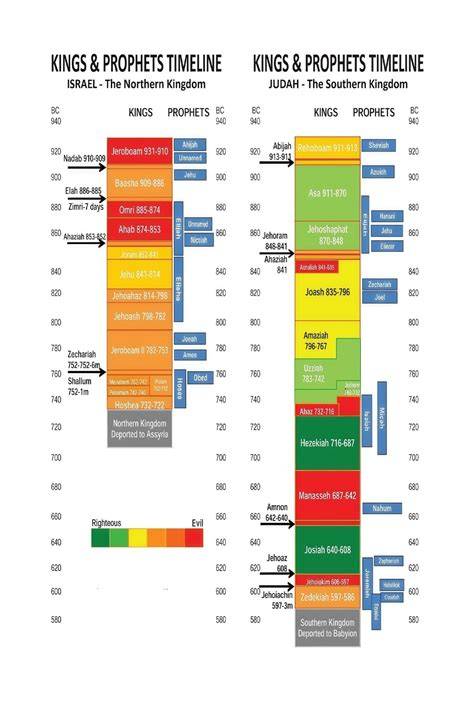
Israel’s role in God’s plan
Israel has always been God’s vehicle of world redemption (Romans 9:1-5). In a way, she is God’s microphone, the means by which He speaks to a lost world.
Moreover, she has birthed all God’s covenants into the world and has now come back to her ancient homeland, by the promise of the Abrahamic Covenant, to birth the final great covenant of history, the Davidic Covenant.
Herein lies the ultimate purpose of her modern-day restoration. Jesus will return to Zion as the “Root and Offspring of David” (Revelation 22:1-6; Psalm 2:1-12; Psalm 72:5-11).
The purpose of Israel’s election is not that Israel is perfect, but that God works through an imperfect people to reveal His faithfulness and bring blessing to the nations.
Replacement theology and antisemitism
Replacement theology has often been connected to Christian anti-Semitism, although theological systems and historical movements must be examined carefully rather than treated as identical in every case.
From the subsequent step, “the Jews killed Christ,” the next logical step would be “God hates the Jews and has revoked His promises to them.”
The belief that the Jews are solely responsible for the death of Jesus is refuted by Acts 4:27, which identifies a conspiracy involving Herod, Pontius Pilate, Gentiles, and Jews. Furthermore, all people are accountable for Jesus’ death as we have all sinned (Romans 3:23).
Christ died for all sinners (1 Corinthians 15:3). Even theologically speaking, blaming only the Jewish people for Christ’s death -which needed to happen for our own sake- is to miss the point.
As the Middle Ages drew to a close, the situation escalated due to the rise of medieval art, particularly paintings of Biblical narratives. In these artworks, Jewish individuals were often portrayed as sinister figures in league with the devil, collectively scheming to execute Christ.
This characterization branded them as “Christ killers,” further perpetuating antisemitic stereotypes.
The Jewish-Israeli Messiah, Yeshua, has been replaced with a gentile, Europeanized Jesus. This alteration skews our perception of these historical figures. It symbolizes the cultural and theological shift in the church regarding Israel.
How Romans 9-11 challenges replacement theology
Much like Acts, in Romans 9-11, Paul puts Israel as the central theme. The covenant God made with Abraham, promising to bless the whole world through his descendants and give them the land of inheritance, is still expected to be fulfilled in the future.
The salvation of Israel is national and includes the return to the land from exile, repentance, forgiveness, and the restoration of the kingdom of God the way it ought to be.
Regardless of what that might look like in reality or if some of it is figuratively speaking, the fact remains that God is not yet done with Israel.
Israel was chosen as God’s people to be a witness, not of their perfection but of a relationship between imperfect people and a perfect God (Isaiah 43:10-12). This calling, which is “irrevocable” (Romans 11:29), is meant to show that God loves and works through imperfect people.
Secondly, in contradiction to Replacement Theology, the Bible affirms that God has not rejected the Jews due to their unbelief. In Romans 3:1-4, Paul declares that Israel’s rejection of Jesus has not invalidated God’s faithfulness to His promises.
In Romans 11:1-2 Paul testifies that he himself is proof God did not forsake Israel because he himself a Jew who follows Jesus. The survival of the Jewish people is therefore understood by this perspective as a testimony to God’s continuing faithfulness rather than as evidence that Israel has disappeared from biblical history.
Different Christian interpretations of the same passages
Replacement theology is not based on one isolated verse. It is a theological framework that combines passages about the new covenant, the inclusion of the Gentiles, the people of God, Abraham’s seed, the kingdom, and the relationship between Israel and the church.
Its opponents argue that these passages establish inclusion without replacement, spiritual blessing without cancellation of national promises, and continuity without confusion between Israel and the church.
Some New Testament scholars contend that the early Christian texts commonly used to support supersessionism would not have been understood by their original audiences as arguments for what would later be identified as replacement theology.
Consequently, interpretation depends on how a reader understands covenant continuity, biblical typology, the meaning of “Israel,” the land promises, the new covenant, and prophetic passages concerning restoration.
How to read the relevant Bible passages
We should interpret Scripture by the nature of the text. If it is literal, then we should interpret it literally, but if it is spiritual or figurative, then we should respond accordingly.
For instance, Jesus said, “I am the Door!” Does this mean He actually is a door? Of course not! The context is clearly figurative and needs to be interpreted as such.
We are therefore not committed to any singular form of biblical exposition - literal or figurative - but rather to the context. This will determine our style of exposition and therefore we uphold the integrity of Scripture and its authority.
One interpretive approach understands the land, kingdom, and restoration promises as fulfilled spiritually in the church. Another understands the spiritual fulfillment in Christ and the church as compatible with a future national fulfillment for Israel.
The key disagreement is therefore not whether Gentiles receive salvation and blessing through Christ. Both sides affirm that salvation is through Christ for Jews and Gentiles alike. The disagreement concerns whether the inclusion of the church cancels, transforms, or leaves intact God’s specific promises to Israel.
tags: #replacement #theology #verses