The Feast of Saint John Vianney is celebrated on August 4, the anniversary of his death in 1859. Also known as the Curé d’Ars, he is the patron saint of parish priests and confessors, remembered for his humility, extraordinary dedication to the Sacrament of Reconciliation, perseverance in prayer, fasting, and pastoral service.
Saint John Vianney’s feast day offers an opportunity to pray for priests, encourage vocations, learn about the sacrament of confession, and reflect on how a life centered on God can transform an entire community. In 2025, the Church also commemorated the 100th anniversary of his canonization.
Who Was Saint John Vianney?
John Vianney, born Jean-Marie-Baptiste Vianney, was a French Catholic priest who served almost forty-two years as parish priest of Ars, France. Catholics remember him for his saintly life, mortification, persevering ministry in the Sacrament of Confession, ardent devotion to the Blessed Virgin Mary, and radical spiritual transformation of the parish entrusted to him.
He was born on May 8, 1786, in Dardilly, near Lyon, France, and was baptized the same day. He was the fourth of six children born to Matthieu and Marie Vianney. His family was “poor in material possessions but rich in humanity and in faith,” Pope Benedict XVI once said.
| Fact | Information |
|---|---|
| Also known as | Curé d’Ars |
| Born | May 8, 1786, Dardilly, France |
| Died | August 4, 1859, Ars-sur-Formans, France |
| Ordained a priest | August 12, 1815 |
| Beatified | January 8, 1905, by Pope Pius X |
| Canonized | May 31, 1925, by Pope Pius XI |
| Feast day | August 4 |
| Patron saint of | Parish priests and confessors |
| Major shrine | Shrine of Saint John Vianney, Ars-sur-Formans, France |
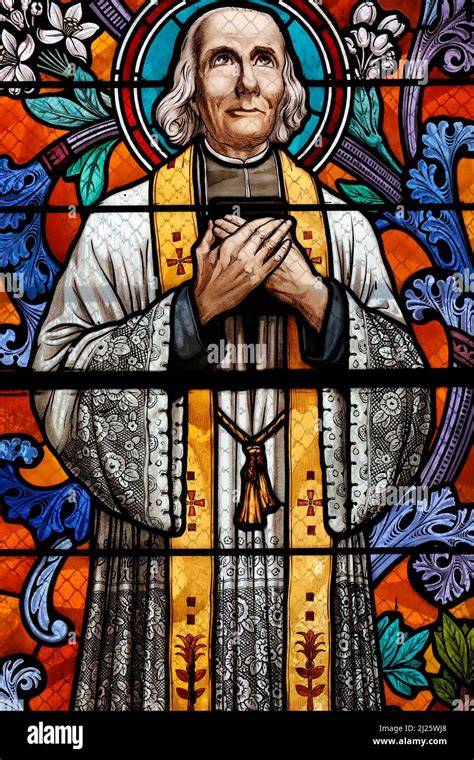
| Symbols | Cassock, surplice, preaching bands, stole, rosary, crucifix, and Bible |
Saint John Vianney’s Early Life
John Vianney grew up during the tumultuous aftermath of the French Revolution, when practicing the Catholic faith often required courage and secrecy. During the anticlerical Terror phase of the French Revolution, priests who remained loyal to the Church were forced to hide in order to celebrate the sacraments.
At the Vianney farmhouse near Dardilly, fugitive priests were offered refuge. The Vianney family traveled to distant farms to attend Masses celebrated by priests who risked their lives day by day. Realizing the danger they faced, Vianney began to look upon these priests as heroes.
He received his First Communion catechetical instruction in a private home from two nuns whose communities had been dissolved during the Revolution. At thirteen years old, John made his First Communion in a neighbor’s kitchen, while the windows were covered so that the light of the candles could not be seen from outside.
John was raised in a Catholic home, and the family often helped the poor. His family also housed Saint Benedict Joseph Labre when he made his pilgrimage to Rome. While tending his father’s sheep, John fashioned a small statue of Our Lady out of clay and hid it in the hollow of an old tree with this petition: “Dear Lady Mary, I love you very much; you must bring Jesus back to His tabernacles very soon!”
His Call to the Priesthood
In 1802, the Catholic Church was reestablished in France, and religious freedom and peace spread throughout the country. When he was twenty years old, John was allowed to leave the family farm to study at a “presbytery school” in Écully, conducted by Abbé Balley.
There he studied arithmetic, history, geography, and Latin. Because his education had been disrupted by the French Revolution, he struggled in his studies, particularly with Latin. His failure to comprehend Latin lectures forced him to discontinue, but his vision of becoming a priest urged him to seek private tutoring.
John almost became a farmer instead of a priest. Despite his limited formal schooling and difficulties understanding theology, he worked hard to learn. Father Balley recognized his piety and sensed that his devotion compensated for his academic limitations.
On a visit to his aunt at Écully, John listened to her praise of Father Balley and sought the priest’s advice regarding his vocation. Although John was unable to answer questions about earthly science, his face became luminous with lively interest when Father Balley asked him questions from the catechism. He answered every question correctly and in a manner beyond his years. The amazed pastor took this evidence as a sign from heaven and prophesied, “You will become a priest!”
Military Service and Interrupted Studies
Vianney’s studies were interrupted in 1809, when he was drafted into Napoleon Bonaparte’s armies. He would normally have been exempt as an ecclesiastical student, but Napoleon had withdrawn the exemption in certain dioceses because he needed more soldiers in his fight against Spain.
Two days after reporting at Lyons, John became ill and was hospitalized. During this time, his draft left without him. After he was released from the hospital, he was sent to Roanne for another draft.
He went into a church to pray and fell behind the group. A young man volunteered to guide him back to his unit, but instead led him deep into the Forez mountains, to the village of Les Noes, where deserters had gathered.
Vianney lived there for fourteen months under the name Jerome Vincent. Under that name, he opened a school for the children of the nearby village. He hid when gendarmes came in search of deserters, sometimes concealing himself inside stacks of fermenting hay in a barn.
An imperial proclamation in March 1810 granted amnesty to all deserters, enabling Vianney to return legally to Écully and resume his studies. He was tonsured in 1811, attended the minor seminary at Verrières-en-Forez in 1812, and was later sent to the major seminary at Lyons.
Considered too slow in his studies, he was returned to Father Balley. Balley persuaded the vicar general that Vianney’s piety was great enough to compensate for his ignorance. Vianney received minor orders and the subdiaconate on July 2, 1814, was ordained a deacon in June 1815, and was ordained a priest on August 12, 1815, at the Couvent des Minimes de Grenoble.
He celebrated his first Mass the next day and was appointed assistant to Father Balley in Écully. As he began his priestly ministry, he prayed, “Here is your priest, O Blessed Mother! Stay close to me. Help me to be a good priest!”
The Curé d’Ars
In 1818, shortly after the death of Father Balley, Vianney was appointed parish priest of Ars, a rural village of 230 inhabitants. When his bishop first assigned him to Ars, Vianney became lost while trying to find the town. A young shepherd named Antoine Givre, tending flocks in the fields, pointed him in the right direction.
“Curé” is French for “pastor,” and Ars was the French village where he served. The title Curé d’Ars therefore means “Pastor of Ars” or “Parish Priest of Ars.”
When Father Vianney arrived, he found a community where faith had grown cold. The Church stood nearly empty, and many people had fallen away from the sacraments. The aftermath of the French Revolution had produced religious ignorance and indifference.
Many people worked in their fields, danced, or drank in taverns on Sundays. Vianney spent much time in the confessional and preached against blasphemy and profane dancing. If parishioners did not give up dancing, he refused them absolution.
Through his deep commitment to morning prayer, fasting, and tireless pastoral work, he gradually transformed the small village into a place of profound spiritual renewal. He preached, taught the catechism, visited the sick, guided penitents, and devoted himself to reconciling people with God.
With Catherine Lassagne and Benedicta Lardet, he established La Providence, a home for girls. Only a man of vision could have such trust that God would provide for the spiritual and material needs of all those who came to make La Providence their home.
His Ministry in the Confessional
Saint John Vianney’s work as a confessor became his most remarkable accomplishment. As his reputation grew, pilgrims began traveling from across France to seek his guidance. People went to Ars to encounter the Curé d’Ars, hear him preach, and go to confession.
He spent at least eleven or twelve hours a day in the confessional during the winter and up to sixteen hours during the summer. In his later years, he often spent sixteen hours daily in the confessional, beginning before dawn and continuing until late evening.
Day after day and year after year, he listened to the challenges and heartaches with which people were struggling and gave deeply personal answers to their deeply personal questions. It was an extraordinary ministry of grace and mercy.
The Curé d’Ars possessed a remarkable ability to read souls, sometimes seeming to know penitents’ sins before they spoke them. This gift enabled him to offer personalized and profound guidance, addressing each person’s specific needs and offering comfort and encouragement.
Yet it was his profound compassion, a reflection of God’s own mercy, that drew thousands to the remote French village. Through his ministry in the confessional, countless souls experienced healing, forgiveness, and conversion.
Saint John Vianney believed that conversion from sin to grace represented “a greater miracle than what the Lord did to raise Lazarus!” His devotion to the Sacrament of Confession inspired many people to return to their faith and receive God’s forgiveness.
One account describes a woman who was devastated because her husband had committed suicide. She wanted to approach the great priest, but his line often lasted for hours and she could not reach him. In a moment of mystical insight, Vianney exclaimed through the crowd, “He is saved!”
The woman was incredulous, so the saint repeated, stressing each word, “I tell you he is saved. He is in Purgatory, and you must pray for him. Between the parapet of the bridge and the water he had time to make an act of contrition.”
Patron Saint of Parish Priests
Saint John Vianney is the patron saint of parish priests because of his extraordinary dedication to priestly ministry, particularly in the confessional. He showed that holiness and effective ministry come through devotion and prayer rather than intellectual brilliance alone.
In 1925, Pope Pius XI canonized John Vianney. In 1929, Pope Pius XI made him the patron saint of parish priests. He is also honored as the patron saint of confessors and diocesan priests.
During the Year for Priests, Pope Benedict XVI proclaimed him patron saint of all priests. In the Pope’s words, the Curé d’Ars was “a true example of a pastor at the service of Christ’s flock.”
Many seminaries, schools, churches, and other institutions are named in his honor. His legacy includes teaching and sharing the faith with many people while always pointing them toward Christ.
“Vianney was specific about Christ,” wrote George William Rutler in The Curé D’Ars Today. “He knew that great teachers pass on teachings, but that Christ passes on himself.”
Saint John Vianney and Prayer
The Curé d’Ars left profound insights about prayer that remain relevant today. He understood prayer not as a duty but as the very breath of spiritual life and the essential connection between the soul and God.
“Prayer is the inner bath of love into which the soul plunges itself,” he once said. This image reminds us that prayer is not only about asking for things but also about immersing ourselves in God’s presence and love.
Saint John Vianney taught that prayer requires perseverance: “The more you pray, the more you want to pray. It’s like a fish that starts by swimming near the surface of the water, then goes down deeper and plunges to the very depths.”
He also said: “Private prayer is like straw scattered here and there: If you set it on fire, it makes a lot of little flames. But gather these straws into a bundle and light them, and you get a mighty fire, rising like a column into the sky; public prayer is like that.”
His writing offers this reflection:
My children, your heart is poor and narrow; but prayer enlarges it, and renders it capable of loving God. Prayer is a foretaste of Heaven, an overflow of paradise. It never leaves us without sweetness. It is like honey descending into the soul and sweetening everything. Troubles melt away before a fervent prayer like snow before the sun. Prayer makes time pass away very quickly, and so pleasantly that one does not perceive how it passes….
A Prayer by Saint John Vianney
I love You, O my God, and my only desire is to love You until the last breath of my life. I love You, O my infinitely lovable God, and I would rather die loving You, than live without loving You. I love You, Lord and the only grace I ask is to love You eternally. My God, if my tongue cannot say in every moment that I love You, I want my heart to repeat it to You as often as I draw breath.
Prayer for Parish Priests
The Feast of Saint John Vianney is a reminder to offer prayers for priests in our own communities and throughout the world. We can pray for their holiness, perseverance, courage, health, and fidelity to their vocation.
We can also offer Masses, novenas, or the rosary for priests through Saint John Vianney’s intercession. A short prayer through his intercession is:
O holy Curé of Ars, St. John Vianney, you loved God and faithfully served Him by serving His people as their priest. Now, as you are with our Father, you can continue to serve Him by presenting our petitions to Him directly. Remember the vulnerabilities, fears, and anxieties that surround us and intercede for us in all our needs, especially….(here mention your own personal request). O Priest of Ars, pray for us in a special way during this novena, we ask in the name of Jesus our Lord. Amen.
On this feast day, families and parish communities can pray for their priests and for more holy vocations to the priesthood. Saint John Vianney once said, “The priesthood is the love of the heart of Jesus.”
Miracles and Spiritual Gifts
Many miracles were attributed to John Vianney during his lifetime and after his death. These included healing the sick and infirm, providing miraculous provisions for La Providence despite financial difficulties, and reading souls during confession.
He became a popular figure in France and beyond, with many people seeking his intercession for healing and other spiritual needs. Many people attribute their spiritual conversions and changed lives to his intercession and prayers.
Saint John Vianney was deeply devoted to Saint Philomena. He erected a chapel and shrine in her honor. When he later became deathly ill but miraculously recovered, he attributed his health to Saint Philomena’s intercession.
After his death, at least thirty physical miracles were attributed to his intercession, contributing to his canonization in 1925. The greatest miracle associated with his life, however, was often understood to be his Eucharistic way of living and his ceaseless service to sinners and saints in the sacred tribunal of penance.
Prayer, Fasting, and Spiritual Battles
Saint John Vianney’s ministry required severe fasting, short nights of sleep, and extraordinary physical sacrifice. He continued to fast and sacrifice for the sake of others, following the example of Jesus.
His simple and humble diet mainly consisted of boiled potatoes and bread, with occasional vegetables or eggs. He believed that fasting could purify the soul, draw a person closer to God, and become an offering for others.
As his fame spread, more hours were consumed in serving God’s people. He had no thoughts of retirement. The devil frequently disturbed even the few hours he allowed himself to sleep, and he became known as a holy priest.
Saint John Vianney yearned for the contemplative life of a monk and ran away from Ars four times, the last time in 1853. Each attempt was made with the intention of becoming a monk, but after the final attempt he decided that it was not to be.
The Final Years and Death
Saint John Vianney’s fame spread beyond France, and people from throughout Europe came to seek his spiritual guidance. By 1855, the number of pilgrims had reached 20,000 a year. So many people traveled to see him that the government built a railway line to carry passengers directly to Ars.
Despite his fame, physical ailments, exhaustion, spiritual battles, and desire for a more secluded life, he remained steadfast in his faith and continued to serve God’s people. He was a champion of the poor as a Franciscan tertiary and a recipient of the French Legion of Honour.
On August 4, 1859, Vianney died at the age of 73. The bishop presided over his funeral, which was attended by 300 priests and more than 6,000 people. Before he was entombed, his body was fitted with a wax mask.
Six years after his death, he left behind a legacy of faith and was remembered as a champion of the poor. He was proclaimed venerable by Pope Pius IX on October 3, 1874, beatified by Pope Pius X on January 8, 1905, and canonized by Pope Pius XI on May 31, 1925.
Why Is His Feast Day August 4?
The feast day of Saint John Vianney is August 4 because it is the anniversary of his death. His feast day was previously declared to be August 9, but it was changed twice before being placed on August 4.
In 1928, his feast was inserted into the General Roman Calendar for celebration on August 9. Pope John XXIII’s 1960 revision moved the feast to August 8, and the 1969 revision placed it on August 4, the day of his death.
Saint John Vianney is remembered in the Anglican Communion with a commemoration on August 4 as well.
Canonization and Church Recognition
In 1959, to commemorate the centenary of John Vianney’s death, Pope John XXIII issued the encyclical letter Sacerdotii Nostri Primordia, meaning “On the Priesthood’s Beginning,” about the Curé d’Ars.
Pope John XXIII wrote of Saint John Vianney’s impact: “It is said that St. John M. Vianney lived in the Church in such a way that he worked for it alone, and burned himself up like a piece of straw being consumed on fiery coals. May that flame which comes from the Holy Spirit reach those of Us who have been raised to the priesthood of Jesus Christ and consume us too.”
Pope John Paul II visited Ars in 1986 for the bicentenary of Vianney’s birth and referred to him as “a rare example of a pastor acutely aware of his responsibilities … and a sign of courage for those who today experience the grace of being called to the priesthood.”
In honor of the 150th anniversary of Vianney’s death, Pope Benedict XVI declared 2009-2010 a Year for Priests. The year began on the Feast of the Sacred Heart and placed Saint John Vianney before priests as a particular model and example.
On June 19, 2009, Pope Benedict XVI officially marked the beginning of the year dedicated to priests: “On the forthcoming Solemnity of the Most Sacred Heart of Jesus, Friday 19 June 2009-a day traditionally devoted to prayer for the sanctification of the clergy-I have decided to inaugurate a ‘Year of the Priest’ in celebration of the 150th anniversary of the dies natalis of John Mary Vianney, the Patron Saint of parish priests worldwide.”
The Shrine of Saint John Vianney in Ars
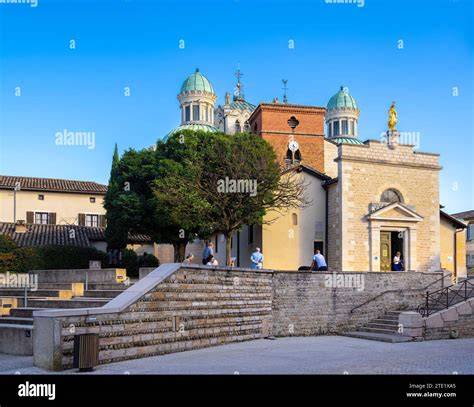
Saint John Vianney’s shrine is located in Ars, France, a small village about 25 miles north of Lyon. The Basilica of Ars contains his incorrupt body and has become a major pilgrimage site, especially for priests and people discerning vocations to the priesthood.
His modest rectory has been preserved, allowing pilgrims to see the simple conditions in which this great saint lived his extraordinary life. His relics are located in the Sanctuaire d’Ars, the Sanctuary of Ars, in France.
The Relic of His Heart
In November 2018, Saint John Vianney’s heart was transported to the United States for a six-month nationwide tour. The heart receives special veneration because in Scripture it is considered to be a person’s hidden center of emotional, intellectual, and moral activity.
Saint John Vianney is said to have lived his life according to the heart of Christ and united his heart to Christ. By the end of the tour, the relic had traveled almost 36,000 miles, or 58,000 kilometers, and was available for more than 1,200 hours of public veneration.
Symbols and Representations
Saint John Vianney is commonly represented wearing a cassock. Other symbols associated with him include a surplice, preaching bands, stole, rosary, crucifix, and Bible.
Images of him often emphasize his identity as a parish priest and confessor. His association with the confessional, rosary, and crucifix reflects his lifelong devotion to prayer, the sacraments, and the mercy of Christ.
How to Celebrate Saint John Vianney’s Feast Day
The feast day is a meaningful opportunity to show appreciation for priests and teach children about vocations, sacrifice, prayer, and the power of the sacraments. Families and parish communities can mark August 4 through prayer, service, learning, and acts of encouragement.
Pray for a Parish Priest
End the celebration with a simple family prayer for the parish priest and for more holy vocations to the priesthood. Pray daily that a friend, coworker, relative, or child may become Catholic or return to the practice of the Catholic faith.
Prayer is first because God is first. Turn to God, seek his will, and ask for his grace. The Collect for the Memorial of Saint John Vianney asks that “we may in charity win brothers and sisters for Christ and attain with them eternal glory.”
Make a Spiritual Bouquet
Children can prepare a spiritual bouquet and card for their priest by offering prayers and sacrifices for him. They can include a decade of the Rosary, a Mass intention, a sacrifice such as giving up screen time, or a special prayer for vocations.
Build a Church with Blocks or LEGO
Children can use blocks or LEGO bricks to build a small church, adding details such as a cross, altar, or confessional. As they build, families can discuss what makes a church holy and how priests help bring people closer to Jesus.
Learn About Saint John Vianney
Children can color a picture of Saint John Vianney while learning about his faithfulness, love for hearing confessions, and nickname “the saint who could read hearts.” A lesson about his life can also introduce the importance of perseverance when studies or responsibilities are difficult.
Share a French-Inspired Meal
Since Saint John Vianney was from France, families can enjoy simple French-inspired food such as croissants with jam, quiche, French bread with cheese, crêpes, or French-style hot chocolate.
Encourage Vocations
Saint John Vianney’s feast day can inspire families to speak openly about vocations and ask how God may be calling each person to serve. His life reminds us that a person’s calling may develop through obstacles, uncertainty, prayer, and trust.
The danger is that we can become so attached to our own plans that we cannot see God’s plan. We are surrounded by possibilities that only God can see. A useful question for prayer is: “What is God calling you to now?”
Frequently Asked Questions
What is Saint John Vianney known for?
Saint John Vianney is widely known and revered for his tireless dedication to hearing confessions and guiding people toward spiritual conversion. He spent long hours in the confessional, often sacrificing sleep and physical comfort to help others find peace with God.
His deep understanding of human nature and compassionate approach made him a beloved confessor. His life inspires priests through humility, selflessness, unwavering faith, and dedication to the Church.
Why is Saint John Vianney the patron saint of priests?
Saint John Vianney is the patron saint of priests because of his extraordinary dedication to priestly ministry, especially his ministry in the confessional. Despite academic struggles, he showed that holiness and effective ministry come through devotion and prayer rather than intellectual brilliance alone.
Pope Pius XI officially declared him the patron saint of parish priests worldwide in 1929.
What miracles is Saint John Vianney known for?
Saint John Vianney is associated with healing the sick and infirm, miraculous provisions for La Providence, spiritual conversions, and the ability to read souls during confession. After his death, at least thirty physical miracles were attributed to his intercession.
Saint John Vianney also believed that conversion from sin to grace was “a greater miracle than what the Lord did to raise Lazarus!”
Could Saint John Vianney read souls?
Many people who came to confession with Saint John Vianney reported feeling that he could see into their hearts and understand their deepest thoughts and struggles. This spiritual gift allowed him to provide personalized guidance, comfort, and encouragement.
What did Saint John Vianney eat?
Saint John Vianney was known for severe fasting and self-discipline. His diet mainly consisted of boiled potatoes and bread, with occasional vegetables or eggs.
He saw fasting as a way to purify the soul, draw closer to God, and offer physical hunger as a sacrifice for others.
What is another name for Saint John Vianney?
Saint John Vianney is also known as the Curé d’Ars, which translates as “Priest of Ars” or “Parish Priest of Ars.” The title refers to his pastoral role in the French village where he served for more than forty years.
What is the prayer of Saint John Vianney?
One of the best-known prayers attributed to Saint John Vianney is his Act of Love, which begins: “I love You, O my God, and my only desire is to love You until the last breath of my life.” The prayer expresses his love for God, desire to serve him, humility, and trust.
How old was Saint John Vianney when he died?
Saint John Vianney died at the age of 73 on August 4, 1859. He had spent more than forty years as the parish priest of Ars and continued serving his parishioners with dedication despite physical ailments and exhaustion.
What is special about Saint John Vianney?
Saint John Vianney’s profound humility, perseverance, prayer, fasting, compassion, and dedication to the Sacrament of Reconciliation make him a special model of priestly holiness.
Although he was known as a holy man and spiritual guide, he never considered himself worthy of such titles. He saw himself as an instrument in God’s hands and accepted praise as a reflection of God’s goodness.
Where is Saint John Vianney’s shrine?
Saint John Vianney’s shrine is in Ars-sur-Formans, France. The Basilica of Ars contains his incorrupt body, and the preserved rectory allows pilgrims to see the simple conditions in which he lived and served.
How can we pray through Saint John Vianney’s intercession?
We can ask Saint John Vianney to intercede for priests, confessors, seminarians, people discerning a vocation, and those seeking reconciliation with God. We can offer Masses, novenas, or the rosary for priests through his intercession.
Saint John Vianney, pray for us.