Testament’s controversies have centered mainly on two issues: whether the band should be regarded as the fifth member of thrash metal’s “Big Four” and the backlash that followed its decision to perform in Tel Aviv, Israel. In both cases, guitarist Alex Skolnick offered explanations that emphasized chronology, musical context, personal identity and the distinction between a country’s people, its symbols and its government.
Metallica, Megadeth, Slayer and Anthrax are the four thrash metal bands forever immortalised as the “Big Four”. But debate has raged for years as to whether certain other bands should be part of that cohort. Such names include Bay Area greats and Kirk Hammett’s former band Exodus, East Coast thrashers Overkill, and, arguably the band most commonly argued as the group’s fifth member, Testament.
Why Testament is often called the fifth member of the Big Four
Across their vast discography - comprising 14 studio albums released over the course of four decades - Testament have made a strong case for their title as the Big Four’s fifth member. The band became one of the most prominent acts associated with the next wave of American thrash metal, while maintaining a close connection to the scene that produced Metallica, Megadeth, Slayer and Anthrax.
However, in a new interview with The Classic Metal Show, guitarist Alex Skolnick explains why he believes the Big Four has always remained those four bands only. And the reason, he says, comes mostly down to timelines.
Alex Skolnick’s explanation: “the first four”
“I never give it much thought, because, to me, it’s not just the ‘Big Four’ - it’s the first four,” he says. “Those bands had albums out when Testament was still called Legacy and was still a local band that I used to hear about when I was in high school.”
“And they supported some of those bands, but all of the ‘Big Four’ bands had records out at the time that Legacy was still getting started. And by the time Legacy became Testament and released its first album, those bands all had several albums out. So you can’t really make the comparison.”
Skolnick’s argument is therefore based less on popularity or artistic quality than on chronology. Testament emerged after the four established acts had already released multiple records and built substantial careers, making a direct comparison between the two stages of development difficult.
“They were there. They were so much further along by the time we even got started. So I think it makes more sense to look at, okay, the next wave after the so-called ‘Big Four’ bands. And it’s an honour that people think - most of the time we’re one of those names. That’s great. I’ll take it.”
Testament’s place in the next wave
Skolnick makes clear that he and his bandmates don’t mind at all that they aren’t cited as a member of the Big Four. “I don’t know of anybody that has any issue with that,” he says. “[Nobody] says, ‘No, we should be in the Big Four.’ No, they’re the Big Four. All good. But we’ll proudly take our place in the next wave.”
This position presents Testament’s status as complementary rather than inferior. The band can be recognized as one of the most important thrash acts without changing the historical meaning of the term “Big Four”. In Skolnick’s interpretation, the phrase identifies the first four groups that had already established themselves before Testament had moved beyond its local Legacy period.
How the mid-to-late 1980s thrash scene actually felt
In a new interview with Tone-Talk, TESTAMENT guitarist Alex Skolnick was asked about the “vibe between thrash bands in the mid-to-late ’80s” and whether there was “major rivalry and competition among the bands or more camaraderie and encouragement”.
He responded: “Interesting question. I think overall more camaraderie and encouragement, because I don’t think any of the bands ever sounded the same. I grew up listening to EXODUS and early METALLICA. I discovered METALLICA. They were already touring for the first record.”
“By the time I played on my first record, METALLICA was off to the races; they were already on ‘Master Of Puppets’. SLAYER had a few records out; I think ‘Reign In Blood’ came out the same year. ANTHRAX had a few records out; they’d already been through a couple singers. So all those bands - even MEGADETH had a couple records out - they were already off and running, so I never really saw them as competition.”
These recollections reinforce Skolnick’s distinction between the original leaders of the movement and the bands that arrived later. By the time Testament recorded its first album, Metallica, Slayer, Anthrax and Megadeth had already developed recognizable identities, released several albums or reached a significantly more advanced stage of their careers.
The brief rivalry involving Exodus and Legacy
Skolnick identified one specific moment when he did feel a sense of competition: the period when Exodus parted ways with singer Paul Baloff and recruited Steve “Zetro” Souza, who had been the vocalist of the pre-Testament band Legacy.
“I think the only time where I did feel a sense of competition was after I’d been in my band for about a year - yeah, I think it was just over a year - EXODUS parted ways with their singer [Paul Baloff], and they poached our singer [Steve ‘Zetro’ Souza, from the pre-TESTAMENT band LEGACY].”
“Gary Holt is a great friend - SLAYER [and] EXODUS guitarist Gary Holt - I’m actually reading his book [‘A Fabulous Disaster: From The Garage To Madison Square Garden, The Hard Way’] now, and I just got to the part where he’s talking about that. And I didn’t know this.”
“Apparently they had split from their singer, Paul Baloff - may he rest in peace - either way. We didn’t know that at the time, but at the time we thought, ‘Oh, they’re coming after our guy. They’re trying to be more like us.’ And so there was a little sense of competition.”
According to Skolnick, the apparent rivalry was tied to a specific personnel change rather than a general hostility between the bands. The situation felt personal because the two groups were connected through Souza, who had been part of Legacy before Testament adopted its name.
“But then we found a new guy - his name’s Chuck Billy, and he’s still in the band today. And it kind of made us sound really different, and we couldn’t have sounded like EXODUS.”
“And then they found a different sound once they had their singer, Steve ‘Zetro’ Souza, who had been in our band. So only for that time period, suddenly it felt, like, ‘Okay…’ It’s like a team. ‘Oh, they took our guy.’”
“But other than that, no - I think everybody that got along surprisingly well, especially for how crazy everybody was. It was kind of a hard-partying scene. [We were] young and wild… And everybody’s great friends now.”
Why Testament did not view the Big Four as direct competition
Skolnick’s account suggests that the band’s relationship with the Big Four was shaped by admiration and distance rather than an attempt to displace them. Metallica, Slayer, Anthrax and Megadeth were already “off and running” when Testament was still developing, so the younger band did not experience the same competitive conditions as groups that had begun at roughly the same time.
The distinction also helps explain why Testament can be both historically important and outside the original Big Four designation. The band’s influence, longevity and discography support its position as a leading thrash act, while its later arrival supports Skolnick’s view that it belongs to the next wave.
Testament’s two-guitar identity
Another part of Testament’s musical identity discussed by Skolnick is its two-guitar format. He was asked about his experiences of working in a two-guitar band and how he and fellow TESTAMENT guitarist Eric Peterson split guitar leads.
“Yeah, I think it’s different for everybody. There’s different types of two-guitar situations. I think for the genre that I came up in, which became known as thrash heavy metal, yeah, you had to have two guitars; it’s two-guitar music.”
“So all the essential thrash bands - I mean, METALLICA is not really a thrash band now; they’re mega supergroup, but they started out kind of leading this thrash movement with two guitars. MEGADETH, two guitars, SLAYER, two guitars, and it was modeled after groups like IRON MAIDEN and JUDAS PRIEST.”
Skolnick described several different models for two-guitar bands. “There’s some groups where you have - SCORPIONS, for example. You have one guy who’s just the rhythm guy, main songwriter, Rudolf Schenker. AC/DC [is] the same model.”
“And then you have other groups where you have somebody who’s, they’re the same ability [and] they play similar solo styles - IRON MAIDEN, JUDAS PRIEST - and it’s always different.”
“And then you have somewhere - MEGADETH is a good example where there’s a guy that’s very dedicated and more of a virtuoso player, but another guy that also plays solos - Dave Mustaine - and he’s got his own personality. And you have to figure out what type of group it is.”
How Skolnick and Eric Peterson divide guitar roles
“When we started out, Eric Peterson didn’t play many solos. He was more of influenced by groups like MOTÖRHEAD and VENOM and just sort of more raw, heavy stuff. And I was coming from [Eddie] Van Halen, Randy Rhoads; I’d studied with [Joe] Satriani.”
“But over the years he’s developed a style. So I think nowadays it’s a little more like MEGADETH, where he’s kind of like the raw player, but he’s got his sound and he’s like the Mustaine and I’m the Marty [Friedman] or the Kiko [Loureiro]. [Laughs]”
“And every song is different too. There’s certain songs where it fits to have one guy or to have another. If it’s a solo like ‘Practice What You Preach’, where it goes through a number of different keys and tempos and modes, that’s probably for me.”
“But then we’ve got some newer stuff, a song like one of the new singles, ‘Shadow People’, where it’s just this raw vamp, and he plays great over that. So, you have to evolve and you have to work it out.”
“You have to figure out, what kind of band are you? Are you the AC/DC type or the SCORPIONS type where it’s rhythm and lead guy, or is it two lead guys or is it somewhere in the middle? So it’s different for every band.”
Alex Skolnick’s background and career outside Testament
One of the elite breed of guitar shredders from the 1980s, Skolnick was famously a student of Joe Satriani, along with Steve Vai and METALLICA’s Kirk Hammett, and was even sought out by Ozzy Osbourne, playing a gig with the BLACK SABBATH legend in the U.K. in 1995.
Skolnick joined TESTAMENT in 1985 at the age of 16 and stayed with the band for eight years before leaving in 1993 and going on to study at the New School for Jazz and Contemporary Music.
Skolnick’s long-running Brooklyn, New York-based jazz-rock band ALEX SKOLNICK TRIO (AST) recently released its sixth album, “Prove You’re Not A Robot”, via Flatiron Recordings.
Alongside Skolnick’s inventive guitar work, bassist Nathan Peck and drummer Matt Zebroski bring rhythmic complexity and emotional depth, with odd-time signatures and genre twists that have become AST hallmarks.
Since forming in the early 2000s, AST has reimagined the jazz guitar trio, melding influences as far-reaching as Wes Montgomery, BLACK SABBATH, Prince, tango, calypso and Western swing.
Known for their adventurous covers of rock and metal classics, they’ve earned praise from outlets like Billboard, Downbeat, Jazziz, The Village Voice and NPR, and have toured internationally, captivating audiences from Norway’s Larvik Guitar Festival to Paris’s The Olympia and New York’s Radio City Music Hall.
In addition to playing with ALEX SKOLNICK TRIO and TESTAMENT, he has worked as a sideman with such artists as vocalist Ishtar of the French band ALABINA and Jewish folk singer Debbie Friedman. He’s also guested on an album from RODRIGO Y GABRIELA.
What caused the Testament controversy in Tel Aviv
Testament have come under fire from some of the band’s fans for deciding to play a show in Tel Aviv, Israel earlier this week. The controversy started when guitarist Eric Peterson posted a photo on Instagram in which he and bassist Steve Di Giorgio can be seen posing with several women in the Israeli military.
For those unaware, Israeli citizens [with some exceptions] are required to serve in the military after they turn 18; two years and eight months of service for men, and two years for women.
Di Giorgio shared the post on both his Instagram and Facebook profiles, resulting in a whole lot of opportunity for internet outrage. Predictably, the photo sparked an outcry from fans who accused both Peterson and Di Giorgio of glorifying Israeli’s use of military force and violence against Palestinians.
Fans also questioned the band’s decision to play in Israel at a time when some very high-profile international artists have taken up a performance boycott in the country.
Alex Skolnick’s response to the backlash
Alex Skolnick, ever the intellectual (and himself of Jewish heritage), stepped into the fray last night to play mediator, issuing one of the most well-reasoned, thoughtful responses to ANY political issue I’ve seen in some time in the metal world.
The tl;dr version is this: his bandmates should’ve known what they were getting into by posting/sharing that photo so the backlash they received is on them, but passionate Israeli metalheads deserve the opportunity to see Testament live in spite of their government’s policies (which they likely don’t even agree with).
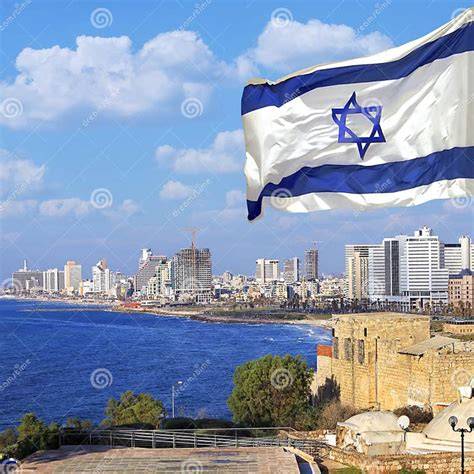
Skolnick explained that the band holding an Israeli flag should not be viewed as support for the occupation or seen as them being Zionist sympathizers. The move was not one made with political intent or motivation.
“Great night in Tel Aviv! First time, amazing crowd. Looking forward to next time!”
“I wish that were all that needs to be said. However. Unlike a couple bandmates of mine - thrown for a loop by the subsequent rage-comments underneath pics of themselves posing with a team of young Israeli women in uniforms fulfilling their required service in the IDF - I’m anticipating blowback.”
“Now before you launch into accusations of my being a ‘supporter of the occupation,’ ‘Zionist sympathizer,’ etc. let’s look at a few things that are simultaneously true:”
The Star of David as both national and Jewish symbol
“The symbol within this flag - the Star of David - is both a symbol of the Nation of Israel and a symbol of Jewish heritage. One can be proud of the star within and simultaneously feel appalled by some actions by the State of Israel and the behavior of certain segments of the population - I am and I do.”
Skolnick’s point was that the Israeli flag can carry more than one meaning. In his explanation, the Star of David may represent the State of Israel while also referring to Jewish cultural and historical identity, allowing a person to recognize one meaning without endorsing every action associated with the other.
His criticism of cultural boycotts
“One can be a massive fan of Pink Floyd’s Roger Waters as a musician - I am - yet still consider his call for a ‘cultural boycott’ of Israel - and thus depriving its general population of music (which can be the best voice for change) - among the worst ideas you’ve ever heard - I do.”
“A pop artist who recently bowed to pressure from Waters - Lorde - canceled an Israel date yet went ahead with a concert in the Philippines on the same tour just after their leader, Duterte, committed a massacre of civilians there, highlighting the selectiveness of Waters & the BDS movement.”
Skolnick’s argument was that cultural performances should not automatically be treated as endorsements of a government. He presented music as a possible means of communication and change, rather than as an activity that should necessarily be withdrawn from a country’s general population.
The difference between a government and its people
“A flag can be both a symbol of a nation’s government and a symbol of that nation’s people. ‘The People’ includes those who oppose their own government (including the Likud party and Prime Minister Benjamin Netanyahu - whom I too oppose with a vengeance).”
“However, all the people should not be judged by the worst transgressions of their own government - I’m not too keen on all the things done in the name of my country’s flag (preemptive war, Japanese internment, Indian displacement, slavery. I could go on) but it’s still my flag.”
In this part of his statement, Skolnick separated national symbols from complete political agreement. His position was that citizens should not automatically be treated as responsible for every policy or action carried out by their government, including people who actively oppose that government.
Jewish identity and the meaning of the Star of David
“One can be Jewish culturally and genetically (I am) without being religious (I’m not). On the flip side, one can also be of a non-Jewish ethnic background and convert to Judaism religiously (I know folks who fit this description).”
“Regardless, the Star of David represents all Jewish heritage, cultural, genetic, and/or religious. So when the Star of David is disparaged (such as Waters’ placing it on the flying pig in his concerts,) even if the intended reference is the State of Israel, it is an insult to all of Jewish heritage and its most charitable description: ignorance.”
Skolnick’s explanation framed the symbol as connected to Jewish heritage in several forms, including cultural, genetic and religious identity. He argued that criticism directed at the symbol could therefore be experienced as criticism of Jewish heritage itself, even when the intended target is the State of Israel.
Accepting criticism from opposing sides
“One can wade into these issues knowing it will piss off folks on all sides, friends, fans and otherwise. And one can decide to go ahead and do so anyway.”
“Shalom/Salam/Peace”
The Tel Aviv performance and the disputed photographs
The March 27 show marked the first time the band has played in Tel Aviv. The band also posed for photos with some Israeli girls who were fans of the group.
That shot can be seen below via Eric Peterson’s Instagram account. The photographs became the immediate focus of the backlash because the women were wearing Israeli military uniforms, while the band’s appearance in the country was already taking place within a wider debate about performance boycotts and Israel’s treatment of Palestinians.
Skolnick’s response did not deny the political sensitivity of the photographs. Instead, it attempted to distinguish the musicians’ contact with Israeli fans and the use of an Israeli flag from direct support for the occupation, Zionism or every policy of the Israeli government.
The broader argument over artists performing in Israel
The controversy reflected a larger disagreement about whether international artists should perform in Israel during periods of intense political conflict. Some fans viewed the show and the photographs as normalizing or glorifying Israeli state violence, while Skolnick argued that Israeli metal fans should not be denied access to live music because of government policies they may not support.
As someone who currently lives in a country in which I’m “appalled by some actions” of our leaders and government, I can totally relate: Americans have a horrible reputation abroad because of our current administration, but the views of that administration most certainly do not represent all of this country’s people.
Further, it’d be incredibly twisted logic if bands from other countries decided not to play the U.S. in protest of our government’s policies; those two things are not related. If anything, like Alex is saying, music can be the best voice for change.
Finally, how perfect is Skolnick’s closing statement? Standing up, knowing full well it’s a dicey topic, going for it anyway and accepting responsibility, Thank you, Alex.
Testament’s continuing position in thrash metal
Testament’s place in thrash metal remains substantial even without formal inclusion in the Big Four. The band’s 14 studio albums, four decades of activity and association with the Bay Area scene have made it one of the most frequently proposed additions to the original group.
Skolnick’s own comments present that distinction as a matter of historical sequence rather than a judgment that Testament lacks importance. Metallica, Megadeth, Slayer and Anthrax were already established when Legacy was still a local band, while Testament later became part of the next wave that expanded the genre’s reach and continued its development.
Testament have a North America tour planned across March and April 2026. Aptly titled Thrash of the Titans, the trek will see the metallers take out support acts Overkill and German thrash metal outfit Destruction.
Testament – "Practice What You Preach" live, Summer Breeze Festival l 2019 | Rockpalast
tags: #testament #band #controversy