Christians do not mourn as those who have no hope because Jesus Christ died and rose again, and God will bring with Him those who sleep in Jesus. The grief of believers is real, but it is not hopeless: death is not the final defeat, the irreversible end of a relationship, or the last word.
In 1 Thessalonians 4:13-18, Paul explains that believers who have died will not be forgotten or left behind at Christ’s coming. The dead in Christ will rise first, living believers will be caught up together with them to meet the Lord in the air, and all will always be with the Lord.
The NKJV Passage: 1 Thessalonians 4:13-18
“But I do not want you to be ignorant, brethren, concerning those who have fallen asleep, lest you sorrow as others who have no hope. For if we believe that Jesus died and rose again, even so God will bring with Him those who sleep in Jesus.
For this we say to you by the word of the Lord, that we who are alive and remain until the coming of the Lord will by no means precede those who are asleep. For the Lord Himself will descend from heaven with a shout, with the voice of an archangel, and with the trumpet of God. And the dead in Christ will rise first.
Then we who are alive and remain shall be caught up together with them in the clouds to meet the Lord in the air. And thus we shall always be with the Lord. Therefore comfort one another with these words.”
What Does “We Do Not Mourn as Those Without Hope” Mean?
The apostle Paul writes to a group of Thessalonian believers, many of whom are troubled and grieving over the deaths of fellow believers: “But I do not want you to be ignorant, brethren, concerning those who have fallen asleep, lest you sorrow as others who have no hope” (1 Thessalonians 4:13, NKJV).
Paul acknowledges the reality of their sorrow in the face of loss yet draws a distinction between the grief experienced by Christians and that endured by nonbelievers, or those “who have no hope.” Paul does not deny the pain of grief. Mourning the loss of a loved one is a natural human response to death.
Our faith in Jesus does not mean we should suppress or ignore these painful emotions. Indeed, Jesus wept at the tomb of His friend Lazarus (John 11:35). But Paul desires to comfort the grieving Thessalonians by reorienting their perspective, tempering their sorrow with hope.
Christian Grief Is Real
The phrase “do not mourn as those without hope” does not command Christians to avoid mourning. It does not mean that faith removes tears, sadness, longing, or the pain of separation. The death of a loved one remains a profound loss, and sorrow is a natural human response to death.
Jesus Himself wept at Lazarus’s tomb, even though He knew that Lazarus would be raised. His tears show that confidence in resurrection does not make human grief artificial or sinful. Christian hope does not require emotional denial; it gives grief a different foundation and a different destination.
Christians still grieve, but their sorrow is not like the mourning of those who have no hope of resurrection and eternal life. Believers can face death with hope. They can endure separation and loss with hope.
The Difference Between Grief With Hope and Grief Without Hope
Paul contrasts two kinds of grief. Grief without hope is the sorrow that fills people who see death as the ultimate defeat, the irreversible end of a relationship, and a meaningless loss. Grief without hope leaves nothing but memories and a sense of absence that cannot be filled.
By contrast, grief with hope is the sorrow experienced by those who trust in Christ’s promises. While the pain of separation is real, it is reshaped by the expectation of reunion, restoration, and resurrection.
| Grief without hope | Grief with hope |
|---|---|
| Views death as the ultimate defeat | Trusts in Christ’s victory over death |
| Sees death as the irreversible end of a relationship | Looks forward to reunion, restoration, and resurrection |
| Leaves only memories and an unfillable absence | Is sustained by the promise of eternal life with God |
| Has no expectation beyond the present life | Is anchored in Jesus and His promised return |
The believer’s grief, though heartrending, is suffused with the light and color of “a living hope” (1 Peter 1:3-4), a “hope that will not lead to disappointment” (Romans 5:5, NLT), a hope that is “a strong and trustworthy anchor for our souls” (Hebrews 6:19-20, NLT), that is, “Christ in [us], the hope of glory” (Colossians 1:27).
Why Paul Wrote to the Thessalonians
Many of the early Gentile converts carried baggage from a pagan worldview that considered death to be the final, hopeless end. In the ancient Greco-Roman world, the afterlife was either uncertain or perceived as a shadowy existence. Most unbelievers anticipated death with a sense of dread.
Likewise, many of the fledgling Thessalonian Christians were still uninformed about what would happen to believers who died before Christ’s return. They assumed these individuals would miss out on the promised resurrection and eternal life.
Thus, Paul writes to reassure them that those who had “fallen asleep”-a biblical metaphor for physical death-would not be left behind. Paul explains that both the living and the dead in Christ will participate in the events surrounding the rapture (1 Thessalonians 4:14-17).
The hope of resurrection life was as real and secure for them as for those still living (see also 1 Corinthians 15:20-22; John 5:24-29). Even after a Christian’s physical body has perished, that person is still “in Christ.” Once we belong to Jesus, nothing-not even death-can separate us from Him (see John 10:28-29; Romans 8:38-39).
“Those Who Have Fallen Asleep”
In the passage, Paul repeatedly uses the expression “those who have fallen asleep” and refers to “those who sleep in Jesus.” This language describes the physical death of believers without presenting death as the end of their existence or hope.
The metaphor of sleep points to the temporary character of death in view of the resurrection. A Christian’s physical body may perish, but the believer remains “in Christ.” Death cannot undo belonging to Jesus, cancel God’s promise, or exclude a believer from the resurrection.
Paul’s purpose is to assure the Thessalonians that Christians who have died will participate fully in Christ’s return. They will not miss the promised resurrection, and living believers will not gain an advantage over them.
The Foundation of Christian Hope: Jesus Died and Rose Again
The central foundation of Paul’s teaching is the resurrection of Jesus: “For if we believe that Jesus died and rose again, even so God will bring with Him those who sleep in Jesus.” Christian hope is not based on optimism, human progress, or an uncertain idea about the afterlife.
It is grounded in a historical and saving event: Jesus died and rose again. Because Christ has been raised, the resurrection of His people is certain. The future of believers is connected to the victory already accomplished by Jesus.
For “we know that God, who raised the Lord Jesus, will also raise us with Jesus and present us to himself along with” every born-again Christian, even those who have already passed from this life (2 Corinthians 4:14, NLT).
Death is not the end for us (Romans 8:11). Jesus Christ defeated death (see Romans 6:9; Hebrews 2:14-15; 1 Corinthians 15:54-57). Christians do not sorrow as those who have no hope because our Savior “broke the power of death and illuminated the way to life and immortality through the Good News,” which is the message of salvation in Jesus Christ (2 Timothy 1:10, NLT).
What Happens at the Coming of the Lord?
Paul presents a sequence of events connected with the coming of the Lord. The Lord Himself will descend from heaven with a shout, with the voice of an archangel, and with the trumpet of God.
The dead in Christ will rise first. Then living believers will be caught up together with them in the clouds to meet the Lord in the air. The passage emphasizes that believers who are alive at the Lord’s coming will by no means precede those who are asleep.
- The Lord Himself will descend from heaven.
- There will be a shout, the voice of an archangel, and the trumpet of God.
- The dead in Christ will rise first.
- Living believers will be caught up together with the resurrected believers.
- They will meet the Lord in the air.
- All believers will always be with the Lord.
Paul explains that both the living and the dead in Christ will participate in the events surrounding the rapture (1 Thessalonians 4:14-17). The dead in Christ will rise first, and the living will be caught up together with them.
Our risen Savior will return for His own one day, bringing with Him all believers who have died, and He will transform their dead bodies and our dying bodies into bodies that will live with Him forever (see 1 Corinthians 15:51-54).
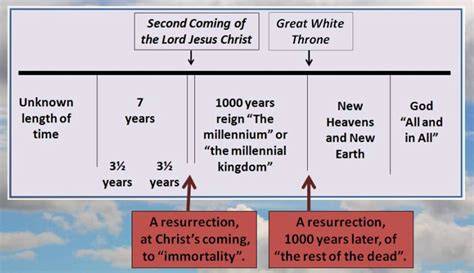
The Dead in Christ Will Rise First
Paul’s words directly address the concern that the Thessalonians had about believers who died before Christ’s return. The dead in Christ will rise first. They will not be disadvantaged by having died before the coming of the Lord.
For this we say to you by the word of the Lord, that we who are alive and remain until the coming of the Lord will by no means precede those who are asleep. The order described by Paul assures grieving believers that those who have died in Christ will be included in the Lord’s coming and will rise first.
The resurrection hope was as real and secure for believers who had died as it was for those who remained alive. The Christian’s physical death does not remove that person from Christ or from the promise of resurrection life.
“Caught Up Together With Them”
After the dead in Christ rise, living believers will be caught up together with them in the clouds to meet the Lord in the air. The word “together” is important to Paul’s comfort: the living and the resurrected believers will share in the meeting with Christ.
The passage does not describe a permanent separation between Christians who die before the Lord’s coming and Christians who are alive when He comes. Instead, it describes their gathering together in the presence of the Lord.
Then we who are alive and remain shall be caught up together with them in the clouds to meet the Lord in the air. And thus we shall always be with the Lord.
The Promise of Being With the Lord Forever
The ultimate comfort in the passage is not merely the sequence of future events but the personal presence of Jesus: “And thus we shall always be with the Lord.” The promise is permanent fellowship with Christ.
Believers who mourn can look forward not only to resurrection but also to everlasting life with the Lord. The future hope of Christians is not simply continued existence; it is being with Jesus forever.
Jesus left us with these wonderful words of hope: “I am the resurrection and the life. Anyone who believes in me will live, even after dying. Everyone who lives in me and believes in me will never ever die” (John 11:25-26, NLT).
Once we belong to Jesus, nothing-not even death-can separate us from Him (see John 10:28-29; Romans 8:38-39). Our hope for a future resurrection and eternal life with God is secure.
Hope Does Not Eliminate Sorrow
The believer’s hope does not eliminate sorrow but redefines it, sustaining us with the assurance that a reunion awaits us in glory. Christians still feel the pain of separation, but they do not regard the grave as the final word.
Faith does not make loss insignificant. It declares that loss is not ultimate. Grief remains, but it is held within the larger promise of resurrection, restoration, and eternal life with Christ.
Paul desires to comfort the grieving Thessalonians by reorienting their perspective, tempering their sorrow with hope. In view of Christ’s resurrection and promised return, believers can experience profound hope even in the midst of loss.
Christ’s Resurrection Changes the Meaning of Death
Jesus Christ defeated death (see Romans 6:9; Hebrews 2:14-15; 1 Corinthians 15:54-57). His resurrection means that death does not have the final authority over those who belong to Him.
Because Jesus died and rose again, believers can trust that God will bring with Him those who sleep in Jesus. The resurrection of Christ is the guarantee that death will ultimately be overcome for His people.
Christians do not sorrow as those who have no hope because our Savior “broke the power of death and illuminated the way to life and immortality through the Good News,” which is the message of salvation in Jesus Christ (2 Timothy 1:10, NLT).
How This Hope Comforts the Grieving
The promise of 1 Thessalonians 4:13-18 gives believers several forms of comfort. It assures them that Christian loved ones who have died are not forgotten, that death does not separate them from Christ, that the dead in Christ will rise, and that all believers will be with the Lord forever.
- God does not leave believers uninformed. Paul teaches Christians what happens to those who die in Christ.
- Christian grief is not hopeless. Believers sorrow, but their sorrow is shaped by resurrection hope.
- Those who have died in Christ will not be left behind. The dead in Christ will rise first.
- Living and resurrected believers will be gathered together. They will meet the Lord in the air.
- The final promise is permanent fellowship with Jesus. Believers will always be with the Lord.
- These words are meant to be shared. Paul commands believers to comfort one another with them.
“Therefore Comfort One Another With These Words”
Paul ends the passage with a direct command: “Therefore comfort one another with these words.” The truth about Christ’s return, the resurrection of the dead in Christ, and the everlasting presence of the Lord is intended to strengthen the church.
Christian comfort is not based on vague encouragement or sentimental memories. It is based on the word of the Lord, the death and resurrection of Jesus, the promised return of Christ, and the certainty that believers will always be with Him.
The Thessalonians needed this comfort because they were grieving. Paul did not rebuke them for feeling sorrow. He gave them truth strong enough to carry their sorrow and instructed them to give that same comfort to one another.
Rapture and Resurrection (1 Thessalonians 4:13–18) | John MacArthur
Living in the Light of Christ’s Return
The hope of Christ’s coming is not meant to encourage passivity or speculation. It gives believers an eternal perspective in the middle of ordinary life, suffering, grief, and death.
In view of Christ’s resurrection and promised return, believers can experience profound hope even in the midst of loss. Depending on how much we are yearning and excited to be with our Jesus, our daily decisions in our lives can be changed.
The promise that believers will always be with the Lord calls Christians to live with confidence, faithfulness, and mutual encouragement. The future presence of Christ strengthens believers in the present.
The Hope of Resurrection Life
The hope of resurrection life was as real and secure for them as for those still living (see also 1 Corinthians 15:20-22; John 5:24-29). Even after a Christian’s physical body has perished, that person is still “in Christ.”
Our risen Savior will return for His own one day, bringing with Him all believers who have died, and He will transform their dead bodies and our dying bodies into bodies that will live with Him forever (see 1 Corinthians 15:51-54).
As believers, we grieve with a hope that is anchored in Jesus and His promise of resurrection life. The believer’s grief, though heartrending, is suffused with the light and color of “a living hope” (1 Peter 1:3-4).
Therefore, Christians do not mourn as those without hope. They mourn as people who trust that Jesus died and rose again, that the dead in Christ will rise first, and that all who belong to Him will always be with the Lord.