A biblically accurate angel does not have one universal appearance. In Scripture, angels may appear as ordinary or radiant human-like figures, while other heavenly beings are described as six-winged seraphim, four-faced cherubim, or mysterious wheels covered with eyes. The familiar image of a human figure with feathered wings, a halo, and a harp represents later artistic tradition more than a single biblical description.
Angels are spiritual beings created by God to serve Him, deliver messages, protect people, carry out judgment, and worship before His throne. Because they can appear in forms adapted to their mission, the Bible does not provide one definitive physical portrait of every angel.
What the Bible Says Angels Are
In the Christian faith, an angel is generally believed to be a spiritual being that acts as a messenger or attendant of God. Similarly, the Book of Hebrews tells us, “Are not all angels ministering spirits sent to serve those who will inherit salvation?” (Hebrews 1:14). Angels are ministering spirits who are sent to do God's will.
Angels are created, immaterial beings with intelligence and will. They are real and distinct from humans, often acting in ways visible to us, though usually unseen. Biblical writers assume their real existence rather than debating it, presenting angels as part of the unseen cosmic order created by God.
The English word angel is borrowed from the Greek angelos, which literally means “messenger,” and translates the Hebrew word mal’ak, which also means “messenger.” These “messengers” can take many forms and serve many purposes beyond delivering divine communications.
Why Angels May Look Different
Angels don’t all look the same. The Bible identifies different types of angels, each serving a specific purpose and having a unique appearance. This means that popular illustrations of naked babies with harps and halos are not an accurate summary of biblical descriptions.
The answer to what angels look like depends on what form they take. Angels, being spiritual beings, can take on different forms. As Scripture shows, angels can sometimes appear as humans, to the point where people may not even recognize that they have encountered an angel: “Do not forget to show hospitality to strangers, for by so doing some people have shown hospitality to angels without knowing it” (Hebrews 13:2).
When angels appear to human beings, they often take a form that can be seen and understood. Christian writers such as Justin Martyr, Irenaeus of Lyons, Origen, Augustine of Hippo, Gregory the Great, and John of Damascus described angels as invisible or incorporeal by nature but capable of assuming visible forms when they are sent to minister to people.
At other times, biblical writers describe angels or heavenly creatures in visions of God's throne room. These visions contain extraordinary imagery that is unlike ordinary human anatomy: multiple wings, several faces, eyes covering bodies, fire, lightning, wheels, and overwhelming brightness.
Human-Like Angels in the Bible
From all practical standpoints, the angels who descend to Earth and are spoken of in the Bible often look like men. This has been a difficult teaching to grasp since angels are spirit beings and not physical beings. Nowhere in the Bible are we told that angels possess human bodies, yet they do seem to appear like a man.
In Genesis 18, the Lord appears to Abraham accompanied by three men. These men are not identified by name, but they accompany the Lord and perform tasks at His request, so biblical scholars generally conclude that they are angels. In Genesis 19, angels appear to Lot in human form.
After Jesus ascends to heaven at the beginning of Acts, the author describes two men in white clothes with Him. Biblical scholars generally conclude that these “men” are angels. The angels in this story have white clothes, which is consistent with other accounts of angelic appearances.
After the resurrection, the Gospel accounts also associate angels with human-like figures in dazzling clothing. Luke describes two men in dazzling clothes, while Matthew describes an angel with a lightning-like appearance and a white robe.
At the tomb, the angel from Mark 16 can be described in simple human-like terms: a young man dressed in white, sitting on the right side. Luke and Matthew add that the clothing or appearance gleamed like lightning.
Gabriel is also described as someone who appeared to be a man. In Daniel 8, the prophet says that Gabriel appeared “like a man,” and in Daniel 10 a heavenly figure is described as a man clothed in linen.
Why Angels Say “Do Not Be Afraid”
People who encounter angels in Scripture frequently become afraid, fall down, tremble, or feel overwhelmed. Angels are intimidating, and even angels who look like humans have a striking and otherworldly presence that astonishes the people who see them.
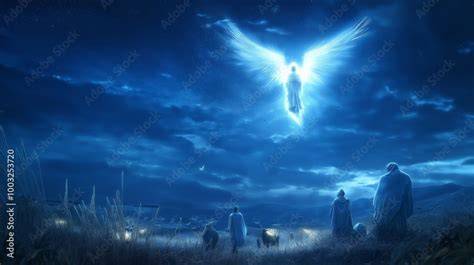
In Luke 2:9-10, an angel appears to shepherds, and the radiance of the Lord’s glory surrounds them. The shepherds are terrified, but the angel tells them, “Do not be afraid.” In Luke 1:29-30, Mary is troubled by Gabriel’s appearance and words before he reassures her.
Daniel falls trembling even when the heavenly figure is described in a moderated, human-like form. The figure’s body resembles beryl, the face has the appearance of lightning, the eyes are like flaming torches, the arms and legs gleam like burnished bronze, and the sound of his words is like the sound of a multitude (Daniel 10:5-6).
These accounts suggest that an angelic appearance may be beautiful, brilliant, and glorious while also being deeply frightening. The biblical command not to fear does not mean that the initial appearance is harmless or familiar.
The Angel Guarding Eden
The first specific example of a biblical angel appears early in the Old Testament, in the Book of Genesis. Just outside the Garden of Eden, where Adam and Eve lived before they were expelled by God for eating the prohibited fruit, an angel was said to guard the entrance of the garden.
Genesis 3:24 describes cherubim and a flaming sword flashing back and forth to guard the way to the tree of life. This angelic guardian is not presented as a gentle, comforting figure. It is a fierce protector whose presence makes clear that the entrance cannot be crossed.
From the beginning, Scripture presents angels as powerful servants and guardians of God's holiness rather than as decorative, childlike figures.
Seraphim: The Six-Winged “Burning Ones”
Seraphim are one of the most distinctive heavenly beings described in the Bible. The word is associated with burning or fiery beings, and their appearance is given in Isaiah 6.
“Above him stood the seraphim. Each had six wings: with two he covered his face, and with two he covered his feet, and with two he flew” (Isaiah 6:2). Their primary activity is worship: they call to one another, “Holy, holy, holy is the Lord Almighty; the whole earth is full of his glory.”
The seraphim use two wings to cover their faces, two to cover their feet, and two to fly. The passage does not describe them as babies, ordinary humans, or figures with small decorative wings.
Their voices cause the doorposts and thresholds of the temple to shake, and the house is filled with smoke. One seraph carries a live coal from the altar and touches Isaiah’s lips, declaring that his guilt has been taken away and his sin purged.
Seraphim are therefore associated with fire, worship, humility before God, holiness, purification, and overwhelming power.
Cherubim: Four Faces, Four Wings, and Calf-Like Feet
Cherubim are radically different from the plump, serene babies commonly portrayed in later art. In the Bible, they are powerful guardians associated with God's presence, sacred boundaries, and the throne of God.
The cherubim first appear in Genesis 3:24 alongside the flaming sword guarding Eden. They also appear in the descriptions of the ark of the covenant, the tabernacle curtains, and Solomon's temple. Their imagery is consistently connected with guarding places where God's holiness is manifested.
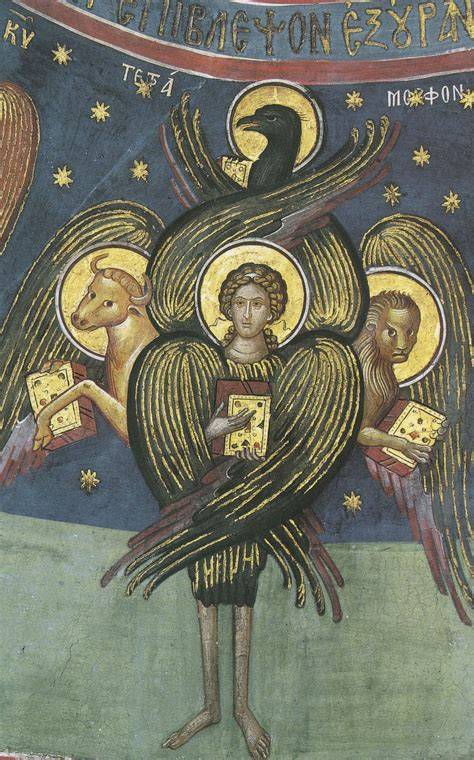
Ezekiel describes four living creatures with the likeness of a man. Each has four faces and four wings. Their legs are straight, their feet are like the feet of calves, and they gleam like burnished bronze. Human hands are visible under their wings.
Each creature has a human face, the face of a lion, the face of an ox, and the face of an eagle. In Ezekiel 10:14, the faces are described as a cherub, a human being, a lion, and an eagle; in Ezekiel 1, the comparable description uses an ox in place of the cherub.
Their wings touch one another, and two wings extend upward while two cover their bodies. They move straight ahead in the direction of one of their faces and do not turn as they move.
Their appearance is connected with burning coals, fire, torches, lightning, and extraordinary speed. They move like flashes of lightning, and the sound of their wings is compared with the voice of God or the sound of a multitude.
Ezekiel 10 adds that their entire bodies, including their backs, hands, and wings, are completely full of eyes. This is one of the clearest biblical examples of an angelic being whose appearance is far removed from ordinary human form.
Biblical Description of a Cherub
- Four faces: human, lion, ox or cherub, and eagle.
- Four wings.
- Two wings covering the body.
- Human hands beneath the wings.
- Straight legs.
- Feet like the feet of calves.
- A body shining like burnished bronze.
- Eyes covering the body, wings, backs, and hands.
- Movement in straight lines without turning.
- Association with fire, burning coals, lightning, and a thunderous sound.
The cherubim are also connected with the throne of God. Ezekiel sees a sapphire-colored platform or throne above them, and the living creatures move together with the wheels beneath it.
Ophanim or Thrones: Wheels Covered with Eyes
The beings commonly called ophanim are described in Ezekiel's vision as wheels beside the living creatures. The Hebrew word ophanim is the plural of ophan, meaning “wheel.” The Bible does not specifically name the ophanim as angels, but later Jewish and Christian writers classified them among the heavenly beings because of their supernatural nature, their eyes, and their proximity to God's throne.
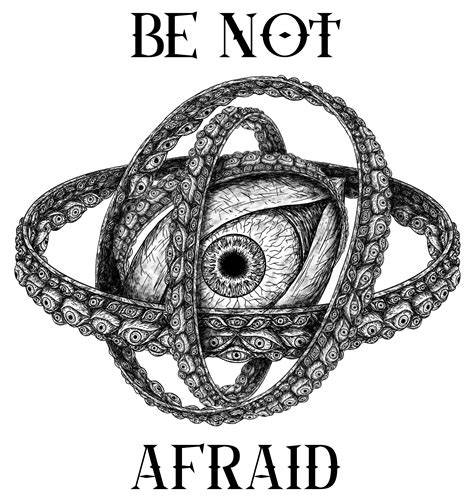
Ezekiel describes each wheel as a wheel within a wheel. The wheels sparkle like topaz or beryl, and all four look alike. Their rims are high and awesome and are full of eyes all around.
The wheel inside a wheel is probably a description of two wheels intersecting at right angles, allowing movement in any direction without turning. The biblical text describes one inner wheel intersecting one outer wheel for each of the wheels.
These wheels move in the same directions as the cherubim. They do not turn as they move, and they are animated by the spirit of the living creatures. Fire is present among the wheels, and one passage calls them “whirling wheels.”
Biblical Description of an Ophanim
- Two intersecting wheels, one within the other.
- A sparkling appearance like topaz or beryl.
- High, imposing rims.
- Eyes covering the rims all around.
- Movement in any of four directions without turning.
- Association with fire and the cherubim.
- No biblical description of wings attached to the wheels.
Many modern artistic representations add wings to the wheels, but Ezekiel does not say that the ophanim have wings. The wheels are associated with the cherubim, whose spirit moves within them, but they are described as wheels rather than winged creatures.
Living Creatures in Ezekiel and Revelation
The phrase “living creatures” is used in several biblical visions. Ezekiel sees four living creatures with human-like forms, four faces, four wings, calf-like feet, human hands, eyes, fire, and lightning. He later identifies these living creatures as cherubim.
In Revelation 4:6-8, four living creatures surround God's throne. They are full of eyes in front and behind, and they resemble a lion, a calf, a human being, and a flying eagle. Each has six wings, and they continually proclaim, “Holy, holy, holy, Lord God Almighty, which was, and is, and is to come.”
The creatures in Revelation resemble both the cherubim of Ezekiel and the seraphim of Isaiah. Their exact relationship is not explained in the text, so it is better to describe the similarities without treating every heavenly creature as identical.
Angels with Radiant or Fiery Appearances
Many angels in the Bible are described through brightness, fire, lightning, or shining clothing rather than through detailed anatomy. Their radiance reflects their heavenly mission and proximity to God's glory.
In Luke 2:9, the radiance of the Lord's glory surrounds the angel who appears to the shepherds. In Matthew 28:2-3, the angel at the tomb has an appearance like lightning, and his clothing is white as snow.
Daniel 10 describes a heavenly figure whose body is like beryl, whose face resembles lightning, whose eyes are like flaming torches, and whose arms and legs shine like burnished bronze.
The Bible does not give an exact measurement of angelic brightness, but these passages portray angels as brilliant, radiant, and difficult for human beings to endure. Their light is not necessarily a halo; it is part of the overwhelming glory associated with their appearance.
Angels with Swords and Weapons
Angels are not always peaceful-looking attendants. Scripture frequently presents them as warriors, guardians, and agents of judgment.
The angel guarding Eden has a flaming sword flashing back and forth. In Numbers 22:23, Balaam's donkey sees the angel of the Lord standing in the road with a drawn sword, while Balaam himself does not initially see the angel.
Angels also appear armed in the account of David's sin, and one angel is associated with the destruction of Jerusalem. In 2 Kings 19:35, an angel strikes down 185,000 Assyrian soldiers in one night.
These passages show that biblical angels can be invisible, armed, terrifying, and capable of immense destruction when acting under God's command.
The General Appearance of Named Angels
The Bible gives the names of Michael and Gabriel. Catholic tradition also includes Raphael, although Raphael is not named in the biblical books accepted by many Protestant traditions. In the Bible, Michael and Gabriel are the clearest named angelic figures.
Gabriel functions primarily as a messenger. He explains Daniel's visions and announces the births of John the Baptist and Jesus. He appears to Daniel as a figure resembling a man and appears to Mary as a heavenly messenger.
Michael is an archangel and a warrior who contends against Satan and protects God's people at God's command. Scripture does not provide a detailed physical description of Michael's body or face.
Many angels are recorded in Revelation, especially in connection with judgment, but most are not given individual names. There are hundreds to thousands of angels, and the Bible does not give an exact number.
Other Classes of Angels
Early Christian writers developed detailed hierarchies of angels, but the Bible itself does not present one complete, universally ordered hierarchy. It does, however, use several titles for heavenly beings.
| Class or title | Role or appearance in the biblical material |
|---|---|
| Seraphim | Six-winged “burning ones” who worship before God and cover their faces and feet. |
| Cherubim | Guardians associated with Eden, sacred spaces, God's presence, four faces, four wings, eyes, fire, and lightning. |
| Thrones or ophanim | Wheels within wheels, covered with eyes and moving with the cherubim. |
| Dominions | Beings traditionally associated with authority over other angels and humanity. |
| Virtues | Beings traditionally associated with elements, light, and miracles. |
| Powers | Beings traditionally associated with spiritual warfare, the natural order, and divine governance. |
| Principalities | Beings traditionally associated with guarding places, nations, or communities. |
| Archangels | Leader angels, including Michael; Gabriel is also a named heavenly messenger. |
| Angels | General ministering spirits who communicate with and serve human beings. |
The dominions, virtues, powers, and principalities are especially prominent in later Christian classifications. The Bible provides titles and functions, but it does not give a complete visual description of each class.
The angels who work most closely with humans generally appear more like the figures shown in religious paintings: human-like messengers dressed in white or shining garments. The highest heavenly beings described in prophetic visions are much stranger and more overwhelming.
Are Angels Male or Female?
The angels presented in the Bible are referred to with masculine pronouns such as “he,” “his,” and “him.” The Bible does not describe female angels, nor does it present angels as a male-and-female species in the way human beings are described.
Some people argue that angels do not have biological genders because they are spiritual beings. However, biblical narratives generally refer to angels appearing as men. Scripture does not support the common artistic convention of portraying angels as feminine figures with long flowing hair.
Jesus teaches that angels in heaven do not marry. This indicates that angelic existence is not organized around human marriage and reproduction, even though angels may appear in masculine forms when they visit people.
Are Guardian Angels Mentioned in the Bible?
Many people believe that every individual has a guardian angel, but nowhere in the Bible are we explicitly told that each person has a permanently assigned guardian angel.
Psalm 91:11 says that God will command His angels to guard His people in all their ways. Matthew 18:10 speaks of “their” angels in connection with little children, although the exact meaning of the phrase is debated.
Most angels in the Bible act as messengers, protectors, warriors, or agents of divine judgment. Cherubim guard Eden, Michael protects Israel, and angels rescue people or carry out God's commands. The biblical evidence supports angelic protection but does not establish every popular idea about individual guardian angels.
What Angels Do According to Scripture
Angels serve God in several important ways. They deliver messages, protect people, fight spiritual battles, carry out judgment, assist God's people, and worship continually before His throne.
Angels as Messengers
Throughout Scripture, God uses angels as messengers. Gabriel visits Daniel, Zechariah, and Mary. Angels announce the birth of Jesus, explain divine visions, deliver warnings, and communicate God's will.
Angels sometimes speak as representatives of God, using first-person language or introducing a message with the words, “Thus says the Lord.” Their role is not to replace God but to convey His command.
Angels as Protectors and Helpers
Psalm 91:11 says, “For he will command his angels concerning you to guard you in all your ways.” Angels escort Lot and his family from danger, oppose Balaam, accompany Israel, and help God's servants according to divine instruction.
In Hebrews 1:14, angels are called ministering spirits sent to serve those who will inherit salvation. Their protection and assistance are expressions of God's will rather than independent powers.
Angels as Warriors and Agents of Judgment
Angels often carry swords and take part in spiritual conflict. Michael fights against Satan, and other angels execute judgments described in the prophetic books and Revelation.
In Revelation, angels control elements, bring plagues, wield swords and sickles, and participate in the separation of the righteous and the wicked. These angels can be massive, fiery, shining, and terrifying.
Angels as Worshipers
Angels direct worship toward God rather than themselves. In Revelation 5, thousands upon thousands of angels surround the throne and proclaim that the Lamb is worthy to receive power, wealth, wisdom, strength, honor, glory, and praise.
When John falls down before an angel in Revelation 22:9, the angel commands him to get up and worship God. The angel is glorious and awe-inspiring, but it refuses to accept worship that belongs to God alone.
Fallen Angels and Demons
Fallen angels are angels who rebelled against God or fell from heaven. Satan and the angels who followed him are no longer defined as God's faithful angels because they opposed Him.
The New Testament explicitly connects Satan with a fall from heaven. Luke 10:18 says that Jesus saw Satan fall like lightning, and Revelation 12:7-9 describes Michael's conflict with the dragon, identified as the Devil and Satan, who is thrown down with his angels.
Many Christians understand Satan to have originally been an angel, possibly connecting him with passages about the fall of a proud heavenly figure in Isaiah 14 and Ezekiel 28. However, those passages directly address earthly rulers in their immediate contexts, so the identification of Satan depends on later theological interpretation.
The Bible does not always provide a clear visual distinction between faithful and fallen angels. The popular image of demons as red goblins with bat wings and arrow tails is also not a direct biblical description.
Terrifying Creatures in Revelation
Revelation contains some of the most unusual and frightening descriptions of supernatural beings in the Bible. Not every creature described in Revelation is explicitly called an angel, so the categories should not be treated as interchangeable.
The locusts in Revelation 9 look like horses prepared for battle. They have something like crowns of gold, human-like faces, hair like women's hair, teeth like lions, iron breastplates, locust wings, and tails with stingers like scorpions.
Their king is the angel of the Abyss, whose name in Hebrew is Abaddon and in Greek is Apollyon, meaning “Destroyer.” These creatures emerge from a smoking Abyss and torment people.
Revelation also describes mounted troops riding horses with lion-like heads. The horses breathe fire, smoke, and sulfur, and their tails are like snakes with heads capable of inflicting injury.
These beings are part of Revelation's symbolic and prophetic visions. They should not automatically be used as descriptions of ordinary angels, but they demonstrate the wide range of supernatural imagery found in biblical apocalyptic literature.
What the Bible Does Not Say About Angelic Appearance
The Bible does not conclusively reveal the skin color of holy angels or their exact everyday clothing. Artistic depictions that assign a precise complexion, hairstyle, or wardrobe go beyond the information provided by Scripture.
The Bible also does not say that angels have halos, harps, tiny wings, cherub cheeks, or the appearance of chubby babies. These features come from artistic, cultural, and religious traditions rather than from a single biblical passage describing angels.
Angels are not dead human beings, and human beings do not become angels when they die. Angels and humans are distinct parts of God's creation.
Nor does the Bible present angels as beings who should be worshiped, summoned, or treated as independent sources of spiritual authority. Their purpose is to serve God and direct attention back to Him.
A Bible-Based Visual Guide
- Ordinary messenger angel: May appear as a man, sometimes dressed in white or shining clothing.
- Radiant angel: May appear surrounded by brightness, glory, lightning-like brilliance, or fire.
- Warrior angel: May appear armed with a drawn or flaming sword.
- Seraphim: Six wings, with pairs covering the face and feet and one pair used for flying.
- Cherubim: Four faces, four wings, human hands, straight legs, calf-like feet, eyes, fire, and lightning.
- Ophanim or thrones: Intersecting wheels with tall rims covered in eyes, associated with fire and the cherubim.
- Living creatures: Heavenly beings with animal and human imagery, eyes, wings, and continual worship before God's throne.
- Revelation's supernatural creatures: Highly symbolic beings with features such as lion-like heads, human faces, crowns, iron breastplates, wings, and scorpion-like tails.
Why a Biblically Accurate Depiction Matters
The biblical descriptions matter because modern images often reduce angels to harmless decorative figures. Scripture presents them as mighty, powerful, and strong, although they are never as mighty, powerful, or strong as God.
A biblically accurate depiction should distinguish between ordinary angels who appear in human-like form and the extraordinary heavenly beings seen in prophetic visions. It should also preserve the details that Scripture actually provides instead of adding unsupported features.
Above all, the biblical portrayal of angels emphasizes their service and humility. No matter how glorious, beautiful, strange, or terrifying their appearance may be, angels belong to God, obey His commands, and direct worship toward Him alone.