Scripture is almost quiet about the Wednesday of Passion Week, often called Holy Wednesday, Spy Wednesday, or Good Wednesday. The most widely held traditional interpretation is that Jesus spent the day in Bethany, withdrew from public activity, was anointed during a meal, and that Judas Iscariot arranged to betray him for thirty pieces of silver.
However, the Bible does not explicitly name “Holy Wednesday” or provide a complete chronological account of that day. The Gospel accounts were not necessarily arranged chronologically, and Roman and Jewish days began at different times. For these reasons, it is unwise to be dogmatic about precisely which events occurred on which days leading up to Jesus’ arrest and crucifixion.
Why Wednesday of Holy Week Is Called “Silent Wednesday”
We know what Jesus did each day of Easter week, except for Wednesday. That day has been called “silent Wednesday” by some scholars. Scripture doesn’t give us many hints about this day, Wednesday, prior to the Last Supper on Thursday.
Two momentous days had passed: On Monday, there was the cleansing of the Temple and the laments over Jerusalem’s lack of faith; Tuesday featured exhaustive teachings by Jesus and interrogations by His opponents. Today, Wednesday, it would seem that Jesus stays in Bethany.
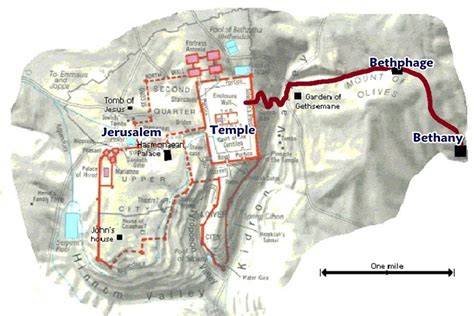
Jesus stayed at the home of Mary and Martha in Bethany during Passion Week. Bethany is about two miles away from Jerusalem. The city would have been extremely crowded and chaotic during the Passover week.
Jesus and his disciples walked those two miles each day to teach in the temple and then returned to Bethany for the night. The Lord Jesus and the Twelve likely spent a quiet sort of day.
What the Gospels Say About Wednesday
According to Matthew’s Gospel, the day begins with an ominous warning: When Jesus had finished saying all these things, he said to his disciples, “As you know, the Passover is two days away-and the Son of Man will be handed over to be crucified” (Matthew 26:1-2).
The scene then shifts across the Kidron valley, where we “overhear” this conversation: Then the chief priests and the elders of the people assembled in the palace of the high priest, whose name was Caiaphas, and they schemed to arrest Jesus secretly and kill him. “But not during the festival,” they said, “or there may be a riot among the people”(Matthew 26:3-5).
It is interesting that they say, “not during the festival,” because according to the Synoptic Gospels, that is exactly when it ended up happening. This serves as a reminder that things unfold according to the Lord’s authority.
Nothing is out of His control. No one takes Jesus’ life; He lays it down freely. Even if one considers the Johannine tradition, which uses a different Jewish calendar to date the Passover (one day later), this all takes place right in the thick of the Passover.
Why? Because the Lord is fulfilling Passover. The priests and elders can plan all they want, but God is in control.
Jesus in Bethany
On the Wednesday before His death, Jesus was still. Though Sunday, Monday, and Tuesday of Holy Week were filled with harrowing experiences that seemed to be drawing Him ever nearer to His death, on Wednesday Jesus stayed out of the public eye.
On this day, Jesus and His disciples had gone to the home of a man in Bethany known as Simon the leper (Matthew 26:6). According to Luke (7:36), Simon was a Pharisee. His leprosy was in remission and he had been readmitted to the community.
Could he have been one of the lepers Jesus cured? We do not know. Simon belonged to a growing part of the population known not for their accomplishments, but for what was wrong with them.
It was a difficult life, but it must also have been strangely liberating since the first thing people learned about Simon was his broken past. Simon lived among the few who did not have to pretend to be what they were not. He was Simon, the leper.
The Anointing at Bethany
During their meal together, Mary of Bethany, Lazarus’ sister, came to Jesus with an alabaster flask of perfume (Mark 14:3). She had been saving this perfume, worth a year’s wages, to perform this very act.
A woman came to him with an alabaster jar of very expensive perfume, which she poured on his head as he was reclining at the table. The disciples reacted with indignation, asking why the oil was not instead sold and the money given to the poor.
She began to pour the perfume on Jesus’ head and feet, which required breaking open its container. By giving Him her most valuable possession, Mary was expressing that she knew what Jesus was about to give of Himself was for her.
Jesus was clearly moved by her act of devotion and insight. He said, “Why are you bothering this woman? She has done a beautiful thing to me.”
Jesus explained the meaning of her action: “When she poured this perfume on my body, she did it to prepare me for burial. Truly I tell you, wherever this gospel is preached throughout the world, what she has done will also be told, in memory of her” (Matthew 26:7-13).
Mary intentionally and deliberately offered Jesus everything she had. The disciples considered the value of her perfume and regarded her actions as though she might as well have been burning a year’s wages in a bread oven.
But they dressed their indignation up in the noble auspices of concern for the poor: Think of the poor people who could have benefited from the sale of this perfume (Mark 14:4-5). But this was not how her actions hit Jesus. He came to her aid.
What Mary is doing is beautiful, He said to them (Mark 14:6). Perfume is meant to be poured out, released into the air until it is gone, in order to fill the room with its beautiful and startling aroma.
So Mary breaks open the jar and the scent electrifies the senses of everyone present, and Jesus says it is beautiful. Everything in creation testifies to a Creator who delights in beauty for beauty’s sake.
There was honor and kindness in her gesture. He returned the honor by saying history would never forget her act of beauty (Mark 14:8-9). And we haven’t.
Different Gospel Accounts
The story here is complex; there are significant differences among the various Gospel accounts. Matthew records the anointing at Bethany during the final days before the crucifixion.
Mark and Matthew place the incident on Wednesday of Holy Week, but report that it is those at the dinner, likely the apostles, who take offense at the anointing. Luke presents this story, or a similar one, much earlier in his Gospel in Chapter 7.
In Luke’s account it is Jesus’ feet, not His head, that are anointed. Further, Luke portrays Simon in a bad light. John’s Gospel places this event six days before Passover, at the home of Martha, Mary, and Lazarus.
In John’s account it is Mary who anoints the Lord, His feet, not His head, and Judas alone who takes offense. The act of anointing Jesus may have happened more than once; in the four accounts of it there are differences in both the details and the timeframes.
For our purposes on this Wednesday of Holy Week, it is enough to note that Jesus sets the meaning of this woman’s action as anointing His body for burial. Jesus does not slight the poor in His response, but He teaches that the worship of God and obedience to His truth are higher goods than even the care of the poor.
Serving the poor is not to be set in opposition to serving God. They are related, but God always comes first. The worship of God comes first and is meant to fuel our charitable and just works.
Judas Iscariot’s Betrayal
Many theologians believe Wednesday was the day spoken about in Matthew 26:14-16, the day Judas chose to betray Jesus. Matthew, Mark, and Luke all seem to place Judas’ plans to betray Jesus as set into motion at some point on this day.
“Then one of the twelve disciples-the one named Judas Iscariot-went to the chief priests and asked, ‘What will you give me if I betray Jesus to you?’ They counted out thirty silver coins and gave them to him. From then on Judas was looking for a good chance to hand Jesus over to them.”
Holy Wednesday-also known as Spy Wednesday-was the day that Judas Iscariot partnered with the Pharisees to betray Jesus. The religious leaders needed an inside man who could provide a time when Jesus was alone.
They were scared to arrest him in public because they feared public outrage or a riot. So instead, they opted for a secret arrest in the middle of the night.
Matthew’s Gospel recounts, “Then one of the Twelve-the one called Judas Iscariot-went to the chief priests and asked, ‘What are you willing to give me if I deliver him over to you?’ So they counted out for him thirty pieces of silver. From then on Judas watched for an opportunity to hand him over” (Matthew 26:14-16).
The Gospel Accounts of the Betrayal
According to Matthew 26:14-16, on this day, Judas went to the religious leaders and agreed to hand Jesus over in exchange for thirty pieces of silver. From that moment, he began looking for the right time to betray Him.
Luke 22:1-6 says, “Now the Festival of Unleavened Bread, called the Passover, was approaching, and the chief priests and the teachers of the law were looking for some way to get rid of Jesus, for they were afraid of the people. Then Satan entered Judas, called Iscariot, one of the Twelve.
“And Judas went to the chief priests and the officers of the temple guard and discussed with them how he might betray Jesus. They were delighted and agreed to give him money. He consented, and watched for an opportunity to hand Jesus over to them when no crowd was present.”
Because of this deceptive and secretive act, the day became known as “Spy Wednesday.” Spy Wednesday refers to Judas Iscariot, the spy in Jesus’ followers, who betrayed Jesus over to the religious leaders in exchange for thirty silver coins.
Why Did Judas Betray Jesus?
Judas had gotten frustrated. The savior who would topple Rome, in his imagination, had not appeared. Perhaps he wanted to give Jesus the final push to finally invoke an insurrection.
We can only guess at Judas’ motivations. The most likely explanation is that he was disillusioned when Jesus did not measure up to the common Jewish conception of the Messiah as a revolutionary warrior who would overthrow Roman power and reestablish the Kingdom of David.
Judas may have been a member of the Zealot Party or at least influenced by them in this regard. Zealots are seldom interested in hearing of their own need for personal healing and repentance, let alone the call to love their enemies.
This is obviously only speculative; Judas’ motivations remain to a large degree shrouded in the mystery of iniquity. No matter what his reasons, Satan enters him during his period of bitterness and gives Judas an extra nudge to finally betray the man he’d followed for three years.
Scripture reveals that he was a thief, stealing from the common money bag (John 12:6). Jesus also hints that Judas was grieved by the Bread of Life discourse, which led many to abandon Jesus when He insisted that they must eat His Flesh and drink His Blood.
Jesus said, “Did I not choose you, the Twelve? And yet one of you is a devil.” He spoke of Judas the son of Simon Iscariot (John 6:70-71).
Judas clearly committed a wrong by betraying his leader. He betrayed the very man whom he had followed for years. Yes, Judas betrayed Jesus for money-a significant amount-but compared to his salvation and his soul, it was but “a mess of pottage for his birthright” (see Genesis 25:34).
What will it profit a man that he should gain the whole world and lose his soul? (Mark 8:36).
Thirty Pieces of Silver and Old Testament Prophecy
Believe it or not, Judas fulfills an Old Testament prophecy. Zechariah 11:12-13 says, “I told them, ‘If you think it best, give me my pay; but if not, keep it.’ So they paid me thirty pieces of silver. And the Lord said to me, ‘Throw it to the potter’-the handsome price at which they valued me! So I took the thirty pieces of silver and threw them to the potter at the house of the Lord.”
This verse, predicted hundreds of years before, shows even the exact amount by which the religious leaders would pay Judas to betray Jesus.
Matthew 27:1-10 describes what happened after Jesus was condemned: “When Judas, who had betrayed him, saw that Jesus was condemned, he was seized with remorse and returned the thirty pieces of silver to the chief priests and the elders.
“‘I have sinned,’ he said, ‘for I have betrayed innocent blood.’ ‘What is that to us?’ they replied. ‘That’s your responsibility.’ So Judas threw the money into the temple and left. Then he went away and hanged himself.
“The chief priests picked up the coins and said, ‘It is against the law to put this into the treasury, since it is blood money.’ So they decided to use the money to buy the potter’s field as a burial place for foreigners. That is why it has been called the Field of Blood to this day.
“Then what was spoken by Jeremiah the prophet was fulfilled: ‘They took the thirty pieces of silver, the price set on him by the people of Israel, and they used them to buy the potter’s field, as the Lord commanded me.’”
They used the money to buy a potter’s field. The verse in Matthew also mentions a prophecy in Jeremiah that predicts this event.
Judas’ role fulfills words declared hundreds of years before and further proves the validity of the Bible and Christianity. But Judas was clearly in the wrong, and the prophecy does not remove his responsibility for his freely chosen betrayal.
Was Jesus Preparing for Passover?
The disciples needed time to prepare for the Passover meal. The Passover celebration required shopping, cooking, and planning. Preparations likely would’ve taken longer than just Maundy Thursday.
We can assume that Jesus and the disciples had to prepare for Passover during this time. The Lord Jesus and the Twelve likely spent a quiet sort of day, while the city prepared for the festival.
Jesus and his disciples walked those two miles each day to teach in the temple and then returned to Bethany for the night. Was everyone bustling around Jesus with important preparations while he was praying for the strength to make an impossibly difficult sacrifice?
Jesus’ Possible Prayers and Grief
What did Jesus do while his life was being sold for the amount commonly associated with the purchase price of a slave? I imagine Jesus taking time on Wednesday to retreat to a quiet spot so that he could sit with his Abba and pray.
It’s impossible to fathom what it would have been like for Jesus to be God incarnate, indwelling the limitations of a human body. He understood physical pain, he felt humiliation, he expected his death would be a horrendous ordeal for his human body to endure.
He also knew that he was about to accomplish the purpose he had been born to do. He was going to provide salvation for anyone who would choose to believe and make him Lord.
I wonder if Jesus was looking at the faces of these close friends and disciples and grieving for what he knew they would experience after his death. I wonder if he grieved the fact that he would miss sitting with them each day, laughing, talking, and sharing ministry together.
What did Jesus pray about during that time with his Abba? I wonder what his thoughts were about Judas that day. Judas Iscariot may have come to his mind often that Wednesday.
It is human to grieve those who are outside God’s control and blessing. Some of us grieve for those same reasons during Easter week. How did Jesus pray for the man that would betray his friends and his Messiah?
The Bible does not tell us what Jesus prayed about on that Wednesday. The silence leaves room for reverence, but it does not allow certainty about the private thoughts or prayers of Jesus on that particular day.
The Meaning of Spy Wednesday
While not as widely observed as Maundy Thursday or Good Friday, Spy Wednesday is a significant reminder of the betrayal, greed, and darkness that led to Jesus’ suffering-but also of God’s ultimate plan to bring redemption through the cross.
Although Judas clearly committed a wrong by betraying his leader, he plays an important role in Easter. Because of Spy Wednesday, we see yet another prophecy fulfilled from the Old Testament.
Spy Wednesday and Holy Week invite us to slow down, reflect on Jesus’ path to the cross, and examine our own hearts. On Spy Wednesday, remembering Judas Iscariot’s betrayal, we’re called to honest repentance and renewed devotion, while the rest of Holy Week helps us walk with Christ from sacrifice to resurrection.
It’s less about doing everything perfectly and more about intentionally making space for prayer, Scripture, and love. The day can direct attention away from busyness and toward the spiritual meaning of Jesus’ approaching death.
How Christians Observe Holy Wednesday
- Reflect on betrayal and grace by reading Matthew 26:14-25.
- Spend time in quiet prayer and confession.
- Fast or give something up to refocus your heart.
- Attend church services, especially Maundy Thursday and Good Friday.
- Read the daily Gospel accounts leading to Easter.
- Practice acts of service or forgiveness.
- Limit distractions, including social media and busyness, to stay spiritually present.
- Prepare your heart for Easter Sunday with gratitude and hope.
Maybe we should spend some of this day like Jesus did. Is there time in your schedule to simply turn the world off, take a walk, and spend some time with your Abba?
If you are reading this on your office computer, take time during lunch or during the drive home to simply quiet your heart and think about what Jesus did that Wednesday-and the significance of the events in the days that followed.
Where Wednesday Fits in Holy Week
| Day | Events traditionally associated with the day |
|---|---|
| Palm Sunday | Jesus’ triumphal entry into Jerusalem, riding on a donkey as the inhabitants laid down palm branches and shouted, “Hosanna!” |
| Holy Monday | Jesus clears out the temple, driving out the merchants who had turned the house of the Lord into a den of thieves. |
| Holy Tuesday | Jesus curses the fig tree, which had a nice appearance but bore no fruit. |
| Holy Wednesday | Jesus is associated with Bethany, the anointing at Simon the leper’s home, Passover preparations, and Judas’ agreement to betray him. |
| Maundy Thursday | Jesus shares the Last Supper, breaks bread, passes around wine, and goes to the Garden of Gethsemane to pray before his arrest and trial. |
| Good Friday | Jesus is found guilty for a crime he did not commit and sentenced to execution on a cross. |
| Holy Saturday | After he died on Friday, Jesus is buried in a tomb and remains buried. |
| Easter Sunday | Jesus conquers death and rises again, appearing first to Mary Magdalene, then to the disciples, and then to over 500 witnesses. |
From Wednesday to the Cross
The following day is sometimes referred to as Maundy Thursday, the fifth day of Holy Week. Jesus broke bread, passed around wine, and shared the Last Supper with his disciples.
He then went to the Garden of Gethsemane to pray prior to his arrest and trial. We commemorate Maundy Thursday through our communion practices.
Good Friday came next: Jesus was found guilty for a crime he did not commit and sentenced to execution on a cross. Many churches hold a somber service on the Friday before Easter to remember Jesus’ sacrifice.
After he died on Friday, they buried him in a tomb. On Saturday, he remains buried, and the whole world holds a collective breath in this period of limbo.
Easter Sunday follows: Jesus conquers death and rises again. First, he appears to Mary Magdalene, then to the disciples, then to over 500 witnesses.
Why the Silence May Matter
Why doesn’t Scripture tell us what Jesus did that Wednesday? Maybe because it was the day Jesus chose to spend privately with God. Maybe we can consider doing the same.
The day was calmer, a day spent among friends, yet a day on which Satan entered one man, who set a betrayal in motion. The storm clouds gather.
Your Abba would love to have that time with you. There is something he wants to tell you.