The Biblical Periodic Table is a visual chart that organizes the books of the Old and New Testaments according to broad literary genres, helping readers see the structure of the Bible at a glance. It is designed as a teaching tool for learning the books of the Bible and for introducing the way genre affects biblical interpretation.
The blue blocks represent the Narratives in the Bible. The yellow blocks represent the Wisdom and Poetic Literature. The purple blocks represent the Prophetic Literature of the Old Testament and the Epistles/Letters from the New Testament.
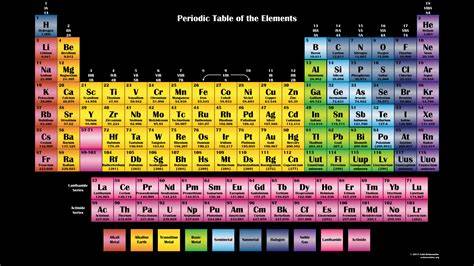
What the Biblical Periodic Table Shows
This period table is an attempt to think about the Old and New Testaments with a broad view towards genre. There are many qualifications to make with respect to these charts.
Though all Scripture is instructive, the Prophets and Letters are most directly so. The chart provides a compact visual overview rather than a complete account of every literary feature found in Scripture.
How the Books Are Grouped
Narrative Literature
The blue blocks represent the Narratives in the Bible. This category includes books that communicate their message through events, characters, settings, conflict, and the development of a story.
Both Daniel and Revelation are included in this section because they contain a fair amount of narrative: Daniel in the first half, and Revelation in the technical sense of Apocalyptic Literature as a “genre of revelatory literature within a narrative framework…”
Wisdom and Poetic Literature
The yellow blocks represent the Wisdom and Poetic Literature. These books use poetry, reflection, prayer, song, proverbial instruction, dialogue, and meditation to explore human experience and life before God.
The poetic and wisdom books do not communicate in exactly the same way as biblical narratives. Their imagery, parallelism, emotional language, and condensed expressions require readers to pay attention to literary form.
Prophetic Literature and Epistles
The purple blocks represent the Prophetic Literature of the Old Testament and the Epistles/Letters from the New Testament. Though these bodies of literature differ in historical setting and literary form, both are especially direct in their instruction and exhortation.
Though all Scripture is instructive, the Prophets and Letters are most directly so. Their purpose frequently includes addressing particular communities, confronting particular problems, interpreting God’s action, calling people to faithfulness, and explaining the implications of belief.
Daniel and Revelation
Daniel and Revelation require particular care because they combine different literary features. Both books contain visionary material and apocalyptic elements, yet both also include substantial narrative frameworks.
Both Daniel and Revelation are included in this section because they contain a fair amount of narrative: Daniel in the first half, and Revelation in the technical sense of Apocalyptic Literature as a “genre of revelatory literature within a narrative framework…”
An Introduction to Biblical Genres
Why Genre Matters for Biblical Interpretation
There is a lot more to say about genre, and there are many qualifications to make with respect to these charts. The chart was created for use in a Hermeneutics course as a teaching tool for an introduction to genre.
Recognizing genre helps readers understand why a passage should not always be approached in the same way as every other passage. A narrative, a poem, a prophetic oracle, a wisdom saying, and a letter each establish different expectations for interpretation.
For further reading on genre and how it affects biblical interpretation, see the following works:
- Robert Alter, The Art of Biblical Narrative. Basic Books, 1981.
- Robert Alter, The Art of Biblical Poetry. Basic Books, 1985.
- Robert Alter, The World of Biblical Literature. Basic Books, 1992.
- Yairah Amit, Reading Biblical Narratives: Literary Criticism and the Hebrew Bible. Fortress, 2001.
- David Aune, The Literary Environment of the New Testament. Library of Early Christianity 8. Edited by Wayne A. Meeks. Louisville: Westminster John Knox, 1985.
- James L. Bailey, “Genre Analysis,” pages 140-65 in Hearing the New Testament, 2nd edition. Edited by Joel B. Green. Grand Rapids: Eerdmans, 2010.
- Gordon D. Fee and Douglas Stuart, How to Read the Bible Book by Book: A Guided Tour. Grand Rapids: Zondervan, 2014.
- Gordon D. Fee and Douglas Stuart, How to Read the Bible for All Its Worth, 4th edition. Grand Rapids: Zondervan, 2014.
- David M. Gunn and Danna Nolan Fewell, Narrative in the Hebrew Bible. The Oxford Bible Series. Oxford: Oxford University Press, 1993.
- Steven L. McKenzie, How to Read the Bible: History, Prophecy, Literature - Why Modern Readers Need to Know the Difference and What It Means for Faith Today. Oxford: Oxford University Press, 2005.
- John H. Walton and D. Brent Sandy, The Lost World of Scripture: Ancient Literary Culture and Biblical Authority. Downers Grove: IVP, 2013.
The Biblical Periodic Table as a Teaching Tool
The colorful Books of the Bible Periodic Table is an excellent teaching resource for any classroom. It is a great tool for learning the books of the Bible.
The chart is a nice visual for the kids and a great resource for both home and classroom use. It can help students organize the books of the Bible through a recognizable visual format.
The abbreviated book titles make it easy to have hints during learning and/or memorization. Each section is color coded, and even with learning blocks, it makes a huge difference.
The periodic chart style with just an outline of color may even help bring emotion to aid the memory for older students familiar with the original scientific version. The more colorful version helps young students who are familiar with the scientific chart, but still really enjoy the extra color to keep their focus.
I saw the periodic table as a great tool for the children AND adults to learn the books of the Bible as it is a recognizable symbol and makes the learning a fun aid. This goes great with Bible Science.
Using the Chart in Classes and Churches
The Biblical Periodic Table can be used in an introduction to the Bible class, Sunday school, children’s church, youth ministry, or a science-themed VBS. It can also serve as a handout for church members and families.
As we are about to begin Sunday School again, this will be a great resource for the kids. I teach an “introduction to the bible” class and could distribute the chart as a handout with proper attribution.
The chart can also help readers track their progress through the Bible. A pastor who goes through a book of the Bible each year can use it as a way for the congregation to track where they have been over the years and going forward.
Its visual format makes it suitable for display in a classroom or children’s church area. It can be printed as a handout, enlarged for a wall, or adapted for classroom instruction.
Design and Format Considerations
The solid colors and text may work better as a PNG. JPG would be better for photographs. Both versions of the chart bring an organization using the best visual presentation for many age and learning style ranges.
Some readers may find the legend insufficient and may prefer words on the sides of the table that say what the legend says, so they do not need to decipher by color. More information under each element, such as who wrote it, when, and what period it covered, may also be helpful.
The chart is available as a visual resource, and different formats may be useful for different purposes. A high-resolution image can be enlarged for classroom display, while a printable version can be distributed page by page or used as a handout.
Learning the Books of the Bible Through Visual Organization
The visual arrangement gives students a way to connect individual books with larger groups. Instead of memorizing a disconnected list, learners can associate each book with its location, color, testament, and literary category.
All students can benefit from how each section is color coded. The chart’s organization provides a visual presentation for many ages and learning-style ranges.
The periodic-table format is especially effective because it connects biblical learning with a familiar scientific symbol. The result is a fun aid for learning and memorization while also introducing the idea that the Bible contains several kinds of literature.
Limits of the Classification
The Biblical Periodic Table presents broad categories, not rigid boundaries. A single biblical book may include more than one literary form, and a book assigned to one section may contain passages that resemble another genre.
Both Daniel and Revelation illustrate this complexity because they contain narrative and apocalyptic literature. The classification therefore should be used as an introduction to genre rather than as a complete explanation of every passage.
There is a lot more to say about genre, and there are many qualifications to make with respect to these charts. They were created for use in a Hermeneutics course as a teaching tool for our introduction to genre.
Further Educational Possibilities
The chart can introduce discussions about the books’ writers, dates, historical periods, literary forms, themes, and intended audiences. Students can use the visual structure as a starting point for more detailed study.
It may also be helpful to have there: Writer Date Written Period Covered. These details can supplement the genre-based organization without replacing it.
The chart can support Bible study in different age groups because the design can function both as a memory aid and as a starting point for interpretation. Older students may use the outline and color system as a visual reference, while younger students may benefit from the brighter version and abbreviated book titles.
Related Biblical Study Themes
The Gospels are the first four books of the New Testament: Matthew, Mark, Luke, and John. These books teach us facts about Jesus’ life and share valuable lessons we can learn from the true story.
As human beings, we all long for a deeper connection with God. We want to hear His voice, feel His presence, and know that He is with us in our daily lives.
We are praying when we deeply long to do better, to help others and to improve ourselves. When we pray again and again, that is, repetitively, something entirely new can come into our lives that could not have been predicted from what has gone before.
Though the Biblical Periodic Table is primarily a visual guide to the books and genres of Scripture, it can also encourage readers to approach the Bible as a unified collection whose diverse forms contribute to its message.