The Gospel starts with God, before sin, creation, or humanity. The good news begins with the Father, Son, and Holy Spirit: a triune community of holy love who existed before time and exists beyond time.
When looking for the best place to begin reading the Gospel, start with the Gospel of John, especially John 1:1-18. John helps you understand who Jesus was and is today, presenting him as the eternal Word who was with God, who was God, and through whom all things were created.
The Gospel Begins with God
The short answer: No. The gospel does not begin with sin. The gospel begins with God’s good creation. The gospel begins with a world where the crowning creation are the image-bearers of God.
The first mistake is to think the gospel begins with the problem-sin. The second mistake is to think the gospel begins with creation-culminating with the creation of people. The gospel begins much earlier than sin or creation or people.
How about an obvious insight? The gospel begins with God. The good news is before anything else, there was God. Putting it that way is not enough though. Who is God? What is God like?
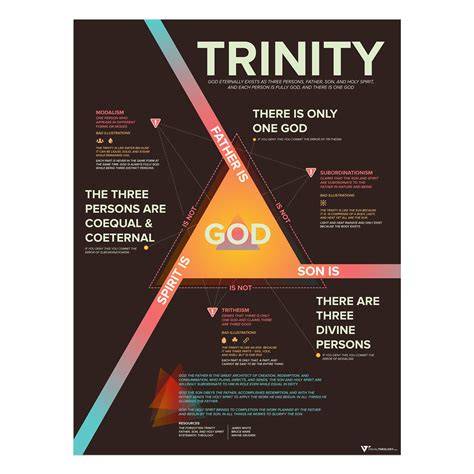
The gospel begins with God, who is Father, Son, and Holy Spirit, a triune community of holy love, who existed before time and exists beyond time and who will exist eternally after time ends. The gospel begins with perfect love in the perfect union of a God who is three in one.
This is very, very good news. At the core of all eternity dwells the triune God of perfect unity in a community of holy, creative love. From this eternal community comes a creation of extravagant diversity.
Where the Four Gospels Begin
The first four books of the New Testament are known as the Gospels: Matthew, Mark, Luke, and John. Each book tells us about the life, ministry, death, and resurrection of Jesus Christ.
Each of the gospel narratives opens with a reference to “the beginning.” Each of them uses a “beginning” word in the first sentence of their story. They each highlight the importance of where the gospel story begins, and yet each of the gospels begins in a different place.
The story of Jesus fits within a broader story, and the frame of that broader story widens or tightens based on the point each evangelist wants to make. The beginning matters, and it subtly shapes the way the story is told and how the end of that story is interpreted.
| Gospel | Where it begins | Main emphasis |
|---|---|---|
| Matthew | Abraham | Jesus fulfills Israel’s story and the promises made to Abraham |
| Mark | John the Baptist | Jesus begins his public ministry as the promised Messiah |
| Luke | Adam and the story surrounding Jesus’ birth | Jesus is the Savior of all humanity and the new Adam |
| John | Before creation | Jesus is the eternal Word and divine Son of God |
Mark: The Gospel Begins with John the Baptist
Mark’s gospel opens with a fragment of a sentence. “The beginning of the gospel of Jesus Christ. As it is written in Isaiah the prophet…. John appeared” (Mark 1:1-4).
We are thrown right into the action, with John baptizing in the wilderness in fulfillment of prophecy: “make straight the paths of the Lord” (Mk. 1:3). In the very next moment (“immediately”) we are witnessing the baptism of Jesus, followed by the temptation, and as soon as 1:14 the public ministry of Jesus has begun.
This is a good place to start. Actually, all the gospels begin their narratives proper with Jesus and John the Baptist.
We don’t get stories of Jesus’ childhood in Nazareth (well, we get one I guess) or his education or his early adulthood (surely he was working hard as a carpenter alongside Joseph prior to the baptism). Though we might expect that material from a biography, the Gospels have a more focused goal, and that means starting at the inauguration of Jesus’ ministry, which is to say his baptism.
Why Mark Begins with John
Mark in particular tells us why he’s beginning with John, the appearance of John represents the end to a long period of waiting. By quoting Isaiah (“the voice of one crying in the wilderness”), Mark places the story of Jesus squarely within Israel’s exile.
Although Israel is restored to their land, and though the temple is rebuilt and fully operational, nevertheless the restoration is still partial, and the temple corrupted, and the promised Messiah has not yet come; indeed, even his forerunner tarries.
“John appeared” (1:4). This is the beginning of good news. Centuries of God’s silence are ended. It is beginning; God has come to redeem Israel from it’s exile.
Starting here puts the focus of Jesus’ story on the immediate problem: the exile. The gospel is the fitting conclusion to the story of exile.
After all, that is what everyone is waiting for. How will God fulfill his promises to restore Israel, establish the final temple, and through these things make the world right again?
The other Gospels do not ignore this aspect of the story; thus, the first sermon Jesus preaches in Luke is about release of Israel’s captivity (Luke 4:18-19).
By contrast, Mark keeps the focus on exile, and at the critical juncture when someone finally professes that Jesus is the Christ, it serves to increase anticipation that he will judge the Roman and the rebel and reestablish Jerusalem as God’s place and the center of the world (Mark 8:27).
Of course, things do not fall out as expected (and if you prefer the shorter ending of Mark, the story concludes with the scattering of the last of Jesus’ disciples-a new kind of exile, which in fact brings the exile to its fullest expression).
But in the end Jesus’ story is the fitting conclusion to the Israel’s exile. In his resurrection Jesus becomes the First Israelite, and the work of the next 40 days (we know from other Gospels) will begin the work of restoration.
What Mark Teaches about God’s Plan
Mark reminds us that God cares about the immediate problem. God responds to our felt needs. Jesus comes preaching restoration for his people Israel, which they rightly (but reductionistically) read as a response to their exile.
And what we learn from Mark is that God does care about that problem and will respond in a fitting manner. In the end that requires seeing God’s response to our prayers through the eyes of faith.
It does not often look like God is addressing the problem that we think needs to be addressed, but the call of Mark is the call of faith. “Who do you say that I am” (Mark 8:29)? If, like Peter, you respond “you are the Christ,” then know that, regardless of appearances, he will restore you.
Matthew: The Gospel Begins with Abraham
Matthew also includes a “beginning” word in his first sentence. He opens with a “genealogy.” So it’s a different word, but Matthew is clearly trying to do the same thing that Mark is doing: setting the story of Jesus (which is to say, the public ministry of Jesus) within a broader story.
Jesus has a family tree, and that family tree clearly matters for his ministry and work. He may be poor, but he doesn’t come “from nothing,” humanly speaking. He comes, Matthew makes clear multiple times, from Abraham.
This is a good place to start. Mark begins with exile, but if you’re familiar with your Bible you know that the exile is simply where we left the story of Israel before God went silent. Israel’s story didn’t begin with exile, it simply stalled out there.
So Adam backs the story up a bit. When did Israel’s story begin? It began with Abraham.
Why Matthew Begins with Abraham
Abraham is God’s solution to the curse he pronounces on humanity in Genesis 11. He scatters the remnants of humanity, confusing their language, resulting in a proliferation of nations, each of which will serve its own ends and its own gods.
Abraham, though, is chosen to be God’s own nations, or at least the seed of that nation. What is more, “through you all the nations will be blessed” (Gen. 22:18).
Abraham is thus a proto-king, and God will fulfill his promises to Abraham by forming a nation from his heirs, with a King at their head. In some mysterious way this nation will be the source of blessing (salvation?) for the whole world.
“So all the generations from Abraham to David were fourteen generations, and from David to the deportation to Babylon fourteen generations, and from the deportation to Babylon to the Christ fourteen generations” Matt. 1:17).
Jesus is the fulfillment of generations of hope. Abraham’s story has been in long anticipation of this moment. History itself has conformed itself to this, the first Son of Abraham born to the 7th set of Seven generations.
Israel’s Story and the Nations
Starting here puts the focus on Israel, and also anticipates God’s bigger plans for Israel’s role in history. The Gospel is the fitting conclusion to Israel’s story.
We see this play out in the pages that follow. Jesus in his birth and life “fulfills” (a frequent refrain in Matthew) the prophecies made to and about Israel.
In fact, so close is Jesus’ own calling to that of Israel that his early life seems to recapitulate Israel’s own story. He’s a new Moses (Herod killing the firstborn sons).
His journey into and out of Egypt is a new Exodus (Matt. 2:14, which is also a restoration from exile, Hos. 11:1). And like Solomon he attracts the wisdom of the east (2:1-6).
This last point is important, for although Matthew does not spell it out for us, his Gospel anticipates the blessings of Israel overflowing to the Gentiles. It turns out that Israel’s salvation isn’t just about Israel.
Through Israel all the nations will be blessed, so God, in saving Israel (by raising Jesus) also saves the world.
What Matthew Teaches about God’s Plan
First, theologically, for us Gentiles it is a reminder that we are not God’s replacement for Israel, as if God’s plan didn’t work out for Israel so he decided to start a new one with “the Church.”
No, we Gentiles are grafted into Israel. We are saved because Israel was saved by her appointed King Jesus, and it was his will to invite us in too (Matt. 20).
Secondly, it reminds us that the story has always been about God’s people. Salvation isn’t some individualistic “I got my ticket into heaven.” It always expresses itself corporately-a world, a nation, a family.
God didn’t save you, he saved his people. Or, better put, he saved each of us by incorporating us into his people, by adopting us as a son of Abraham.
Luke: The Gospel Begins with Adam
Perhaps you see where all of this is going. We are moving backwards in time, and Luke does not disappoint.
Like Mark (on whose Gospel he is definitely dependent), Luke wants to tell the story “from the beginning” (Lk. 1:2).
It would appear at first that Luke’s beginning is not with John and Jesus, but rather their parents. Luke gives us an extensive prologue to the beginning of Jesus’ public ministry with two birth narratives, first John the Baptist, then Jesus.
There’s also a lot of singing. But all of this is prologue. The story of Jesus actually begins far earlier.
Luke’s Genealogy and Jesus’ Mission
Like Matthew, Luke also includes a genealogy, but it’s placement is a bit odd. It’s not at the beginning of his gospel, like Matthew; it’s right between the baptism of John and the temptation in the wilderness.
In the other gospels these two stories flow right into one another, but Luke breaks them up. Why?
If John’s baptism is something like Jesus’ “ordination” to public ministry, then the temptation is the first test of that ministry (and, in Luke, the crucifixion is the last test).
The genealogy thus represents the last element of Luke’s prologue and transitions the reader into the first act of Jesus’ mission: the testing of Satan.
Luke’s genealogy sets the thematic stage of Jesus’ ministry. Luke begins contextualizes the first act of Jesus’ public ministry with this genealogy.
So where does Luke thematically locate us? “Jesus, when he began his ministry, was about thirty years of age, being the son (as was supposed) of Joseph,…the son of Seth, the son of Adam, the son of God” (Luke 3:23, 38).
Luke’s Gospel begins with Adam, and this is a good place to start. In some ways it’s the obvious way to start. After all, this is where the problem began.
Jesus as the New Adam
Israel is a solution to the problems that Adam set into motion. It’s not an accident that Genesis 3:15 (“he shall bruise your head, and you shall bruise his heel”) is sometimes called the proto-evangelion, the “first gospel.”
Here we see the gospel through the widest possible lens: it is the fitting and glorious resolution of the greatest tragedy: the fall of humanity.
Actually, it’s even broader than that, for Adam was created “the son of God.” Luke backs up even further than we expected. His gospel begins before the fall.
There is good news in the story of creation. Eve and Adam are created for a purpose. They have a creational identity and destiny.
“In the image of God he created them” (Gen 1:27). The first couple was to fill the earth, to cultivate it, to extend the garden, to be the start of a humanity fit for bringing all of creation to glory (Psa. 8; Heb. 2:5-11).
Instead, they subjected the creation to futility (Rom. 8:20), but God was not done. He brought forth a new Adam, one not only born under the Torah (and so he’s new Israel), but born of woman (so he’s a new Adam too).
It matters that Jesus’ story begins with Mary, because in being born of Mary he is Son of Man.
What Luke Teaches about Humanity’s Purpose
Starting here broadens the focus to a cosmic scale. The Gospel of Jesus is the fitting conclusion to Adam’s story.
Matthew reminds us that God is saving a people for himself. Luke reminds us of the purpose of this people: to tend God’s world until it reaches the fulness of his purposes.
Luke is a student of Paul, who tells us precisely this. “For the creation waits with eager longing for the revealing of the sons of God” (Rom. 8:19).
Jesus is that Adamic Son, and because of his suffering, he is able to lead many sons to share in this grand task (Heb. 2:9-15).
What does this teach us about God? It reminds us of our purpose. We were made to do his work.
We were made to be ambassadors of God in creation, and as we obeyed his will and cultivated his garden, we would bless the whole world.
It reminds us that this plan has not been finally sundered. “Grace restores nature,” as our theologians say.
Our salvation is not plan B but the merciful reconstitution of the original plan, now guaranteed not by our obedience but rather by that of the Second Adam.
Furthermore, it reminds us that even now we have a task to do. We are to fill the earth and care for it in anticipation of the creation that is to come.
We are to do this by being fruitful and to multiplying. And how do we do that? Well, the normal way still works, but after the fall there is also a second parallel path: “you will be my witnesses in Jerusalem and in all Judea and Samaria, and to the end of the earth” (Acts 1:8).
John: The Gospel Begins Before Creation
John begins before the dawn of time.
“In the beginning was the Word, and the Word was with God, and the Word was God. He was in the beginning with God.”
All things were made through him, and without him was not any thing made that was made. In him was life, and the life was the light of men.
The light shines in the darkness, and the darkness has not overcome it.

Why John 1:1 Is the Best Starting Point
This is a surprising place to start. First, notice that it definitely is before time, since the “Word” who brings light “to humanity” exists and has communion with God before “any thing made that was made.”
Second, notice that it is the very nature of this Word to be “with God;” in fact, the Word “was God.” This is the tightest and most perfect kind of communion.
It’s our doctrine of the Trinity. The Word, which is to say the Son, is distinct and separate from the Father, but he is such in a way that is fully consistent with being God.
We can put this another way. The Son is in perfect and perpetual communion with the Father before the dawn of time, and John opens his Gospel precisely by putting that communion on display.
This observation brings us to our third point: the destiny of humanity, as John sees it, is sharing in this communion. “In him was life, and the life was the light of men” (John 1:4).
The Word Becomes Human
My uncle was right all of those years ago, because John’s gospel helps you and I understand who Jesus was, and is today.
In the beginning, the word already existed. The Word was with God, and the Word was God.
2 He existed in the beginning with God. 3 God created everything through him, and nothing was created except through him.
4 The Word gave life to everything that was created, and his life brought light to everyone. 5 The light shines in the darkness, and the darkness can never extinguish it
This is speaking of Jesus of course. He came into the very world he created, but the world didn’t recognize him.
11 He came to his own people, and even they rejected him. 12 But to all who believed him and accepted him, he gave the right to become children of God.
13 They are reborn-not with a physical birth resulting from human passion or plan, but a birth that comes from God.
14 So the Word became human and made his home among us. He was full of unfailing love and faithfulness. And we have seen his glory, the glory of the Father’s one and only Son.
From his abundance we have all received one gracious blessing after another. 17 For the law was given through Moses, but God’s unfailing love and faithfulness came through Jesus Christ.
18 No one has ever seen God. But the unique One, who is himself God, is near to the Father’s heart. He has revealed God to us.
Jesus Reveals God
This is who Jesus was and is. He came to tell us who God was, to show us who God was.
God is love, and everything Jesus did and said was out of that love that he’s made of. He is love.
Perhaps you grew up with a different perception of God. Perhaps you feel God is vengeful, or you grew up thinking that he was always angry at you.
God looks at you with heart shaped eyes, like that emoji. He sees the person he knit you to be in your mama’s womb. He made you special and he loves you very much.
I want you to know that today.
What the Gospel Is
Now, brothers and sisters, I want to remind you of the gospel I preached to you,which you received and on which you have taken your stand.
By this gospel you are saved, if you hold firmly to the word I preached to you. Otherwise, you have believed in vain.
For what I received I passed on to you as of first importance: that Christ died for our sins according to the Scriptures, that he was buried, that he was raised on the third day according to the Scriptures, and that he appeared to Cephas, and then to the Twelve.
After that, he appeared to more than five hundred of the brothers and sisters at the same time, most of whom are still living, though some have fallen asleep.
Then he appeared to James, then to all the apostles, and last of all he appeared to me also, as to one abnormally born.
For I am the least of the apostles and do not even deserve to be called an apostle, because I persecuted the church of God.
But by the grace of God I am what I am, and his grace to me was not without effect.
No, I worked harder than all of them-yet not I, but the grace of God that was with me.
Whether, then, it is I or they, this is what we preach, and this is what you believed.
The Gospel Does Not Begin with Sin
To those sanctified in Christ Jesus and called to be his holy people (i.e., us): What is the gospel? If someone asked you to answer the question, how would you do it?
Perhaps the bigger question is where do you start. Does the gospel begin with a problem? Must you have bad news in order to have good news? Is the gospel a bad news-good news scenario?
The good news is God created a world filled with righteousness, peace, and joy in the Holy Spirit.
We talk so much about original sin, when we need to remember what preceded sin-original goodness and glory.
Only after all of this unprecedented, unequaled glory and goodness, do we get the bad news of sin and death.
Sin and death and evil are a major problem for the world and the human race, but not for God. That’s good news.
Because the gospel does not begin with sin it will not let sin prevail. The overwhelming love of God overcomes sin in a way only divine love could do.
How the Four Gospels Tell the Same Good News
The Gospels are where we find all the famous Bible stories about Jesus. Because each Gospel is about the same main character, they all share several elements.
For example, each of the four gospels follows this general progression:
- A statement of Jesus’ divine status (Mt 1:23; 3:13-17; Mk 1:1, 9-11; Lk 1:32-35; 3:21-22; Jn 1:1, 29-34)
- Jesus’ miracles and teachings (Mt 4-25; Mk 1-13; Lk 4-19:27; Jn 2-17)
- Jesus’ betrayal, trial, and death (Mt 26-27; Mk 14-15; Lk 19:28-23:56; Jn 18-19)
- Jesus’ resurrection and encouragement to his followers (Mt 28:1-15; Mk 16:1-8; Lk 24:1-12; Jn 20:1-10
Matthew’s Emphasis
Traditionally penned by the apostle of the same name, Matthew is the first gospel of the four.
This gospel was written for people familiar with the Old Testament, both the Law of Moses and the prophets.
Matthew makes more references to the Old Testament than any other gospel. Matthew takes great care to show how Jesus fulfills the prophecies made about him earlier in the Bible-especially focusing on Jesus’ role as the Messiah.
(The promised king descended from David.) Today, Matthew is the perfect book to bridge the gap between the Old Testament and the New.
In the famous Sermon on the Mount, Jesus says, “Do not think that I have come to abolish the Law or the Prophets; I have not come to abolish them but to fulfill them” (Mt 5:17).
Mark’s Emphasis
This is the shortest gospel. In fact, it’s possible that this gospel was written so that it could be easily memorized and told aloud-written to “go viral,” if you will.
According to early church tradition, this gospel was written by John Mark, the same guy who backed out of his missionary journey with Paul and Barnabas (Ac 15:37-39).
Mark purportedly aided the apostle Peter later in life, and this gospel is an arranged collection of Peter’s memories of Jesus.
Mark was written for a wide audience. This gospel focuses on Jesus’ role as the suffering servant and son of God.
While the other gospels contain long discourses and sermons of Jesus, Mark is all about action. This is where we see Jesus doing things, and then doing more things.
It’s very action-oriented (the word “immediately” shows up frequently), and of the four gospels, Mark reads most like a story.
Luke’s Emphasis
This is the longest of the four gospels-in fact, it’s the longest book of the New Testament for that matter.
Luke is the historical, journalistic Gospel: a thorough account of the episodes in Jesus’ life arranged in chronological order.
This gospel was written to establish believers in the teachings of Jesus (Lk 1:1-4).
Church tradition recognizes the first-century physician Luke as the author and editor of this book, which is how it gets its name.
Luke may be one of the only non-Hebrew authors of the Bible based on a few clues we pick up in the New Testament.
This gospel presents Jesus as the seeking savior of all nations (Lk 2:30-32).
It was and continues to be a rich story of Jesus’ life and ministry for both those who don’t know much about Jesus and those who have a great deal of familiarity with the Old Testament.
John’s Emphasis
John is the persuasive Gospel. It’s written to show the miracles of Jesus, so that those who read his story will believe in him and have everlasting life (Jn 20:30-31).
John’s account of Jesus’ teachings and miracles emphasize the divine nature of Jesus Christ.
To John, Jesus is the cosmic Son of God, come to destroy the works of the devil.
The whole book is arranged to present Jesus this way. That means the gospel of John has a very different feel from the other three.
The way the gospel starts is a good example. Mark begins with Jesus’ baptism. Luke begins with the happenings surrounding Jesus’ birth.
Matthew begins with Abraham, and traces the generations down to Jesus. But John takes us all the way back to the very first words of the Bible: “In the beginning” (Jn 1:1).
John is telling the story of the divine being who became flesh, dwelt among us, and died so that we might have everlasting life.
Where to Start Reading the Bible
I was 16 years old when I became a Christian, when my uncle Joey told me the good news that Jesus died on the cross for my sins and rose again defeating death, hell, and the grave, and everything I was afraid of as a girl.
And I accepted that good news. I accepted the love and forgiveness of Jesus and he saved my heart and my life.
It meant that I could have peace now and eternal life forever, and it means the same thing for you. That’s why it’s called good news.
I said to my uncle when he gave me a Bible, I looked at it and I was like, okay, where do I start?
And he looked at me with one of his trademark smiles. I loved him so much, he’s now with the Lord.
And he said in the Gospel of John, in the book of John.
So, join me now in John’s Gospel chapter one beginning in verse one.
Why Begin with John?
John’s gospel helps you and I understand who Jesus was, and is today.
There were many stories that John wrote down that you can read and experience. As you go through the Gospel of John on your own study time, open it up to any chapter and you are going to get to know Jesus better by reading the stories that John wrote down about him.
You’ll read about how Jesus turned the water into wine, how he fed 5,000 people with a boy sack lunch.
He had five loaves of bread and two fish. You’ll be amazed when you read about how Jesus walked on water and how he raised Lazarus from the dead.
That’s all in the gospel of John. So, like I said, open up the Gospel of John to any page and you’re going to learn something new about Jesus.
You’ll be sitting in the carpool line, in the coffee drive-through line and just Google John chapter seven, see what you get.
You’re going to learn more about your savior.
How to Read the Gospels
The gospels, like the other books of the Bible, were intended to be read in one sitting.
That doesn’t mean every time you read from John you need to read the whole thing. But it does mean that if you want to know one of them better, you should set aside an hour or so to read the whole gospel in one go.
This gives you a feel for the general “flow” of the gospel’s narrative. You’ll notice different recurring motifs. You’ll see how the tone shifts in different movements.
As you read the gospels, ask these questions:
- What does Jesus say about himself?
- Whom is Jesus talking to? (This is vital. Is he talking to his disciples, his enemies, a massive crowd?)
- What does Jesus say about God?
- How does Jesus react to different situations?
- What pleases him?
- What upsets him?
- What does Jesus tell people to do?
The Gospel Goes to All Peoples
The gospel does not say that the gospel has already been preached in the whole world. It does not say that the gospel has reached to the ends of the world.
It simply says that the gospel, which has come to you Colossians, is the very gospel that is bearing fruit and increasing everywhere it goes in the whole world.
The point is not that he has finished going through the whole world. The point is that it’s the kind of gospel that goes through the whole world, and wherever it goes, it bears fruit and increases.
Colossians 1:6 and the Global Gospel
The gospel is not merely local, not merely tribal, not parochial, not limited to any one tribe or class or ethnicity or language or culture or city like Colossae.
The point is that this gospel that you have believed, you Colossians, in your little out-of-the-way town of Colossae, is a triumphant, global gospel laying claim on every single person and people group in the whole world, wherever it goes.
Don’t think you’ve embraced a little thing - that’s number one.
Paul said this - namely, that it’s spreading throughout the whole world and increasing - to underline the fact that there is a great, glorious Creator God behind the gospel who is laying claim on the entire creation.
He’s not a tribal deity. When you believe the gospel, you believe in the God of the universe who has no serious rivals.
Wherever you go, you won’t ever run into another religion, anywhere in the world, that can nullify the gospel, compromise the gospel.
And the third reason, I think, he talks this way and stresses the global dimension of the gospel for the Colossians is to show that it is the power - this gospel has power - to change people of every kind, all kinds of people.
It’s not just effective among one kind of humanity but will bear fruit among every single kind of humanity that it runs into - all the unimaginable differences in the world that there are today and that there were then.
Therefore, it is a great gospel.
Colossians 1:23 and the Proclamation of the Gospel
Now let’s look at Colossians 1:23. I’m going to read the ESV.
Now, that’s a real stumbling block for lots of people to read in their translation in verse 23, that the gospel in the first century, halfway through the first century, “has been proclaimed in all creation under heaven.”
So what’s the solution? The solution is that the translation “which has been proclaimed,” is not at all the most natural translation.
It clarifies and defines the kind of gospel we’re talking about.
Very literally it would read like this: “. the gospel that you heard, the proclaimed one in all creation under heaven, and of which I, Paul, became a minister.”
So the solution is that Paul is not saying anything about when the gospel is proclaimed in all creation.
Rather, he’s saying, “That’s the kind of gospel it is - that’s what’s happening. It is the kind of gospel that is proclaimed under all creation under heaven.”
In other words, the meaning is virtually the same as chapter 1:6: “. as indeed in the whole world it is bearing fruit and increasing.”
Paul is emphasizing the fact that the gospel embraced by this little group of people in this little town of Colossae is the very gospel that is proclaimed in all creation under heaven.
God is laying claim on the entire creation, and you are being swept up into that glorious plan.
It does not say, “has been proclaimed” - it “is proclaimed in all creation.” Everywhere it goes, it is being proclaimed, and it is bearing fruit.
The Continuing Mission
Paul himself said later in Romans 15:20-24, And thus I make it my ambition to preach the gospel, not where Christ has already been named, lest I build on someone else's foundation.
This is the reason why I have so often been hindered from coming to you. But now, since I no longer have any room for work in these regions, and since I have longed for many years to come to you, I hope to see you in passing as I go to Spain, and to be helped on my journey there by you, once I have enjoyed your company for a while.
Paul had no notion that the gospel had already been preached throughout the whole world.
In other words, Paul knew very well that the gospel had not reached Spain, at least to any significant degree, because he wants to preach the gospel where the gospel has not been preached.
That’s why he’s going to Spain.
So, Kevin in Chicago, don’t lose your sense of urgency or your sense of confidence that the gospel you believe can be taken - should be taken, must be taken - to every people group on the planet.
It will be as relevant there as it is in your own heart, with tremendous power.
It is a gospel bearing fruit in the whole world. It is a gospel proclaimed in all creation under heaven.
And when that’s finished, Jesus says, “The end will come” (Matthew 24:14).
John’s Gospel and Its Open-Ended Story
There were many stories that John wrote down that you can read and experience.
John’s Gospel includes Jesus turning water into wine, feeding 5,000 people with five loaves of bread and two fish, walking on water, and raising Lazarus from the dead.
John concludes by emphasizing that Jesus did many other things. This disciple, He’s referring to himself now. …is the one who testifies to these events and has recorded them here.
And we know that his account of these things is accurate.
Jesus also did many other things. If they were all written down, I suppose the whole world could not contain the books that would be written.
The Gospel story begins with God and continues through creation, humanity, Israel, Jesus’ incarnation, his death and resurrection, and the proclamation of his good news to all peoples.