The answer depends on which group of apostles is meant. Among the original Twelve Apostles of Jesus, John is traditionally considered the youngest, although the Bible does not state the exact ages of any of the apostles. Historical and cultural evidence has led some researchers to estimate that John may have been between 15 and 18 when he began following Jesus.
Among apostles in the history of The Church of Jesus Christ of Latter-day Saints, John Willard Young was the youngest person ever ordained an apostle. He was ordained privately by his father, Brigham Young, in 1855 at the age of 11, although he never joined the Quorum of the Twelve Apostles. George A. Smith was the youngest apostle to serve in the Quorum of the Twelve Apostles, receiving that calling at age 21.
John: The Youngest of Jesus’ Apostles
St. John the Apostle was one of the Twelve Apostles of Jesus and traditionally believed to be the author of the three Letters of John, the Fourth Gospel, and possibly the Revelation to John in the New Testament. He played a leading role in the early church at Jerusalem.
John was the son of Zebedee, a Galilean fisherman, and Salome. John and his brother St. James were among the first disciples called by Jesus. In the Gospel According to Mark he is always mentioned after James and was no doubt the younger brother.
John and his brother, together with St. Peter, formed an inner nucleus of intimate disciples. James and John were called Boanerges, or “sons of thunder,” by Jesus, perhaps because of some character trait such as the zeal exemplified in Mark 9:38 and Luke 9:54, when John and James wanted to call down fire from heaven to punish the Samaritan towns that did not accept Jesus.
In the Fourth Gospel, ascribed by early tradition to John and known formally as the Gospel According to John, the sons of Zebedee are mentioned only once, as being at the shores of the Sea of Tiberias when the risen Lord appeared. Whether the “disciple whom Jesus loved” (who is never named) mentioned in this Gospel is to be identified with John (also not named) is not clear from the text.
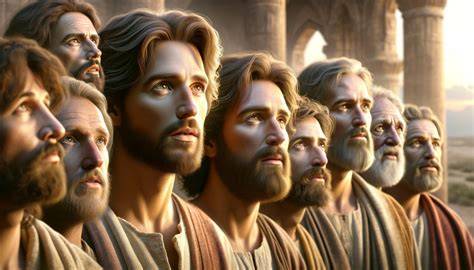
Does the Bible Give the Apostles’ Ages?
The Bible does not specifically give the ages of any of the original twelve disciples. However, a few observations can be made regarding their ages.
First, Scripture teaches Jesus was about 30 years old when He began His public ministry (Luke 3:23). In Jewish culture, disciples (or students) were generally younger than their teacher. Therefore, it is likely the disciples were under 30 years of age.
Jesus also referred to them as “little children,” possibly indicating they were several years younger than He. This description does not establish their precise ages, but it is consistent with the view that at least some of the apostles were young men rather than middle-aged or elderly adults.
Evidence from the Apostles’ Occupations and Families
Many of the disciples worked as fishermen. James and John specifically left their father in the boat to follow Jesus (Matthew 4:21-22). This means they were old enough to work full-time.
They were likely at least teenagers by this time, since they could leave home to follow a rabbi. Their work and ability to make an independent decision to follow Jesus suggest that they were not small children, even if some may have been adolescents.
Peter is noted as already married when he began following Jesus. His sick mother-in-law is mentioned in Matthew 8:14. This means Peter was at least old enough to be married; at the very least, Peter was in his mid-teens.
These details provide only broad limits. Peter’s marriage may indicate that he was older than several of the other disciples, while the occupations of James and John show that they were capable of adult responsibilities despite possibly being relatively young.
Jewish Religious Training and the Possible Age of John
Jewish culture made it customary for a child to begin his religious training at the age of 5 and to continue to age 12 or 13. If a boy was intelligent and interested in continuing his religious studies, he would then seek a rabbi to disciple him and would follow and pattern his life after the rabbi until age 30.
At that time he could take on disciples of his own. A young man’s discipleship training under a rabbi would usually begin between the ages of 13 and 15.
If this pattern was consistent with the followers of Jesus, some of them may have joined Jesus as early as age 13 and would have still been teenagers at the time of His death, resurrection, and ascension.
Though the Bible does not give the exact ages of the disciples of Jesus, it is likely they were all between the ages of 13 and 30 at the time they followed Jesus. This view allows for some variety in their ages, with John likely the youngest and Peter perhaps one of the oldest since he was already married.
Estimates That Place John Between 15 and 18
Extensive research revealed that, based off historical and cultural evidence, John, the youngest, was anywhere from 15 to 18 and Peter, the oldest, 26 to 30.
This means that, on average, most of the apostles were somewhere in their 20s during the time of Christ’s ministry, a far cry from the typical depiction we are accustomed to.
These estimates are not stated directly in Scripture. They are based on the age of Jesus, Jewish educational customs, the apostles’ occupations and family circumstances, and later information about the length of their lives and ministries.
John’s Later Life and Its Significance
The later lives of many of the disciples help to reveal their possible ages. John lived the longest, passing away in the last decade of the first century, according to church history.
This was 60 years after walking with Jesus. Even if John were in his 90s when he died, he would have been no more than 30 years old at the time he was with Jesus.
Since John was old enough to care for the mother of Jesus (John 19:26-27), he was probably at least 20 at the time of the crucifixion. This suggests that John may have been a teenager when he first followed Jesus and a young adult during the final events of Jesus’ earthly ministry.
The Gospel of Matthew was written 30-40 years after Jesus’ resurrection, indicating that Matthew was perhaps in his 20s when following Jesus on earth.
Peter referred to himself as an old man when he was in his 60s, about 30 years after walking with Jesus. This may mean Peter was in his 20s or 30s at the time he was with Jesus.
Why Traditional Images Often Make the Apostles Look Older
Growing up, I was used to seeing the Twelve Apostles depicted as middle age or older: Da Vinci’s Last Supper, Ghirlandaio’s Vocation of the Apostles and Caravaggio’s The Incredulity of St. Thomas, to name a few.
Mel Gibson’s The Passion of the Christ in 2004 broke away from this with a fairly young actor, Christo Jivkov (around age 29), who played the disciple John. Still, the others were largely in their 40s and 50s - mature, grown adults.
It wasn’t until Dallas Jenkins’ The Chosen that I realized the apostles were younger than I ever imagined. Like millions of Christians around the world, I’ve become enamored with The Chosen.
As the show runners remind us, it’s not a substitute for Scripture by any means, but an aid. There’s something powerful about seeing these crucial biblical moments brought to life in a realistic, relatable manner.
The Apostles’ Youth in The Chosen
One of my favorite scenes from the show is the portrayal of Luke Chapter 5, “The Call of Simon the Fisherman.” In it, Simon’s initial resistance to accept Jesus as the Messiah is emphasized by actor Shahar Isaac.
He demonstrates the stubbornness and griping of an immature young adult who thinks he knows better, not the response of a humble, obedient full adult with life experience. But when his boat begins to overflow with fish, Simon’s disbelief turns into belief, and he throws himself at the feet of Christ, confessing his unworthiness.
It was here, at the feet of Christ with tears streaming down his face and a broken voice - a child begging their father for forgiveness - that I noticed just how young Simon truly was. From then on, I started focusing on the other apostles in the show.
Andrew, Simon Peter’s brother, appears slightly more youthful. Sons of Thunder, James and John, mirror Peter and Andrew’s age group. Little by little, each apostle is introduced and all seem to be between their mid-20s and early 30s.
This casting choice didn’t match the paintings, icons and other performances I’d come to know over the years. I’ll admit, seeing the apostles portrayed as older always left me confused.
How the Apostles’ Ages Affect the Chronology
In addition to imagining the apostles two to three decades older than Jesus, their Teacher (which didn’t make sense to me), I was curious when it came to the rest of their lives.
Because if Peter was 50 when he was called to follow Christ, that would have made him around 80 when he was martyred; maybe 60 if we go with one of the more youthful approaches, or upwards of 90 if we consider other depictions I’ve seen.
If John was only a few years younger, then he would have been nearly 100 when he wrote his Gospel. These ages aren’t outrageous per say, but imagining them like this took away some of my admiration of the true power of their sacrifices.
John’s Role Among the Twelve
John’s authoritative position in the church after the Resurrection is shown by his visit with St. Peter to Samaria to lay hands on the new converts there.
It is to Peter, James (not the brother of John but “the brother of Jesus”), and John that St. Paul successfully submitted his conversion and mission for recognition.
What position John held in the controversy concerning the admission of the Gentiles to the church is not known; the evidence is insufficient for a theory that the Johannine school was anti-Pauline-i.e., opposed to granting Gentiles membership in the church.
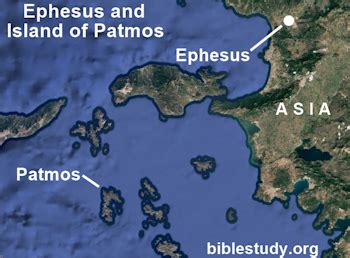
John’s subsequent history is obscure and passes into the uncertain mists of legend. At the end of the 2nd century, Polycrates, bishop of Ephesus, claims that John’s tomb is at Ephesus, identifies him with the beloved disciple, and adds that he “was a priest, wearing the sacerdotal plate, both martyr and teacher.”
That John died in Ephesus is also stated by St. Irenaeus, bishop of Lyon circa 180 ce, who says John wrote his Gospel and letters at Ephesus and Revelation at Pátmos.
Traditions About John’s Death
During the 3rd century two rival sites at Ephesus claimed the honor of being the apostle’s grave. One eventually achieved official recognition, becoming a shrine in the 4th century.
In the 6th century the healing power of dust from John’s tomb was famous (it is mentioned by the Frankish historian St. Gregory of Tours). At this time also, the church of Ephesus claimed to possess the autograph of the Fourth Gospel.
Legend was also active in the West, being especially stimulated by the passage in Mark 10:39, with its hints of John’s martyrdom. Tertullian, the 2nd-century North African theologian, reports that John was plunged into boiling oil from which he miraculously escaped unscathed.
During the 7th century this scene was portrayed in the Lateran basilica and located in Rome by the Latin Gate, and the miracle is still celebrated in some traditions.
In the original form of the apocryphal Acts of John (second half of the 2nd century) the apostle dies, but in later traditions he is assumed to have ascended to heaven like Enoch and Elijah. The work was condemned as a gnostic heresy in 787 ce.
Another popular tradition, known to St. Augustine, declared that the earth over John’s grave heaved as if the apostle were still breathing.
John’s Representation as a Young Apostle
The legends that contributed most to medieval iconography are mainly derived from the apocryphal Acts of John. These Acts are also the source of the notion that John became a disciple as a very young man.
Iconographically, the young beardless type is early (as in a 4th-century sarcophagus from Rome), and this type came to be preferred (though not exclusively) in the medieval West.
In the Byzantine world the evangelist is portrayed as old, with long white beard and hair, usually carrying his Gospel. His symbol as an evangelist is an eagle.
Because of the inspired visions of the book of Revelation, the Byzantine churches entitled him “the Theologian”; the title appears in Byzantine manuscripts of Revelation but not in manuscripts of the Gospel.
The Youngest Apostle in the Latter-day Saint Tradition
In the early days of the Church, it was common for members to be called to serve at young ages. For example, George W. Bean was called as a Seventy at age 14; Don Carlos Smith was called to preside over the High Priests’ Quorum at age 19; Joseph F. Smith was ordained as an elder and sent on a mission at age 15; and George A. Smith was called to be a member of the First Quorum of the Seventy at age 17 and as an apostle in the Quorum of the Twelve Apostles at age 21, making him the youngest apostle to ever serve in the Quorum of the Twelve Apostles (500 Little-Known Facts in Mormon History).
John Willard Young: Ordained an Apostle at 11
However, he was not the youngest apostle ever ordained. According to Todd Compton, a Mormon historian and author of John Willard Young, Brigham Young, and the Development of Presidential Succession in the LDS Church, John Willard Young was the youngest person ever ordained an apostle, which happened during a private event in 1855.
President Brigham Young ordained his 11-year-old son John Willard Young as an apostle shortly after John received his temple endowment, though John never joined the Quorum of the Twelve Apostles.
Brigham Young later privately set apart three other sons and Joseph F. Smith as apostles who served as "assistant Counselors to the First Presidency."
Though John Willard "was publicly sustained as an assistant counselor to Brigham," he focused most of his time on business endeavors and lived most of his life in New York, according to Compton.
| Person | Age or estimated age | Position or significance |
|---|---|---|
| John, son of Zebedee | 15 to 18 | Traditionally considered the youngest of Jesus’ original Twelve Apostles |
| Peter | 26 to 30 | Estimated to be among the oldest of Jesus’ apostles; he was already married |
| George A. Smith | 21 | Youngest apostle to serve in the Quorum of the Twelve Apostles |
| John Willard Young | 11 | Youngest person ever ordained an apostle in the Latter-day Saint tradition |
Why John Willard Young’s Ordination Was Unusual
The secrecy of this ordination is evidenced by the fact that Young counseled the apostles to make a record of it, but instructed them not to tell anyone not present about the event. Young's first counselor, Heber C. Kimball, was not present.
A few days later, Kimball approached Joseph F. and told him that he had received a spiritual impression that Joseph F. would someday become an apostle. Joseph F. felt somewhat embarrassed that he could not tell Kimball he already was an apostle.
The private nature of John Willard Young’s ordination and his absence from the Quorum of the Twelve are important distinctions. He was ordained an apostle, but his case differs from that of George A. Smith, who served as an apostle in the Quorum of the Twelve Apostles.
A Change in the Understanding of Apostolic Seniority
In the early church years, the method of judging apostolic seniority was base on the date of ordination. Since John Willard was ordained at such a young age, after the death of President Lorenzo Snow, he would have become the next president of the Church instead of President Joseph Fielding Smith.
However, President Snow announced apostolic seniority should be gauged by the entry date into the Quorum of the Twelve, making Joseph Fielding Smith the next prophet.
George A. Smith: Youngest Apostle in the Quorum of the Twelve
George A. Smith was born in 1817, and he was the cousin of the Prophet Joseph Smith. According to lds.org, George A. Smith was deeply committed to the Church since his baptism in 1832.
“He trekked with Zion’s Camp in 1834, was driven with his ailing parents from Missouri in 1838, and in 1840, so ill he could barely walk, he left on a mission to England.”
During those trying times, he was ordained a Seventy in March 1835 at age 17 and as an apostle in the Quorum of the Twelve on April 26, 1839.
He later became a prominent pioneer in southern Utah, and St. George, Utah, may have been named after him. According to a BYU Scholars article, “His speaking talent, organizational and leadership ability, and political sagacity were given untiringly to the service of his church.”
He was a model Latter-day Saint; a good man possessed in large measure with friendliness, integrity, optimism, and unswerving loyalty to his leaders.
Smith had a strong relationship with both the Prophet Joseph Smith and President Brigham Young during his apostleship. He said, “I was always Joseph’s friend; his enemies are my enemies.”
George A. Smith died in 1875 at age 58. His grandson and namesake, George Albert Smith, later became an apostle and prophet of the Church.
He dedicated his whole life to church service and made a significant contribution in the early days of the Church.
He stated in an 1861 sermon: “The Priesthood which the Lord has conferred upon my head through his servant, and which in his abundant mercy has enabled me thus far to magnify, is my joy, my theme, and the thoughts and reflections of my soul are how and by what means I may in the best possible manner make honorable all those blessings and ordinations which have been conferred upon my head. It is and ever have been, since I entered into this church, my desire to be found among those who are valiant for the truth.”
How the Answers Differ by Tradition
The phrase “youngest apostle” can refer to different historical groups. John is the traditional answer when the question concerns the original Twelve Apostles of Jesus, but his exact age is not recorded in the Bible.
John Willard Young is the answer when the question concerns the youngest person ever ordained an apostle in the Latter-day Saint tradition, because he was ordained at age 11.
George A. Smith is the answer when the question concerns the youngest apostle to serve in the Quorum of the Twelve Apostles, because he entered that quorum at age 21.