Deborah is the only female judge in the Bible. She served ancient Israel as a prophet, judge, military leader, songwriter, and minstrel in Judges 4-5.
As a judge, she held court under the Palm of Deborah between Ramah and Bethel in the hill country of Ephraim, and the Israelites went up to her to have their disputes decided. She also led Israel during a period of oppression, summoned the military commander Barak, accompanied him into battle, and proclaimed the divine promise of victory.
Who Was Deborah?
Deborah is introduced in Judges 4:4 as “a prophet, the wife of Lappidoth,” and she was leading Israel at that time. Her name means bee or even honeybee.
Deborah, the only female judge in the Bible, excelled in multiple areas. Clearly one of the Bible’s most outstanding figures, she served ancient Israel as a prophet, judge, military leader, songwriter, and minstrel (Judges 4-5).
The two chapters show her exemplary moral character and indicate the people gave her great love and respect. Like Moses before and David afterward, she fused in herself the roles of prophet, national leader, and military commander.
Thought to be an Ephramite because she resided in Ephraim (4:5), Deborah judged and led Israel for 60 years in the 12th century B.C. Her oversight covered approximately 20 years of national hardship before the Canaanite war and then a peaceful aftermath of 40 years.
Deborah is the only female judge and the only judge to also be called a prophet. These roles were traditionally male roles, as they are mostly still today.
“Wife of Lappidoth” or “Woman of Torches”?
Deborah, introduced as “a prophetess, the wife of Lappidoth”, may make you think her first role is as wife. However, a better understanding of the phrase, “wife of Lappidoth”, from the original Hebrew, notes this phrase can mean either “wife of Lappidoth” or “woman of torches.”
“Wife of Lappidoth” also could be translated “woman of torches” or “woman of flame”; rabbinic tradition notes that Deborah was “a great light in Israel.”
Since we don’t see anything else in Judges 4-5 about a husband or indicating she has a traditional domestic role of “wife”, I’m going with Deborah as a “woman of torches”, or “fiery woman”.
She was wise, judicious, assertive, respected, and fearless. She didn’t back down from a fight and did not flinch when Barak said he would only go to battle if she went with him.
Israel’s Oppression Under Jabin and Sisera
Deborah’s tenure starts with the Lord’s judgment against Israel. Because the Israelites did evil in the eyes of the Lord, the Lord sells them into the hand of Jabin, a king in Canaan.
Again the Israelites did evil in the eyes of the Lord, now that Ehud was dead. So the Lord sold them into the hands of Jabin king of Canaan, who reigned in Hazor.
Sisera, the commander of his army, was based in Harosheth Haggoyim. Because he had nine hundred chariots fitted with iron and had cruelly oppressed the Israelites for twenty years, they cried to the Lord for help.
Confined to the unproductive hilltops and denied commercial access on the highways, the Israelites suffer economic hardship under the Canaanites.
The cycle in the book of Judges presents Israel’s repeated pattern of sin, oppression, crying out for help, and divine deliverance. Israel sins, God gives them over into the hands of their enemies in the land, they subsequently cry out for help, and God “raises up” a judge to act as a savior and deliverer for them.
Deborah as Judge
She held court under the Palm of Deborah between Ramah and Bethel in the hill country of Ephraim, and the Israelites went up to her to have their disputes decided.
The way the term is used in this book, it means something more like a leader of Israel who seeks justice for Israel, which often includes a strong protective component - i.e., defending the nation from outside threats to Israel’s shalom (peace).
As a judge, the Israelites came to her. The Israelites. It doesn’t say only women. God’s people, in a patriarchal time, came to a woman to have a woman decide their disputes.
To issue judgments that effected not just women, but men as well. The men submitted to her authority.
Deborah judged under a palm tree-a setting, rabbinic tradition maintains, that validated her fairness, openness, and refusal to show partiality.
Deborah is introduced, as are the other 11 judges in the Book of Judges, without fanfare. The Bible records no dissent or rebellion against her.
Deborah as Prophet
More importantly, in this regard, she is called a “prophetess.” A prophet was one who acted as a conduit of divine speech, a mouthpiece for God.
Deborah’s role as judge would have afforded her the opportunity to make divinely authorized verdicts which are, for all intents and purposes, a form of “proclamation.”
When she tells Barak that she will go with him, but notes that a woman will be the one to subdue Sisera, this has all the marks of being a word of divine prophecy.
Arguably, Deborah first was recognized as a prophet, then as judge/leader, next in a military role (5:15), and finally as a songstress.
Deborah Summons Barak
Deborah summons Barak from Kadesh in Naphtali; she tells him the Lord commands him to position himself at Mount Tabor and bring in 10,000 from the tribes of Naphtali and Zebulon.
She sent for Barak son of Abinoam from Kedesh in Naphtali and said to him, “The Lord, the God of Israel, commands you: ‘Go, take with you ten thousand men of Naphtali and Zebulun and lead them up to Mount Tabor.’”
The Lord shares his strategy and promises deliverance and victory: “I will draw out Sisera, the general of Jabin’s army, to meet you by the Wadi Kishon with his chariots and his troops; and I will give him into your hand.”
“I will lead Sisera, the commander of Jabin’s army, with his chariots and his troops to the Kishon River and give him into your hands.”
Barak said to her, “If you go with me, I will go; but if you don’t go with me, I won’t go.”
“Certainly I will go with you,” said Deborah. “But because of the course you are taking, the honor will not be yours, for the Lord will deliver Sisera into the hands of a woman.”
So Deborah went with Barak to Kedesh. There Barak summoned Zebulun and Naphtali, and ten thousand men went up under his command. Deborah also went up with him.
Deborah as Military Leader
Some translations of the original text indicate she may have gone into the thick of battle, not just watched from the sidelines. She was a warrior.
Chapters 4 and 5 provide character sketches of those involved in the war. Barak, at Deborah’s command, suddenly becomes Israel’s general; he bargains with Deborah to come with him to the war; she agrees but prophesies that “the Lord will sell Sisera into the hand of a woman.”
The tribes of Naphtali and Zebulon followed by Ephraim, Benjamin, and Issachar and the men of Machir; all march with Barak and are praised by Deborah.
The tribes of Reuben, Dan, and Asher and the men of Gilead are ridiculed for failing to heed the summons to the Holy War.
Tribes assemble under Barak’s order. Sisera hears and takes his chariots to the Wadi Kishon. Making good his word, the Lord throws Sisera and his forces into panic.
Then Deborah said to Barak, “Go! This is the day the Lord has given Sisera into your hands. Has not the Lord gone ahead of you?” So Barak went down Mount Tabor, with ten thousand men following him.
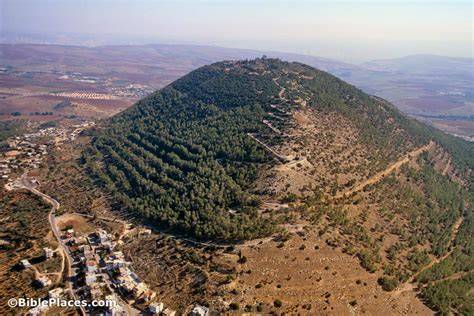
The Battle Against Sisera
At Barak’s advance, the Lord routed Sisera and all his chariots and army by the sword, and Sisera got down from his chariot and fled on foot.
Barak pursued the chariots and army as far as Harosheth Haggoyim, and all Sisera’s troops fell by the sword; not a man was left.
Seeing that the battle goes against the Canaanites, Sisera flees on foot. Exhausted, he arrives at Jael’s tent.
The chapters present the possibility of three war zones: the initial battleground of Mount Tabor and the Jezreel Valley; Tanaach; and the gates of Hazor and other Canaanite cities.
Two themes pervade the Song of Deborah. First, the victory belongs to YHWH - the Divine Warrior. It was not primarily human strength and strategy that was victorious, but God’s own power at work on behalf of his people.
Indeed, the stars in heaven fought against the doomed Sisera and the Canaanites. Credit for the Holy War and inevitable victory goes to Yahweh.
Jael and the Woman Who Defeated Sisera
Sisera, meanwhile, fled on foot to the tent of Jael, the wife of Heber the Kenite, because there was an alliance between Jabin king of Hazor and the family of Heber the Kenite.
Jael went out to meet Sisera and said to him, “Come, my lord, come right in. Don’t be afraid.” So he entered her tent, and she covered him with a blanket.
“I’m thirsty,” he said. “Please give me some water.” She opened a skin of milk, gave him a drink, and covered him up.
“Stand in the doorway of the tent,” he told her. “If someone comes by and asks you, ‘Is anyone in there?’ say ‘No.’”
But Jael, Heber’s wife, picked up a tent peg and a hammer and went quietly to him while he lay fast asleep, exhausted. She drove the peg through his temple into the ground, and he died.
Just then Barak came by in pursuit of Sisera, and Jael went out to meet him. “Come,” she said, “I will show you the man you’re looking for.” So he went in with her, and there lay Sisera with the tent peg through his temple-dead.
Jael the Kenite invites the fleeing Sisera into her tent and murders him. As Sisera sleeps, Jael calmly and quietly hammers a tent peg into his temple.
Jael’s actions gave the Israelites victory. Deborah told Barak in Judges 4:9 that the Lord would hand over Sisera to a woman, meaning a woman would win the battle and take the glory, not the male Barak or any other male.
That is exactly what happened. God delivers this powerful army into the hands of two women.
A Tale of Two Heroines
The two heroines in this story are Deborah and Jael. In their stories, there are similarities and differences.
For instance, they are both doing what God called them to do. Deborah was judging, Jael was caring for her household. God spoke to both of them as they were doing the ordinary activities of life and both obeyed God when He spoke.
Deborah’s leadership lasted for a long period of time. She was a judge and regularly proclaimed a ruling among the people.
Jael was called upon to perform a single act at one specific point in time. At this time in history, everything connected with a tent was a woman’s job.
Jael had become an expert in all the phases of making, pitching and striking tents. This was why Jael was able to turn her skill to a good account, as with a tent pin in one hand and with a maul in the other.
After this act is done she is not mentioned again in the Bible.
“A Mother in Israel”
Deborah calls herself a mother in Israel. Probably one of the highest designations in scripture, it indicates authority.
Judges 5:7, in reference to the unique time of deliverance ushered in by Deborah, refers to her as “a mother in Israel.” While this could be taken as a bare statement of fact that she had biological children, there is good reason to believe that she rose up as a national caretaker; or, as the New English Translation puts it, “a motherly protector in Israel.”
However you look at her “motherly” role, there is little doubt that the book of Judges sets her up to be a hero in Israel and a wise judge for the people.
Centuries afterward, the wise woman of Abel Beth Maacah will describe her city with the same phrase in a conversation with military leader Joab during a break in a civil war.
The Song of Deborah
Judges 5 narrates the same story of Deborah and Barak’s military success by the help of the LORD, but in poetic terms.
The poetry in Chapter 5, the Song of Deborah, smacks of realism and emphasizes the role of women. The ballad tells a gripping story, ringing with eyewitness details.
One easily imagines Deborah strumming and beckoning Barak to walk and sing with her among their victorious countrymen. Her leadership style favors a team approach; she willingly recognizes those who joined and served.
She not only praises others but also thereby encourages them to ongoing service and development as leaders.
Considered one of the oldest pieces of Hebrew poetry, Deborah’s Song continues the Israelite tradition of immortalizing a victory in song. Both Moses and Miriam led the Israelites in songs of victory after the crossing of the Sea of Reeds.
Deborah’s song has many Hebrew words that are unknown now; that’s why its translations vary so much. Deborah sings about the Lord but to the Israelites.
For example, the earth trembled, the clouds poured water, the Lord marched, and the mountains quaked “before the Lord.”
With great force, Deborah prays that all the Lord’s enemies will share Sisera’s fate and likewise perish.
Deborah and Moses
Deborah’s role is meant to parallel that of Moses, the paradigmatic “prophet” and leader of Israel.
First, the unique construction of victory narrative in Judges 4 followed by a victory song in Judges 5 is found only again in Exodus 14-15, where Moses leads the people across the Red Sea by the power of YHWH and then Moses and Miriam sing victory songs.
Thus, when you read Judges 4-5, you are probably meant to think about Exodus 14-15, and making the connection between the two primary authorities in these stories, Deborah and Moses, would be difficult to miss for an Israelite reader.
Second, and perhaps more specifically and concretely, the language used of Deborah’s judicial role resembles that of Moses:
“[Deborah] used to sit under the palm of Deborah between Ramah and Bethel in the hill country of Ephraim; and the Israelites came up to her for judgment.”
“The next day Moses sat as judge for the people, while the people stood around him from morning until evening.”
Her prophetic gifting and the similarities of the crossing of the Sea of Reeds and Deborah’s War have led to the argument that Deborah was seen as “the Moses of her time.”
Women and Authority in Judges 4-5
The fact that the model judge of Chapters 4 and 5 is a woman is attention-getting. Within the category of Old Testament books called the “Historical Books”, the book of Judges stands out for having a female positioned in such a prominent leadership role.
At the very least, we see here that the notion of a woman’s place being only in the home, that women cannot fulfill leadership positions, or that women should be silent in meetings are complicated by Judges 4-5.
The first thing to reiterate is that Deborah receives a rather lengthy treatment early on in the book of Judges, and models a wise and strong form of leadership.
As a “judge” she clearly possesses governing authority. Indeed, unlike the other judges, she actually did happen to have a key law-court role, where Israelites, including men, came to her for “judgment.”
Given the national status of the “judge” in this time period, she would be the highest arbiter in Israelite society. Clearly YHWH felt Deborah capable of carrying out such a task, and apparently she acquitted herself remarkably.
One rebuttal that has been made in this regard is that God approved of Deborah’s making executive decisions, but she did not “preach” or “teach.”
In the first place, if we define “preach” as a proclamation of “the Gospel,” then really no one in the Old Testament did that. However, if “preach” is understood more generally as “proclamation” that is authoritative and divinely instituted, then certainly Deborah did this much.
Both men and women are made in the image of God. Leadership resides not in gender but in character and gifting.
The Israelites recognized her abilities and prospered under her tenure.
Deborah’s Spiritual Leadership
Deborah was able to turn the Israelites back to worshipping God. This story of Deborah is sandwiched between the Israelites doing evil in the sight of God.
In Judges 4:1, it notes unrest was brought upon the Israelites for not following God and doing evil in His sight. Again, in Judges 6:1, the Israelites did evil in the eyes of God, so He again brought about unrest and oppression.
However, in Judges 4-5, after Sisera was defeated, there was peace for 40 years which leads you to assume the Israelites did what was right in God’s eyes.
The credit for that goes to the leader of Israel at the time - Deborah. Just as she focused her song in Judges 5 as a praise to God, so she must have lived her life as a judge and prophet, turning Israel’s eyes back to God.
Otherwise, it is reasonable to assume, they would have continued to be attacked and oppressed.
The Victory and Forty Years of Peace
On that day God subdued Jabin king of Canaan before the Israelites. And the hand of the Israelites pressed harder and harder against Jabin king of Canaan until they destroyed him.
This assassination led to freedom from the relentless opposition of the Canaanites for a time. They had peace for 40 years.
The two chapters begin with Israel’s disobedience, vividly describe a Holy War and its participants, and end with the victorious result: the land had rest for 40 years.
Put another way, the people sinned, learned from hardship, repented, and cried out to the Lord. The Lord responded with a plan of deliverance.
Deborah’s War changed history. Any dreams Sisera had to use those 900 chariots to defeat Egypt and become a world power literally got stuck in the mud when the Lord sent rain.
Deborah’s War effectively took the Canaanites off the world stage. The Israelites moved to the fertile valleys and vended their wares on recognized thoroughfares.
Deborah’s Legacy
Deborah is shown as a leader whose authority did not depend on a husband, brother, father, or military title. God affirmed Deborah as a leader in her own right because she loved and served God, and had the needed attributes of a leader.
Her example combines wisdom, courage, prophecy, judicial authority, military leadership, spiritual direction, and public recognition of others.
Her leadership style favors a team approach; she willingly recognizes those who joined and served. She not only praises others but also thereby encourages them to ongoing service and development as leaders.
According to rabbinic tradition, Deborah wrote Psalm 68; it clearly resembles both chapters, especially Judges 5.
According to another rabbinic tradition, descendants of Sisera, the Canaanite commander whose doom was prophesied by Deborah and fulfilled under Jael’s hand, taught children in Jerusalem.
If that tradition is true, then it shows one of the great themes of scripture. The judgeship of Deborah started with the Israelites’ sin but its legacy, in time, included God’s good work of redemption in the lives of the descendants of Israel’s enemy.
From the end of Deborah’s time onward, things really start to go downhill, beginning with Gideon and coming to a climax with Samson. The “heyday” of the judges, so to speak, has come to an end.