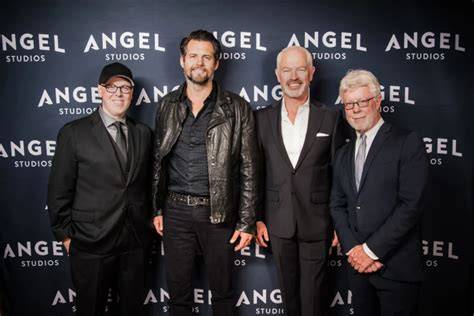
Angel Studios is a Utah-based Christian-adjacent streaming and film-distribution company founded by Mormon brothers, but it does not officially describe itself as either a Christian or Latter-day Saint company. Its stated mission is to create and distribute stories that “amplify light,” defining light through values such as truth, honesty, nobility, justice, authenticity, loveliness, admirability, and excellence.
The company’s Latter-day Saint identity is therefore central to its history and public perception, but not an official doctrinal foundation for its content. Angel Studios has distributed explicitly Christian works such as The Chosen and Sound of Hope, faith-adjacent projects such as Cabrini, Sight, and The Shift, and projects with no explicit Christian advocacy, including Rule Breakers, whose main characters are Muslim.
What is Angel Studios?
The Christian streaming and distribution service Angel Studios is a lightning rod of contemporary disputes about the place of Christian belief in mainstream media production and reception. The company's Mormon founders, the Harmon brothers, are overtly motivated by belief-based principles to “tell stories that amplify light.” Jeff Harmon says “truth should not be something that people look at subjectively.”
Yet the studio has been mired in controversy since its inception. Sued by Disney, losing the series The Chosen in legal arbitration, and generating sharp contention about representation in Bonhoeffer: Pastor, Spy, Assassin (2024) and Sound of Freedom (2023), the company’s beliefs impact the way they do business.
Although owned and run by Mormon brothers, Angel Studios has established itself as a darling of the far-right, attempting to appeal to a wide Christian viewership. Angel Studios serves as a contemporary gauge of disputes about what mainstream Christian media is, what it can do, and what it should do.
Angel Studios, Christianity, and Latter-day Saint identity
Essentially, Angel Studios is not actually a Christian film company. This is not a hot take. They, in fact, don’t even claim to be one.
In a page about their company values on their official website entitled “Why Angel Studios? What is our North Star?” the company states “We’re building a home for stories that amplify light (or as we call it, our North Star).”
The page goes on to describe, in generality, the company’s mission to amplify light and “truth” and combat darkness. But never once is Christianity mentioned.
Obviously, this will come as a surprise to many. Across the board, the content that Angel Studios has distributed has been overwhelmingly connected to the Christian faith, leading many people to assume that the company has some sort of basis in Christianity. But that basis is nowhere to be found, at least not officially.
When Angel Studios was founded in 2014, it was under the name VidAngel. Then, the company’s main business model was to take popular secular films with explicit content and censor/remove the adult content so that the films would be accessible to a wider audience.
This was all started by family members Neal Harmon, Daniel Harmon, Jeffrey Harmon and Jordan Harmon, alongside Benton Crane. They all identify as members of the Church of Jesus Christ of Latter Day Saints.
| Person | Role or association |
|---|---|
| Neal Harmon | Angel Studios CEO |
| Jordan Harmon | President |
| Jeffrey Harmon | Chief Content Officer |
| Daniel Harmon | Co-founder |
Latter Day Saints, historically known as the “Mormon” Church, view themselves as Christians according to their official website. But because of the church’s doctrine, which considers the Book of Mormon to be scripture inspired by God in addition to The Bible, many faith experts consider them to be another religion entirely.
“There are differences of what traditional Christians - Orthodox Christians, Catholics and Protestants - believe and what Latter Day Saints believe,” Lindvall said.
Regardless of whether that distinction has validity or not, Angel Studios doesn’t claim to be a Latter Day Saint company either, so that can’t be considered an official factor in the values of the company.
None of Angel Studios’ films have explored doctrine unique to the Latter Day Saints; the protagonist that the film Sound of Freedom (2023) was based on is a Latter Day Saint, but the film doesn’t delve into beliefs specific to the Book of Mormon or additional Latter Day Saint theology.
The moral basis of Angel Studios
The moral basis for Angel Studios is more complicated than people realize.
“Christians are very accepting and naive,” Terry Lindvall, the C.S. Lewis Endowed Chair in Communication and Christian Thought at Virginia Wesleyan University tells me. “Many of them are basically ignorant of their own doctrine, of their tradition.”
According to Lindvall and many others, the rapid rise of the film company Angel Studios is at least somewhat related to a kind of Christian ignorance.
Lindvall isn’t saying that Angel Studios is intentionally up to anything nefarious or misleading. Their films are telling stories that aim to amplify positive messaging.
What he is simply pointing out is a deeper religious and moral tension at work that many supporters and detractors of Angel Studios don’t even realize is in play.
That tension is important to explore, especially for people who support the studio and influence the studio’s decisions related to acquiring content.
The value proposition that many people believe that Angel Studios is making turns out to be quite different from the ideals the company commits to in reality.
The evidence shows that instead of having a religious basis, it is vaguely conservative and provides surface-level affirmation of then culture of American Christianity.
“The emphasis is on creating a shared moral and political culture, which is where the Mormon and Christian worlds overlap,” Sheldon said.
Religious diversity inside the company
Beyond official claims on the company website, Angel Studios lacks religious unity on a staffing level as well.
David Fischer, who serves as the Director of Business Affairs and Acquisitions for Angel Studios, identifies as a Catholic. He mentioned that there are members of the company who don’t even identify as religious at all, though he asserted they are all united around a common mission of promoting positivity and “light”.
“When I experienced that ‘North Star’ at the company, and I saw it lived out in a certain way where everyone that I was engaged with, whether they were religious or not, it wasn’t kind of based on religion per se, it was based on these sentiments of nobility and excellence,” Fischer said.
So beyond the company’s lack of explicit religious claims in its official branding, religious unity is not represented in its hiring pool.
If they can still allow a variety of people to come in and make their films and distribute them, I think that’s always a good thing. I like to see people who haven’t had an opportunity make films,” Lindvall said.
What does “amplifying light” mean?
How do we define light? To us, light means stories that are true, honest, noble, just, authentic, lovely, admirable, or excellent.
Stories that are true to the human experience-that raise, inspire, and move us-deserve to be shared and cherished.
That’s why Angel is committed to creating authentic films and shows that resonate with real people-seeking to address the unspoken needs of audiences.
From the emotional journey of The Sound of Freedom to the inspiring courage of Bonhoeffer: Pastor. Spy. Assassin., Angel movies shine a light on stories that speak to the soul.
Series like The Wingfeather Saga and and Tuttle Twins inspire young minds and instill values of empathy, courage, and wisdom-proving that even the youngest hearts can be touched by stories that are genuine, bold, and meaningful.
Christian themes without explicit religious labeling
The studio has touched on Christian themes in most of its content, including its theatrical releases so far. But not all of them - Rule Breakers (2025) features Muslim main characters and most reviews claim the film steers clear of Christian advocacy entirely.
“A project like ‘Rule Breakers’ is a really tough project to get distribution for, and we were really happy that the [Angel] Guild supported it, wanted to see it go forward,” Fischer said of Rule Breakers (2025).
In addition, the films that have tangential religious themes don’t even claim to be faith-associated on the surface - many of the official trailers do not mention Christian themes.
Trailers are important to the marketing of any film, but they actually seem to be especially key to the success of Angel Studios.
“The trailers are really attractive, they look good in marketing,” said Zachary Sheldon, a Lecturer in the Department of Film and Digital Media at Baylor University. “Ultimately, that’s the point is to get you to see the movie, it sort of doesn’t matter how good the movie is.”
They are able to attain such impressive trailers because of their production value, which has consistently impressed critics across the board.
“These are very professional productions,” said William Bibbiani, a professional film critic who writes for The Wrap and other major publications.
How Angel Studios presents its films
Official synopses do not mention Christian themes either.
The film The Shift (2023), for example, is clearly a reimagining of the story of the Biblical Book of Job upon viewing. But the official synopsis for the film on the Angel Studios website reads, “Kevin Garner (Kristoffer Polaha) travels across worlds and dimensions to reunite with Molly (Elizabeth Tabish), the love of his life. A mysterious adversary known as The Benefactor (Neal McDonough) upends Kevin’s world as he tries to escape an alternate dystopian reality.”
There is nothing to indicate that this film isn’t a secular science fiction film, and it’s entirely plausible that a typical fan of sci-fi or multiversal films may not be aware of Angel Studios’ reputation and see the film unaware of the religious content they are going to experience.
So, other than the small sample size of Angel Studios content in recent years, the company’s reputation as a Christian one has very little basis, and the studio itself doesn’t even claim to have a strictly Christian mission.
Major films and the range of Angel Studios content
Utah-based Angel Studios can fairly be called a Christian company, but its offerings vary in how Christian they are, a fact many critics have overlooked.
Angel Studios was founded by Mormon brothers; its films portray stories drawn from a variety of Catholic and Protestant sources, as well as non-religious ones.
The studio’s digitally distributed television series about Jesus, The Chosen, was obviously Christian. It also delivered big box office numbers when it was shown in theaters.
Cabrini, released in March, was about an immigrant nun who overcame adversity in late nineteenth-century New York City to create a global network of hospitals.
It too made healthy profits and enjoyed a long theater run. In addition, Cabrini has a near perfect score among viewers and reviewers whose opinions are compiled on Rotten Tomatoes.
Cabrini (2024) earned a 90% critic score on Rotten Tomatoes, with 92 verified critics leaving a review of the film.
In May, Sight, about an immigrant eye surgeon struggling to help blind children see, had religious overtones.
“The story of ‘Sight’ is really a story not about the good doctor bringing sight to these patients that he had but it was actually how the patients brought sight to him to see much more clearly who he was and why he was,” Fischer said of Sight (2024).
Sound of Freedom was not a Christian film in any explicit way.
Sound of Hope is.
Sound of Hope: The Story of Possum Trot
The latest offering from Angel Studios, Sound of Hope: The Story of Possum Trot, is the true story of a predominantly black community in East Texas where twenty-two families belonging to a single church in the late 1990s adopted seventy-seven foster children.
It’s a beautiful movie. The Reverend W. C. Martin (Demetrius Grosse) and his wife, “The First Lady” Donna Martin (Nika King), adopt four of the hardest-to-place children in the foster care system.
Social worker Susan Ramsey (Elizabeth Mitchell, of Lost fame) tries to persuade the couple not to adopt a young girl called Terri (Diaana Babnicova), a child so badly traumatized that she is almost impossible to endure: she thinks she’s a cat.
Yet the Martins insist. The many difficulties they face with Terri and their other adopted children, and the troubles of the other families within the church who follow their example, are detailed throughout the film.
It’s a movie about Christian charity-and how hard it can be.
Sound of Hope, in theaters nationwide, is not a complicated film, and that’s a good thing. It’s an inspiring tale that doesn’t try to surprise viewers, because that’s not the point.
It delivers what the audience would expect when purchasing their tickets. Hope’s simplicity is integral to its quality.
This is the kind of “basic” movie I grew up watching, as a part of Generation X, and it will feel familiar to other generations born in the twentieth century, too.
It’s a movie made for regular people of any age or class; it puts on no airs.
Angel Studios makes normal movies for normal people in an age when that can be rare. Their movies are for the people coming to see them-and for moviegoers as they are, not as some Los Angeles director or producer would like his audiences to be.
Sound of Freedom
Sound of Hope is not a sequel, but it thematically resembles Angel Studios’ 2023 monster hit movie about sex trafficking, Sound of Freedom, in that both are about saving children at risk.
Freedom made $250 million.
Many critics portrayed Sound of Freedom as a right-wing Christian extremist film, on account of the lead actor Jim Caviezel’s alleged promotion of conspiracy theories.
The Nation called it a “QAnon Fever Dream.” It wasn’t that. How many critics actually watched it?
Audience, accessibility, and political perception
Angel Studios seems primarily concerned with reaching large audiences whether or not they are labeled conservative or Christian.
Its various offerings share a level of quality not commonly achieved by other Christian-based or Christian-adjacent companies of the past, which may or may not have had faith but lacked talent to appeal beyond the proverbial choir.
As the iconic King of the Hill cartoon character Hank Hill once said about terrible Christian rock bands, “Can’t you see you’re not making Christianity better, you’re just making rock’n’roll worse?”
Angel Studios makes good movies its priority.
It’s hard to imagine this company being as commercially successful as it has been if its products were all message and no entertainment.
Much of Hollywood has spent years trying to corral general audiences into buying whatever strange woke, trans, racialized, gender-fluid “ism” elites happen to be selling at a given moment.
Angel Studios’ works are not necessarily aimed at attacking such ideologies, but they are free and clear of them.
They are an escape from a Hollywood that too often seeks to impose its values on us.
Ultimately, though the messaging of Angel Studios is certainly targeted to conservative people groups, that does make the films more wide reaching and accessible for people who may disagree on theology but agree on morality.
The Angel Guild and audience control
Angel Studios has a unique relationship with their fans through the Angel Guild, which is a subscription-based crowdfunding model.
Each member of the Angel Guild, whether they have a basic plan or premium plan, gets to vote on what films get made by the studio, which plays a critical role in what eventually does or doesn’t hit theaters.
The Angel Guild is our community of members who’ve joined the mission to bring meaningful, inspiring, and worthwhile stories to life.
When you join the Guild, you gain access to Angel’s entire library of movies and shows, including weekly releases, while helping us expand our library with even more stories that uplift and inspire.
By supporting Angel, you’re not just enjoying great entertainment-you’re playing a vital role in building a collection of films and series that leave a lasting impact.
Your continued support helps us create new movies and episodes every week, all while empowering storytellers who value what truly matters.
The studio’s overall intention is to circumvent what its founders have described as Hollywood’s “gatekeeping.”
Movie pitches for the studio are filtered through an “Angel Guild” that currently has more than 100,000 members who pay a base membership fee of $20 a month.
The guild largely crowdfunds Angel productions, voting on what they want and don’t want to support.
As co-founder Neal Harmon put it: “Angel’s fine with the craft of Hollywood and the capability, but then the gatekeeper and the decision-making we feel like has lost its way, it’s trapped in a bubble. And we’ve flipped the power structure so that the Angel community, the Angel Guild makes the decisions, rather than a few elite decision-makers.”
Sheldon pointed out that no matter who may be working at the company or what kind of content those filmmakers may want to see, the Angel Guild model allows film fans to have a significant amount of power.
“You become intensely beholden to your stakeholders in terms of the messaging you can convey,” Sheldon said.
This is something that even the studio itself boasts about.
“I love that Angel Studios starts with the audience,” Fischer said. “There’s no team of us, no matter how high we are at the company, that sits around a table and greenlights a film. It always starts with the audience saying this is a film we want to see.”
How projects move through Angel Studios
Are you a filmmaker with a project that amplifies light? We’re seeking concept videos (Torches) and completed films or series that are true, honest, noble, just, authentic, lovely, admirable, and excellent.
Whether your project is newly created or already licensed, if it aligns with our mission, follow these steps to submit.
- Submit Your Project
- Guild Voting
- Angel Review
- Distribution
You’ll submit details about your project, its current stage of production, a video file, and the application fee.
The Guild will vote on your project and decide if it meets the requirements for Angel partnership.
Once you pass the Guild, we'll consider your project for a potential partnership with Angel.
We’ll work with Angel Funding to start raising the capital to fund the production.
Why the Guild matters to Angel’s identity
So what is the basis for the specific kind of light that Angel Studios amplifies? As it turns out, it’s the fans.
Whatever the fans consider to be “light”, and whether they believe Angel Studios is the right company to amplify that light, will likely shape the messaging that Angel Studios amplifies in the future.
Or whether they make anything at all.
The financial aspect of the Angel Studios model could fuel their vision for the future of the company.
There are traditional Christians and Latter Day Saints both who want to see their films delve into more theological themes.
There are film fans who are critical of the quality of the films and clamor for more nuance.
And on the other hand, there are plenty of fans who are big fans of the films and are perfectly fine with, or unaware of, the complications that occur below the surface.
But whether an individual is a fan that wants to see the current ways reinforced or a critic who wants to see things change, the financial aspect of the Angel Studios model could fuel their vision for the future of the company.
So people, especially those who identify as Christians, want to see changes in the types of films that are made at Angel Studios, they have access to the kind of power to make at least a small change.
They just need to stay informed about the companies they support, convicted about what they actually believe, and thoughtful about how those two things align.
Commercial success and audience response
I tend to go to movie theaters on weekdays during the daytime, when the crowds are generally smaller than on a Friday or Saturday night.
I saw Sound of Hope on a Friday at noon on its second day of release in my hometown of Charleston, South Carolina.
The theater was roughly 70 percent full, the audience about half black and half white.
It was seemingly working-class people and retirees.
The movie was well received-there was applause at the end, with a smattering of sniffles and “amens” throughout.
At the end of each Angel Studios movie there is a plea to “pay it forward” by purchasing tickets for other people through a barcode that is presented on-screen.
At my showing, a significant number of people were doing just that.
Sound of Hope may not match Sound of Freedom’s meteoric success.
As of this writing, the movie has not come close to replicating the financial performance of the earlier film.
But my aunt asked me about Hope and plans to see it.
My grandmother asked me about it too.
Word of mouth was a primary driver behind Sound of Freedom’s ascent.
Whatever Sound of Hope ultimately earns, it advances a goal that powerfully motivates Angel Studios and its fans: independence-rejecting elites and their diktats, getting away from how low minds in high places want to define us, and getting back to what best defines normal.
Angel Studios as a point of cultural conflict
Because of all of this, Angel Studios could face a lot of criticism from many different groups.
Traditional Christians and Latter Day Saints may want to see its films explore more specific theological themes, while other viewers may question the company’s religious ambiguity, political associations, or artistic choices.
Film fans who are critical of the quality of the films may clamor for more nuance.
At the same time, many supporters value the studio precisely because its films offer accessible moral narratives without requiring agreement on every point of theology.
Angel Studios makes normal movies for normal people in an age when that can be rare.
If they can still allow a variety of people to come in and make their films and distribute them, I think that’s always a good thing. I like to see people who haven’t had an opportunity make films,” Lindvall said.
The company’s Mormon origins help explain its language of moral purpose, family participation, and resistance to centralized cultural authority. They do not, however, establish that every Angel Studios project expresses Latter-day Saint theology.
Angel Studios is best understood as a media company shaped by Latter-day Saint founders, Christian and conservative cultural concerns, audience-funded decision-making, and a deliberately broad vocabulary of moral “light.”