The Level III Neonatal Intensive Care Unit at The Christ Hospital’s Mt. Auburn Birthing Center provides specialized care for premature infants and newborns who need additional medical support while keeping families nearby in a nurturing environment. The unit is designed for newborns with greater needs and combines advanced neonatal services with a family-centered approach.
The Christ Hospital NICU provides care for babies born prematurely, babies who require extra support after birth, babies from multiple pregnancies, and newborns whose parents have experienced a previous premature birth. The NICU provides care for newborns as early as 23 weeks.
Who May Need Care in the NICU
Newborns who arrive prematurely often need extra support to continue their physical and neurological development outside the womb. The NICU also cares for infants who develop unexpected medical complications or require specialized monitoring, breathing assistance, nutrition, medication, or other neonatal services.
Families expecting multiples and parents with a history of premature birth may receive care involving the Level III NICU. Dedicated rooms are available for twins and other multiples so babies can remain close together while receiving intensive care.
What Level III Neonatal Care Means
Neonatologists and specially trained nurses provide the comprehensive neonatal care of a Level III NICU, including placing chest tubes and peripherally inserted central catheter (PICC) lines. The lines provide your newborn with nutrition and medication. And if they need help breathing, we offer mechanical ventilation.
Non-surgical care in the NICU may include advanced imaging, including MRI, CT scans, and echocardiography. The care team can also draw on dedicated respiratory therapists, nutritionists, neonatal pharmacists, and occupational therapy subspecialist support from Cincinnati Children's Hospital Medical Center.
When an unexpected complication occurs, high-risk obstetricians are on call 24 hours a day, seven days a week. The maternity care team may also include physicians, certified nurse mid-wives, certified nurse anesthetists, neonatal nurse practitioners, and registered nurses.
Advanced Support for Breathing and Development
If a newborn needs help breathing, the NICU offers mechanical ventilation. Developmentally appropriate care is used to help premature infants maximize their potential by giving them as much undisturbed, restful time as possible for healthy development.
Our neonatal specialists are available around the clock. However, they schedule team visits with your baby, delivering coordinated services more efficiently.
A Womb-Like NICU Environment
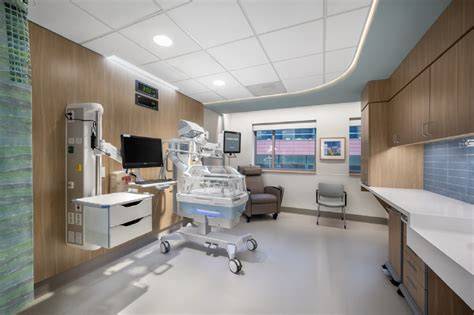
The state-of-the-art NICU is designed to mimic the womb as closely as possible so premature babies can continue to grow and flourish. In fact, the environment promotes better outcomes for premature infants.
The NICU uses special lighting that automatically brightens and dims to encourage healthy sleep and wake cycles. Sensors adjust the lighting to match natural dawn to dusk patterns, so babies develop healthy sleep and wake cycles.
Noise-reducing flooring lowers the volume level to support neurological development. Acoustical flooring cushions the sound of footsteps to reduce noise levels.
Individual cribs have temperature and humidity controls that promote proper skin development and let parents touch their babies. Cribs have humidity and temperature controls for proper skin development.
Coordinated Care From a Specialized Team
The NICU was designed by physicians and nurses to care for newborns with greater needs in an efficient, supportive environment. Extra attention was given so parents can have greater comfort and privacy.
Individual rooms allow parents to stay close to their babies with more privacy. The unit includes dedicated rooms for twins and other multiples to stay close together.
Developmentally appropriate care helps premature infants maximize their potential by providing protected periods of rest and minimizing unnecessary interruptions. Neonatal specialists are available around the clock, while scheduled team visits help coordinate services efficiently.
Family-Centered Care During the NICU Stay
The NICU bays are designed to help parents be part of their newborn’s care from the beginning. Families can stay close to their babies while they are in the NICU and participate in care as their child’s medical condition allows.
There are rooms designed specifically for families of twins and triplets. This allows parents to be with all their babies at the same time.
Parents can learn how to take over their baby’s care before discharge. They can practice care, ask questions, and become more comfortable and confident before their baby leaves the hospital.
Preparing to Go Home
When it is time to take a baby home, parents can spend 24 hours in a private transition room. During that time, a highly trained nurse walks the family through everything they need to know to provide care at home.
Parents practice care side-by-side with nurses and have the opportunity to ask last-minute questions. This transition period helps families feel comfortable and confident when their baby is discharged from the hospital.
Ongoing Care as the Child Grows
The Christ Hospital partners with Cincinnati Children's Hospital Medical Center’s Perinatal Institute to help families access additional services their child may need as they grow.
Early in a child’s stay, the care team helps determine whether special follow-up care may be needed in the future, such as cardiology, neurology, gastrointestinal care, or pediatric ophthalmology.
The team then connects families with specialists so they can begin building relationships with them. Through the partnership, The Christ Hospital has also joined Cincinnati Children's Perinatal Institute and contributes to and learns from ongoing research efforts designed to improve care for premature babies.
Safe Sleep Education for Families
The maternity team is trained to follow the American Academy of Pediatrics safe-sleep guidelines and is a certified Gold Cribs for Kids National Safe Sleep Hospital.
During the hospital stay, families receive instruction on safe-sleep practices for infants at home. These practices include placing a baby on their back for every overnight sleep and nap until one year of age, or until the baby is able to roll over independently.
- Use a firm, flat, non-inclined, safety-approved sleep space, such as a crib or bassinet.
- Share your room, not your bed.
- Place your baby in a bare crib.
- Feed and promote the use of breast milk, when able to do so, to reduce the risk of death.
- Use a pacifier to reduce the risk of death.
- Safely swaddle your baby and avoid overheating.
- Keep up with all medical visits and vaccines.
- Research baby products before buying them.
- Practice tummy time.
- Spread the Safe Sleep message.
Related Maternity Support
Highly trained, compassionate maternity specialists help keep parents and babies safe and secure while they are in the hospital. After delivery, lactation consultants and specially trained nurses are available to assist with newborn care and answer questions.
When the big day arrives, the birthing center care team partners with the family to make the experience safe, supportive, and personal. Some women may also choose to bring a doula, also known as a birth companion or post-birth supporter.
All care for the baby, from baths to exams, is done in-room as parents and family members learn about and bond with their new baby.
Location and Birthing Center
The Level III Neonatal Intensive Care Unit is located at the Mt. Auburn Birthing Center. The Christ Hospital’s main campus is at 2139 Auburn Avenue, Cincinnati, OH 45219.
The Christ Hospital also has a Liberty Township Family Birthing Center and a Mt Auburn Birthing Center.
Accessing Additional Services
The ezCare Concierge Service can help families choose a primary care provider, specialist, or surgeon; review symptoms and healthcare questions; verify insurance information; provide help and guidance with second opinions; and advise on preventative care and screenings.
Families can also seek help finding a Women’s Health Specialist close to home, work, or another preferred location.