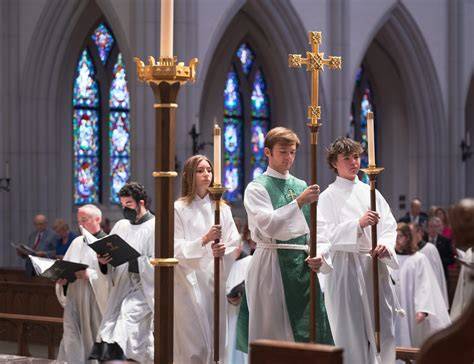
In The Episcopal Church, a priest’s ministry is “to represent Christ and his Church, particularly as a pastor to the people; to share with the bishop in the overseeing of the Church; to proclaim the Gospel; to administer the sacraments; and to bless and declare pardon in the name of God.” The priest, commonly serving as a rector when leading a congregation, combines pastoral care, worship leadership, preaching, sacramental ministry, teaching, administration, and collaboration with the bishop and the wider Church.
The role requires more than the ability to preach on Sundays. An Episcopal Church pastor must demonstrate mature Christian character, theological understanding, communication skills, spiritual depth, pastoral compassion, administrative competence, and the ability to work with people who have different responsibilities and gifts. The ministry is varied, bringing joy, disappointment, unexpected challenges, and meaningful opportunities to serve.
The Episcopal Understanding of a Priest’s Ministry
You can look to the Book of Common Prayer for the best short overview available. On page 856, the Catechism says, “The ministry of a priest is to represent Christ and his Church, particularly as a pastor to the people; to share with the bishop in the overseeing of the Church; to proclaim the Gospel; to administer the sacraments; and to bless and declare pardon in the name of God.”
It is important to notice that the first part of the description overlaps exactly with what everyone is called to in ministry - to represent Christ and his Church. People who are not priests also do the work of pastoring to people, working with the bishop in administering and overseeing the Church, proclaiming the Gospel and administering the sacraments. The particular ministry of priests and bishops is to declare pardon in the name of God.
Given all of these overlaps, a priest must be someone who works well with many other people in all of their various responsibilities and gifts. In working with other people, priests must be good at listening, inviting, handling rejection, teaching and presenting their faith with authenticity and practice.
The daily work is full of variety, joy, disappointments and good surprises. And because it is impossible to sum up the ministry of a priest in one paragraph, make sure you talk several priests to hear about how they perceive what it is to be a priest.
The Episcopal Pastor’s Relationship with the Bishop
In The Episcopal Church, the priest (rector) leads congregations, and bishops hold authority over these priests and groups of churches, with the “Presiding Bishop,” often referred to as the “Primate,” above them. While bishops primarily act as leaders and overseers within specific geographical regions (dioceses), they are responsible for providing pastoral care to pastors and congregations, overseeing the administration of sacraments, ordaining new ministers, interpreting church doctrine, and advocating for the church’s mission within their area.
They essentially serve as the chief shepherd and spiritual leader. As successors of the apostles, bishops are recognized as authentic teachers of the faith. Each bishop has pastoral care of the particular church entrusted to them and shares responsibility for the apostolic mission of the Church with other bishops.
They serve as the chief shepherd, guiding and nurturing the spiritual growth of the clergy and laity, and as the spiritual leader, setting the direction and tone for the diocese’s mission and ministry. The priest therefore exercises congregational leadership within a wider episcopal structure and shares in the Church’s ministry under the bishop’s oversight.
Core Responsibilities of an Episcopal Church Pastor
Representing Christ and the Church
The priest represents Christ and the Church particularly as a pastor to the people. This responsibility includes being present with individuals and families in ordinary life, moments of crisis, seasons of grief, celebrations, spiritual questioning, and decisions requiring discernment.
Pastoral ministry is deeply personal and relational. It means shepherding the congregation through life’s triumphs and trials, offering spiritual guidance, prayer, and support when they need it most. It is about knowing the flock and genuinely caring for their spiritual well-being, which requires a compassionate, Spirit-led heart and a willingness to be present.
Leading Worship
Pastors lead worship services by planning the order of service, selecting music, and delivering a sermon. They oversee music ministries, communion, baptisms, weddings, funerals and other special services.
Within an Episcopal setting, worship leadership is closely connected with sacramental ministry. The priest administers the sacraments and helps the congregation participate faithfully in the Church’s common prayer and liturgical life.
Proclaiming the Gospel
Preaching the word of God is central to a pastor’s role. They prayerfully prepare and deliver sermons that teach biblical truth and connect scripture to modern life. The goal is to encourage, convict and inspire people in their faith.
At the heart of pastoral ministry is the faithful proclamation and application of God's Word. This pillar is about feeding the flock with sound doctrine and equipping them for a life of discipleship. It demands diligent study, prayerful preparation, and an unwavering commitment to biblical authority.
Effective teaching prepares believers to engage the world with wisdom and grace. Impactful preaching makes biblical truths relevant to daily living. Sermons should not just intellectually engage but also move people emotionally and spiritually.
Teaching and Formation
Pastors provide biblical education through Bible studies, Sunday school classes and small groups. This helps disciples grow in their knowledge of scripture and Christian theology. Teaching takes place both formally and through everyday conversations.
A pastor is charged with equipping the saints for ministry and building up the body of Christ. Effective teaching prepares believers to engage the world with wisdom and grace. The pastor’s ministry of formation may include adult education, preparation for Baptism and Confirmation, theological discussion, spiritual practices, and guidance in Christian vocation.
Administering the Sacraments and Religious Rites
The priest administers the sacraments and leads the congregation in the Church’s liturgical life. The pastor may also officiate at weddings, funerals, and other religious ceremonies.
Pastoral ministry includes officiating weddings, attending and speaking at funerals, visiting those who are sick or otherwise, and offering prayer and spiritual support during significant transitions. These responsibilities require theological preparation, emotional maturity, careful listening, and sensitivity to the needs of individuals and families.
Pastoral Care
Pastors meet with individuals and couples to provide spiritual guidance, marriage counseling, grief counseling, and general life advice. They listen, pray, offer scriptural wisdom, and help people apply faith to real-life issues.
A pastor’s presence during times of crisis, celebration, and quiet struggle is often where the gospel's comfort becomes most tangible. Counseling and conflict resolution demand empathy, understanding, and clarity in conveying advice.
Pastors visit the sick and homebound members of the congregation. They provide spiritual guidance and counseling to congregation members, offer conflict resolution and pastoral care, and support people whose spiritual, emotional, or practical circumstances require the Church’s presence.
Community Outreach and Mission
Organizing community outreach and mission programs is an important pastoral responsibility. The pastor may lead or coordinate the congregation’s efforts to serve the local community and participate in the wider mission of the Church.
Leading evangelism and outreach means championing the church's efforts to reach the local community and the world with the gospel. A pastor helps the congregation connect worship, discipleship, compassion, justice, and public witness in ways that express the Church’s mission.
Administration and Organizational Leadership
Pastors oversee the day-to-day operations of the church. This can involve managing staff and volunteers, developing programs, handling finances, maintaining facilities and ensuring the church runs smoothly.
Administrative duties also test a pastor’s written and verbal communication abilities. Everything from staff management to event organization requires teamwork, delegation, conflict resolution, and people skills. A pastor must be diplomatic and decisive when communicating vision, plans, and policies.
Administrative oversight may include working with church leadership to manage budgets, facilities, and overall organizational health. The pastor may also develop and implement church policies and procedures, coordinate with church staff and volunteers, write and distribute church newsletters and bulletins, and oversee religious education programs.
Pastoral Leadership and Shared Ministry
To be an effective pastor, strong leadership skills are essential. Pastors are called to be servant leaders who humbly guide and direct their congregations.
Servant Leadership
Jesus gave instructions for leaders of the church to be humble servants who tend to the needs of others (Matthew 20:25-28). Pastors should lead by example and focus on serving the needs of their congregation and community.
This involves listening, empathy, awareness, persuasion, conceptualization, foresight, stewardship, commitment to growth, and community building. Servant leadership allows pastors to gain legitimacy and influence.
Vision and Mission
Pastors must be able to discern God’s vision for their church and effectively communicate that vision to inspire and motivate their congregation. Vision casting gives direction and purpose for the church’s mission.
Strategic planning involves guiding the church in setting long-term goals and ministry priorities. A pastor provides spiritual and organizational direction for the church and works with elders, deacons, and staff to discern God’s vision and implement strategies to fulfill the church’s mission.
Team Building and Delegation
Pastors lead a team of other church leaders, staff, and volunteers. Strong team building skills allow pastors to delegate tasks, empower others, foster collaboration, manage conflict, and develop future leaders.
Teamwork is essential for achieving the church’s goals. Staff and volunteer development involves equipping, mentoring, and overseeing ministry leaders and staff. An Episcopal pastor must recognize that the ministry of the Church includes the gifts and service of many people rather than depending entirely on the priest.
Mentoring and Discipleship
An important part of pastoral leadership is spiritually mentoring others and helping them develop their faith and gifts. Through mentorship and discipleship, pastors can have an exponential impact as their mentees go on to mentor others.
The pastor’s work includes helping people discover and use their gifts, preparing leaders for ministry, and creating a culture in which responsibility is shared. The aim is not personal control but the building up of the whole body of Christ.
Qualifications for an Episcopal Church Pastor
For those called to serve the church in a leadership role, understanding the biblical qualifications of a pastor is essential for fulfilling their pastoral duties. The Bible provides clear guidelines regarding the spiritual gifts, personal character, and practical skills required for this sacred office.
Faithful study of Scripture reveals that God has set a high standard for those who would shepherd His flock. Several key passages in the New Testament outline the various qualifications pastors should exhibit. The Apostle Paul wrote letters to his protégés Timothy and Titus, specifying the spiritual and moral requirements for overseers and elders (1 Timothy 3:1-7; Titus 1:5-9). Peter exhorted leaders to willingly care for God’s people by setting an example of Christ-like character (1 Peter 5:1-4).
Spiritual Calling
A critical qualification for the pastoral role is an individual’s spiritual development and personal connection with God. Equally important is discerning God’s personal calling for an individual to enter pastoral ministry.
This involves deep prayer, reflection, and openness to hearing God’s voice. Signs of a pastoral calling may include a heart for serving people, a passion for scripture, an eagerness to share one’s faith, and a commitment to living out Christian principles.
Assessing one’s motivations and desire to bring people closer to God is also key. An inner sense of purpose and meaning in pastoral work, beyond personal interests or gain, often signifies a genuine calling from God.
Discerning a call to pastoral ministry begins with prayer, reflection, and openness to God’s leading. For many, the call comes gradually over time rather than as a sudden revelation. Pastors often reflect back on moments in their spiritual development, service in the church, or the encouragement of others as signposts along the journey.
Character and Integrity
Above all, a pastor should be “above reproach” and demonstrate consistent Christ-like behavior (1 Tim 3:2; Titus 1:6). This encompasses being respectable, gentle, self-controlled, not quick-tempered or violent, and modeling integrity.
According to Titus 1:8, a pastor must be hospitable and love what is good. 1 Timothy 3 also says a pastor should be sober-minded, not quarrelsome, and able to manage their household well.
A pastor’s personal character and integrity are essential to effective ministry. At the heart of pastoral leadership is the ability to shepherd God’s people, and this requires an exemplary moral character marked by spiritual maturity and wholeness.
Pastors are expected to model Jesus’ example of servant leadership, acting as humble shepherds who lay down their lives for the sheep (John 10:11; 1 Pet 5:1-4). The stresses of ministry and leadership challenges test the pastor’s patience, kindness, and humility.
By walking closely with God and pursuing spiritual disciplines like prayer and scripture meditation, pastors can grow in Christ-like virtues that enable them to lead by example. As underscored throughout the New Testament, godly character and personal integrity give credibility to the pastor’s preaching and teaching (1 Tim 4:12, 16).
Pastoral integrity breeds trust within the congregation. Members are more receptive to guidance and teaching from a pastor they view as authentic, humble, and sincere.
Essential Character Qualities
- Patience: Pastors deal with many different personalities and complex situations requiring wise counsel, tender correction, and empathetic listening. Patience enables the pastor to respond thoughtfully rather than reacting hastily.
- Humility: Although pastors teach and guide others spiritually, they too are fellow disciples in need of God’s grace. A humble pastor remembers that the ministry is not about self-glory but bringing glory to Christ.
- Compassion: Like Jesus, pastors are called to model heartfelt compassion toward the suffering and lost. Compassion moves the pastor to genuine caring service.
- Self-control: Pastors often deal with challenging people and circumstances that require restraint of selfish impulses. Self-control enables prudent, Spirit-led responses.
- Integrity: Congregations need pastors who live with consistency between their teachings and personal life. Integrity breeds trust and moral authority.
The wise pastor recognizes that a Christ-like character is not developed overnight but through a lifetime of prayerful devotion to Jesus. The integrity of the messenger impacts the reception of the message.
A pastor’s personal growth in grace and godly virtues is just as crucial as the development of ministry knowledge and skills. The pastor is expected to maintain a posture of teachability and accountability while continuing to grow in faith and wisdom.
Scriptural Standards for Oversight
The Bible provides clear standards for the role of a pastor in passages like 1 Timothy 3 and Titus 1. These scriptures emphasize the importance of character, spiritual gifts, and leadership abilities in pastoral candidates.
1 Timothy 3 describes an overseer as “above reproach, the husband of one wife, sober-minded, self-controlled, respectable, hospitable, able to teach,” and states that the overseer must not be a drunkard, violent, quarrelsome, or a lover of money. The passage also emphasizes managing the household well, not being a recent convert, and having a good reputation with outsiders.
Titus 1 describes an elder as above reproach, hospitable, a lover of good, self-controlled, upright, holy, and disciplined. The overseer must hold firm to the trustworthy word as taught so that they may give instruction in sound doctrine and rebuke those who contradict it.
These passages identify the pastor as a steward of God. They connect pastoral authority with moral responsibility, sound doctrine, spiritual maturity, and care for the Church.
Communication Skills
Effective communication is of utmost importance for a pastor. Much of a pastor’s role involves preaching and teaching, so he or she must be able to deliver sermons and lessons in an impactful yet relatable manner.
This does not only apply to the Sunday service. Counseling church members, resolving conflicts, administrative duties - all require strong communication abilities. Beyond preaching, a pastor must listen attentively, pick up on unspoken cues, and respond with care and wisdom.
Counseling and conflict resolution demand empathy, understanding, and clarity in conveying advice. A pastor must be approachable and open to feedback. The ability to listen, invite participation, handle rejection, teach, and present faith with authenticity is essential to healthy pastoral relationships.
It is critical that a pastor can craft teachings that resonate with the congregation based on their background and maturity. Preaching requires creativity, passion, and knowledge of scripture to bring the Word to life.
Along with effective public speaking skills, solid theological knowledge and the ability to interpret scripture in context is key. A pastor must also be able to respond meaningfully to questions about faith.
Administrative duties also test a pastor’s written and verbal communication abilities. Everything from staff management to event organization requires teamwork, delegation, conflict resolution, and people skills.
With social media use increasing, pastors now require communication skills across various mediums and platforms. Overall, honing communication and interpersonal skills is a lifelong endeavor for effective pastoral ministry.
Theological Education and Preparation
A vital component in becoming a pastor is pursuing formal seminary training. Most mainstream Christian denominations require candidates to obtain a Master of Divinity (MDiv) degree, which takes approximately 3 years of full-time study.
This graduate-level program provides essential biblical, theological, and practical ministry training to equip pastors for their calling. Topics covered include Old and New Testament, church history, preaching, counseling, leadership, and more. Hands-on ministry internships are also a key part of seminary training.
Beyond a Master’s degree, some pastors pursue doctorates in specialized areas like theology or ministry. In addition to formal education, continuing development is vital for effective pastoral ministry.
A solid seminary education does more than fill a pastor's head with knowledge; it equips them to handle Scripture faithfully, navigate difficult ethical questions, and lead with genuine biblical wisdom. It provides the doctrinal depth necessary for sound preaching and compassionate pastoral care.
When you specify a degree like a Master of Divinity (M.Div), you signal a commitment to leadership that is firmly and confidently grounded in Scripture. Formal education is a key part of honing the ability to correctly handle the word of truth.
Continuing Development
The landscape of society and church is constantly changing, so pastors must commit to lifelong learning. Regularly reading books/articles, attending conferences, and connecting with mentors helps pastors gain new skills and stay refreshed.
Many denominations also require pastors to earn a certain number of continuing education credits annually. Pursuing ongoing growth demonstrates the pastor’s desire to sharpen their gifts and better serve their congregations.
Spiritual Development and Daily Practices
A critical qualification for the pastoral role is an individual’s spiritual development and personal connection with God. This includes consistent spiritual practices that nurture the pastor’s relationship with the divine.
Common practices may include prayer, meditation, studying scripture, fasting, and observing Sabbath. These help pastors remain rooted in their faith, which provides wisdom, discernment, and guidance in their work.
A pastor’s effectiveness begins with a firm understanding of the word of God. The pastor must also cultivate a life of prayer, because prayer is not an optional addition to pastoral ministry but a central means of seeking wisdom, interceding for the congregation, and remaining dependent on God.
Protecting, Leading, and Equipping the Church
Shepherding the Congregation
When pastors shepherd, they care for, protect, and feed their congregations. This includes discipline, encouragement, rebuke, and exhortation from the Word of God.
Additionally, they exercise oversight, that is, they lead their congregations. Finally, Peter mentions that elders are examples to the flock. It is not a stretch to say that as a pastor goes, so goes the congregation.
Equipping the Church
A pastor is charged with equipping the saints for ministry and building up the body of Christ. When you combine this exhortation with Titus 1:9 and 2 Timothy 4:1-2, you see the importance of a pastor’s preaching and teaching ministry.
Being an expert of the Bible and an expert communicator of the Bible are among the essential qualifications of a pastor. The pastor’s teaching should help people mature in faith, understand Christian doctrine, and participate actively in the Church’s mission.
Protecting the Church from Harmful Teaching
A pastor needs to be on alert for those who would cause dissension in the church and lead others astray by false teaching. This aspect of a pastor’s calling takes courage.
In addition, it takes discipline to study and know sound doctrine so that the pastor can spot heresy. This is where a firm foundation in church history and systematic theology comes in.
Leading by Example
Pastors are looked up to, they are followed, and their example has a direct impact on the members of the congregation. That is why there is such a great emphasis on character in the lists of qualifications.
Pastors should expect to live in a glasshouse. They should expect themselves and their families to be on display. Living their lives as a godly example to the flock is non-negotiable.
Prayer and Intercession
When combined with the overall teaching of the Bible (Acts 2:42, 13:3, 20:36, etc.), prayer is a priority for pastors. In Acts 2:42, the apostles devoted themselves to prayer, among other things.
A pastor should be prepared to set aside sufficient time to pray for the members of the church. Prayer supports pastoral care, worship, discernment, theological work, leadership, and the spiritual well-being of the congregation.
Associate Pastor Responsibilities
An associate pastor is not one of the specific pastors like the youth pastor, family pastor, or worship pastor, who all have specific roles and duties in different areas of the church. Associate pastors are more so involved in all the areas of the church, much like the senior pastor, but on a lower scale.
They assist the senior pastor in helping to oversee all areas of the church and may be involved in the planning of all church events and are essentially assistants to the senior pastor. The role of the associate pastor is to aid the senior pastor in day-to-day pastoral duties.
They may be asked to preach and teach on any given Sunday, or they may be asked to make pastoral care visits and perform pastoral care duties such as officiate weddings, attend and speak at funerals, or visit those who are sick or otherwise.
They have a hand in every area of the church and may be called upon to assist in any given area of ministry to help plan events, facilitate events, gather volunteers, lead events, etc.
Associate Pastor Qualifications and Skills
- A heart for the gospel and Jesus.
- Relevant education and experience.
- A heart and passion for people.
- A heart of humility and joy.
- Biblical leadership skills.
- Clear and effective communication skills.
- The ability to help oversee and lead all other areas of the church ministry.
An associate pastor is more of a general pastor, they do not have a clear area of ministry that they fall under but are more so assistants of the senior pastor helping to lead in all areas of ministry.
An associate pastor oversees all areas of ministry usually, it mostly depends on the church and what their hierarchy style is like. They help to oversee the staff of the church, the volunteers of the church, and the congregation of the church.
Structuring a Pastor’s Job Description
Crafting a job description for a pastor is far more than an administrative task-it’s a ministry tool. Think of it as your church's first handshake with potential candidates, a foundational document that sets a prayerful and intentional tone for the entire search process.
It must clearly communicate your church's unique mission, vision, and spiritual needs to attract the leader God has prepared for you. This document is essentially a roadmap for your pastoral search committee.
A thoughtful, prayerfully crafted job description helps attract leaders who are a genuine fit, honoring God by stewarding the search process with intention and clarity. This is your opportunity to articulate not just the tasks of the role, but the heart behind the ministry.
Clarifying Expectations
One of the greatest challenges in ministry is navigating unclear or unrealistic expectations. Research has shown that the combined expectations of even a small group of church leaders can add up to an impossible workload-sometimes exceeding 100 hours per week.
A clear job description serves as a powerful and healthy corrective. By defining the primary responsibilities and desired outcomes, you create a framework for sustainable ministry.
- The Search Committee: It provides a unified, biblically-grounded standard for evaluating candidates, reducing subjectivity and focusing the team on the most critical needs.
- The Candidates: It allows them to prayerfully discern if their skills and calling match the church’s actual needs, preventing future conflict and burnout.
- The Congregation: It helps the church body understand the pastor’s primary focus and rally in support of that mission.
This document is not just about finding a person to fill a position; it’s about calling a shepherd to care for a flock. It’s an act of stewardship that honors God and serves His people by seeking the right leader for the right season of ministry.
Essential Elements of a Pastoral Job Description
| Component | Purpose | Examples |
|---|---|---|
| Ministry Purpose Statement | Answers the "why" behind the role, connecting it to the church’s broader mission. | "To lead and shepherd the congregation in fulfilling the Great Commission through expository preaching, discipleship, and community outreach." |
| Key Responsibilities | Outlines the primary duties and day-to-day functions of the pastor. | Preaching/Teaching, Pastoral Care, Leadership Development, Administrative Oversight, Community Engagement. |
| Qualifications & Skills | Lists the necessary educational, experiential, and practical requirements. | M.Div from an accredited seminary, 5+ years of pastoral experience, proficiency in biblical languages, strong communication skills. |
| Spiritual & Character Qualities | Defines the personal and spiritual attributes expected, often referencing Scripture. | Meets the qualifications of an elder (1 Timothy 3, Titus 1), a vibrant personal prayer life, a heart for the lost. |
| Performance Metrics | Provides a framework for evaluating success and ensuring accountability in a grace-filled manner. | Growth in small group participation, development of new leaders, baptisms, measurable community impact. |
Each of these pieces works together to paint a complete picture, ensuring that you're not just hiring for a role, but calling a leader into a specific, God-given mission.
Responsibilities Commonly Listed in a Pastor’s Role
- Deliver sermons and lead worship services.
- Provide spiritual guidance and counseling to congregation members.
- Officiate at weddings, funerals, and other religious ceremonies.
- Organize community outreach and mission programs.
- Oversee religious education programs.
- Coordinate with church staff and volunteers.
- Visit the sick and homebound members of the congregation.
- Conduct Bible study and prayer meetings.
- Administrate church finances and budgeting.
- Provide conflict resolution and pastoral care.
- Develop and implement church policies and procedures.
- Engage in continuing education and professional development.
- Write and distribute church newsletters and bulletins.
Qualifications Commonly Listed in a Pastor’s Role
- Master of Divinity or equivalent theological degree.
- Experience in pastoral ministry or church leadership.
- Strong public speaking and communication skills.
- Proficiency in conflict resolution and pastoral care.
- Knowledge of church management software.
- Background in religious education or counseling.
- Ability to work effectively with diverse groups of people.
- Experience with community outreach programs.
- Ordination or certification by a recognized religious denomination.
- Bachelor’s degree in Theology, Divinity, or a related field.
- Strong commitment to the faith and teachings of the denomination.
- Excellent interpersonal and leadership skills.
- Ability to handle sensitive and confidential information.
- Strong organizational and administrative abilities.
- Flexibility to work evenings, weekends, and holidays.
Requirements Versus Preferences
A critical step is to separate your non-negotiable requirements from your ‘nice-to-have’ preferences. Drawing this line early prevents your search committee from disqualifying an excellent candidate over something that isn't central to the role.
Non-Negotiables: These are the foundational pillars. They almost always include alignment with your church’s doctrinal statement, ordination requirements set by your denomination, and a clear testimony of faith and calling to ministry.
Preferences: These are desirable but not essential traits. This might include experience in a specific ministry context, proficiency with certain technologies, or a particular leadership style. These are bonuses, not deal-breakers.
This clarity ensures your job description for a pastor is both aspirational and achievable. The goal is to create a realistic profile that attracts the right candidates without creating a "superhero" wish list that no single person could fulfill.
The Pastoral Journey
Once a sense of calling emerges, the prospective pastor seeks wisdom, tests this calling through ministry service, and pursues the necessary education and training. In tandem with education, the pastoral candidate gains practical experience through local church service, mentoring, and internships.
This allows them to determine if pastoral ministry is a good vocational fit for their gifts and personality. Over time, as calling and competency are confirmed, opportunities to serve in pastoral roles open up.
These usually begin as assistant pastor, youth pastor, or director positions. With experience, continued education, proven leadership capability, and clarity of calling, pastors may eventually transition into roles like senior pastor, chaplain, or denominational leader.
More than a career, the pastoral journey is a spiritual pilgrimage of faithfully following God’s guidance and developing the heart and skills of a shepherd. The destination is not a job title, but rather being exactly where God wants you to be, for however long, in loving service to His flock.
Employment and Financial Realities of Priesthood
The ministry of a priest can be done anywhere. But finding a job where you will be paid to do the work of a priest is not always easy.
If you are exploring the priesthood, it is important to also consider also how you will earn a living in your vocation. Jesus saves us from our sins, but not from our utility bills.
Be realistic about the burden of seminary debt in your financial future. Be realistic about retirement planning, especially if you are discerning ordained ministry in your forties, fifties, or sixties.
Be realistic about your willingness (and your partner or family’s willingness) to move across the country if you don’t find a position in the Diocese of Chicago or the geographic area of your choice.
There are a limited number of paid positions in congregational ministry, especially in the Diocese of Chicago. Jobs are competitive here; many priests are seeking full- and part-time positions in the churches of northern Illinois, especially in the Chicago area.
More and more churches can afford to pay a priest only a part-time salary, which is not enough of an income to live on. Assistant positions are becoming scarce.
An increasing number of priests practice what is sometimes referred to as a “bi-vocational ministry,” earning some of their living as a priest, but a significant portion through work in another field in which they are also guided by the promises of the Baptismal Covenant.