The Maronite Christians are Lebanon’s largest Christian community and the heartland of the ancient Maronite Catholic Church. They are an Eastern Catholic community in full communion with the pope, with roots in the Syriac-speaking Christian tradition and a history closely connected to the mountains, monasteries, villages, politics, and cultural life of Lebanon.
There are no official statistics for the number of Christians in Lebanon today, but it’s estimated that there are around 2.24 million, approximately 33% of the population. The Catholic Maronite Church is the largest Christian community in the country (about 1 million), while there are about 3.5 million Maronites worldwide.
Who are the Maronite Christians?
The majority - over half - of Lebanon’s Christians belong to the Maronite Church, an Eastern Catholic rite in full communion with the pope. Maronite Catholics trace their origins to St. Maron of Cyr, an ascetic who lived in the latter part of the fourth century in a rocky region near the ancient city of Antioch, part of what is now modern Turkey.
St. Maron, the Church’s namesake, was a Syriac-speaking hermit who is believed to have died in the early fifth century. His disciples, who gathered before his death around 410 A.D., erected a monastery to honor the ascetic’s memory on the banks of the Orontes River, in what is now northern Syria.
Although part of the Catholic branch of the church, it developed independently and has a unique character. The Maronites belong to the Western Syrian liturgical family, along with the Syrian and Malankara Syrian Catholic and Orthodox churches.
Origins and early history
Christianity was introduced to Lebanon in the first century AD. Tradition states that it was brought to Lebanon by St Peter and St Paul, and there has been a continuous Christian presence in the country since then.
Lebanon, then part of the Roman Empire, was one of the first places Christianity spread to in the first century AD. Sidon, on the Lebanese coast, is mentioned in Acts (27:3). It is where St Paul (then a Roman prisoner) was allowed ‘to go to his friends so they might provide for his needs’, possibly indicating a very early Christian presence.
The Bible mentions the ancient pagan trading towns of Tyre and Sidon, both of which still exist today as major cities in southern Lebanon, dozens of times. St George’s Greek Orthodox Cathedral in Beirut was said to have first been built by Eusebius of Nicomedia, Bishop of Berytus (modern-day Beirut), who died in AD 341, although the current building is much later.
But it’s the Maronite Church that has had the biggest influence in Lebanon and its history. In the 4th century, Maronite Christians (followers of St Maron, an ascetic monk from Syria) moved into the Lebanese mountains and began converting the population.
The Council of Chalcedon and persecution
St. Maron’s followers were persecuted for their defense of the orthodox christological doctrine declared by the church fathers of the Council of Chalcedon in 451. In 517, more than 350 Maronite monks were slain and several Maronite monasteries sacked and burned by those Christians who disagreed with the teachings of the council fathers.
Today church leaders agree that the descendants of those Christians who did not accept the council - the Armenian Apostolic and the Coptic, Ethiopian, Syrian and Malankara Syrian Orthodox churches - indeed share the same faith, but hold different formulas to express the complexities of the Christian faith.
Migration to the Lebanese mountains
In the eighth century, renewed intraChristian strife and the rapid rise of Islam forced many followers of St. Maron to migrate to the Qadisha valley, the deepest and most remote of northern Lebanon’s numerous mountain gorges.
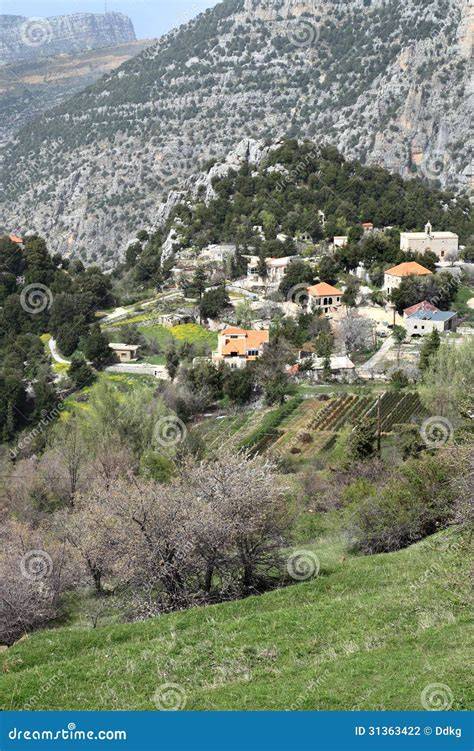
Cradled by cliffs and shaded by Lebanon’s renowned cedars, the Maronites prospered. Clinging to the land as they hung on to their religion, the early Maronites carved embankments in the steep mountain slopes for cultivation. Today Maronite areas are still covered by these giant verdant steps.
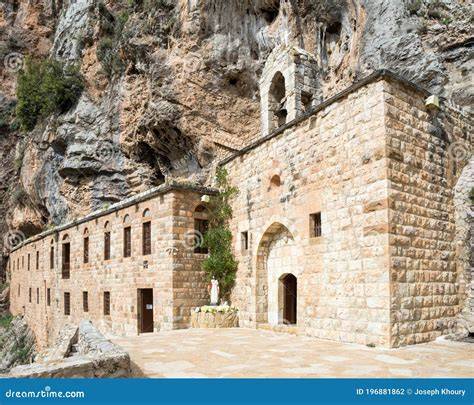
The Maronite community lived for many centuries in the seclusion of the Lebanese mountains, largely cut off from Rome (and the rest of the church). They, and the other indigenous Christian communities (Greek and Syriac Orthodox), resisted assimilation with the Arab conquerors, who moved into the Levant in the 7th century, and maintained a significant level of autonomy.
The mountains of Lebanon - a refuge and haven for persecuted minorities for centuries. For centuries the inaccessibility of Lebanon’s mountain villages was the key to the survival of its persecuted minorities - Christian and non-Christian. For the Maronites, their mountain refuge from their Christian and Muslim rivals saved them from extinction.
Qadisha Valley and monastic life
The monasteries in the Kadisha Valley are some of the oldest in the world and the Maronite Church is the largest Christian presence in Lebanon today. A key tourist attraction and UNESCO World Heritage site is the Kadisha/Qadisha (Holy) Valley, site of some of the most ancient Christian monastic communities of the Middle East.
The Maronite nation (as they called themselves) had lived in isolation from the West since their flight to the mountains of Lebanon in the eighth century. Their patriarch was both a spiritual and secular leader; his authority, unquestioned.
As the monasteries grew in wealth, power and land, a system was developed to assist the impoverished refugees. This partnership (known in Arabic as shriiq) entitled the peasants to work on Church owned land, sharing crops and profits with the monastic community. Housing and schooling were also provided.
The monasteries continued their feudal like partnership with Lebanon’s peasants until the 1960s, when they began to give land to the peasants. But the collapse of the economy following the civil war has called back into service the defunct shriiq system.
At the monastery of St. Yuhanna Maron in Kfar Hay, a sad face entering the priest’s office leaves a moment later with a look of hope. The man is a Maronite refugee from the village of Deir Doreit, which was blown up house by house during the war.
He and his family found shelter in Beirut where he worked as a welder. But life has taken a hard turn for this man and his family. His demolished village may never be rebuilt and laborers from Syria, eager to work for migrant wages, have left him unemployed.
He came to the “village of life” to find a way to survive. The monks found a house for the family and the children will be enrolled in school. And soon the head of this family will be raising vegetables and tending the fruit orchards.
This ancient practice - now revived out of need - was explained by the youthful parish priest, Father Boutros Khalil, who also runs the affairs of the monastery with an admirable respect for things old and an enthusiasm for things new.
Village life and the survival of tradition
Tannious Nakhal Faris is too old to putter around the house, too old to fix even the leaky roof that barely protects him and his wife from the winter rains. But at 93 he is a fount of knowledge.
Tannious is one of the more than a million Maronite Catholics who live in Lebanon - the heartland of the ancient Maronite Catholic Church. Tannious and his wife, Marianna, live in the mountain village of Kfar Hay, “the village of life” in Aramaic, the ancient semitic language spoken by Jesus.
Although modern roads scramble deep into the mountains, the village is quiet and seems removed from most of the events of the 20th century. Tannious eagerly talks about his boyhood excursions to the sea on horseback from his mountain home.
And until the introduction of the automobile after World War I, he had never made the 45-mile journey to Beirut.
Tannious and Marianna raised their 11 children in a house that belongs to the church. They farmed church land. The old man easily recounts the products of his labors, counting them out on the fingers of his rough, stiff hands.
Their children attended, as his grandchildren do now, the school built on the site of a late seventh century monastery that was built by St. Yuhanna Maron, the first Maronite patriarch.
The silk industry and Maronite culture
But Tannious’s happiest memories are from the season of silk cocoons, mausim ish-sharaaniq. In the 17th century, a microeconomy emerged, centered around the silk trade and dominated by the Maronites.
Tannious and his family - as did generations before them - raised silkworms. Life revolved around the month-long season in late spring. He remembers receiving every year from France two cans of “seeds,” tiny black eggs that hatched into worms.
Tannious, who is now almost blind, looks into the empty corners of his simple house where this early cottage industry was set up. He still sees baskets filled with mulberry leaves and the worms who consumed them.
The work was hard, but the results were profitable. It was after a successful silkworm season that marriages took place, or a house was built.
A family prepares mulberry leaves for the hungry horde of silkworms.
The production of silk was also big business for a number of other religious communities. Because of their mutual economic interests, bonds were forged between the Maronites and the Druze, a syncretic Muslim sect who also sought refuge in the mountains.
But the demand for Lebanese silk declined with World War I and the advent of synthetic silk in the 20s. Raising silkworms was something the old man’s grandchildren could only appreciate while listening to their grandfather’s stories.
But last May, in several nearby Maronite villages, the tradition was dusted off and renewed.
Relations with Rome and the Crusaders
However, the spring of 1099 was a turning point for the community: the arrival of the soldiers from the first crusade. Demonstrating that they shared the same faith, the Maronites welcomed the crusaders and provided them with guides as they drove on to Jerusalem.
During the 11th and 12th centuries, the Crusaders briefly established Western Christian rule in the region. Before they were driven out by the Muslim army, they built several churches and castles, including St John-Marc Cathedral in Byblos, and reestablished contact with the Maronite church.
In the late 12th century, the entire Maronite nation formally confirmed its loyalty to the Holy See. And in 1215 Patriarch Jeremias II Al Amshitti attended the fourth Lateran Council in Rome, the first Maronite patriarch to visit the Eternal City.
The patriarch returned to Lebanon a year later with the pallium, a symbol of the church’s union with the See of Peter.
The strong link forged between the two churches accounts for the addition of the name Boutros, or Peter, to the name of every patriarch down to the present patriarch, Nasrallah Boutros Sfeir, Patriarch of Antioch of the Maronites.
Although the Ottoman Turks conquered the Maronite homeland in the 16th century, the Roman church did not abandon her sister church. In 1584, Pope Gregory XIII erected the Maronite College in Rome to help train the Maronite clergy.
Maronite beliefs and liturgical tradition
The Maronite Church is part of the Catholic Church while retaining its Eastern Christian heritage. The Maronites share the Catholic faith and remain in communion with the pope, but their worship, spiritual traditions, Syriac heritage, monastic history, and ecclesiastical structures give the Church a distinctive identity.
The liturgy of St. James, as used by the Maronites, has been considerably latinized. Western vestments and sacramentals were adopted as were the Latin forms for the creed and the eucharistic prayer.
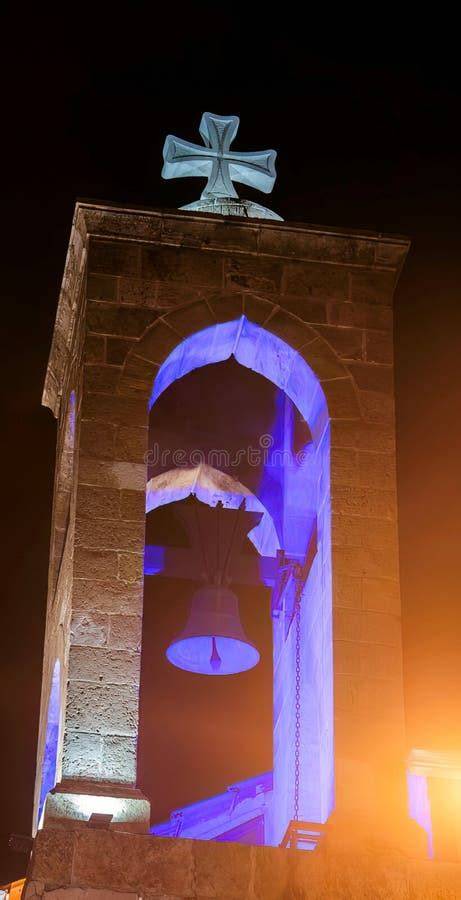
Like most Eastern Christian churches, the Maronites used wooden gongs to call the faithful to prayer. But in the early 12th century, they adopted bells.
Church bells and material heritage
The manufacturing of church bells in Lebanon developed into a monopoly held by the Naffa’ family in the village of Beit Shabab; a family business that is still going strong.
Yusef Naffa’, the 90-some-year-old patriarch of the family, still supervises the work done by the younger men, including the work of his son, whose enthusiasm for the tradition will insure its survival.
The Younger Naffa’ explains how the molds for casting the bells are made: mud, straw and goat hair are listed as ingredients. The mixing of these simple elements is done by the stomping of feet.
As with any tradition, bell-making was threatened by modern technology and market economics. But as Maronite churches begin to restore what was damaged or destroyed by war, there has been a renewed demand for bells.
When asked if bells are sent abroad, a worker picks up his ledger and points to an entry that reads: “Austin, Texas, 1993.”
Manuscripts, Syriac, and education
When the priest took up his post in Kfar Hay the monastery’s library of ancient texts was in a state of disarray. It is now a well kept collection of priceless Maronite artifacts.
With pride he showed the oldest document, a Syriac dictionary from 1619. The earliest extant Syriac manuscripts date to the 1600s, when Maronite monks, heavily influenced by the Roman Catholic Church, established a printing press in the monastery of Qoshaya near Qadisha - the first printing press in the Middle East.
Today Maronite clergy are active in all fields of education. Father Paul Sayah, the associate general secretary of the Middle East Council of Churches, works to promote among Maronite religious personnel a better understanding of Islam through study and dialogue.
Father Boutros Khalil thumbs through an early 17th-century Syriac manuscript.
Saints and devotional culture
St. Maron
St. Maron’s life as an ascetic monk and hermit shaped the spiritual character of the community that bears his name. His disciples built a monastery in his memory, and later Maronite communities carried his tradition into the mountains of Lebanon.
Enduring persecution by various groups over the centuries, the Maronites retained a strong relationship with the popes.
St. Charbel Makhlouf
St. Charbel is perhaps the best-known Maronite saint, other than St. Maron himself, lending his name to Maronite churches across the world. He was born Yussef Antoun Makhlouf to a humble Lebanese family in 1828, the youngest of five children.
As a boy, he spent a great deal of time outdoors in the fields and pastures near his village, contemplating God amid the inspiring views of Lebanon’s valleys and mountains. His family wanted him to get married, but the young man had other ideas.
He trekked on foot to the Monastery of St. Maron, where he took his monastic vows in 1853. After studying for the priesthood, he was ordained and returned to the monastery where he would humbly serve for the next 19 years.
He showed great devotion to the life of prayer, manual work, and contemplative silence. In 1875, he was granted permission to live in solitude at a nearby hermitage. He spent the next 23 years there, until his death.
St. Charbel was deeply devoted to God’s presence in the Eucharist. On Dec. 16, 1898, Charbel suffered a stroke while celebrating the Maronite Divine Liturgy (the Maronite equivalent of the Mass).
He died on Christmas Eve of that year, and Pope Paul VI canonized him in 1977. The former monastery and nearby hermitage where St. Charbel lived out his last days is located in Annaya, an hour north of Beirut and in the hills nine miles inland from the coast.
It remains a place of pilgrimage for Christians and Muslims alike, who come seeking miraculous healings. Since 1950, when St. Charbel’s tomb was first opened, the shrine has archived some 29,000 medically-verified healings.
Our Lady of Lebanon
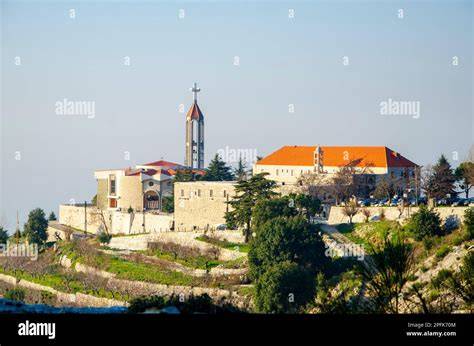
The Maronite shrine of Our Lady of Lebanon, located near Beirut, survived the civil war.
The Shrine of Our Lady of Lebanon is located in Keserwan district of Mount Lebanon, known as the heart of the Christian community due to its large Maronite population and the presence of important religious sites like the Maronite Patriarchate and the Shrine of Our Lady of Lebanon.
Other Christian communities in Lebanon
The Maronite Church is the largest Christian community in the country. The Eastern (Greek) Orthodox Church is the second biggest.
The Armenian Orthodox Church (part of the Oriental Orthodox church family) also has a strong presence, with at least 17 churches, as many Armenian Christians fled to Lebanon during the Armenian Genocide in 1915.
One of the church’s two Sees - the Catholicosate of the Great House of Cilicia - has been led from Antelias in Lebanon since the 1930s.
Other denominations in Lebanon include the Syriac Orthodox Church (of the Oriental Orthodox church family), the Armenian Catholic Church, the Syriac Catholic Church, and Protestant Presbyterians and Congregationalists.
Other Christian groups present in Lebanon, according to the U.S. State Department, include Greek Catholics (Melkites), Armenian Orthodox, Armenian Catholics, Syriac Orthodox, Syriac Catholics, Assyrians, Chaldean Catholics, Copts, Protestants (including Presbyterians, Baptists, and Seventh-day Adventists), and Roman Catholics.
Congregationalists and Presbyterian churches began to appear after Protestant missionaries arrived in Lebanon in around the 1820s, and the first Baptist congregation was founded in Beirut in 1895, but their numbers have remained small.
More significant in terms of numbers are the Armenian Christians. Many fled to Lebanon during the Armenian Genocide in 1915, bringing with them their unique Christian heritage. Armenians are considered to be the world’s first Christian nation, when King Dirtad III converted to Christianity in AD 301.
By 1926 there were 75,000 Armenians in Lebanon, many concentrated around Beirut. Today this number has risen to around a quarter of a million.
Current population of Maronite Christians
There are no official statistics for the number of Christians in Lebanon today, but it’s estimated that there are around 2.24 million, approximately 33% of the population. The latest figures show that Lebanon remains about 70% Muslim and about 30% Christian, according to a 2022 international religious freedom report by the U.S. Department of State - a far higher percentage of Christians than its neighbors.
The Catholic Maronite Church is the largest Christian community in the country (about 1 million). Tannious is one of the more than a million Maronite Catholics who live in Lebanon - the heartland of the ancient Maronite Catholic Church.
The figures are estimates rather than the result of a current official census. Lebanon’s population has been shaped by migration, emigration, displacement, demographic change, and the arrival of refugees from neighboring countries.
For much of Lebanon’s history the indigenous Christian community and larger Muslim community have lived in relative harmony. Notable exceptions being the 1860 Mount Lebanon Druze-Maronite conflict and the Lebanese Civil War (1975-1990).
Political role and constitutional position
Although a minority, the Christian community in Lebanon is enshrined in the constitution of the country, meaning they have a significant impact in the politics and policies of the country.
The end of the civil war led to a power-sharing agreement (the Taif Agreement), with Christians and Muslims having an equal number of seats in the parliament. The key positions are evenly shared among Christian, Shi’a and Sunni.
The President must be a Maronite Christian and other key roles, such as the head of the Central Bank, are also reserved for Christians.
Power-sharing agreements between the Christians and Muslims have been part of Lebanese politics since at least the 19th century and Christians continue to play a significant role in the government and culture of Lebanon today.
Christian institutions and social services
In Lebanon, as across the Middle East, Christians work to be salt and light in their communities, providing many services including schools, hospitals and universities.
Many of Lebanon’s private schools were Church institutions and over 20 hospitals across the country are run by Christians.
Christians also run many social support programmes, serving the large Palestinian and Syrian refugee communities, as well as many Lebanese.
The Middle East Council of Churches (an ecumenical body made up of the four key denominations) has its base in Beirut and provides significant humanitarian response and development work, not just in Lebanon but in countries across the region.
War, economic crisis, and emigration
However many villages have been abandoned as the population follows the worldwide trend toward urbanization, or, as in the case of much of the Christian population in the rest of the Middle East, emigrates to more secure and prosperous lands.
Along with the majority of the rest of the population of Lebanon, the main challenge facing Christians in the country today is the crippling economic and political crisis that has been affecting the country for the last few years and exacerbated by the Israel/Hezbollah war at the end of 2024.
Churches are struggling to continue to run their hospitals, schools and social support programmes. Many church schools, in particular, have closed.
It is not only due to lack of money to cover basic resources, such as electricity, that is forcing these closures but also lack of staff. Wages in Lebanon are a fraction of what they were once worth and are no longer enough to make ends meet, forcing many families, both Christian and Muslim, to emigrate.
After a long civil war from 1975 to 1990, Lebanon gained a reputation for being one of the most peaceful and prosperous nations in the Middle East. In later years, however, Lebanon’s people began suffering from a nationwide financial crisis.
Then came the August 2020 Beirut port explosion, one of the largest nonnuclear, man-made explosions in human history, which took place at Beirut’s vital port caused by a stockpile of dangerous chemicals that had sat at the port for years amid negligence and corruption.
Most of the neighborhoods of Beirut destroyed in the explosion were majority-Christian, which exacerbated an exodus of Christians from the country.
In addition, the country’s Muslim population has been massively bolstered since 2011 by an influx of mostly-Muslim refugees from neighboring Syria, fleeing that country’s brutal civil war.
According to the U.N. refugee agency, Lebanon has taken in at least 1.5 million Syrian refugees - a massive number for such a small country and one of the highest proportions of any country in the world.
Current security conditions
The situation in Lebanon is evolving and changing every day. A Sept. 26 report from the agency noted that amid the Israeli attacks, “Christian towns remain far from direct bombardment, even if they have their share of shrapnel.”
In late September, it reported that the Keserwan district of Mount Lebanon, known as the heart of the Christian community due to its large Maronite population and the presence of important religious sites like the Maronite Patriarchate and the Shrine of Our Lady of Lebanon, has been subject to Israeli airstrikes targeting a Hezbollah official.
Aid to the Church in Need reported in December that about 90% of those living in southern Lebanon’s Christian villages have fled their homes amid the rocket strikes between Israel and Hezbollah.
However, Christian cities and towns across Lebanon are now crowded with people displaced from the southern villages. Beirut and its suburbs are seeing some Christian families move to their summer homes in rural areas.
A Maronite priest, Father Marwan Ghanem, personally witnessed the recent Israeli pager attack that killed and wounded hundreds of Hezbollah operatives and told ACI Mena about the experience.
Ghanem said after the coordinated explosions happened he stopped to help three wounded people. He said he did not consider whether they were Muslim or Christian but rather recognized “the face of the wounded Christ on the road.”
In such dire circumstances, he said, there is no distinction between a Christian and a Muslim but rather everyone is human, created in the image of God.
Maronite culture and coexistence
The long and continuous Christian presence in the country has left its mark on Lebanon’s cultural and social heritage. The Maronite community’s heritage includes Syriac manuscripts, monasteries, mountain agriculture, silk production, church bells, schools, shrines, and a strong tradition of monastic and parish life.
The mountains of Lebanon, once a refuge in times of persecution, are now accessible. The Maronite community, religious and secular, sees the need and possesses the desire to reach out to all of Lebanon’s religious communities to achieve the cherished goal of understanding and coexistence.
The production of silk created bonds between Maronites and Druze through mutual economic interests. Church schools and hospitals serve both Christian and Muslim communities, while Christian institutions also provide support for Lebanese, Palestinian, and Syrian refugees.
Father Paul Sayah works to promote among Maronite religious personnel a better understanding of Islam through study and dialogue. The work of coexistence remains part of the community’s public and religious role in Lebanon.
Lebanon and Maronites: A History and Faith with English subtitles
tags: #maronite #christians #lebanon