Theology of the Body for Teens applies the principles of Pope St. John Paul II’s teaching to the lives of teenagers, specifically addressing questions relating to identity, chastity, and sexuality. It helps young people understand who God created them to be, how to love with the heart of Christ, and how their bodies, relationships, and future are connected to their dignity as human persons.
The program is designed for middle school students, while high-school resources extend the same vision into questions of vocation, marriage, the sacraments, moral life, technology, family, work, and social responsibility. Although sexuality is an important part of the subject, Theology of the Body is not merely a chastity program, a biology textbook, sex education, or a collection of rules; it is an integrated study of the human person, created in God’s image and called to love.
What Is Theology of the Body?
What does it mean to be a human? Christopher West lays a foundation for understanding the basics of St. John Paul II’s Theology of the Body, making his profound teachings on human sexuality easy to grasp and apply in our lives. As we lose our basic understanding of the meanings of man, woman, marriage, and sex, the question becomes ever more urgent: What does it mean to be a human being?
Against this backdrop, St. John Paul II's Theology of the Body appears as a bright light in the darkness. His writings go straight to the heart of what it means to be fully human-but they are often difficult for most of us to grasp easily. He covers the main points of this revolutionary teaching in a way that you can understand. You'll see desire-physical, emotional, and spiritual-in a whole new light!
Theology of the Body not only encompasses the Church’s teachings on human sexuality, but it helps all who study it to understand the dignity and value of every human being, body and soul. It teaches that the human body is not an accidental or secondary part of the person. The body reveals the person and is connected to the person’s call to love, relationship, self-gift, and vocation.
Why Teens Need This Message
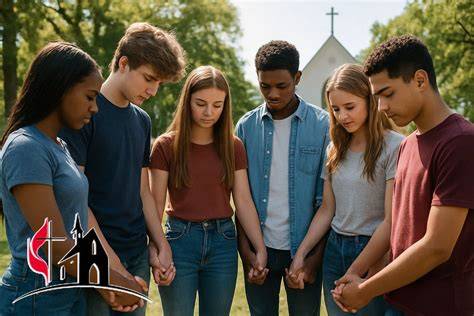
Our teens are struggling to find their place in the world. If we want to combat the loneliness and alienation, anxiety and confusion they are facing, we need the life-giving truths found in the teachings of Pope St. John Paul II’s masterwork, The Theology of the Body. Conflicting and confusing messages bombard them daily.
My teenagers have phones, jobs, and cars. It is time for them to let their light shine and be witnesses to the foundations of faith that my husband and I have (hopefully) instilled in them. Theology of the Body is one of those foundations. It helps young people see that their identity does not come from their gender, grades or athletic ability, but comes from being made in the image and likeness of God.
Young people are keenly aware of truth and justice. They respond best when adults are open and honest with them and then allow them some freedom to make their own choices within reason. Young people don’t want a watered-down version of the faith. They want to be presented with the fullness of a message and then be given the freedom to accept or reject it.
The Theology of the Body offers very simple truths which they all need to help them develop a healthy sense of sexuality. These truths include the dignity of every person, the goodness of the body, the meaning of sexual difference, the importance of virtue, the reality of human freedom, and the call to authentic love.
Beginning the Conversation with Middle School Students
One of the most challenging parts of teaching young people about human sexuality and the Theology of the Body is reading the room and walking that fine line between sharing important truths that they need right now and using restraint so as not to rob them of their right to innocence. It’s a challenging age because young people go through so much development-physically, mentally, emotionally and spiritually-in just a few short years.
When looking out at a room full of middle school students, some may have very little knowledge about sexual love while others may already be engaged in some sexual activity, including sexting. In spite of this broad spectrum, the Theology of the Body offers simple truths which they all need to help them develop a healthy sense of sexuality.
Parents of tweens should begin regular conversations with them about God’s plan for human sexuality as early as possible. It’s necessary to lay a solid foundation of good conversations, learn a vocabulary, and get comfortable so that parents are ready and able to tackle more difficult questions when their children are ready.
Starting with Creation
A useful place to begin is right at the very beginning with the creation story. Starting with God’s gift of masculinity and femininity, girls see that women are created with a unique gift, an incredible capacity to receive and nurture life, both in their bodies and in their hearts.
The story of the Fall shows them that the pernicious plan of the evil one is to attack this feminine gift directly, tempting Eve to grasp, rather than receive. This opens a door for talking with daughters about being made in God’s image and likeness, male and female, created for community and endowed with a special dignity.
Tweens in particular are able to come to a deeper understanding of these things through a “via negativa,” beginning with some of the “classically feminine” sins. They can see clearly that the evil one seeks to twist the goodness of their hearts and that unique gift to receive and nurture others.
Temptations That Can Distort Human Love
These temptations can be discussed as distortions of otherwise good capacities and desires. The goal is not to shame young people, but to help them recognize how vanity, comparison, manipulation, lust, and the misuse of sexuality can obscure the dignity of the person.
- Emphasis on the exterior rather than the interior: vanity, overwhelming fear of how others think of you, judging others, extreme dieting or physical alterations.
- Jealousy or envy: comparing yourself to others and feeling ill will toward others who succeed.
- Immodesty: revealing what is meant to be reserved in the hopes of getting attention, or desiring status among friends-to be the “hot one.”
- Gossip and manipulation: putting ourselves first and trying to control situations or other people.
- Emotional lust: mental stalking, seeing others for what they can do for us rather than for who they are, allowing the imagination to run away, and reading “chick lit” with excessive sensuality.
- Inappropriate uses of the gift of sexuality: making out, sexting, pornography and masturbation, excessive curiosity about sex, vulgar dancing, and inappropriate touch.
Difficult topics should be addressed according to the maturity of the group. Sex-related topics are taught in a wider context: first students learn how they use their bodies to communicate, how they must make an effort to grow in virtue and purity, and how they should not use others for their own gratification within the wider context of regular life.
It is only after these essentials are thoroughly explored, many weeks into the course, that students are shown how they apply specifically to sex. Sexual topics are dealt with directly but modestly. If a student is not yet ready to learn about the existence of pornography, sexting, and fornication, the course may need to be postponed.
Media, Friendship, and the Formation of Desire
The media young people consume and the friends they keep greatly impact their understanding of human sexuality. Parents should guard their hearts and talk with them about the YouTube videos, movies and TV shows, books, and music they like and what kinds of messages they receive about love and sexuality.
Parents should also pay careful attention to how their children interact with their friends and to the media their friends consume. These influences contribute to either a healthy or unhealthy understanding of sexuality and either the truth or a twisting of God’s plan for human love.
One teaching technique uses a scenario in which a teacher reads about young people gathering in the alley behind a movie theater, without specifying the actual misbehavior. The teacher then asks: What do you think was happening there? This gives students an opening to share the kinds of things they know are going on in their community, which the instructor can then address as appropriate.

Theology of the Body for Teens: Middle School Edition
The Theology of the Body for Teens Middle School program is divided into 8 unique segments that reflect the pedagogical approach of St. John Paul II’s revolutionary teaching. The program gives sixth through eighth graders answers to their tough questions concerning their bodies, their sexuality, and their future.
The program has been designed specifically as a catechetical program to fit Catholic schools, youth ministry, CCD, and homeschooling settings. Theology of the Body for Teens Middle School Edition has been granted an imprimatur and a nihil obstat.
The program takes great care to treat difficult topics about human sexuality with great reverence, and it respects the vital role that parents play as the first and primary educators of their children. The presenters and materials speak to students at their particular academic and emotional level about issues that are highly relevant to them and their life experiences.
What the Middle School Program Teaches
| Area | Central question |
|---|---|
| Identity | Who did God create me to be? |
| The body | What does my body reveal about the person I am? |
| Sexuality | How should I understand the gift of sexuality? |
| Chastity | How do I respect myself and others? |
| Relationships | How do I build good relationships? |
| Vocation | How do I know what God wants me to do? |
The content features the Pope’s original schema, but it intentionally deviates from the original order of catechesis in order to meet the unique needs of teenagers. The content is not changed or altered; rather, it is presented in a manner that best facilitates a teenager’s desire to learn the material and makes it easily understandable.
Materials and Learning Format
The student book contains eight chapters of substantial, readable lessons. It uses an upbeat format and presents solid teaching. The teacher’s guide follows the student book page by page, with helpful teaching notes, lesson-planning ideas, answer keys, additional information about the Theology of the Body, and supplemental material on difficult topics.
The parent’s guide serves as an informative overview of the curriculum. It includes summaries of each of the 8 chapters of the Student Workbook, a basic introduction to the Theology of the Body, an explanation of what sons and daughters will be learning, study questions for family discussion, and family applications to help parents create and foster a Theology of the Body culture in the home.
The DVD collection includes a set of videos for each chapter, additional material on difficult topics, and a chapter for parents explaining what the course is about. The videos are designed to hold students’ interest and add significantly to the content of the course.
The materials are made to be used together. Each element contributes new and useful material rather than simply repeating the other components. The lessons can be used in a classroom group setting, while some groups have adapted the format so that students watch videos individually at home and then join together for teacher-led group discussion, either in person or online.
Teaching Methods
The primary authors of the program-Brian Butler, Jason Evert, and Colin and Aimee MacIver-are recognized leaders in education, youth ministry, and chastity education. They carefully designed the lessons to provide a variety of teaching methods and learning styles.
The video presentations are highly engaging and thought provoking, and they are unpacked in the classroom to provide opportunities for active learning. Lesson components are designed for both whole-class and small-group settings, while journaling exercises encourage individual reflection.
Both inductive and deductive learning are used throughout the program. Inductive learning looks at personal life experiences and the desire for happiness, gradually unveiling how this desire is fulfilled in the Church’s teaching on the Theology of the Body. Deductive learning unpacks the Church’s teaching to show how it fulfills the human desire for happiness.
The program also includes prayer, reflection, discussion, class assignments, and projects. These elements allow students to engage intellectually, personally, socially, and spiritually with the material.
Teaching Theology of the Body at Home
Teaching Theology of the Body at home can feel less like attending a class and more like having a really good conversation. Reading a saint biography aloud together can become an effective way to introduce the principles behind the Theology of the Body.
One example is Saint John Paul the Great: His Five Loves by Jason Evert. The book brilliantly weaves the principles behind the Theology of the Body into the way it presents its subject matter. First, readers hear Karol Wojtyla’s remarkable life story, including his firsthand experience with war, the deaths of his family members, and the deep faithful joy that permeated his being through so much suffering.
By the time teenagers hear John Paul II’s life story, they can develop a relationship with him. They may become ready to listen to and believe the messages he preached. Hearing about his ability to read and absorb the information in one book while listening to someone read another, speak a multitude of different languages, and pause his rigorous schedule for extended prayer can remind families that God is the one source of all their gifts.
Why Personal Relationships Matter
One of John Paul II’s loves was young people. His Five Loves is sprinkled with quotes from John Paul II, many of them directed to young people. His words encourage teenagers to pursue high ideals and remind them of the value and potential they have.
The book provides an easy starting point for thought-provoking conversations and gives parents words they want their children to hear about human love and sexuality. Learning about Theology of the Body in this way nurtures relationships, faith, and hope in humanity.
A book can guide the conversation naturally. John Paul II’s life, wisdom, and teaching can help parents and teenagers move from biography to questions about suffering, freedom, gifts, love, sexuality, vocation, and holiness.
Theology of the Body: An Overview | Fr. Thomas Petri, O.P.
High School Theology of the Body Curriculum
Theology of the Body high school curricula give educators tools and a simple language to help teens become who God made them to be-instead of who the world says they should be. One high-school curriculum, Called to Be More, is intended to strengthen teens’ faith, their relationship with God and friends, and their perspective on life.
The curriculum can help teens articulate their faith to family, friends, co-workers, classmates, and others who challenge their beliefs. It requires no prior Theology of the Body experience and offers foundational lessons that educators can teach at their own pace.
The lessons are designed to mesh easily into common high school theology classes. Educators can assign online material or print it for in-class discussion, and they can give students access to the entire curriculum or to specific lessons.
What High School Theology of the Body Teaches
- What it means to be male and female, created in God’s image.
- That we are created as a gift.
- That God gives us an essential purpose to live for others.
- That we are called to authentically love God and one another.
- That when we align with God and our purpose, we are destined for happiness.
- How God reveals himself through Jesus, marriage, the sacraments, and more.
- The dignity of each human person and their calls to work and love God.
- God’s plan for marital relationships.
What It Is Not
- A chastity program.
- Too hard for the common person to understand.
- A bunch of rules.
- Only focused on human sexuality.
- Revolutionary or a break with tradition.
- A biology textbook.
- A fad or trend.
- Sex education.
High School Course Structure
The high school curriculum includes 7-10 lessons per semester that mesh easily into common high school theology classes. Every lesson digitally provides tools an educator needs: opening prayer, written lesson, discussion questions, activities, recommended video clips and movies, original testimony video, personal reflection prompts, saint story in one-third of lessons, and a quiz with answer key.
Course 1: The Revelation of Jesus Christ in Scripture
- Who is St. John Paul II?
- Why Does God Reveal Himself?
- How Does God Reveal Himself?
- Genesis 1-2.
- Marital Imagery in Scripture.
- Jesus Christ Reveals Man to Himself.
- Prayer.
Course 2: Who Is Jesus Christ?
- Jesus Christ and Revelation.
- The Trinity.
- Receiving Life as a Gift.
- Love.
- Sexual Difference-Visible Sign of Love.
- Womanhood.
- Manhood.
- Friendship.
- Suffering.
Course 3: The Mission of Jesus Christ
- Creation.
- The Original Experiences.
- The Fall.
- Historical Man.
- Dignity of the Human Person.
- Dignity and Suffering.
- Dignity and Dating.
- Eschatological Man.
Course 4: Jesus Christ’s Mission Continues in the Church
- The Church as Bride.
- Spousal Meaning of the Body.
- Femininity and Masculinity.
- Vocation as a Call to Love.
- The Domestic Church.
- The Church as the Body of Christ.
- The New Evangelization.
Course 5: Sacraments as Privileged Encounters with Jesus Christ
- Sacraments and the Body.
- Baptism.
- Eucharist.
- Confirmation.
- Reconciliation.
- Anointing of the Sick.
- Marriage.
- Marriage and Divorce.
- Holy Orders.
- Embracing a Sacramental View of the World.
Course 6: Life in Jesus Christ
- Moral Life as a Response.
- The Language of the Body.
- The Dignity of the Body: Chastity.
- The Dignity of Fruitfulness.
- The Dignity of Sexual Difference.
- The Dignity of Self.
- The Dignity of Relationships: Technology.
Course 7: Living as a Disciple of Jesus Christ in Society
- Who Is the Human Person?
- Truth and Love.
- The Family as the Cell of Society.
- Structures of Sin.
- Suffering and Death.
- The Dignity of Work.
- Care of Creation.
Course 8: Responding to the Call of Jesus Christ
- Being as Gift.
- Marriage.
- Motherhood and Fatherhood.
- The Priesthood.
- Consecrated Life.
- The Call to Holiness of the Laity.
- Who Is God Calling Me to Be?
Parents as the First Educators
The program respects the vital role that parents play as the first and primary educators of their children. Parents should communicate their intent to work through a sexuality and Theology of the Body series before beginning, and they should remain attentive to their children’s maturity, questions, emotional development, and personal experiences.
A parent’s role is not limited to transferring information. Parents help children interpret what they encounter, develop a vocabulary for difficult subjects, distinguish truth from distortion, and connect moral teaching with the goodness of the person and the call to love.
Regular conversations make it easier to address difficult questions when they arise. The aim is to create a Theology of the Body culture in the home in which the body, relationships, sexuality, marriage, vocation, prayer, and human dignity can be discussed with reverence and honesty.
Teachers, Catechists, and Youth Ministers
Teaching Theology of the Body requires clarity and compassion. Parents, catechists, and anyone working with youth benefit from formation in identity, chastity, and vocation. Training can include video segments, thought-provoking questions, and simple checks for understanding.
The educators who present this material need to use a variety of teaching methods and learning styles. Video, discussion, journaling, prayer, reflection, assignments, projects, small-group work, and whole-class instruction can help students engage the content in different ways.
The methodology should remain attentive to the students’ academic and emotional level. Difficult topics should not be presented in a way that unnecessarily removes innocence, but neither should young people be left without language for experiences they may already be encountering.
The best approach is gradual, positive, reverent, and honest. It begins with the person, dignity, identity, gift, relationship, and love, and then shows how these foundations illuminate questions about chastity and sexuality.
From Human Dignity to Vocation
Theology of the Body teaches that every person is made by Love for love. When students begin to understand that their identity comes from being made in the image and likeness of God, they can begin to ask where they belong in God’s plan for the world.
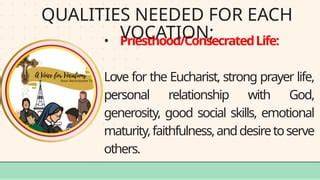
The teaching connects the human person with marriage, motherhood and fatherhood, priesthood, consecrated life, and the call to holiness of the laity. It helps young people see vocation not merely as a future job or lifestyle, but as a call to love.
This education is foundational for a young man or woman to hear and respond joyfully to a call to consecrated life, priesthood, and marriage. If we want to build a culture of vocations, it starts with understanding the human person as gift and learning to love according to Christ’s example.
Through testimonies, stories of saints, movie clips, and other forms of engagement, students can discover their vocation to love. The teaching can help them ask important questions and slowly uncover answers as they encounter the vastness of the Father’s loving plan for each person.
Theology of the Body in the Life of the Church
Theology of the Body touches on all areas of the Church’s life and ministry. Its themes include Scripture, Jesus Christ, creation, the Fall, the dignity of the human person, suffering, dating, marriage, the sacraments, moral life, family, social responsibility, work, care of creation, and the call to holiness.
It is more than a series of chastity talks. It is an intimate study of the human person who was made by Love for love. It offers a holistic approach to faith by connecting the body and soul, truth and love, freedom and responsibility, personal dignity and vocation.
The teaching helps humanity rediscover its greatness through an “adequate anthropology” centered in Jesus. It presents universal truths that set the human heart free to love for a lifetime-and into eternity.