The Council of Trent was the Catholic Church’s central response to the teaching and rapid spread of the Protestant Reformation. Meeting in twenty-five sessions from 1545 to 1563, it issued formal statements of Catholic doctrine on salvation, the sacraments, Scripture, tradition, worship, church discipline, and reform.
By the time the decrees and canons of the Council were ratified in 1564, the delegates had reformed abuses in the Church and established the beliefs, authoritative scripture, and practices of what it meant to be a Catholic while simultaneously condemning the Protestant Reformation as anti-Christ and heretical. The decrees issued at Trent have never been overturned and many were reaffirmed again at the Second Vatican Council during the 1960s.
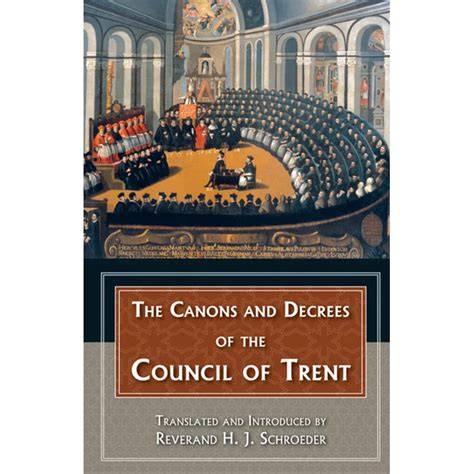
Historical setting and purpose
The Protestant Reformation (1517-1648) began when Martin Luther's 95 Theses were issued in 1517, challenging the authority of the Church by questioning the sale of indulgences. Martin Luther (l. 1483-1546) developed his own vision of Christianity which inspired others like Huldrych Zwingli (l. 1484-1531) and John Calvin (l. 1509-1564) to develop theirs.
The Church responded with the Counter-Reformation (also given as the Catholic Reformation, 1545 to c. 1700), which began with the Council of Trent. In fact, its primary intent was to condemn and refute every Reformed doctrine. The Council issued numerous decrees and formal statements of Catholic doctrine on topics of salvation, the sacraments, and the canon.
The decrees and canons of the Council of Trent informed all the efforts of the Counter-Reformation, which succeeded in its goal of reaffirming the Church's spiritual authority and condemning the Protestant challenge. Although Christianity would continue to splinter into various sects in the West, the Catholic Church maintained its claim as the only true successor to the ministry of Jesus Christ and, through its decrees and canons, explained exactly why that was so.
The structure of the Council’s legislation
The Council’s documents consist of doctrinal decrees, disciplinary decrees, reform measures, formal condemnations, safe-conduct provisions, and acts relating to the continuation and confirmation of the Council. The complete text is arranged by session, beginning with the bull of indiction and ending with the confirmation of the Council by Pope Pius IV.
| Session | Main doctrinal or disciplinary subject |
|---|---|
| Third | Symbol of faith |
| Fourth | Canonical Scriptures; edition and use of the sacred books |
| Fifth | Original sin; reform |
| Sixth | Justification; reform |
| Seventh | Sacraments; reform |
| Thirteenth | Eucharist; reform; safe-conduct to Protestants |
| Fourteenth | Penance; extreme unction; reform |
| Twenty-First | Communion under both species; communion of infants; reform |
| Twenty-Second | Sacrifice of the Mass; celebration of the Mass; reform |
| Twenty-Third | Holy orders; reform |
| Twenty-Fourth | Matrimony; reform of marriage; reform |
| Twenty-Fifth | Purgatory; saints, relics, and sacred images; regulars and nuns; indulgences; fasting; books; reception and confirmation of the decrees |
The central controversy: justification
The focus of the first part of the first session was on defining how one was justified before God, and the 33 canons of 1547 clarify the rules one needed to follow to meet that definition. The first session of the Council of Trent was focused on the issue of justification, & the canons were issued to clarify how one should conduct oneself.
The Church taught one was justified before God (granted salvation) by one's faith in Jesus Christ and one's works, which increased the believer's merit in the eyes of God. Ecclesiastical authorities cited many passages from the Bible to support this teaching, including one of the most famous from James 2:24: "You see that by works a man is justified, and not by faith only."
These 'works' were not only good deeds one performed in the course of a day but also participating in the sacraments of the Church and adhering to its teachings. The first session of the Council of Trent was therefore focused on the issue of justification, and once it had been settled by decree that one was justified by faith and works, as well as what 'justification' meant and other particulars, the canons were issued to clarify precisely how one should conduct oneself - and what teachings/claims one should reject - to be a Catholic in good standing.
Martin Luther was a Catholic monk, theologian, and professor who experienced a crisis of faith when he could not reconcile his belief in a loving God with what he understood as the God of Judgment taught by the Church. All of the 'works' the Church approved of did not seem to Luther to be of any use because they constituted an endless struggle for perfection one could never win.
Since God was all-good and humans were inherently sinful, one could work all one's life and still would never be able to meet the standards set by the Church for justification. Luther felt his conflict resolve when he read the passage from Romans 1:17, which reads, in part, "the just shall live by faith," which he interpreted as meaning one only needed faith in God to be justified and that faith was strengthened through reading the Bible.
Through faith, one opened oneself to God's love, mercy, and salvation, and through scripture, one learned God's will for one's life. Luther then claimed a Christian only needed faith and scripture to be justified, and all the edicts and rules of the Church were human constructs and should be rejected.
This issue became central to the Protestant Reformation and also to the Catholic response of the Counter-Reformation. The canons targeted Lutheran claims specifically, but by 1547, Zwingli and Calvin had developed their own arguments against the Church's teachings, which also needed to be addressed.
Meaning and force of the anathemas
After this Catholic doctrine on justification, which whosoever does not faithfully and firmly accept cannot be justified, it seemed good to the holy council to add these canons, that all may know not only what they must hold and follow, but also what to avoid and shun.
The canons were written following the decrees defining justification in 1547. Each canon ends with the line, "let him be anathema," meaning excommunicated from the Church and the grace of God and so doomed to an eternity in hell.
It is for this reason that the canons can seem needlessly redundant at points because the delegates wanted to ensure that there was no room for error in a Catholic's understanding of what was expected of a believer as well as what aspects of the so-called 'new teachings' were to be rejected. All aspects of the 'new teachings' were to be rejected, of course, but these canons focused specifically on the justification controversy and were written to address every aspect of it.
The Thirty-Three Canons on Justification
Grace, human works, and the initiative of God
Canon 1: If anyone says that man can be justified before God by his own works, whether done by his own natural powers or through the teaching of the law, without divine grace through Jesus Christ, let him be anathema.
Canon 2: If anyone says that divine grace through Jesus Christ is given for this only, that man may be able more easily to live justly and to merit eternal life, as if by free will without grace he is able to do both, though with hardship and difficulty, let him be anathema.
Canon 3: If anyone says that without the predisposing inspiration of the Holy Spirit and without his help, man can believe, hope, love, or be repentant as he ought, so that the grace of justification may be bestowed upon him, let him be anathema.
Canon 4: If anyone says that man's free will moved and aroused by God, by assenting to God's call and action, in no way cooperates toward disposing and preparing itself to obtain the grace of justification, that it cannot refuse its assent if it wishes, but that, as something inanimate, it does nothing whatever and is merely passive, let him be anathema.
Canon 5: If anyone says that after the sin of Adam man's free will was lost and destroyed, or that it is a thing only in name, indeed a name without a reality, a fiction introduced into the church by Satan, let him be anathema.
Canon 6: If anyone says that it is not in man's power to make his ways evil, but that the works that are evil, as well as those that are good, God produces, not permissively but also proprie et per se [directly and intrinsically], so that the treason of Judas is no less his own proper work than the vocation of St. Paul, let him be anathema.
Canon 7: If anyone says that all works done before justification, in whatever manner they may be done, are truly sins, or merit the hatred of God; that the more earnestly one strives to dispose himself for grace, the more grievously he sins, let him be anathema.
Canon 8: If anyone says that the fear of hell, whereby, by grieving for sins, we flee to the mercy of God or abstain from sinning, is a sin or makes sinners worse, let him be anathema.
Faith, justification, and the justice of Christ
Canon 9: If anyone says that the sinner is justified by faith alone, meaning that nothing else is required to cooperate in order to obtain the grace of justification, and that it is not in any way necessary that he be prepared and disposed by the action of his own will, let him be anathema.
Canon 10: If anyone says that men are justified without the justice of Christ, whereby he merited for us, or by that justice are formally just, let him be anathema.
Canon 11: If anyone says that men are justified either by the sole imputation of the justice of Christ or by the sole remission of sins, to the exclusion of the grace and "the charity which is poured forth in their hearts by the Holy Spirit" [Romans 5:5], and remains in them, or also that the grace by which we are justified is only the good will of God, let him be anathema.
Canon 12: If anyone says that justifying faith is nothing else than confidence in divine mercy, which remits sins for Christ's sake, or that it is this confidence alone that justifies us, let him be anathema.
Canon 13: If anyone says that in order to obtain the remission of sins it is necessary for every man to believe with certainty and without any hesitation arising from his own weakness and indisposition that his sins are forgiven him, let him be anathema.
Canon 14: If anyone says that man is absolved from his sins and justified because he firmly believes that he is absolved and justified, or that no one is truly justified except him who believes himself justified, and that by this faith alone absolution and justification are effected, let him be anathema.
Predestination, perseverance, and the commandments
Canon 15: If anyone says that a man who is born again and justified is bound ex fide [from faith] to believe that he is certainly in the number of the predestined, let him be anathema.
Canon 16: If anyone says that he will for certain, with an absolute and infallible certainty, have that great gift of perseverance even to the end, unless he shall have learned this by a special revelation, let him be anathema.
Canon 17: If anyone says that the grace of justification is shared by those only who are predestined to life, but that all others who are called are called indeed but receive not grace, as if they are by divine power predestined to evil, let him be anathema.
Canon 18: If anyone says that the commandments of God are, even for one that is justified and constituted in grace, impossible to observe, let him be anathema.
Canon 19: If anyone says that nothing besides faith is commanded in the gospel, that other things are indifferent, neither commanded nor forbidden, but free; or that the Ten Commandments in no way pertain to Christians, let him be anathema.
Canon 20: If anyone says that a man who is justified and however perfect is not bound to observe the commandments of God and church, but only to believe, as if the gospel were a bare and absolute promise of eternal life without the condition of observing the commandments, let him be anathema.
Canon 21: If anyone says that Christ Jesus was given by God to men as a redeemer in whom to trust, and not also as a legislator whom to obey, let him be anathema.
Perseverance, sin, and the loss of grace
Canon 22: If anyone says that the one justified either can, without the special help of God, persevere in the justice received, or that with that help he cannot, let him be anathema.
Canon 23: If anyone says that a man once justified can sin no more, nor lose grace, and that therefore he that falls and sins was never truly justified; or, on the contrary, that he can during his whole life avoid all sins, even those that are venial, except by a special privilege from God, as the church holds in regard to the Blessed Virgin, let him be anathema.
Canon 24: If anyone says that the justice received is not preserved and also not increased before God through good works, but that those works are merely the fruits and signs of justification obtained, but not the cause of its increase, let him be anathema.
Canon 25: If anyone says that in every good work the just man sins at least venially, or, what is more intolerable, mortally, and hence merits eternal punishment, and that he is not damned for this reason only, because God does not impute these works unto damnation, let him be anathema.
Canon 26: If anyone says that the just ought not for the good works done in God to expect and hope for an eternal reward from God through his mercy and the merit of Jesus Christ, if by doing well and by keeping the divine commandments they persevere to end, let him be anathema.
Canon 27: If anyone says that there is no mortal sin except that of unbelief, or that grace once received is not lost through any other sin however grievous and enormous except by that of unbelief, let him be anathema.
Canon 28: If anyone says that with the loss of grace through sin faith is also lost with it, or that the faith which remains is not a true faith, though it is not a living one, or that he who has faith without charity is not a Christian, let him be anathema.
Penance, temporal punishment, and merit
Canon 29: If anyone says that he who has fallen after baptism cannot by the grace of God rise again, or that he can indeed recover again the lost justice but by faith alone without the sacrament of penance, contrary to what the holy Roman and universal Church, instructed by Christ the Lord and his apostles, has hitherto professed, observed, and taught, let him be anathema.
Canon 30: If anyone says that after the reception of the grace of justification the guilt is so remitted and the debt of eternal punishment so blotted out to every repentant sinner, that no debt of temporal punishment remains to be discharged either in this world or in purgatory before the gates of heaven can be opened, let him be anathema.
Canon 31: If anyone says that the one justified sins when he performs good works with a view to an eternal reward, let him be anathema.
Canon 32: If anyone says that the good works of the one justified are in such manner the gifts of God that they are not also the good merits of him justified; or that the one justified by the good works that he performs by the grace of God and the merit of Jesus Christ, whose living member he is, does not truly merit an increase of grace, eternal life, and in case he dies in grace, the attainment of eternal life itself and also an increase in glory, let him be anathema.
Canon 33: If anyone says that the Catholic doctrine of justification as set forth by the holy council in the present decree, derogates in some respect from the glory of God or the mercies of our Lord Jesus Christ, and does not rather illustrate the truth of our faith and no less the glory of God and of Christ Jesus, let him be anathema.
Other doctrinal decrees
Scripture, tradition, and the canon
The Fourth Session contained a decree concerning canonical Scriptures and a decree concerning the edition and the use of the sacred books. The Council issued formal statements of Catholic doctrine on the canon, and the wider legislation of Trent defined the relationship between Scripture, tradition, and the Church’s authoritative teaching.
The complete text includes the following headings: "Decree concerning canonical Scriptures" and "Decree concerning the edition, and the use, of the sacred books." The later sessions also included legislation on the index of books, the catechism, breviary, and missal.
Original sin
The Fifth Session issued a decree concerning original sin and a decree on reformation. The doctrine of original sin formed part of the Council’s larger account of humanity’s condition, divine grace, baptism, and justification.
The sacraments
The Seventh Session issued a decree concerning the sacraments and a decree on reformation. The full text included material touching the sacraments in general, baptism, and confirmation.
The Council’s later sessions treated the Eucharist, penance, extreme unction, communion under both species, holy orders, and matrimony. These doctrinal statements were accompanied by disciplinary measures intended to regulate clergy, worship, ecclesiastical institutions, and sacramental practice.
The Eucharist and communion
The Thirteenth Session issued a decree concerning the most holy sacrament of the Eucharist, a decree on reformation, and a decree for postponing the definition of four articles touching the sacrament of the Eucharist and for giving a safe-conduct to Protestants.
The Twenty-First Session dealt with communion under both species and the communion of infants, together with a decree on reformation. The Twenty-Second Session addressed the sacrifice of the Mass, the things to be observed and avoided in the celebration of the Mass, reform, and a petition for the concession of the chalice.
Penance and extreme unction
The Fourteenth Session treated the most holy sacraments of penance and extreme unction. It included doctrine on the sacrament of penance, doctrine on the sacrament of extreme unction, and a decree on reformation.
Holy orders
The Twenty-Third Session presented the true and catholic doctrine touching the sacrament of order, decreed and published by the Holy Synod of Trent in condemnation of the errors of the time. It also included a decree on reformation.
Matrimony
The Twenty-Fourth Session issued doctrine on the sacrament of matrimony, a decree on the reformation of marriage, and a decree on reformation. The legislation addressed both the sacramental doctrine of marriage and the regulation of marriage within the Church.
Reform and church discipline
The Council combined doctrinal definitions with extensive reform decrees. The complete text repeatedly places a decree on reformation beside a doctrinal statement, showing that the Council’s work concerned not only what Catholics were required to believe but also how the Church’s ministers, institutions, worship, and members were expected to conduct themselves.
The reform material extended across the sessions. It addressed the manner of living during the Council, clergy and ecclesiastical offices, regulars and nuns, marriage, the celebration of the Mass, the administration of the sacraments, and the observance of the Council’s decisions.
The Twenty-Fifth Session included decrees concerning purgatory, the invocation, veneration, and relics of saints, sacred images, regulars and nuns, indulgences, choice of meats, fasts, festival days, the index of books, the catechism, the breviary, and the missal.
Purgatory, saints, relics, images, and indulgences
The Twenty-Fifth Session issued a decree concerning purgatory and a decree on the invocation, veneration, and relics of saints and other sacred images. These subjects belonged to the wider dispute over Catholic worship, mediation, devotion, and the place of inherited ecclesiastical practices.
The same session included a decree concerning indulgences. It also included provisions on choice of meats, fasts, and festival days, as well as the index of books, the catechism, breviary, and missal.
Sessions, interruptions, and confirmation
The Council met over several years during the middle of the sixteenth century. Its legislative history included sessions for opening, resuming, transferring, suspending, proroguing, and finally closing the Council.
- The First Session contained the decree touching the opening of the Council.
- The Second Session addressed the manner of living and other matters to be observed during the Council.
- The Eighth Session contained a decree concerning the translation of the Council.
- The Ninth and Tenth Sessions contained decrees for the prorogation of the session.
- The Eleventh Session contained the decree for resuming the Council under Julius III.
- The Sixteenth Session contained the decree for the suspension of the Council.
- The Seventeenth Session contained the decree for celebrating the Council under Pius IV.
- The Nineteenth and Twentieth Sessions contained decrees for the prorogation of the session.
- The Twenty-Fifth Session contained the decrees concerning the close of the Council and the request for confirmation.
The final material included acclamations of the fathers at the close of the Council, confirmation of the Council, and the bull of Pope Pius IV touching the confirmation of the ecumenical and general Council of Trent.
Books, Scripture, and ecclesiastical authority
The Eighteenth Session issued a decree on the choice of books and invited all men on the public faith to the Council. It also granted a safe-conduct to the German nation and extended it to other nations.
The final session included legislation on the index of books; on the catechism, breviary, and missal; on the place of ambassadors; on receiving and observing the decrees of the Council; and on reciting, in session, the decrees of the Council under Paul III and Julius III.
The Council of Trent was the primary prong of the three-pronged Counter-Reformation of the sixteenth century where the Roman Catholic Church defined de fide their doctrine of justification along with their doctrine of authority, Scripture, tradition, sacraments, and so on.
The continuing significance of Trent
The Council of Trent was an extremely important moment in church history, and it wasn’t just a moment. It took place over several years during the middle of the sixteenth century.
Many people think that at Vatican II the doctrines such as justification were altered significantly. Pope John XXIII made it very clear when he called Vatican II that it was not to deal with theology itself but with the life of the church.
As recently as the Roman Catholic Catechism in the 1990s, there has been a strong reaffirmation of the canons and decrees of the Council of Trent. So, to think that the Roman Catholic Church has left Trent, or really in any significant way modified the decrees of Trent, I think would be to misunderstand what has happened.
Particularly, the canons and decrees of the Council of Trent remain. The Council’s definitions continued to serve as a reference point for the interpretation of Roman Catholic doctrine and for the comparison between Roman Catholic theology and the theology of the Reformation.
Martin Luther had rejected the concept of human free will and championed the doctrine of predestination long before Calvin made it a central tenet of his theology, and so aspects of both Lutheranism and Calvinism needed to be addressed.
The Council’s canons therefore addressed not only the sale of indulgences or isolated abuses but the underlying questions of grace, faith, works, free will, predestination, Scripture, the sacraments, penance, church authority, and the conditions of Christian obedience.