“He Touched Me” is a gospel song composed by Bill Gaither in 1963 and revised with Gloria Gaither the following morning. Its central message is that an encounter with Jesus transforms a life marked by “guilt and shame” into one that is “cleansed and made whole.”
The song combines personal testimony with biblical narratives of healing. The singer steps into the biblical story and describes an experience that cannot be fully explained: “something happened,” and the result is “oh the joy that floods my soul.”
Who wrote “He Touched Me”?
“He Touched Me” (“Shackled by a heavy burden”) by Bill and Gloria Gaither The United Methodist Hymnal, 367 For complete lyrics, see Bill and Gloria Gaither have an interesting effect on people.
“He Touched Me” was composed in 1963, soon after the couple’s wedding in 1962. While not their first song, “He Touched Me” was the first of several early songs that defined their career, including “Because he lives” (1971), “Jesus, Jesus, Jesus, There’s just something about that name” (1970), and “The King is coming” (1970).
Bill and Gloria Gaither became two of the primary forces that kept evangelical gospel song alive in their respective gatherings during the last half of the twentieth century. Their work was associated with the accessibility of southern gospel music, the hospitality of their Homecoming events, and the participation of leading gospel artists.
The Gaithers’ compositions and performances have earned them Grammys, dozens of Dove Awards in various categories, including Southern Gospel Album of the Year, Southern Gospel Song of the Year, Songwriter of the Year, and Long Form Video of the Year, and induction into the Gospel Music Hall of Fame (1999).
The musical world of Bill and Gloria Gaither
When it comes to evangelical gospel song in the last half of the twentieth century, two of the primary forces that kept this genre alive in their respective gatherings were the Billy Graham Crusades under the musical leadership of Cliff Barrows (1923-2016) and George Beverly Shea (1909-2013) and the Homecoming concerts of William James “Bill” (b. 1936) and Gloria Lee (b. 1942) Gaither (née Sickal).
These gatherings featured a wide range of gospel music from the early gospel-quartet style and the Gaither Vocal Band to more harmonically daring and complex current African American gospel styles.
The Homecoming events combined the melodic accessibility of southern gospel music and the warm hospitality conveyed by the host Bill Gaither with the star power of the finest gospel artists of the day.
These artists ranged from traditional “old-time” gospel quartets like the Statler Brothers and The Oak Ridge Boys to African Americans Andraé Crouch (1942-2015), Wintley Phipps (b. 1955), and Lynda Randle (b. 1962).
Other well-known contemporary Christian artists began their careers while touring with the Gaithers, including Michael W. Smith (b. 1957), Sandi Patti (b. 1956), Steve Green (b; 1956), Amy Grant (b. 1960), and Cynthia Clawson (b. 1948).
In a conversation with this writer, Bill Gaither said rather self-effacingly, “I’m not much of a singer, and not that great of a composer, but I know how to get good people together” (June 2018).
Indeed, he is a producer, and the Gaither recording studio in Alexandria, Indiana, is a meeting place of artistry and fellowship. This spirit of community building has been a primary characteristic of the Gaithers’ ministry, especially in nurturing younger artists and ministering to them in times of need.
They are long-time residents of Alexandria, Indiana, where Bill, a native of nearby Anderson, began as a high school English teacher and met Gloria, a teaching colleague, originally from Michigan.
How “He Touched Me” was written
Bill Gaither’s inspiration for the writing of the song “He Touched Me” came very late one night. He had been asked to play the piano for a revival meeting in Huntington, Indiana.
He was accompanying [award-winning gospel singer] Doug Oldham [1930-2010], who was providing the music for his father, Dr. Dale Oldham, the speaker for the evening.
After the meeting, as the three rode back to Bill’s home in Anderson, Indiana, they discussed how deeply they had felt the Spirit at the meeting.
Dr. Oldham dropped Bill off at home and his parting words were, “You should write a song that says, ‘He touched me, oh, He touched me’” (Australia, 2004, n.p.).
Gaither completed the song, working throughout the night, and revised it with Gloria the next morning. Doug Oldham first recorded it in 1964, followed quickly by the Bill Gaither Trio and other notable artists including The Imperials (1965), Elvis Presley (1972), Tennessee Ernie Ford (1977), and, more recently, Steven Curtis Chapman (2013).
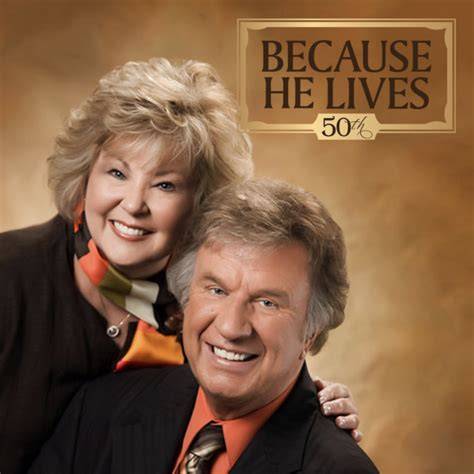
The Gaither Trio and the song’s early development
Though the songs were recorded by many notable gospel singers, the Bill Gaither Trio, begun by Bill in 1956, made them popular initially.
Gloria, a writer and poet, joined the trio in 1964 and remained the ensemble’s primary alto until the disbanding of the group in 1991.
Bill’s melodies were so singable that soon the songs became adapted for congregational use. The first version of “He Touched Me” to appear in hymn form was in Hymns for the Family of God (Nashville, 1976), edited by Fred Bock.
The meaning of “He Touched Me”
The strength of this song lies in its combination of personal witness and biblical narrative. On the one hand, this song is a first-person account of an encounter with Jesus who transformed the singer’s life stained with “guilt and shame” (stanza 1) to a life “cleansed and made. whole” (stanza 2).
On the other hand, this song bears witness to several biblical narratives and extends them to the present day. The singer of this hymn steps into the biblical story.
While the stanzas describe the encounter, it is the refrain that communicates the ecstasy of the moment-“oh the joy that floods my soul.” This was a wondrous encounter-“something happened”-that cannot be explained.
The result is that the singer has been “made. whole.” The song therefore presents salvation and spiritual renewal not only as theological ideas, but also as a deeply personal experience.
Touch and healing in the biblical narratives
Though inspired by a revival sermon, touch was a significant part of Jesus’ healing ministry, both touching others and others touching him.
For example, a woman with a flow of blood touched Jesus from behind (Matthew 9:20-21). The sick begged Jesus to let them touch the hem of his cloak (Matthew 14:35-36; Mark 3:10; 6:56).
The blind man at Bethsaida begged Jesus touch him (Mark 8:22). The story of the leper that begged Jesus to cleanse him (Matthew 8:1-3; Luke 5:12-13) corresponds particularly well with the refrain of the song.
These accounts help explain why the song’s language of touch is so powerful: it connects an individual testimony with stories in which physical contact represents healing, mercy, cleansing, and restored life.
Why the song became widely used
The song’s melodic accessibility helped it move from gospel performance into congregational singing. Bill’s melodies were so singable that soon the songs became adapted for congregational use.
Its structure also supports communal participation. The stanzas describe the singer’s condition and encounter, while the refrain provides the emotional and musical release of the testimony.
The song’s origins correspond with an account in the local Anderson newspaper, given three years after its composition:
People often ask us how we write our songs. Often they have the idea that we sit down at the piano a certain time each week and stay there until we have produced a song. This is far from what happens.
First of all, I doubt that we have one song that we could claim as our own personal accomplishment. Songs are more like whispered answers to the questions of the heart, or manna provided to supply need.
We seem to have very little to do with how often or at what time a song is written. When it is there, we simply stop everything and record it on paper. [I]f it is ignored, it slips away like a vapor and is never recalled.
Many times we hear a phrase spoken in a sermon or a prayer that “rings a bell.”. Often during family worship we read a Scripture that seems new and fresh and beautiful, that seem to sing itself into our hearts.
Many times we have had experiences. that have produced the seeds of a song (Anderson Daily Bulletin, 1966, p. 4).
Notable recordings and performances
The first recording was made by Doug Oldham in 1964, followed quickly by the Bill Gaither Trio. The song was subsequently recorded by artists from different parts of the gospel and popular music world.
| Artist or ensemble | Year or period mentioned |
|---|---|
| Doug Oldham | 1964 |
| The Bill Gaither Trio | Early popularization |
| The Imperials | 1965 |
| Elvis Presley | 1972 |
| Tennessee Ernie Ford | 1977 |
| Steven Curtis Chapman | 2013 |
The renditions are many and varied. Selected recordings are listed below:
- The Bill Gaither Trio (with Bill and Gloria Gaither singing)
- The Gaither Vocal Band
- Kaoma
- Elvis Presley
- The Isaacs
- The Cathedrals
Heritage Singers / "He Touched Me Medley" (Live from Prague)
Place in the Gaithers’ wider work
“He Touched Me” was followed by other songs that became closely associated with the Gaithers’ career, including “Jesus, Jesus, Jesus, There’s just something about that name” (1970), “The King is coming” (1970), and “Because he lives” (1971).
The songs were recorded by many notable gospel singers, while the Bill Gaither Trio made them popular initially. The Gaithers’ later Homecoming events broadened the context in which their compositions were heard, bringing together traditional southern gospel performers, contemporary Christian artists, and African American gospel musicians.
The Gaither Family Resource Center, including studios, museum, store, and restaurant, is a major tourist attraction in Alexandria ( The city water tower even has the Gaither name on it.